
Tag: Gujarat

  • India’s Semiconductor Ambitions Get a Boost as PM Modi Launches New Chip Plant and Electronics Roadmap

    India’s Semiconductor Ambitions Get a Boost as PM Modi Launches New Chip Plant and Electronics Roadmap

    India’s Electronics Sector Reaches New Heights

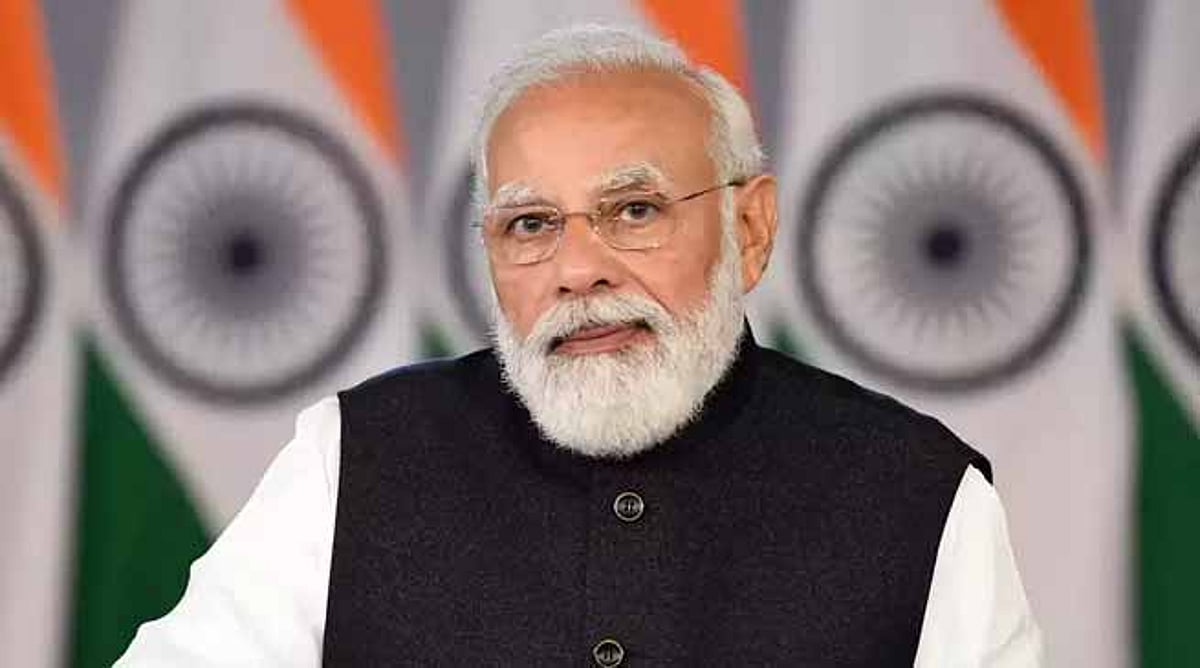
    India has solidified its position as the world’s second-largest mobile phone manufacturer, and Prime Minister Narendra Modi is now charting a bold course for the country’s electronics future. On July 4, 2026, Modi inaugurated the CG Semi Outsourced Semiconductor Assembly and Test (OSAT) facility in Sanand, Gujarat, marking a key milestone in India’s journey from assembling phones to producing semiconductors domestically.

    Speaking at the event, Modi emphasized that the plant represents the next logical step in a decade-long electronics revolution, moving the nation up the value chain and reinforcing its role in the global technology supply chain.

    The Shift from Phones to Chips: Key Numbers

    Modi highlighted India’s mobile manufacturing growth as the foundation for this shift. Since 2014, mobile phone production has surged approximately 33 times, making India the world’s second-largest mobile phone manufacturer and exporter. Overall electronics production has increased nearly sevenfold, while electronics exports have grown almost elevenfold over the same period.

    “The expansion of the semiconductor industry in India did not happen overnight. It is the next step in the electronics revolution that has taken place in India over the past decade,” Modi said. “First products, then components and now semiconductors… India is building the entire electronics value chain. This is the roadmap to Viksit Bharat. This is the next phase of Make in India.”

    Inside the Sanand Plant and Production Targets

    The Rs. 7,500 crore CG Semi facility has already begun commercial production of semiconductor packaging, with an initial annual target of 200 million chips. Modi expressed confidence that the plant will quickly scale toward a national goal of 500 million chips annually. Once the Sanand cluster is fully developed, he projected a daily output of 1.5 crore (15 million) chips.

    The Prime Minister credited the project as a collaboration between Indian, Japanese, and Thai industry partners. He also praised the facility’s diverse workforce, which includes women trained in states like Jharkhand, Madhya Pradesh, and Chhattisgarh, with some employees receiving advanced training in Malaysia. Modi called them representatives of a ‘Mini India’ operating within a single plant.

    Broader Make in India Push

    Modi tied the Sanand launch to a broader national roadmap, noting that four operational semiconductor facilities are expected in 2026 alone. The government’s goal is to cover design, manufacturing, packaging, and testing capabilities entirely within India. He framed this as the next phase of Make in India and a building block toward a ‘Viksit Bharat’ (Developed India) vision.

    He also pointed to parallel efforts to secure domestic access to critical and high-tech minerals needed to support long-term chip manufacturing, ensuring a resilient supply chain for the future.

    Political Framing and Reactions

    Modi used part of his address to contrast the current pace of semiconductor investment with what he described as a lack of follow-through on similar plans under previous governments, referencing past proposals that earmarked land near Gandhinagar and Sanand for chip projects but never materialized.

    Union Railway Minister Ashwini Vaishnaw and Gujarat Chief Minister Bhupendra Patel also spoke at the event, reinforcing the state’s positioning as an emerging hub within India’s broader semiconductor mission.

  • Gujarat Government, IAIRO, and IBM Launch Industrial AI Centre of Excellence

    Gujarat Government, IAIRO, and IBM Launch Industrial AI Centre of Excellence

    IBM, the Department of Science and Technology of the Government of Gujarat, and the Indian AI Research Organisation (IAIRO) have announced plans to establish an Industrial Artificial Intelligence Centre of Excellence (Industrial AI CoE) in Vadodara, Gujarat. The initiative aims to drive innovation, skill development, and ecosystem growth around Industrial AI, leveraging sovereign AI technologies.

    The Industrial AI CoE will function as a living lab, focusing on technology demonstrations, pilot programs, and applied research to accelerate the adoption of AI in asset-intensive sectors such as manufacturing, energy, utilities, and supply chains. By combining domain knowledge with advanced AI models, the centre seeks to enhance efficiency, safety, resilience, and quality across industries.

    Key objectives include fostering collaboration between industry, academia, and government through workshops, conferences, and technical sessions. The centre will also promote capacity building via academic partnerships, hackathons, training programs, and the development of AI frameworks, reference architectures, standards, and best practices for responsible and scalable AI deployment.

    Dr. Amit Sheth, Founding Director of IAIRO, stated: “The next generation of industrial systems will require AI that combines learning with domain knowledge, human expertise, and trust. Translating these capabilities into real-world impact requires an ecosystem where research, policy, and enterprise innovation evolve together. Gujarat’s industrial leadership provides a strong foundation for that transformation.”

    Sriram Raghavan, General Manager of IBM Software, India and Software Innovation Lab, added: “Scaling the application of AI is a strategic imperative for manufacturing and industrial organizations. Realizing this opportunity requires advanced AI models, real-time and historical data, enterprise-ready platforms, governance, and ecosystem partnerships. We look forward to collaborating with the Government of Gujarat and IAIRO to create a platform that fosters innovation, develops skills, and accelerates the adoption of sovereign AI technologies.”

    Under the collaboration, IBM and IAIRO will serve as technical and strategic advisors to the Gujarat Department of Science and Technology, providing expertise in Industrial AI, sovereign AI, and asset management platform best practices to scale AI adoption across the industrial sector.

    The initiative aligns with Gujarat’s vision to become a leading destination for Industrial AI, leveraging sovereign AI technologies and strengthening India’s position in trustworthy AI innovation.

  • FUJIFILM India Partners with Gujarat Government to Advance Semiconductor Materials Manufacturing

    FUJIFILM India Partners with Gujarat Government to Advance Semiconductor Materials Manufacturing

    FUJIFILM India has signed a Memorandum of Understanding (MoU) with the Gujarat State Electronics Mission (GSEM) under the Department of Science and Technology, Government of Gujarat, to explore opportunities for manufacturing advanced semiconductor materials in the country and strengthen the domestic supply chain. The agreement was formalized during the Vibrant Gujarat Regional Conference in Vadodara.

    The collaboration aligns with India’s goal of becoming a global semiconductor hub. Through the MoU, FUJIFILM India will assess the feasibility of establishing a semiconductor materials production base in Dholera. The initiative aims to work closely with government bodies, industry associations, and private enterprises to build a resilient semiconductor supply chain.

    As demand for semiconductors surges across electronics, automotive, telecommunications, and artificial intelligence sectors, this partnership is expected to boost India’s self-reliance in critical semiconductor materials and enhance its position in the global value chain.

    Koji Wada, Managing Director of FUJIFILM India, stated: “At FUJIFILM India, we have been closely assessing opportunities across the Indian market and evaluating how our diverse businesses can contribute to the country’s long-term growth and innovation ambitions. This MoU marks an important milestone and brings us a step closer to realizing our plans for investment in Dholera. Guided by our Group Purpose of ‘Giving our world more smiles,’ we believe innovation should create meaningful value for society.”

    Abhi Shekhar Singh, National Head – Strategy & Business Development, Electronic Materials Division, FUJIFILM India, added: “FUJIFILM Electronic Materials develops and manages chemical formulations that power the most critical semiconductor processes. We are a diverse global supplier delivering tailored support where our customers need us most. We are now gearing up to introduce our technology to India’s semiconductor ecosystem, supporting today’s aspirational India and guaranteeing tomorrow’s Viksit Bharat.”

    With more than 20 production bases worldwide and deep expertise in advanced materials, Fujifilm Electronic Materials views India as a strategic market. The MoU reflects the company’s support for the Government of India’s “Make in India” initiative through localized manufacturing, technology collaboration, and supply chain development. By strengthening its engagement with India’s semiconductor ecosystem, Fujifilm aims to contribute to a sustainable, future-ready manufacturing infrastructure that supports the nation’s long-term ambitions.