
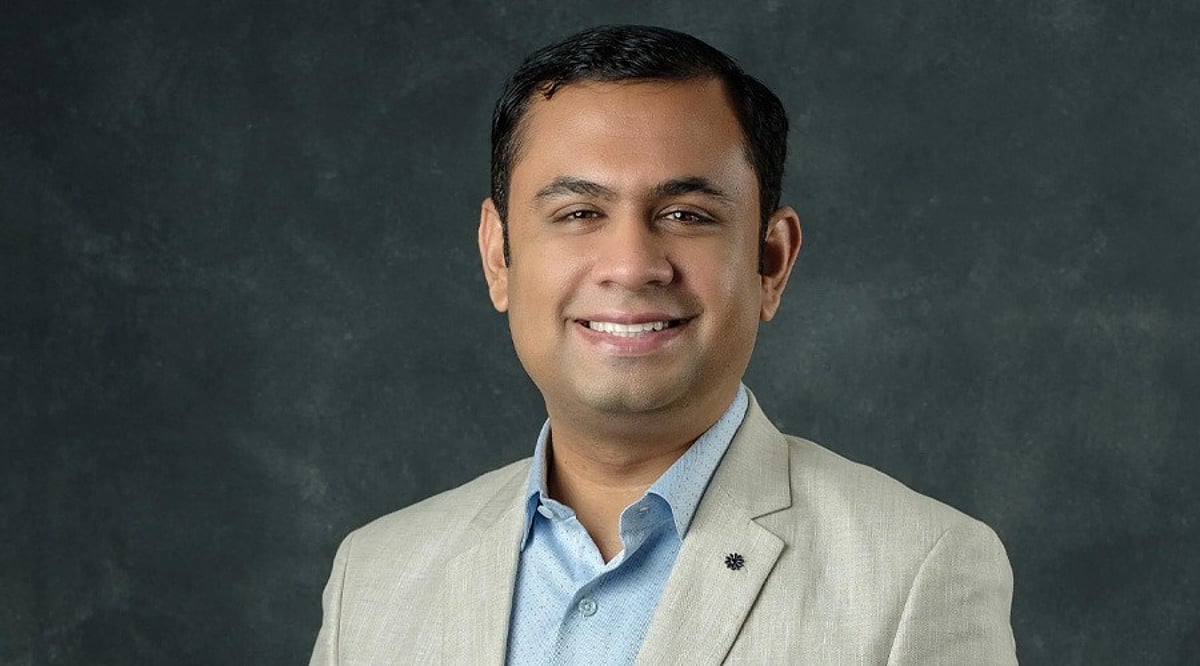
When Harshil Mathur and Shashank Kumar launched Razorpay in 2014, India’s online payment infrastructure was a mess of failed transactions, clunky integrations, and limited options for businesses trying to accept money digitally. Twelve years later, Razorpay processes over $180 billion in annualized total payment volume, has onboarded more than 12 million merchants, and filed a confidential DRHP with SEBI in June 2026, targeting a public listing valued at $5 to $6 billion. For Mathur, the journey from wireline field engineer to CEO of one of India’s most consequential fintech companies is anything but accidental.
From Jaipur to IIT Roorkee to a Bold Bet
Born in 1991 into a middle-class family in Jaipur, Rajasthan, Mathur developed an early fascination with technology and coding. He completed a degree in metallurgical engineering from IIT Roorkee in 2013 and joined Schlumberger as a wireline field engineer, a technically intensive role that lasted just eight months before the pull toward building something of his own won out. In December 2014, he co-founded Razorpay with Kumar around a straightforward insight: India’s businesses desperately needed a clean, developer-friendly API to accept online payments, and nothing available delivered that reliably.
Y Combinator and the Developer-First Growth Engine
In 2015, Razorpay got into Y Combinator’s Winter batch, one of the world’s most selective startup programs. The YC period sharpened the company’s product thinking and opened the door to early investors. Early growth was built almost entirely on developer trust; Razorpay’s clean API documentation and reliable integration made it the default payment gateway for startups, SMEs, and eventually larger enterprises. By 2020, the company had crossed the $1 billion unicorn mark. By December 2021, a $375 million Series F round valued it at $7.5 billion, backed by Peak XV Partners, Tiger Global, Ribbit Capital, Lightspeed, and Singapore’s GIC.
Building Beyond Payments
Mathur’s strategic ambition for Razorpay was never limited to a payment gateway. Under his leadership, the company expanded into RazorpayX, a neobanking platform now serving over 40,000 businesses with payroll, corporate cards, and connected banking; Razorpay Capital for merchant credit; and Magic Checkout, a one-click product reportedly reducing cart abandonment by 22%. In January 2026, Razorpay received RBI’s payment aggregator cross-border license, enabling transactions across 130-plus currencies in over 180 countries, and the company has established operations in Singapore and Malaysia.
The IPO Moment
Razorpay’s planned stock market debut is the most significant milestone on the horizon. The company filed a confidential DRHP with SEBI on June 12, 2026, targeting Rs 5,000 to Rs 6,000 crore through fresh shares and an offer for sale, with Axis Capital, Kotak Mahindra Capital, JPMorgan, and Citi appointed as lead managers. The targeted $5 to $6 billion IPO valuation is a markdown from the $7.5 billion 2021 peak, reflecting broader compression in fintech valuations and a public market that now demands profitability alongside growth. Razorpay’s FY25 revenue grew 65% to Rs 3,783 crore, though a net loss of Rs 1,209 crore, driven by ESOP costs and one-time reverse-flip tax liabilities from its 2025 domicile shift back to India, is a narrative that Mathur will need to tell convincingly to public-market investors.
The Leader Behind the Company
Mathur’s leadership style is widely described as product-first, technically grounded, and collaborative. He has consistently credited the broader Razorpay team and his co-founder rather than positioning himself as the singular force behind the company’s rise. He is also an active angel investor with a portfolio of over 22 companies, has been recognized on the Forbes 30 Under 30 Asia list, and has been a vocal voice in India’s startup community on digital policy issues. What makes his story particularly resonant is the consistency of the original thesis: building reliable, developer-first financial infrastructure for Indian businesses was not a fashionable idea in 2014. A decade on, it has become the foundation of how a significant share of India’s digital economy moves money.
Why This Matters
India’s digital economy depends on reliable payment infrastructure, and entrepreneurs like Harshil Mathur have played a significant role in building it. His journey demonstrates how solving a fundamental business problem with technology can create lasting impact, inspire future founders, and accelerate innovation across an entire industry.