Tag: HCLTech

  • Wealth Management Firms Chase AI Adoption, Yet Most Remain Unprepared

    Wealth Management Firms Chase AI Adoption, Yet Most Remain Unprepared

    A recent HCLTech study highlights a significant disconnect in the wealth management industry: while nearly all leadership teams are pursuing artificial intelligence, very few have built the systems needed to truly transform their operations. The report, titled Hidden In Pl(AI)n Sight, suggests that firms recognize the need for change but are still far from executing it.

    AI Ambitions Versus Agentic Readiness

    According to the study, 98% of wealth management leadership teams are actively advancing an AI agenda. However, only slightly more than 7% are developing agentic AI capabilities — systems that can independently perform a sequence of tasks toward a defined goal, rather than simply responding to individual prompts.

    While 84% of respondents acknowledged that their operating models require a fundamental redesign to fully leverage AI, fewer than 10% are prepared for such a transition. These figures indicate that although firms understand the magnitude of the work ahead, most are still in the early stages of implementation.

    The research was conducted using a synthetic methodology. HCLTech, in collaboration with Evidenza, created 1,066 AI personas modeled on senior wealth management decision-makers across 17 markets. Industry practitioners, researchers, and subject experts helped design and validate the approach, meaning the percentages reflect modeled personas rather than a traditional survey of executives.

    Funding Efficiency While Ignoring Revenue Impact

    The report identifies three critical gaps between AI plans and business outcomes. First, firms tend to fund projects aimed at operational efficiency even when they acknowledge the need for broader change. Second, technology spending often outpaces investment in proprietary client data and insights. Third, measurement remains a weak point: companies track AI adoption but rarely measure whether these initiatives generate revenue or improve client value.

    Although 84% of leaders favor a major redesign of their operating models, only 12% measure the new revenue generated by these changes. Srinivasan Seshadri, HCLTech’s chief growth officer and global head of financial services, emphasized that clarity is essential. “The industry doesn’t have an investment problem. It has a choice problem,” he said.

    Executives in the study placed greater importance on client-derived data and behavioral insights than on cloud platforms, technology infrastructure, or AI partnerships as sources of competitive advantage. Nearly 80% also expect future leaders to combine AI with human expertise and external collaboration.

    Regional Confidence Varies Widely

    The study found notable regional differences in AI readiness confidence. The Asia-Pacific region led with 89% confidence, followed by North America at 84%. Europe trailed significantly at 38.3%. These figures reflect perceived readiness rather than actual deployment of agentic AI systems.

    HCLTech suggests that firms must connect AI investments with operational changes and measurable business outcomes. The research offers a snapshot of where modeled decision-makers see gaps today, not a prediction of how quickly those gaps will close.

    For wealth managers, the message is clear: adding AI tools is not the same as transforming the work those tools support. The industry’s enthusiasm for AI is evident, but meaningful progress in agentic capabilities remains limited.


  • Leading Modernization Engineering Services Firms for Legacy Technology Transformation

    Leading Modernization Engineering Services Firms for Legacy Technology Transformation

    Modernizing legacy technology is no longer just an IT upgrade—it has become a strategic necessity for enterprises aiming to keep applications secure, reduce technical debt, and prepare systems for cloud computing, automation, and artificial intelligence. Businesses are increasingly turning to engineering and IT services companies that can assess legacy systems, migrate workloads, rebuild applications, and introduce modern architectures without disrupting daily operations. Industry research highlights several global technology providers for their capabilities in application and legacy modernization.

    10 Leading Firms Transforming Legacy Technology

    Here are ten companies that stand out in the modernization engineering services space:

    Accenture

    Accenture offers a broad application modernization practice covering legacy assessment, architecture planning, cloud migration, application transformation, and mainframe modernization. The company also uses automation and AI-assisted approaches to help enterprises modernize large application estates.

    Tata Consultancy Services (TCS)

    TCS works with large enterprises on application modernization, cloud transformation, and legacy technology upgrades. Its scale and global delivery network make it a major provider for organizations managing complex technology environments. TCS was named a Leader in Forrester’s 2024 assessment of application modernization and migration services.

    Infosys

    Infosys takes an AI- and cloud-first approach to modernization. Its services cover legacy applications, mainframes, databases, cloud migration, technology upgrades, and the transition of monolithic applications to microservices.

    Capgemini

    Capgemini helps businesses modernize applications and technology environments while moving toward cloud-native architectures. The company has been recognized among the leading providers in application modernization and migration services.

    HCLTech

    HCLTech is a major player in legacy and application modernization. Its services focus on helping enterprises move away from older technology environments while adopting cloud, automation, and modern engineering practices. HFS Research included HCLTech among its 2025 Market Leaders.

    Cognizant

    Cognizant offers end-to-end modernization services, from application assessment and migration to cloud-native transformation. Its Skygrade platform uses automation, modern tooling, and generative AI to support large-scale cloud modernization programs.

    IBM

    IBM Consulting focuses strongly on hybrid cloud and AI-led application modernization. Its services include migrating and modernizing existing applications, containerizing legacy systems, and incrementally improving older applications rather than replacing everything at once.

    Wipro

    Wipro provides modernization through rehosting, re-platforming, refactoring, and rearchitecting applications. Its services also cover integration and data modernization, with GenAI being used to speed up parts of the transformation process.

    EPAM Systems

    EPAM has an engineering-focused modernization practice covering applications, platforms, and data. It also uses AI for legacy code migration and documentation, alongside cloud, containerization, and platform engineering capabilities.

    LTIMindtree

    LTIMindtree is a notable provider for enterprises looking to modernize legacy and mainframe environments. The company has been included among major application modernization providers assessed by industry research firms.

    Final Take

    Modernization engineering is becoming a long-term technology strategy rather than a one-time migration project. Companies need to balance legacy systems with cloud adoption, AI, security, and the need to release software faster. The right modernization partner depends on the size of the technology estate, the complexity of legacy applications, and the organization’s cloud and AI roadmap. For large-scale transformation, companies such as Accenture, TCS, Infosys, Capgemini, HCLTech, and Cognizant remain prominent names, while IBM, Wipro, EPAM, and LTIMindtree offer additional options across different modernization needs.

    Frequently Asked Questions

    What are modernization engineering services?

    Modernization engineering services help businesses upgrade legacy applications, migrate systems to cloud platforms, improve architecture, introduce automation, and integrate artificial intelligence while maintaining business continuity and reducing technical debt.

    Why do companies need modernization engineering services?

    Companies use modernization engineering services to address outdated technology, improve application performance, strengthen security, reduce maintenance costs, support scalability, and create technology environments capable of adapting to changing business requirements.

    Which companies provide modernization engineering services?

    Leading providers include Accenture, Tata Consultancy Services, Infosys, Capgemini, HCLTech, Cognizant, IBM, Wipro, EPAM Systems, and LTIMindtree, offering different combinations of application, cloud, mainframe, data, and digital engineering modernization capabilities.

    How does AI support application modernization?

    AI can assist modernization by analyzing legacy code, generating documentation, identifying dependencies, suggesting code improvements, automating testing, and accelerating migration activities, helping engineering teams modernize applications more efficiently.

    How should businesses choose a modernization engineering partner?

    Businesses should evaluate a provider’s legacy technology expertise, cloud capabilities, engineering experience, security practices, AI adoption, industry knowledge, delivery scale, modernization methodology, and ability to support long-term transformation goals.

  • How to Invest in IT Sector Stocks: Key Metrics, Risks, and Long-Term Strategies

    How to Invest in IT Sector Stocks: Key Metrics, Risks, and Long-Term Strategies

    IT sector stocks are influenced by global technology spending, currency movements, workforce costs, and client demand. Investors need to assess company fundamentals, valuation, business cycles, and risks. A disciplined approach can help identify stronger long-term investment opportunities.

    What Makes IT Sector Stocks Different?

    Three forces are particularly important when analyzing IT stocks: overseas client spending, currency movement, and talent costs. IT companies earn most of their revenue from clients in the United States and Europe, so their fortunes rise and fall with technology budgets in those regions. Infosys and TCS earn most of their revenue in foreign currencies. Rupee movement can shift their reported numbers even when client demand has not changed. On the talent side, IT is a people-driven business. How a company manages hiring and retention feeds directly into its margins. This exposure does not exist in sectors that sell mainly within India, such as consumer goods or utilities. An investor moving from those sectors into IT stocks needs to track more moving parts than usual.

    Which Numbers Should You Check Before Buying?

    Revenue growth alone does not tell the full story. Deal wins, often called Total Contract Value (TCV), show where growth is heading. A company can report flat quarterly revenue but strong deal wins — that signals growth arriving in future quarters rather than the current one. TCV should not be treated as immediate revenue, though. Large contracts are usually delivered over multiple quarters or years.

    Attrition rate matters too, but not as a fixed threshold. Direction matters more than a universal target. Falling attrition can indicate improving employee stability. A sudden increase can raise delivery and hiring costs.

    Client concentration is the third figure worth checking. A company that depends heavily on a small number of large clients can face sharper revenue swings when one customer cuts technology spending.

    Operating margin is another important measure. It shows how much profit an IT company retains from its core operations after operating costs. A falling margin can point to wage pressure, weaker pricing, lower employee utilization, or a shift toward lower-margin services. The trend over several quarters is more useful than one quarter in isolation.

    Large-Cap vs. Mid-Cap IT Stocks

    Large IT companies such as TCS, Infosys, and HCLTech offer stability. They serve hundreds of clients across regions, so a slowdown in one industry rarely sinks their overall numbers. Their growth tends to be steady rather than explosive.

    Mid-sized firms such as Persistent Systems or Coforge often grow faster in percentage terms. They start from a smaller base and can win niche, high-value contracts in areas like cloud migration or specialized engineering. The trade-off is higher volatility. Growth also needs to be judged against valuation. A smaller company growing faster is not automatically the better investment if its share price already reflects that growth.

    Understand the IT Business Cycle

    IT stocks tend to move in cycles tied to global technology spending. When clients abroad raise their budgets, Indian IT firms benefit through more outsourced work. When budgets tighten, deal signings slow, and stock prices often fall before earnings confirm the slowdown. This makes IT stocks forward-looking in nature. Prices can drop on cautious management commentary about client budgets months before the impact shows up in reported revenue.

    Look Beyond One IT Company

    Holding several IT companies reduces company-specific risk, but it does not remove sector risk. If global technology spending falls, several IT stocks can decline together. Diversification across sectors matters, not only within IT. Sector-focused mutual funds or index funds tracking IT indices offer one route for those who prefer not to track individual companies closely.

    A Good Company Is Not Always a Good Stock

    The valuation point applies beyond company size. A strong IT company is not automatically a strong investment at every price. A business can grow revenue, win large contracts, and maintain healthy margins while its stock delivers weak returns if investors have already priced in years of future growth. Business quality and valuation need to be assessed together. The real question is not only whether the company can grow, but also whether its expected growth justifies the current share price.

    Build an Investment Approach for the Long Term

    The IT sector rewards patience more than quick trades. Large IT contracts can run across multiple years, so the financial benefits of a major deal usually appear gradually across several quarters rather than immediately. Investors who track deal wins, attrition trends, margins, and currency movement together build a clearer picture than those relying on headline growth figures alone.

    Final Thought

    The better way to invest in IT sector stocks is to connect three things: business growth, earnings quality, and valuation. Technology trends may create the opportunity, but a company’s ability to convert those trends into sustainable earnings at a reasonable price determines whether the stock deserves a place in the portfolio.

  • Fed Rate Hike Fears Trigger Sell-Off in Indian IT Stocks: TCS, Infosys, HCLTech Under Pressure

    Fed Rate Hike Fears Trigger Sell-Off in Indian IT Stocks: TCS, Infosys, HCLTech Under Pressure

    Indian IT stocks experienced a sharp decline on September 7 as stronger-than-expected US jobs data reignited concerns about further Federal Reserve interest rate hikes. The Nifty IT index dropped 2.28% to close at 29,995.20, falling 699.90 points from its previous close of 30,695.10. The index hit a high of 30,377.10 and a low of 29,847.25 during the session, now sitting about 25.6% below its 52-week high of 40,301.40.

    Top IT Stocks Take a Hit

    Among the major players, Infosys suffered the steepest decline, losing 3.76% to close at Rs. 1,087.50. TCS fell 1.48% to Rs. 2,270, while HCLTech slipped 0.82% to Rs. 1,282.80. The broader IT sector also faced pressure, with Tech Mahindra, Wipro, LTIMindtree, Mphasis, and other key names declining.

    Strong US Jobs Data Revives Rate-Hike Fears

    The trigger was the US jobs report for August, which showed the economy added 162,000 jobs—far exceeding the market expectation of around 56,000. The unemployment rate held steady at 4.1%. The robust data bolstered the view that the US economy remains strong enough for the Federal Reserve to maintain higher rates or even raise them again.

    Markets now price a 58% chance of a rate hike at the September 16 Fed meeting, with the probability for an October move reaching about 70%, according to data from Reuters and Moneycontrol. The next major test will be the US August inflation report, due on Friday.

    How Higher US Rates Impact Indian IT Firms

    The US is the largest market for Indian IT companies. Higher interest rates increase borrowing costs for American corporations, making them more cautious with technology budgets. This can lead to delays or cancellations of large-scale projects, especially discretionary ones that don’t require immediate action.

    Two Pressure Points

    • Demand pressure: Higher borrowing costs may prompt US clients to postpone software upgrades, digital initiatives, and consulting engagements.
    • Valuation pressure: Rising US bond yields reduce the present value of future earnings, putting additional strain on technology stocks.

    This sell-off reflects more than a knee-jerk reaction to a single jobs report. Investors are now confronting a tougher policy backdrop while Indian IT companies already face headwinds from weak demand, artificial intelligence disruption, and slower growth.

    Infosys Leads the Decline

    Infosys was the hardest hit among the three largest IT firms, closing 3.76% lower at Rs. 1,087.50. The stock is now roughly 37% below its 52-week high of Rs. 1,727.85. TCS showed relative resilience with a 1.48% drop, and HCLTech fared best with a 0.82% decline. However, HCLTech also remains well below its 52-week peak of Rs. 1,780.10.

    These moves indicate that while the sector-wide pressure is visible, individual stocks have reacted differently. The overarching concern remains US demand, interest rate trajectory, and the future of technology spending.

    AI Adds Another Layer of Uncertainty

    Beyond central bank policy, artificial intelligence continues to weigh on the sector. Investors are debating whether AI will drive additional technology demand or reduce the need for traditional IT services. AI can cut the time and cost for coding, testing, support, and other software tasks. At the same time, companies require external partners for AI deployment, system integration, governance, and modernization.

    This creates both a risk and an opportunity for firms like TCS, Infosys, and HCLTech. The market now seeks evidence that AI-led demand can offset pressures on legacy service models. Deal wins, client budgets, margins, and management guidance will be critical for the next phase of the IT sector.

    September Fed Meeting in Focus

    The upcoming Federal Reserve meeting is the most significant near-term event for Indian IT stocks. UBS has revised its forecast and now expects two 25-basis-point rate hikes in 2026—one in September and another in December—reversing its earlier view of no change this year.

    A softer US inflation report could ease rate-hike fears and trigger a relief rally. Conversely, a hot inflation reading could push bond yields higher and intensify selling pressure.

    The sharp decline on September 7 marks a critical test for TCS, Infosys, and HCLTech. The next move will likely depend more on US inflation data and the Fed’s decision than on the single-day sell-off.

    FAQs

    1. Why did Indian IT stocks fall on September 7?

    Indian IT stocks declined after strong US jobs data revived fears of additional Federal Reserve rate hikes.

    2. Which major IT stock fell the most?

    Infosys recorded the sharpest drop among TCS, Infosys, and HCLTech, falling 3.76% to Rs. 1,087.50.

    3. How do higher US interest rates affect Indian IT companies?

    Higher rates can encourage US companies to tighten spending and delay discretionary technology projects, potentially reducing demand for IT services.

    4. What additional risk is affecting Indian IT stocks?

    Artificial intelligence is creating uncertainty over traditional IT services while also opening opportunities in AI implementation, integration, and modernization.

    5. What should investors watch next?

    The US inflation report and the Federal Reserve’s September policy decision are key near-term triggers for IT stocks.

  • IT Stocks Rise as Infosys Shorts Are Covered and Tech Mahindra Draws Fresh Bets

    IT Stocks Rise as Infosys Shorts Are Covered and Tech Mahindra Draws Fresh Bets

    The Indian IT sector rallied in Tuesday’s trading session as bearish bets on Infosys were unwound and fresh buying emerged in Tech Mahindra. TCS led the gains, helping the entire sector close on a strong note.

    Tech Mahindra’s futures surged 2.30% to Rs 1,675, with open interest climbing 9.86% — a clear sign of new money entering the stock. Meanwhile, TCS, Infosys, and HCLTech futures advanced between 1% and 2%, but their open interest declined, indicating short covering rather than fresh accumulation. Wipro futures edged up 0.91%, but open interest fell 0.26%.

    The contrasting open interest data reveals diverging investor strategies. Short covering in Infosys suggests that bearish traders rushed to exit positions as the stock rebounded. In contrast, Tech Mahindra’s rising open interest signals that institutional and retail investors are placing fresh bets, betting on further upside.

    The broader market context also supports the rotation into IT. After a strong run in banking and other cyclical sectors, traders are now rotating capital into technology stocks, seeking the next wave of growth. This shift in focus has given the Nifty IT index a fresh lift.

    Market analysts note that fresh buying — rather than mere short covering — is often viewed as a more durable indicator of confidence. The latest data suggests that while some investors were forced to cover shorts in Infosys, others are actively building positions in Tech Mahindra, expecting the stock to outperform.

    The IT sector’s performance will remain sensitive to global cues, corporate earnings, and currency movements. However, the recent price action and volume patterns indicate that many traders believe the rally has further room to run.

    As always, investors should monitor evolving macro conditions and company-specific developments before making trading decisions.

  • Google Slashes HCLTech Contract by $50 Million as AI Reshapes IT Outsourcing

    Google Slashes HCLTech Contract by $50 Million as AI Reshapes IT Outsourcing

    Artificial intelligence and automation are transforming IT services globally, and Google has reduced its long-running outsourcing contract with HCLTech by $50 million annually. Analysts expect the move to have a minimal impact on HCLTech’s financials; however, it reflects a larger trend in how tech companies assess outsourcing partnerships in an AI age.

    Contract Scope Reduced

    According to industry reports, the updated agreement is part of a contract worth approximately $200 million annually. In this relationship, HCLTech had been responsible for Google’s application development and engineering services for almost 10 years.

    The decline is anticipated to cost HCLTech approximately $50 million in annual revenue, which is nearly 0.3% of the company’s annual revenue base of $14.7 billion. Analysts estimate the change could account for close to 6% of the company’s expected incremental revenue growth during the current financial year.

    Employees to Be Redeployed

    Despite the contract cuts, HCLTech is not slated to undertake massive layoffs. Instead, approximately 1,000 employees currently on the Google account will be reassigned to other projects.

    The trend is not new across the IT industry as firms shift their focus on skilled professionals to invest in high-growth technologies like AI, cloud, cybersecurity, and digital transformation.

    AI and Vendor Consolidation Drive the Shift

    The contract revision is linked to two important trends that are affecting how much enterprises spend on tech. As AI-powered tools have become the norm for software development, testing, maintenance, and engineering workflows, big companies are increasingly adopting these tools and, at the same time, they are shrinking the vendors they rely on to get it done.

    Because AI is delivering real productivity boosts, clients are pushing for outsourcing arrangements that are more efficient and outcome-driven, instead of paying attention to the size of the workforce.

    Outlook for HCLTech and the IT Industry

    Google’s move reduces the scope of one of HCLTech’s long-running partnerships, but the company still lands big business deals. It recently announced a multi-year deal valued at $1.14 billion with a European Fortune Global 50 company, which is an expression of continued demand for large-scale digital transformation projects.

    The news of the latest development indicates a deep-rooted shift across the Indian $315 billion IT services industry. Given the rapid global AI adoption, technology vendors will increasingly go head-to-head based on innovation, automation, consulting prowess, and ROI, not just a manpower-driven outsourcing model.

  • HCLTech Invests Rs. 14,257 Crore in AI Data Centre and Tech Hub in Odisha’s Sovereign AI Park

    HCLTech Invests Rs. 14,257 Crore in AI Data Centre and Tech Hub in Odisha’s Sovereign AI Park

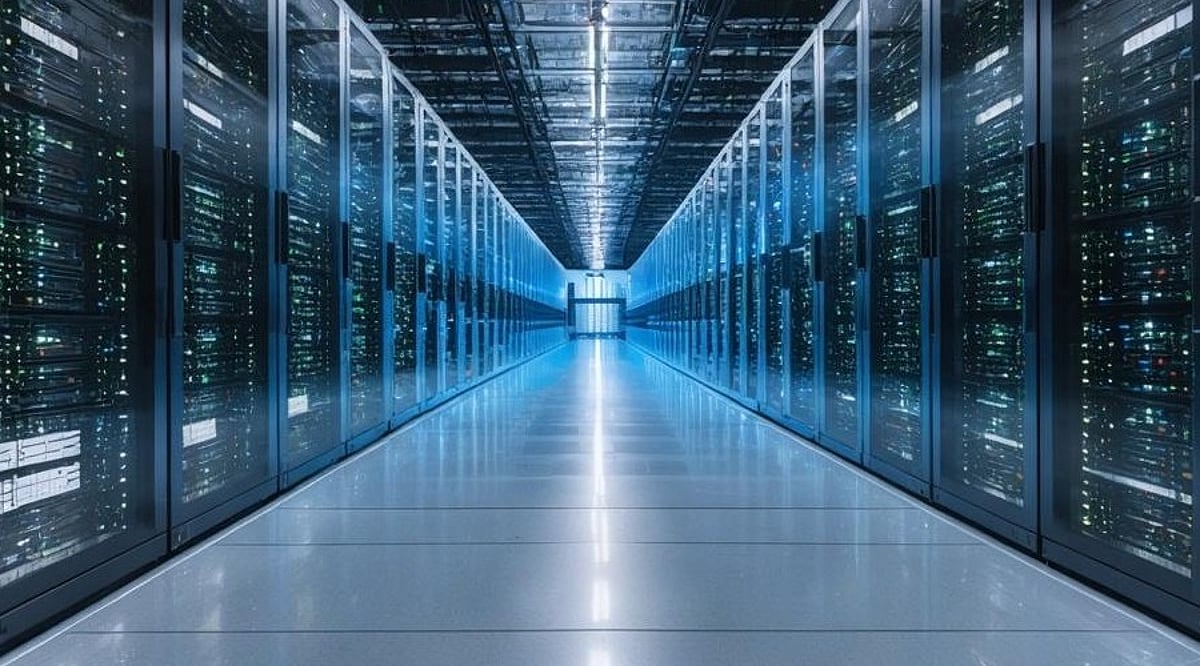
    India’s push for sovereign AI infrastructure has received a major boost as HCLTech announces a massive Rs. 14,257 crore investment in a new AI data centre in Odisha. The facility will be part of the state’s upcoming Sovereign AI Park in Bhubaneswar, marking one of the largest commitments to domestic AI computing power to date.

    HCLTech is collaborating with Sarvam AI and the Odisha government on the project. Together, they aim to build robust AI compute capacity for government agencies, businesses, and research institutions, reducing India’s reliance on overseas AI infrastructure.

    What the Data Centre Will Deliver

    The new data centre will combine HCLTech’s full suite of AI capabilities with Sarvam AI’s foundational models. This integration will power AI applications and infrastructure for a wide range of users, from public sector entities to private enterprises and academic researchers.

    India’s demand for secure, homegrown computing resources has been accelerating rapidly. This data centre directly addresses that need, signaling a strategic shift away from depending on foreign AI infrastructure.

    A Bigger Push for Odisha

    Beyond the data centre, HCLTech plans to establish a technology delivery hub in Bhubaneswar with a capacity of 5,000 employees. The hub is expected to begin operations by 2028.

    Together, these two projects are anticipated to create thousands of direct and indirect jobs, significantly strengthening Odisha’s technology ecosystem. This investment follows HCLTech’s earlier funding round in Sarvam AI, reflecting the company’s broader strategy to expand into AI infrastructure, models, and enterprise tools.

    Also read: Airtel partners with Google to establish India’s first mega AI hub and data center in Visakhapatnam

  • Best Indian Web Development Companies for 2026: Trusted by Businesses

    Best Indian Web Development Companies for 2026: Trusted by Businesses

    Introduction

    As businesses increasingly move online, choosing the right web development partner is critical. India has emerged as a global hub for web development, offering a blend of technical expertise, scalability, and cost-effectiveness. Here are the top Indian web development companies that businesses trust in 2026.

    1. TCS: Enterprise-Grade Web Development

    TCS delivers secure, scalable digital platforms for large enterprises requiring complex integrations, cloud capabilities, and long-term technology support.

    2. Infosys: AI-Powered Digital Experiences

    Infosys combines web development with artificial intelligence, cloud computing, automation, and digital transformation for modern enterprise applications.

    3. HCLTech: Complex Technology Ecosystems

    HCLTech builds enterprise web platforms integrated with backend systems, cloud infrastructure, cybersecurity frameworks, and advanced digital engineering capabilities.

    4. Tech Mahindra: Industry-Focused Solutions

    Tech Mahindra develops customized web solutions for telecommunications, manufacturing, healthcare, banking, and businesses undergoing large-scale digital transformation.

    5. Aalpha Information Systems: Custom Development

    Aalpha provides full-stack development, e-commerce platforms, custom software, and mobile applications for businesses seeking flexible technology partnerships.

    6. Emizen Tech: E-commerce Expertise

    Emizen Tech focuses on web development, e-commerce platforms, custom software, and digital solutions designed for businesses across multiple industries.

    7. IndiaNIC: Digital Product Development

    IndiaNIC helps businesses create custom websites, web applications, software products, and digital platforms tailored to specific operational requirements.

    8. Hidden Brains: Enterprise Digital Transformation

    Hidden Brains offers web applications, enterprise software, cloud solutions, and emerging technologies for organizations pursuing long-term digital innovation.

    9. Acodez IT Solutions: Design And Development

    Acodez combines responsive web design, development, e-commerce capabilities, and digital solutions to help businesses build engaging online experiences.

  • Top 7 Companies Offering Massive Manager Salaries in 2026: AI, Equity, and More

    Top 7 Companies Offering Massive Manager Salaries in 2026: AI, Equity, and More

    Overview

    AI is reshaping compensation: Managers with artificial intelligence, machine learning, and advanced computing expertise command premium salaries across leading technology companies. Equity drives earnings: Stock grants and performance incentives significantly increase total compensation beyond base salaries at major global technology firms. Leadership demand is rising: Companies increasingly reward managers who can lead large teams, deliver complex products, and manage high-impact technology programs.

    Management roles in technology have become some of the most lucrative positions in the global job market. In this tech-powered world, compensation at leading companies increasingly reflects the value of AI expertise, technical leadership, and the ability to manage large-scale engineering organizations.

    Companies Offering Highest Salary Packages to Managers

    These companies offer some of the strongest salaries across tech, finance, consulting, e-commerce, and product roles. Their pay ranges, bonuses, and stock options set them apart. You get high-value roles, fast growth, and exposure to global projects. Here are the best companies paying high salary packages to managers in 2026.

    Meta

    Meta has one of the best compensation structures for managers of software engineers. Reported compensation packages in US dollars range from ₹5.14 crore to ₹34.06 crore per year, depending on experience. The median compensation is around ₹7.30 crore per year. Equity constitutes a major portion of total compensation packages. Managers involved in artificial intelligence, machine learning, infrastructure, and large-scale engineering earn the best packages.

    Google

    Software engineers at Google earn roughly ₹3.66 crore to ₹18.91 crore per year on average in total compensation. The median package is nearly ₹6.22 crore. Google compensates employees through a combination of base salary, annual bonuses, and stocks. Engineers who manage important AI, cloud, and engineering projects get hefty compensation packages.

    Nvidia

    Nvidia’s technical expertise in AI leadership has increased its importance. Software engineering managers are earning approximately ₹3.59 crore to ₹6.66 crore per year, with a median salary of around ₹5.50 crore. Senior managers receive approximately ₹5.86 crore, while directors earn about ₹6.66 crore.

    Microsoft

    Microsoft continues to provide premium pay for managers working in artificial intelligence, cloud computing, cybersecurity, and enterprise software. Reported packages for engineering managers start from ₹3.38 crore, with top positions earning more. Base pay, year-end bonuses, and RSUs form the basic components of the package.

    Amazon

    Amazon’s Engineering Management salary packages depend on the size of its cloud and technology business. Salary for software engineering managers in the United States starts from about ₹2.95 crore and goes up to nearly ₹18.26 crore, with a median of roughly ₹4.95 crore. Cloud, AI, and infrastructure are among the most lucrative domains. Amazon also pays well in India, where software development managers earn an annual salary range between ₹86.2 lakh and ₹5.49 crore, median around ₹1.42 crore.

    Apple

    Apple offers substantial compensation to software engineering managers, especially those working on strategic products, platforms, and advanced technologies. In India, software engineering manager compensation ranges from approximately ₹1.49 crore to ₹2.56 crore annually, with a median total compensation of nearly ₹1.68 crore. Equity represents a significant portion of the overall package.

    HCLTech

    HCLTech focuses on exceptional remuneration at the pinnacle of the tech industry in India. For FY26, HCLTech’s CEO C Vijayakumar received about ₹176.47 crore in total compensation, including salary, bonuses, stock-based rewards, and other components. While not a manager-level figure, it shows the earning potential for tech industry leaders.

    Compensation Comparison Table

    Company Low (₹ crore/year) Median (₹ crore/year) High (₹ crore/year)
    Meta 5.14 7.30 34.06
    Google 3.66 6.22 18.91
    Nvidia 3.59 5.50 6.66
    Microsoft 3.38 — —
    Amazon (US) 2.95 4.95 18.26
    Apple (India) 1.49 1.68 2.56
    HCLTech (CEO) — — 176.47

    Note: US compensation figures converted at approximately ₹96.5 per US dollar; total compensation includes salary, stock, and bonuses where reported.

    Why Managerial Pay Is Rising

    The most generous bonuses go to positions related to AI, cloud computing, and advanced computing. The demand for leaders capable of assembling teams, managing complex infrastructure, and delivering products globally is intense.

    Stock-based compensation also plays a central role. At companies such as Meta, Google, and Nvidia, equity can represent a substantial share of total annual earnings. As a result, headline salary figures often understate the value of senior management packages. Looking ahead, technical managers responsible for high-value AI projects and infrastructure will get the most attractive compensation packages.

    Frequently Asked Questions

    1. Which company pays managers the highest salaries in 2026? Meta offers among the highest reported compensation packages, with senior software engineering managers potentially earning millions through salary, bonuses, and equity.
    2. Why are technology managers earning such high salaries? Technology managers combine leadership expertise with technical knowledge, enabling companies to execute complex AI, cloud, infrastructure, and software projects at global scale.
    3. Does total compensation include only the manager’s salary? No. Total compensation typically includes base salary, annual bonuses, stock awards, and other incentives, which can significantly increase a manager’s overall earnings.
    4. Which skills can help managers secure higher compensation? Artificial intelligence, machine learning, cloud computing, cybersecurity, infrastructure management, and large-scale engineering leadership remain among the most valuable skills for managers.
    5. Are these salary packages available to managers worldwide? Compensation varies by country, role, and seniority. The highest figures generally come from US-based technology roles and executive positions at global companies.
  • Top Indian Web Development Companies to Partner With in 2025

    Top Indian Web Development Companies to Partner With in 2025

    India is home to some of the world’s most capable web development firms, offering everything from enterprise-grade applications to agile digital experiences. Whether you need a robust e-commerce platform, a cloud-native solution, or AI-powered customer portals, these Indian companies lead the market with proven expertise and global reach.

    Tata Consultancy Services (TCS): TCS delivers enterprise-grade web development, cloud integration, digital transformation, and scalable business applications for global organizations across multiple industries.

    Infosys: Infosys specializes in custom web applications, AI-powered digital experiences, responsive websites, and enterprise modernization solutions tailored to evolving business requirements worldwide.

    HCLTech: HCLTech provides secure web development, cloud-native applications, API integration, and digital engineering services that help businesses accelerate online transformation and growth.

    Wipro: Wipro builds responsive websites, enterprise portals, e-commerce platforms, and customer-focused digital experiences using modern technologies and agile development methodologies efficiently.

    Tech Mahindra: Tech Mahindra develops scalable web platforms, digital commerce solutions, customer engagement portals, and cloud-enabled applications for businesses across diverse sectors globally.

    LTIMindtree: LTIMindtree combines digital engineering, UI/UX expertise, cloud technologies, and application modernization to create high-performance web solutions for modern enterprises and startups.

    Persistent Systems: Persistent Systems focuses on custom web applications, SaaS platforms, API development, and cloud-based digital products that support innovation and business scalability effectively.

    Net Solutions: Net Solutions offers product engineering, web development, e-commerce solutions, and user-centric digital experiences for startups, enterprises, and fast-growing technology companies worldwide.

    OpenXcell: OpenXcell delivers affordable custom website development, web applications, e-commerce platforms, and dedicated development teams for businesses seeking scalable digital solutions.