Tag: Healthcare

  • Leading AI Clinical Trial Companies Shaping Drug Development in 2026

    Leading AI Clinical Trial Companies Shaping Drug Development in 2026

    Discover the top companies leveraging artificial intelligence to transform clinical trials and accelerate drug development in 2026.

    • IQVIA: Combines AI-powered analytics with clinical research expertise to accelerate trial execution.
    • Tempus AI: Uses AI and real-world healthcare data to improve precision medicine and clinical research.
    • Saama: AI-driven clinical analytics platform helping sponsors improve trial efficiency and data quality.
    • Medidata: Leverages AI and cloud technology to streamline decentralized and digital clinical trials.
    • Insilico Medicine: Uses generative AI to discover drug candidates and optimize clinical development timelines.
    • Owkin: Applies federated AI to analyze healthcare data while preserving patient privacy.
    • Deep 6 AI: Accelerates patient recruitment by using AI to match eligible participants quickly.
    • Unlearn AI: Creates AI-generated digital twins that enhance clinical trial design and reduce placebo requirements.
  • Trump’s Phased Tariff Plan on Generic Drugs Threatens India’s Pharma Export Dominance

    Trump’s Phased Tariff Plan on Generic Drugs Threatens India’s Pharma Export Dominance

    US President Donald Trump has announced a phased tariff plan for imported generic medicines, offering a two-year window before imposing sharply higher duties. The proposal, aimed at encouraging pharmaceutical companies to shift manufacturing to the United States, could have significant implications for India’s export-driven generic drug industry.

    Under the plan, imported generic medicines will face zero tariffs for the next two years. Beginning in August 2028, the US will levy a 100 percent tariff for one year, followed by a 200 percent tariff thereafter. The policy is scheduled to take effect from August 1, 2026.

    Why India Has Most at Stake

    India is one of the major exporters of cheap generic drugs across the globe and holds an important place in the healthcare sector of the United States. Generic drug companies in India are responsible for almost 40 percent of generic drugs sold in the United States by volume, making them highly susceptible to any restrictions on their exports.

    According to the Global Trade Research Initiative (GTRI), India exported pharmaceuticals worth US$9.7 billion to the US during FY2024-25. This accounted for 38 percent of India’s total pharmaceutical exports.

    Industry Braces for Long-Term Impact

    Though the two-year grace period will give firms some breathing space, industry watchers feel that the new tariff structure will change the landscape of the pharmaceuticals business. Companies might be forced to think about increasing production facilities in America or rethinking their export strategy.

    The development is also likely to have an impact on the stock markets, with the stocks of certain Indian pharmaceutical giants facing pressure.

    Part of Trump’s Manufacturing Push

    This tariff idea is one of the latest attempts made by President Trump to ensure the production of pharmaceuticals in the US again. It is believed that such actions will result in lower dependence on imported drugs and help to make supply chains more secure. However, it may become another point of discussion regarding increased healthcare expenses and the international generic drug trade.

  • 10 Biotechnology Breakthroughs Transforming Modern Healthcare

    10 Biotechnology Breakthroughs Transforming Modern Healthcare

    The field of biotechnology is advancing at an unprecedented pace, bringing revolutionary changes to how we diagnose, treat, and prevent diseases. Here are ten key breakthroughs that are reshaping healthcare today.

    CRISPR Gene Editing

    This powerful tool enables precise modifications to DNA, offering promising treatments for inherited disorders, advancing cancer research, and paving the way for personalized medicine with unprecedented genetic accuracy.

    mRNA Vaccines

    The rapid development of mRNA vaccines has revolutionized infectious disease prevention, and the same technology is now being explored for cancer therapies and treatments for rare medical conditions.

    CAR-T Cell Therapy

    By engineering a patient’s own immune cells to target cancer more effectively, CAR-T cell therapy provides new hope for those with difficult-to-treat blood cancers around the world.

    Liquid Biopsies

    These tests detect cancers using simple blood samples, enabling earlier diagnosis, reducing the need for invasive procedures, and improving monitoring of treatment effectiveness over time.

    Personalized Medicine

    Using genetic information to tailor treatments improves effectiveness while reducing side effects across multiple diseases and diverse patient populations globally.

    AI-Assisted Drug Discovery

    Artificial intelligence accelerates the identification of promising drug candidates, shortening research timelines and helping pharmaceutical companies develop innovative treatments faster than ever before.

    Regenerative Medicine

    Stem cells and tissue engineering are being used to repair damaged organs, offering hope for treating chronic diseases and severe injuries that were once considered irreversible.

    Synthetic Biology

    By designing biological systems and engineered microorganisms, scientists can produce medicines, vaccines, and therapeutic proteins more efficiently and at lower cost.

    Wearable Biosensors

    Continuous monitoring of health indicators through wearable devices enables early disease detection, personalized care, and real-time medical insights for both patients and healthcare providers.

  • Metal Additive Manufacturing: Transforming Production in 2026 and Beyond

    Metal Additive Manufacturing: Transforming Production in 2026 and Beyond

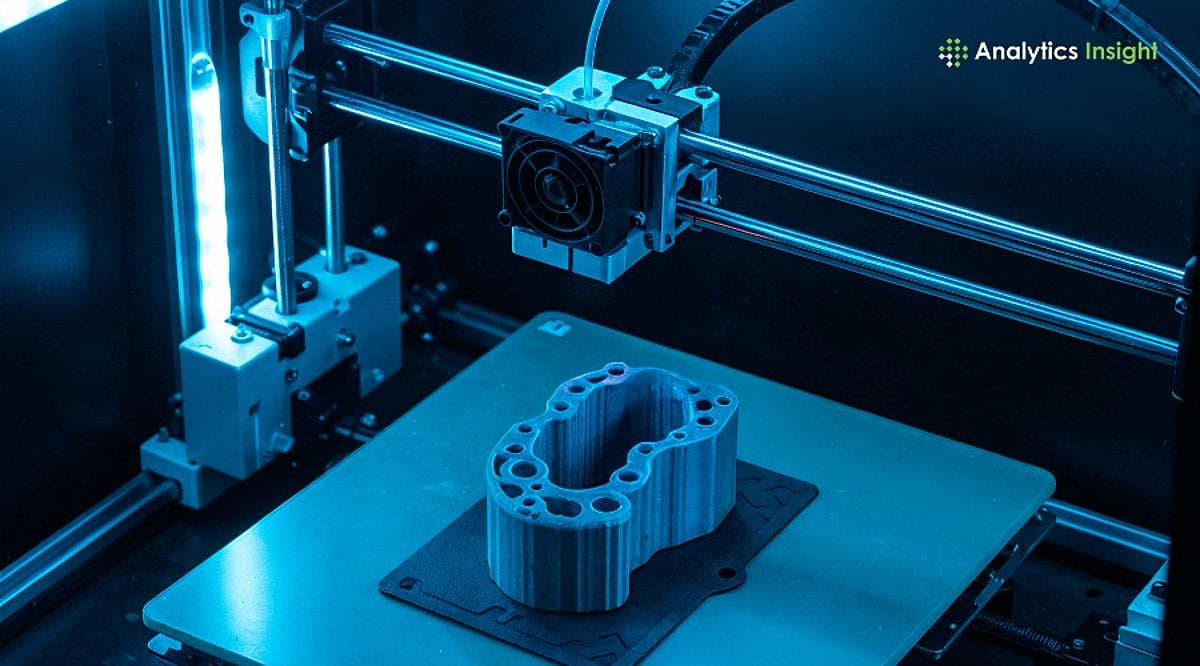
    Metal 3D printing has evolved from a prototyping novelty into a mainstream production technology. In 2026, industries worldwide are leveraging it to create stronger, lighter, and more complex metal parts while drastically reducing waste and lead times. With AI-driven quality control, faster printers, and advanced materials, metal additive manufacturing is reshaping aerospace, automotive, healthcare, and defense sectors.

    Less Waste, Stronger Parts

    Traditional machining cuts away material from a solid block, generating significant scrap. Metal 3D printing builds parts layer by layer, using only the metal needed for the final component. This reduces material costs and enables intricate geometries that are impossible with conventional methods. The resulting parts are often lighter yet equally strong, improving energy efficiency in vehicles and machinery.

    Aerospace Leads Adoption

    Aircraft manufacturers are among the biggest adopters. By printing lightweight components, they cut fuel consumption and carbon emissions. Consolidating multiple smaller parts into a single printed piece enhances structural integrity and reduces failure points. Defense contractors also rely on metal 3D printing for mission-critical parts, and large-scale printing facilities are now common.

    Automotive Gains Speed and Flexibility

    Car makers use metal 3D printing for engine components, cooling systems, tools, and custom parts. This accelerates time-to-market and allows digital inventory management—companies store digital files instead of physical spare parts, printing replacements on demand and saving storage and logistics costs.

    Healthcare Personalization

    Medical applications benefit from custom implants tailored to individual patients. Titanium, favored for its strength, lightness, and biocompatibility, is widely used for dental crowns, hip and knee implants, spinal and skull implants, and surgical tools. Better-fitting implants improve patient recovery outcomes.

    Market Growth Projection

    The global metal 3D printing market is expected to grow from $15 billion in 2026 to $102 billion by 2035, a compound annual growth rate of about 24%. Factories are investing heavily in smart machinery, automation, and digital technologies.

    AI Enhances Quality and Efficiency

    Artificial intelligence checks designs before printing, optimizes build parameters, and monitors each layer in real time to detect flaws. Digital twins—virtual replicas of physical products—allow engineers to test and refine designs without material waste, saving time and money.

    New Materials Expand Possibilities

    Researchers continue developing advanced alloys, including stronger aluminum, titanium, stainless steel, nickel alloys, and cobalt-chrome. A recent breakthrough enables a single printer to combine multiple metal alloys in one print by adjusting laser parameters via software, opening the door to novel, high-performance products.

    Faster Machines and Greater Throughput

    Modern metal printers use multiple lasers, larger build volumes, and robotic post-processing. Some jobs that once took weeks or months now finish in days, making metal 3D printing viable for medium-to-large production runs.

    Environmental Benefits

    By using only necessary material and enabling localized production, metal 3D printing reduces waste and transportation emissions. Digital inventories replace vast warehouses, and longer-lasting parts mean fewer replacements—contributing to a more sustainable manufacturing ecosystem.

    Challenges Remain

    High machine and material costs persist. Many printed parts require post-processing such as polishing, heat treatment, or inspection. There is also a shortage of skilled operators. However, as technology matures and adoption scales, these barriers are gradually being overcome.

    Frequently Asked Questions

    What is metal 3D printing?

    It is an additive manufacturing process that builds metal objects layer by layer from a digital 3D model.

    Which industries use it most?

    Aerospace, automotive, healthcare, defense, energy, and industrial manufacturing are the primary adopters.

    Why is it becoming popular?

    It reduces waste, shortens production times, enables complex geometries, and supports rapid prototyping and low-volume production.

    How does AI help?

    AI optimizes designs, monitors print quality in real time, detects anomalies, and improves overall process reliability.

    What is the future outlook?

    Experts predict sustained rapid growth as costs fall, materials improve, and more manufacturers integrate metal 3D printing into mainstream production.

  • Best Stocks to Buy Now With $3,000: Turn a Small Investment Into Long-Term Wealth

    Best Stocks to Buy Now With $3,000: Turn a Small Investment Into Long-Term Wealth

    Investing doesn’t require a fortune. With just $3,000, you can build a diversified portfolio of high-quality stocks that have strong growth potential. Here are some of the top picks for long-term wealth creation.

    NVIDIA (NVDA)

    The AI chip leader continues to benefit from booming demand for data centers and artificial intelligence. NVIDIA’s GPUs are essential for training large language models and powering AI applications, making it a core holding for any tech-focused portfolio.

    Microsoft (MSFT)

    Its cloud business (Azure) and AI investments, including its partnership with OpenAI, make Microsoft one of the strongest long-term technology stocks. The company’s diversified revenue streams from productivity software, gaming, and enterprise services provide stability and growth.

    Amazon (AMZN)

    Beyond e-commerce, Amazon’s cloud platform (AWS) and AI services continue driving future growth. AWS remains the dominant cloud provider, and Amazon’s logistics network and advertising business add further upside.

    Alphabet (GOOGL)

    Google’s AI expansion and advertising business keep Alphabet among the market’s strongest performers. The company’s search dominance, YouTube growth, and investments in autonomous driving (Waymo) and cloud computing provide multiple growth engines.

    Meta Platforms (META)

    Meta is investing heavily in AI while maintaining strong revenue from digital advertising. Its social media platforms (Facebook, Instagram, WhatsApp) generate massive user engagement, and its metaverse and AI initiatives could unlock new revenue streams.

    Broadcom (AVGO)

    Its semiconductor and infrastructure software businesses continue benefiting from enterprise AI demand. Broadcom’s networking chips are critical for data centers, and its software acquisitions (VMware) provide recurring revenue.

    Eli Lilly (LLY)

    Strong demand for weight-loss and diabetes treatments makes Eli Lilly a healthcare favorite. Its drugs like Mounjaro and Zepbound have blockbuster potential, and the company’s pipeline includes promising treatments for Alzheimer’s and other conditions.

    Visa (V)

    Global digital payments continue expanding, giving Visa steady long-term growth potential. As cash transactions decline worldwide, Visa’s network effects and transaction volume growth provide reliable returns.

    Disclaimer: This article is for informational purposes only and does not constitute financial advice. Always do your own research before investing.

  • How Kiran Veernapu Is Using AI to Turn Enterprise Data Into Better Patient Outcomes

    How Kiran Veernapu Is Using AI to Turn Enterprise Data Into Better Patient Outcomes

    Kiran Veernapu has spent more than 25 years building the data systems that large organizations rely on to make decisions. His work spans healthcare, aviation, manufacturing, and enterprise technology, but the underlying challenge remains constant: turning scattered, inconsistent information into actionable insights.

    Starting in data architecture and business intelligence, Veernapu designed the warehouses and pipelines that move information through organizations. As machine learning matured, his focus shifted toward predictive analytics and clinical decision support—where the stakes are higher because a wrong answer at the point of care costs more than a wrong quarterly report.

    Much of his recent work centers on Clinical Decision Support Systems (CDSS), which sit between complex medical data and clinicians who need clear, timely answers while treating patients. The results are measurable. His AI and automation initiatives have produced tens of millions of dollars in savings, cut billing and inventory errors by double digits, and kept supply chains performing at benchmark levels for eight consecutive years.

    Research Meets Real-World Deployment

    Veernapu is also an active researcher and reviewer, authoring 25 peer-reviewed articles on healthcare AI and predictive analytics that have been cited and downloaded across more than 29 countries. He reviews manuscripts for Elsevier, Springer, Wiley, IGI Global, and MDPI, and has evaluated over 60 submissions for major IEEE, Springer, and Elsevier venues. He serves as a session chair, program committee member, and judge at international conferences, and is a Senior Member of IEEE.

    His research and his day job feed each other. Academic work surfaces new methods, and enterprise deployment tests whether those methods hold up once real data and real workflows get involved. That loop shapes his approach to AI at scale. “The algorithm is rarely the hard part,” he says. “Data quality, governance, and fitting a system into the way people already work are what determine whether a strong model delivers anything at all.”

    Looking Ahead: The Next Wave of Healthcare AI

    Looking forward, Veernapu points to AI-driven clinical decision support, remote patient monitoring, wearable health technology, and ambient clinical intelligence as the developments most likely to change care delivery. Each moves healthcare toward earlier intervention and more personalized treatment—and each depends on the real-time data infrastructure he has spent his career building.

    Beyond his technical work, he serves on the Utah STEM Education Advisory Council and speaks for academic programs internationally. He is currently pursuing a PhD in AI and machine learning applied to wearable devices and clinical bioinformatics. His advice to newcomers: “Start with a problem worth solving. Technology changes quickly. The ability to understand a business or clinical need and translate it into a working system is what creates impact that lasts.”

    The next generation of healthcare innovation will empower clinicians with intelligence of precision care, diagnostic accuracy, disease prediction, making patient care more reachable and affordable. The future of healthcare lies in turning data into better decisions. Clinical Decision Support Systems will help clinicians access timely insights, improve patient outcomes, reduce the cost of care, and enable more personalized and proactive treatment strategies.

  • Morning Tech Roundup: OpenAI Debuts Jalapeño AI Chip, Leyden Labs Secures €40M, and More

    Morning Tech Roundup: OpenAI Debuts Jalapeño AI Chip, Leyden Labs Secures €40M, and More

    Good morning, tech enthusiasts! Here’s your quick roundup of the biggest stories making headlines today—from artificial intelligence and healthcare to careers, consumer technology, and cryptocurrency.

    OpenAI Unveils First In-House AI Inference Chip

    OpenAI has introduced its first self-developed AI inference chip, named Jalapeño, built in collaboration with Broadcom. The chip is designed to speed up AI responses while consuming less power, marking a strategic step toward reducing OpenAI’s reliance on Nvidia and lowering computing costs. Early tests have yielded strong results, and the company plans to deploy the chip for customer services later this year as part of its long-term hardware strategy.

    Leyden Labs Raises €40M for Broad Flu Protection Nasal Spray

    Dutch biotech firm Leyden Labs has secured €40 million to advance its PanFlu nasal spray through clinical trials. The spray delivers antibodies directly into the nose to block influenza viruses before they spread in the body. Unlike traditional flu vaccines, this approach may also benefit individuals with weakened immune systems. The funding will support further research, expand work on other respiratory viruses, and improve access in lower-income countries.

    Fresh Graduate Left Without Job After Campus Offer Revoked

    A recent engineering graduate has shared their distress online after the company that hired them through campus placements revoked its job offer following graduation. With no internship or work experience, the graduate now faces significant challenges in finding a new position. They have asked for guidance rather than sympathy, highlighting a growing concern among new graduates in a volatile job market.

    Tech Giants Look Beyond Phone Screens

    Major tech companies are increasingly focusing on screen-free devices such as smart glasses, AI earbuds, and AI pendants. The goal is to reduce reliance on smartphones for everyday tasks. However, privacy and public trust remain significant hurdles. While phones are not disappearing, screen-free tools may gradually reshape how people interact with technology.

    Bitcoin May Face More Weakness Before Recovery

    Bitcoin could remain under pressure for another quarter before reaching a major market bottom, according to analysts tracking its four-year cycle. Prices may stay weak through the third quarter, though long-term indicators—including market value, ETF demand, and global money supply—point to a potential rebound later in the year. Until then, caution is advised, especially if Bitcoin stays below key price levels.

    Stay tuned for more updates throughout the day.

  • How AI Is Reshaping Key Careers: From Customer Support to Healthcare

    How AI Is Reshaping Key Careers: From Customer Support to Healthcare

    As artificial intelligence continues to evolve, its impact on the workforce is undeniable. While some fear job displacement, AI is actually transforming roles rather than eliminating them entirely. Here’s a look at ten careers experiencing the most significant changes as AI becomes a workplace collaborator.

    Customer Support

    AI chatbots now handle routine inquiries, freeing up human agents to tackle complex, high-emotion issues that require empathy and nuanced judgment.

    Content Writing

    AI accelerates content creation by generating drafts and data-driven pieces, but human creativity, storytelling, and brand voice remain irreplaceable.

    Software Development

    Developers leverage AI-powered coding assistants (like GitHub Copilot) to write code faster, debug efficiently, and automate repetitive tasks, boosting overall productivity.

    Graphic Design

    AI tools can generate visuals in seconds, allowing designers to focus on strategy, concept development, and creative direction rather than manual execution.

    Accounting

    Automation handles data entry, invoicing, and reconciliation, shifting accountants’ work toward analysis, advisory, and strategic financial planning.

    Marketing

    AI enhances targeting by analyzing consumer behavior, yet human marketers still drive campaigns with creative intuition and ethical decision-making.

    Healthcare

    AI assists in diagnosing diseases, analyzing medical images, and managing patient data, while physicians retain final authority and patient interaction.

    Human Resources

    Recruiters use AI screening tools to filter resumes and identify candidates, but human evaluation ensures cultural fit and fair assessment.

    AI isn’t replacing humans—it’s augmenting our abilities. The careers that adapt will see workers focus on higher-value tasks that demand emotional intelligence, creativity, and strategic thinking.

  • AI and Digital Transformation Video Roundup: AWS, IBM, Toyota, and More

    AI and Digital Transformation Video Roundup: AWS, IBM, Toyota, and More

    Stay up to date with the latest insights on artificial intelligence, supply chain modernization, and digital transformation. This curated collection of videos features industry leaders from AWS, IBM, Deloitte, Toyota, Oracle, and other top organizations discussing how they leverage AI and data-driven strategies to drive innovation.

    • Bill Foy: How AWS is Modernising Supply Chains With AI – Learn how AWS applies AI to streamline logistics and inventory management.
    • Clay Sheriff: IBM Helps Toyota Reimagine Supply Chain – Explore IBM’s collaboration with Toyota to build a more resilient, AI-powered supply chain.
    • Deloitte’s Matt Fiorino on Modernising University IT – Deloitte shares approaches for transforming legacy university systems into agile digital platforms.
    • Ascentt’s Nilesh Vyas on Microtransformation at Toyota – A deep dive into incremental AI-driven changes that yield big results at Toyota.
    • Inside the University of Cincinnati’s Digital Transformation – See how the university is leveraging technology to enhance operations and student experience.
    • Toyota North America’s AI & Data-Driven Supply Chain Revamp – Toyota’s strategy for using AI and data analytics to optimize its North American supply chain.
    • Eaton’s Armand van Niekerk on Africa’s Digital Expansion – Eaton’s perspective on scaling digital and AI capabilities across African markets.
    • Lisa Gulker: How Oracle Helps Transform Healthcare Delivery – Oracle’s vision for AI and cloud solutions in modernizing healthcare workflows.

    More videos are available on the source page. Watch and learn from today’s leading digital transformation pioneers.

  • India’s AI Startup Ecosystem Expands Beyond Bengaluru: Key Hubs and Specializations

    India’s AI Startup Ecosystem Expands Beyond Bengaluru: Key Hubs and Specializations

    India’s artificial intelligence ecosystem has entered a new phase. Bengaluru still dominates the funding charts and deep-tech innovation, but the country’s AI growth story no longer revolves around a single city. Hyderabad, Mumbai, Pune, Delhi-NCR, Chennai, and emerging cities like Kochi, Chandigarh, Ahmedabad, and Kolkata are developing specialized strengths in enterprise AI, fintech, healthcare, industrial automation, and language technologies.

    Why Bengaluru Continues to Lead India’s AI Economy

    Bengaluru remains the country’s biggest AI startup destination because of its unmatched scale. The city hosts India’s deepest pool of engineers, startup founders, venture capital firms, and multinational R&D centers. AI companies working on foundational models, cloud infrastructure, and enterprise software continue to choose Bengaluru as their primary base. Notable startups include Sarvam AI, Observe.AI, Mad Street Den, and Uniphore. Global firms have also strengthened Bengaluru’s position, driven by engineering talent and startup density.

    How Hyderabad Turned into India’s Fastest-Growing AI Hub

    Hyderabad has rapidly transformed from an IT outsourcing destination into one of India’s most ambitious AI ecosystems. Government-backed initiatives, better infrastructure, and lower operational costs have encouraged startups to expand aggressively. HITEC City and T-Hub have played a major role in building the ecosystem around enterprise technology and AI innovation. The city has gained traction in conversational AI, enterprise automation, and cloud technologies.

    Why Mumbai’s AI Ecosystem Focuses on Finance and Media

    Mumbai’s AI startup landscape reflects the city’s larger economy. Unlike Bengaluru’s engineering-heavy ecosystem, Mumbai specializes in fintech, advertising technology, and consumer-facing AI products. Banks, financial institutions, media companies, and large enterprises create strong demand for AI-driven analytics and automation tools. AI firms in Mumbai work on fraud detection, financial analytics, personalized advertising, and generative content systems.

    How Delhi-NCR Became a Major AI Innovation Corridor

    Delhi-NCR has quietly emerged as one of India’s strongest AI startup regions. The ecosystem spreads across Gurugram, Noida, and Delhi, creating a large network of enterprise software firms, logistics platforms, and edtech startups. AI companies operating in automation, mobility, and cloud infrastructure are increasingly based in the region. The region also benefits from access to policymakers and government-backed technology initiatives.

    Why Pune is Becoming an Engineering and Industrial AI Center

    Pune’s AI rise comes from its strong engineering and manufacturing base. The city is home to major automotive companies, industrial firms, and educational institutions, creating demand for AI-powered automation and predictive technologies. Startups in robotics, supply-chain optimization, and industrial analytics are increasingly choosing Pune. Lower operating costs and access to skilled engineering talent further strengthen its ecosystem.

    How Chennai Built a Strong Presence in Healthcare and Industrial AI

    Chennai’s AI ecosystem has developed around manufacturing, mobility, and healthcare. The city’s long-standing automotive and industrial network created early demand for AI-led automation. Healthcare technology has emerged as another important sector, with AI startups working on diagnostics, medical imaging, and hospital management systems. Engineering institutions and research centers continue supporting innovation in robotics, mobility technology, and semiconductor research.

    Why Ahmedabad is Emerging as a Growing AI Startup Destination

    Ahmedabad represents the expansion of India’s AI economy beyond Mumbai into western India. The city’s strong business culture and manufacturing ecosystem have encouraged startups building automation and analytics solutions for SMEs and industrial firms. AI companies in Ahmedabad focus on retail intelligence, logistics, and operational software. Lower business costs and faster operational execution are major advantages.

    How Kolkata is Building a New AI Startup Identity

    Kolkata entered the AI startup race later than most major cities, but the ecosystem has begun to show steady growth. Lower operating costs and a strong technical education network have helped several startups emerge in analytics, edtech, and language technologies. University incubators and state-backed innovation programs continue to support early-stage companies. Founders focus on niche areas such as regional-language AI and civic technology.

    Why Kochi and Chandigarh are Attracting the Next Generation of Founders

    India’s AI boom isn’t restricted to metros anymore. Kochi and Chandigarh have started luring startups because of cheaper costs, better infrastructure, and remote work capabilities. Kochi’s ecosystem revolves around health-tech, digital products, and marine technologies. Chandigarh has evolved into a thriving hub for SaaS and enterprise software startups targeting northern India. Remote working practices have lowered the need to recruit from Bengaluru-centric centers.

    Why India’s AI Future Now Belongs to Multiple Cities

    The AI ecosystem in India is slowly breaking free from centralized control. While Bengaluru continues to lead in funding, talent, and startups, other cities have found their own ways to attract entrepreneurs and venture capitalists. Hyderabad comes across as the key city for business development. Mumbai acts as the engine for AI implementation by businesses. Pune serves as the engine for industrial AI research and development. The Delhi-NCR region acts as the engine for both business software and governance technology. Smaller cities are now part of the conversation. The current Indian startup ecosystem has transformed into a diverse network of innovation centers, each developing specialized capabilities to drive progress in the artificial intelligence economy.