
Tag: high-bandwidth memory

  • Samsung zHBM: Stacking Memory for Faster AI Workloads

    Samsung zHBM: Stacking Memory for Faster AI Workloads

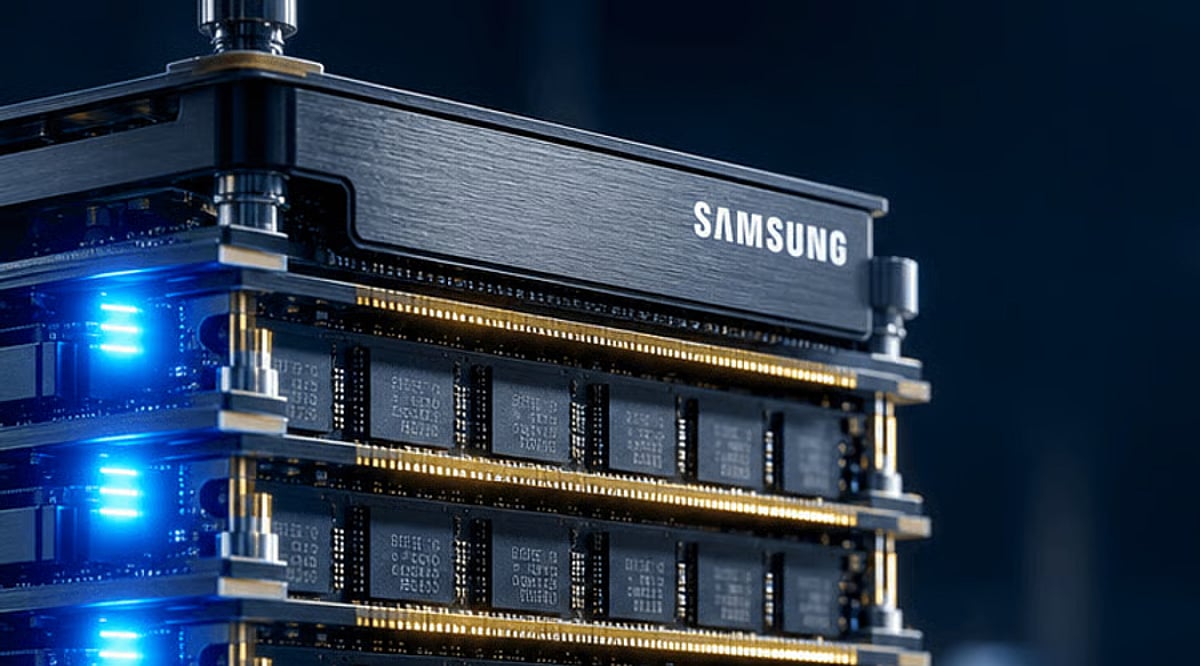
    AI accelerators are becoming increasingly powerful, but moving data between memory and processors can create bottlenecks. Samsung’s zHBM concept takes a different approach by vertically stacking high-bandwidth memory directly above an AI accelerator to shorten the data path.

    Memory Moves Closer

    Traditional HBM sits alongside the processor within advanced packages. Samsung’s zHBM concept places memory vertically above the AI accelerator. Shortening the distance between the two components is designed to improve data movement and support faster processing for demanding AI workloads.

    Higher Bandwidth Is the Goal

    Large AI models constantly move huge amounts of information between compute and memory. Samsung says its next-generation interface system incorporating zHBM is expected to deliver approximately eight times the performance of HBM5, targeting substantially faster AI data processing.

    Density Could Jump

    Samsung says zHBM could achieve more than 10 times the memory density of HBM5 using next-generation wafer-bonding technology. Higher density could allow AI systems to access more memory within compact architectures, potentially supporting increasingly large models and data-intensive workloads.

    Power Efficiency Matters

    Faster AI processing is not useful if energy consumption rises uncontrollably. Samsung says zHBM could improve energy efficiency by three times while reducing thermal resistance by more than half. Those improvements could help address power and heat challenges in high-performance AI systems.

    Custom AI Designs Are Possible

    Samsung says zHBM can support customer-specific designs by allowing customised intellectual property to be integrated into the interlayer between memory and an AI accelerator. This could give customers more flexibility to tailor memory capacity and accelerator performance for specific workloads.

    A Future AI Memory Architecture

    zHBM remains a next-generation concept rather than a mainstream memory product today. However, its vertically integrated design shows where AI hardware could be heading: closer memory, higher bandwidth, greater density and improved efficiency as models continue demanding more computing resources.
  • 7 Key Semiconductor Manufacturing Trends Driving the Industry in 2026

    7 Key Semiconductor Manufacturing Trends Driving the Industry in 2026

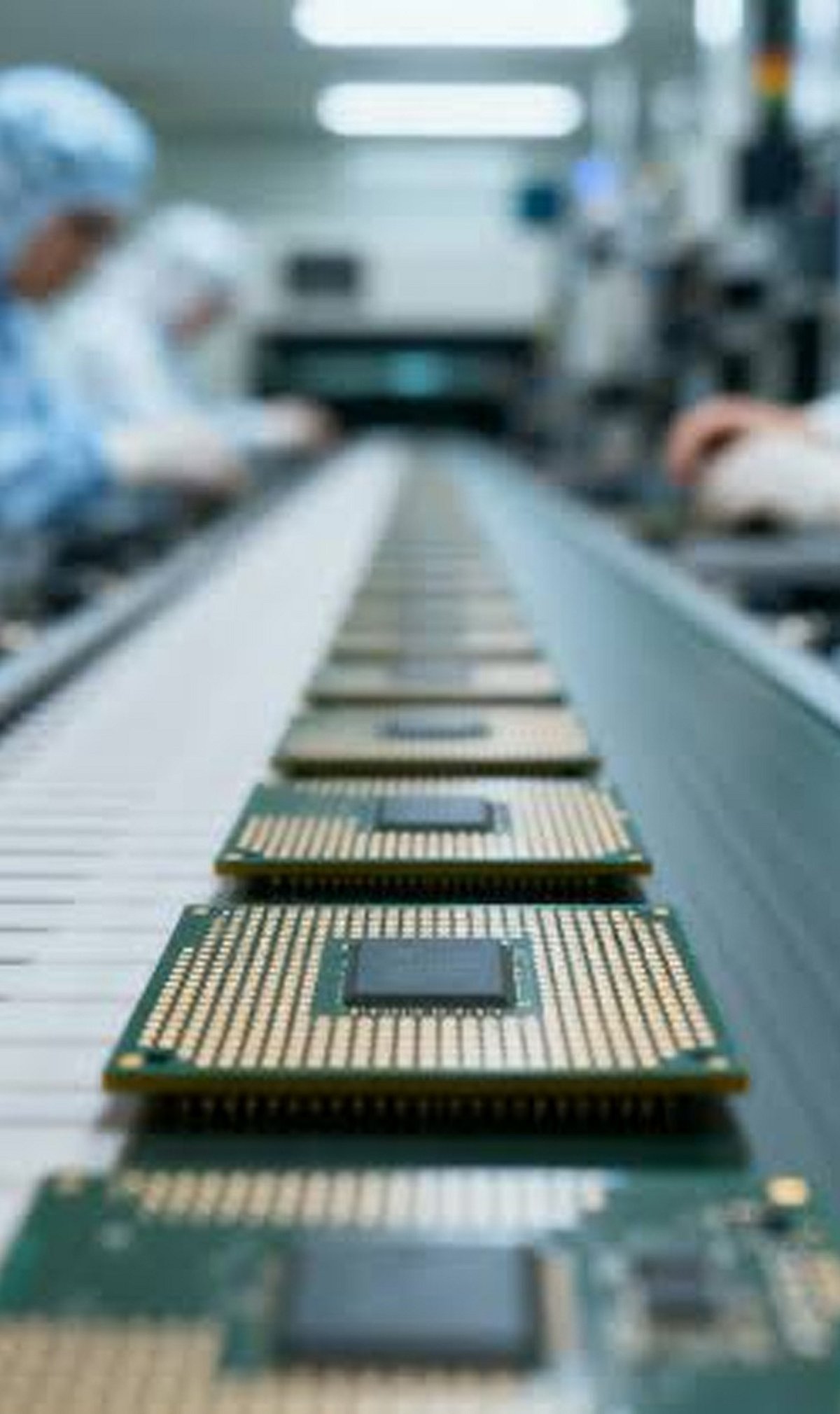
    Semiconductor manufacturing is entering a transformative era, driven by soaring demand for AI and the need for more powerful, efficient chips. In 2026, the industry is moving beyond traditional transistor scaling to embrace a broader set of innovations. Here are the seven key trends reshaping chip production.

    1. 2nm Chips and GAA Transistors

    Chipmakers are advancing toward 2nm-class process technology with gate-all-around (GAA) transistors. These designs deliver higher performance and better power efficiency, but they also increase manufacturing complexity significantly.

    2. Advanced Packaging and Chiplets

    As shrinking individual dies becomes prohibitively expensive, chiplets and 2.5D/3D packaging are gaining traction. By integrating multiple chip components into a single package, manufacturers achieve higher performance and flexibility without relying solely on node shrinks.

    3. High-Bandwidth Memory for AI

    AI workloads demand enormous amounts of fast memory. High-bandwidth memory (HBM) places stacked memory close to powerful processors, enabling faster data movement and reducing processing bottlenecks in AI systems.

    4. Silicon Photonics and Optical Data

    Electrical connections face growing bandwidth and power challenges. Silicon photonics uses light to transmit data at high speeds, making it a critical technology for future AI data centers, networking, and high-performance computing.

    5. SiC and GaN Take on New Roles

    Silicon carbide (SiC) and gallium nitride (GaN) can handle high voltage, heat, and power demands. These materials are becoming essential in electric vehicles, fast chargers, renewable energy systems, and advanced data-center infrastructure.

    6. AI-Powered Smart Factories

    AI is moving inside semiconductor fabs. Machine learning monitors equipment, detects defects, improves yields, predicts maintenance needs, and optimizes production processes in real time, making factories smarter and more efficient.

    7. Chip Supply Chains Are Going Regional

    Geopolitical tensions and supply risks are pushing companies and governments to diversify semiconductor production. New fabs and packaging capacity are being developed across multiple regions to reduce dependence on concentrated manufacturing hubs.

    The semiconductor race is no longer solely about making transistors smaller. Advanced packaging, memory, new materials, optical connectivity, AI-driven production, and regional manufacturing are becoming equally important for the industry’s future.

  • SK Hynix Stock Jumps 13% on Nasdaq Debut After Record $26.5 Billion IPO

    SK Hynix Stock Jumps 13% on Nasdaq Debut After Record $26.5 Billion IPO

    SK Hynix shares surged nearly 13% in their Nasdaq debut on Friday, marking a strong entry into the U.S. market for the South Korean chipmaker. The company’s American depositary receipts opened at $170 and closed at $168.01, well above the $149 offer price.

    The $26.5 billion raised through the sale sets a record for the largest U.S. initial share offering by a foreign company. The listing gives American investors direct access to one of the leading suppliers of memory chips for artificial intelligence systems, amid a busy IPO market.

    Record-Breaking $26.5 Billion Sale

    SK Hynix sold 177.9 million American depositary receipts, with each ADR representing one-tenth of a common share. Demand exceeded available shares by more than seven times, according to reports, allowing the company to price the offer at $149 per ADR.

    The shares traded under the temporary ticker SKHYV during Friday’s when-issued session. Nasdaq said the ticker will change to SKHY on Monday, July 13, when regular trading begins. The company’s main stock market listing will remain on the Korea Exchange.

    AI Memory Demand Fuels Investor Interest

    SK Hynix leads the market for high-bandwidth memory (HBM), a type of chip placed close to advanced processors. HBM provides AI systems with quick access to data for complex computing tasks. Nvidia uses the technology in graphics processors built for data centers.

    Chairman Chey Tae-won said customer demand has remained high as companies expand AI infrastructure. “The demand is enormous, exponentially,” he said. He added that customers asked for more supply after SK Hynix announced plans to double production capacity within five years.

    The company supplies major technology firms, including Nvidia and Apple. Its regulatory filing indicates it holds 56.4% of the HBM market. Samsung Electronics and Micron Technology also produce HBM and storage chips for servers, phones, computers, and other electronic devices.

    New Funding Targets Factories and Equipment

    SK Hynix plans to use the proceeds from the U.S. offering to finance factories and production equipment. The company is expanding capacity as memory shortages raise prices and limit supply across the technology sector. New chip plants take several years to build and prepare for production.

    Part of the expansion includes a $4 billion advanced packaging facility in Indiana. The company also plans large manufacturing projects in South Korea, including a chip cluster in Yongin. These sites will support production of HBM and other memory products for AI servers.

    Memory manufacturing has a long history of sharp supply cycles. High demand can lead chipmakers to add capacity, while later oversupply can push prices lower. SK Hynix said newer uses, including AI agents and robots, require more memory than earlier computing systems.

    The U.S. listing follows a steep rise in SK Hynix’s Korea-listed shares. The stock gained 634% over the past year, supported by higher memory prices and AI spending. Friday’s Nasdaq debut broadens the company’s investor base while its Seoul listing remains active.