
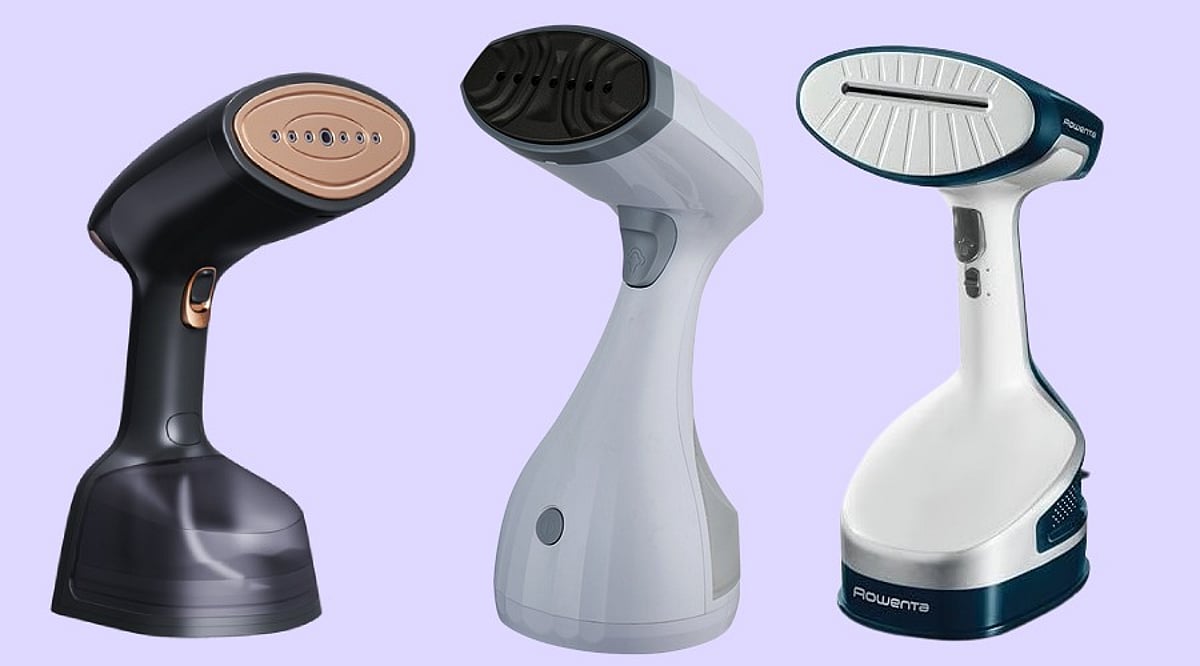
Garment steamers are increasingly common in modern homes, offering a quick way to remove wrinkles without needing a full ironing board. By sending hot steam into fabric fibers, steamers relax wrinkles in shirts, dresses, jackets, curtains, and delicate materials. In India, prices range from ₹1,500 to over ₹12,000, giving buyers plenty of options.
Select the Right Type
Handheld models are ideal for small homes, travel, and quick touch-ups. Standing steamers suit larger families or heavy use: a standing unit can handle 12 or more garments at once, while handheld models are better for daily use with only a few pieces. Standing models also feature larger water tanks and longer steam times.
Check the Wattage Before Purchase
Power directly affects performance. Travel steamers range from 700–1,000 watts, home models from 1,000–1,400 watts, and experts recommend at least 1,500 watts for reliable household use. Heavy-duty standing steamers may reach 1,800–2,000 watts, ideal for heavier fabrics.
Heat-Up Time Saves Valuable Minutes
Premium handheld steamers heat up in 15–30 seconds; good home models in 30–45 seconds; budget options in 45–60 seconds. Fast heating adds convenience during busy mornings.
Steam Output Matters More Than Numbers Alone
Steam output—measured in grams per minute—determines effectiveness. Everyday shirts benefit from 18–20 g/min; dresses from 20–30 g/min; jackets and thick fabrics from 30–36+ g/min. Always check both wattage and steam output.
Water Tank Size Affects Daily Use
Small portables (70–100 ml) last 3–5 minutes; 150 ml tanks last 6–8 minutes; 200 ml tanks last 8–10 minutes; 300 ml tanks last 12–15 minutes. Standing models (1.5–2 liters) provide 45–60+ minutes. For home use, a 250–300 ml removable tank is ideal.
Fabric Compatibility Deserves Attention
Steam works well on cotton, linen, polyester, rayon, wool, satin, silk, chiffon, velvet, curtains, blazers, and sweaters. Crisp shirt collars and formal wear still benefit from a traditional iron. Steam is gentler on delicate fabrics.
Useful Features Add Extra Value
Look for ceramic steam plates (even heat), auto shut-off, detachable tanks, vertical/horizontal steam support, continuous steam lock, fabric brushes, lint brushes, and foldable handles for travel.
Price Ranges for Every Budget
Budget handheld steamers: ₹1,500–₹2,500. Mid-tier: ₹2,500–₹4,500. High-end handheld: ₹4,500–₹6,500. Basic standing: from ₹4,500; premium standing: ₹7,000–₹12,000+. Popular models include Philips 1000 Series, Havells Falcon, Xiaomi Handheld, Philips Standing, and Morphy Richards Upright.
Why This Matters
A good garment steamer saves time, protects delicate fabrics, and prevents wasted money on unnecessary features.
Final Thoughts
Aim for 1,500W+, steam output 20–36 g/min, tank capacity 250–300 ml, and heat-up time 15–45 seconds. Handheld models suit compact spaces; upright models handle large loads.
FAQs
- What wattage works best for a garment steamer? 1,500W or higher delivers faster heating and stronger steam.
- Is a garment steamer better than an iron? Yes for wrinkles and delicate fabrics; no for crisp creases on formal wear.
- What water tank size is ideal? 250–300 ml provides enough runtime for several garments.
- How long does a garment steamer take to heat up? 15–45 seconds for quality models.
- Should I choose a handheld or standing model? Handheld for daily touch-ups; standing for larger households.