Tag: HR technology

  • How Integrated Attendance and Payroll Streamlines Workforce Management as Businesses Scale

    How Integrated Attendance and Payroll Streamlines Workforce Management as Businesses Scale

    Growth brings new opportunities, but it also makes everyday operations more complex. As headcount rises, businesses face a growing volume of attendance records, leave requests, employee information, and payroll tasks. What once worked with spreadsheets or manual processes can quickly become difficult to coordinate across an expanding organization.

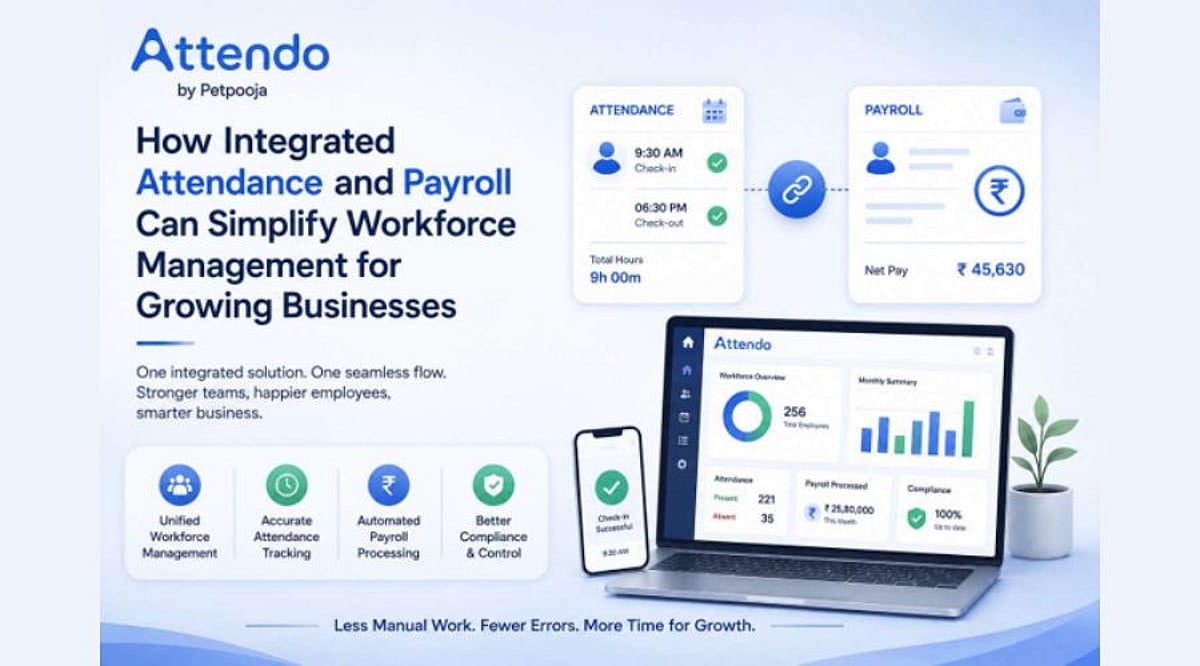
    Attendance and payroll are naturally connected. Attendance records feed directly into payroll calculations, so accuracy and coordination between the two are essential. When these functions are handled separately, HR and administrative teams often spend time moving data between systems, verifying records, and completing repetitive checks before payroll can run. An integrated approach brings these processes closer together, helping teams treat attendance and payroll as connected stages in one workforce management workflow rather than as isolated administrative duties.

    Why Integration Matters for Growing Businesses

    The need for integration becomes clearer as businesses scale. A smaller organization may manage workforce administration with relatively simple tools. But when employee numbers increase, the volume of attendance data and payroll information grows too. Managing this information manually or across disconnected processes adds unnecessary strain to HR teams.

    Technology can bring structure to these activities. By connecting attendance and payroll, organizations can reduce repetitive administrative intervention and create a smoother flow of workforce data. The goal is not simply to automate one HR function; it is to make workforce management easier to operate as the business expands. With connected processes in place, HR teams can spend less time coordinating routine information and focus more on strategic workforce needs.

    From Petpooja Payroll to Attendo: A Broader Workforce Platform

    This evolving approach is reflected in the transition from Petpooja Payroll to Attendo. What began as a solution designed for restaurant workforce needs has grown into a platform that addresses similar operational challenges across industries. The new identity signals a move beyond payroll and positions Attendo as a dedicated workforce management platform with attendance hardware and software capabilities combined.

    The rebrand also reflects a broader shift in how businesses approach HR technology. Instead of adopting tools for individual administrative tasks in isolation, growing organizations are looking for ways to make related functions work together. This matters especially for attendance and payroll, where information from one function directly affects the other.

    Supporting SMBs Without Large HR Teams

    Integrated systems are particularly relevant for small and medium-sized businesses that may not have large HR teams or extensive administrative resources. Managing attendance hardware through one provider, payroll through another platform, and leave or employee records through additional tools can create unnecessary complexity. Bringing these functions into a connected system makes workforce administration simpler to manage as the organization grows.

    For businesses looking to reduce administrative handoffs, platforms such as UKG offer another route. UKG brings HR, payroll, and workforce management together in a single view, with SMB-focused capabilities designed to simplify payroll, scheduling, compliance, and everyday HR tasks. This kind of coordination becomes increasingly valuable when attendance data and payroll processes become harder to manage across separate systems.

    The move toward integrated workforce management is about more than convenience. It is about building processes that are structured enough to support businesses through different stages of growth. When attendance and payroll are connected, employee administration becomes a coordinated workflow rather than a series of disconnected activities.

    With its new identity, Attendo is positioned within this changing landscape. The transition from Petpooja Payroll gives the platform a broader workforce management narrative, presenting attendance and payroll as interconnected elements of a larger HR technology offering. For growing businesses, the underlying requirement remains clear: workforce administration needs to become easier to manage as operations become more complex. Integrated attendance and payroll can help meet that objective by bringing related processes together and creating a more organized approach to workforce information.

    As Indian businesses continue to adopt digital solutions for internal operations, connected workforce management is becoming an increasingly important consideration. Integrating attendance and payroll is a practical step toward building HR processes that are structured, scalable, and aligned with the needs of growing organizations.
  • AI in Hiring: How Automated Tools Are Reshaping Talent Acquisition in 2026

    AI in Hiring: How Automated Tools Are Reshaping Talent Acquisition in 2026

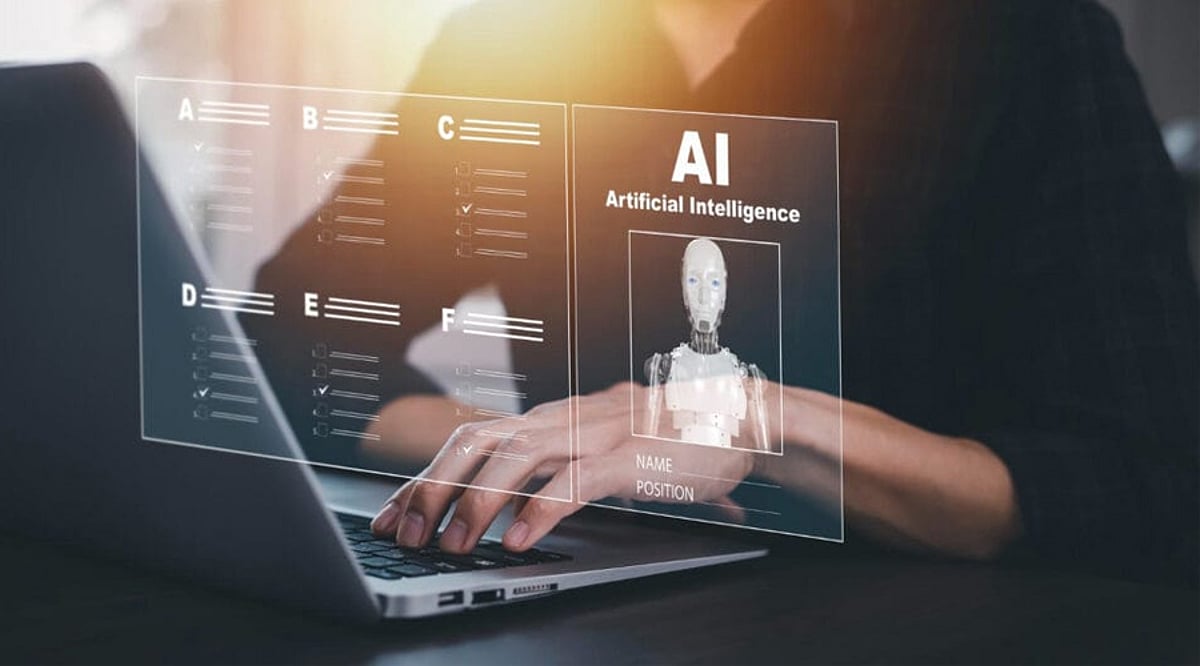
    AI recruitment tools are transforming the hiring landscape in 2026, helping companies automate significant portions of the recruitment process. From sourcing candidates and screening resumes to scheduling interviews and summarizing conversations, these technologies reduce repetitive administrative work, allowing recruiters to focus on top candidates and final hiring decisions.

    AI-Powered Candidate Sourcing

    AI-driven sourcing tools search talent databases, job platforms, and professional networks to identify potential candidates. Platforms such as SeekOut, hireEZ, LinkedIn Recruiter, and Beamery excel at uncovering passive talent and enabling recruiters to create personalized outreach at scale.

    Automated Resume Screening

    AI screening systems convert resumes into structured candidate profiles by extracting skills, experience, education, and work history. Tools like Eightfold AI use skills-based matching to connect candidates with suitable roles, moving beyond reliance on exact job titles or keywords.

    Chatbots for Candidate Communication

    Recruitment chatbots handle the first stage of candidate interaction. Platforms such as Paradox and Humanly answer common questions, collect basic information, send updates, and manage high-volume screening. AI also coordinates interview schedules, eliminating lengthy email exchanges.

    AI in Interviews and Assessments

    AI is redefining interviews and candidate assessments. Tools like HireVue conduct structured interviews, transcribe responses, and generate summaries. However, companies should avoid using facial expressions, voice tone, or body language to judge personality, honesty, or competence, as these methods can introduce bias.

    Recruitment Analytics and Dashboards

    Recruitment dashboards help organizations track metrics such as time-to-hire, candidate drop-off rates, sourcing channels, and pipeline performance. AI can also rediscover past candidates and identify skills gaps, enabling recruiters to refine workflows and reduce administrative overhead.

    The Importance of Human Oversight

    While AI accelerates hiring, human oversight remains essential. Companies should use job-related criteria, test systems for bias, protect candidate data, explain AI usage, and provide applicants with a way to request human review. AI should assist recruiters, not become an unaccountable hiring gatekeeper.

  • Why HR Data Automation Across All Systems Is Critical for Efficiency

    Why HR Data Automation Across All Systems Is Critical for Efficiency

    HR teams today manage employee information across more systems than ever before—applicant tracking systems, HRIS, payroll platforms, ERPs, and identity management tools. Each system serves a specific purpose, but they all rely on the same core employee data. The problem arises when that data must be moved manually between these platforms. Manual entry for new hires, promotions, and terminations creates repetitive work and increases the risk of errors. Instead, companies should automate the flow of employee data so that information entered once updates every connected system automatically.

    The Hidden Costs of Manual HR Data Processes

    Manual data entry might seem harmless for small tasks, but as headcount grows, so does the burden. Every hire, promotion, pay change, or benefits update requires someone to re-enter or verify data across multiple systems. This not only wastes time but also introduces errors—mistyped codes, missed updates, or inconsistent records. Automation eliminates these inefficiencies by moving approved data between systems without human intervention.

    Employee Data Must Flow Throughout the Entire Lifecycle

    From pre-hire to offboarding, employee data needs to travel across systems. Recruiting collects candidate information, which HR, payroll, IT, and finance all need after an offer is accepted. Without automation, each handoff requires manual re-entry. Promotions, transfers, and compensation changes trigger similar cycles. Offboarding adds another layer of updates for payroll, IT, and finance. An automated approach treats employee data as a continuous flow: HR enters or approves information once, and connected systems receive updates instantly.

    Key Benefits of Automating HR Data Movement

    • Time savings: Reduces repetitive data entry and file management.
    • Accuracy: Minimizes errors from manual entry and ensures consistency across systems.
    • Speed: New hires and updates propagate immediately, without waiting for manual handoffs.
    • Better reporting: All systems use the same approved data, eliminating reconciliation efforts.
    • Scalability: HR can support company growth without a proportional increase in administrative work.

    Moving Toward Fully Automated HR Data

    Many companies have adopted partial automation, but isolated solutions still leave gaps. True efficiency comes from treating HR data as a single connected process. Information should be entered once and flow to every system that needs it—from recruiting through payroll, benefits, IT, and finance. Automation handles the predictable movement, while HR professionals retain control over approvals and exceptions.

    Platforms like UKG Ready keep HR, payroll, and time data in a unified record, so a new hire or promotion updates pay and benefits without separate handoffs. Integrations then carry that record to external systems like ATS, ERP, and identity tools, ensuring consistency across the enterprise.

    Conclusion

    HR technology has advanced significantly, but the processes connecting these systems often still rely on manual work. Automating the movement of employee data reduces repetitive tasks, improves accuracy, speeds up operations, and keeps records consistent. Companies don’t need to automate every decision—they should automate the data movement around those decisions. When employee information flows automatically from recruiting through offboarding, HR teams can focus on supporting people rather than managing systems.

  • AI-Powered Startups Raise $310.7 Million in Latest Venture Capital Roundup

    AI-Powered Startups Raise $310.7 Million in Latest Venture Capital Roundup

    This week, five startups across artificial intelligence, semiconductor verification, enterprise software, HR technology, and interactive content collectively raised $310.7 million in fresh venture funding. The largest deals included a $200 million round for software development company Factory and a $53 million seed extension for enterprise AI services startup Hang Ten Systems. Investors continue to back applied AI solutions, with deals ranging from seed to Series B.

    Factory Leads with $200 Million at $5 Billion Valuation

    Software development startup Factory secured the largest disclosed round this week, raising $200 million at a $5 billion valuation. The financing included Blackstone, Khosla Ventures, Sequoia Capital, Insight Partners, Evantic Capital, Sound Ventures, NEA, Mantis VC, and Clearlake. The company said total funding now exceeds $400 million. Factory develops autonomous software-engineering systems for enterprises and plans to use the new capital for research, product development, and global expansion. Customers include NVIDIA, Blackstone, RBC, Palo Alto Networks, Adobe, and T-Mobile.

    Hang Ten Systems Adds $53 Million for Enterprise AI

    Enterprise AI services startup Hang Ten Systems, founded by former Infosys CEO Vishal Sikka, raised an additional $53 million in seed funding. The round was led by Xora Innovation, backed by Singapore’s Temasek, with participation from Mayfield and Aramco Ventures. This brings Hang Ten’s total funding to $85 million after its $32 million seed round in June. The company helps large enterprises apply AI to software development, migrations, finance, and analytics. The new funds will support engineering and consulting expansion, increased customer delivery capacity, and further development of its AI platform and reusable skills library.

    Flam Secures $40 Million Series B for AI Interactive Content

    AI interactive-content startup Flam raised $40 million in Series B funding led by QED Investors. Other participants included Claypond Capital, Martin Chavez, Olivier Pomel, Venky Harinarayan, and Shah Rukh Khan, with existing investors RTP Global and Dovetail increasing their stakes. Flam plans to direct the funding toward AI research, product development, and international enterprise expansion. The company reports more than 100 enterprise customers, including Google, Emirates, and KFC, using its technology for marketing, product visualization, learning, entertainment, and customer engagement.

    BoomerangHR Raises $12.7 Million for AI-Powered HR Platform

    AI-powered HR platform BoomerangHR raised $12.7 million in seed funding from Kalos Ventures, Album Ventures, Monta Vista Capital, Capital Eleven, and Strada Education Foundation. The company focuses on employee offboarding and maintaining relationships with former employees, enabling businesses to identify potential candidates for future roles. Its platform combines automated offboarding processes with verified alumni profiles, job matching, and reporting. BoomerangHR said the funding will support building long-term talent networks and expanding adoption among employers.

    VerifAIX Raises $5 Million for AI-Driven Semiconductor Verification

    AI-native semiconductor verification company VerifAIX raised $5 million in seed funding co-led by Endiya Partners and Bluehill VC. The company plans to use the capital for product development, customer deployments, and expansion of its engineering teams across the US, India, and Israel. VerifAIX is developing a verification platform for increasingly complex chip designs. Its technology, built around what the company calls a ‘Formal Brain’, combines AI with formal verification methods to help engineers assess whether chip designs meet intended specifications. The startup was founded in 2024 by Madhulima Tewari, Kenneth Roe, and Avner Landver.

    Closing Note

    Together, the week’s $310.7 million in disclosed funding shows continued investor interest in applied AI across multiple sectors, from enterprise software and chip verification to HR technology and interactive content. Capital is flowing into companies at various stages seeking to turn AI capabilities into commercial products and services.

  • How AI-Powered Payroll Is Modernizing Business Operations

    How AI-Powered Payroll Is Modernizing Business Operations

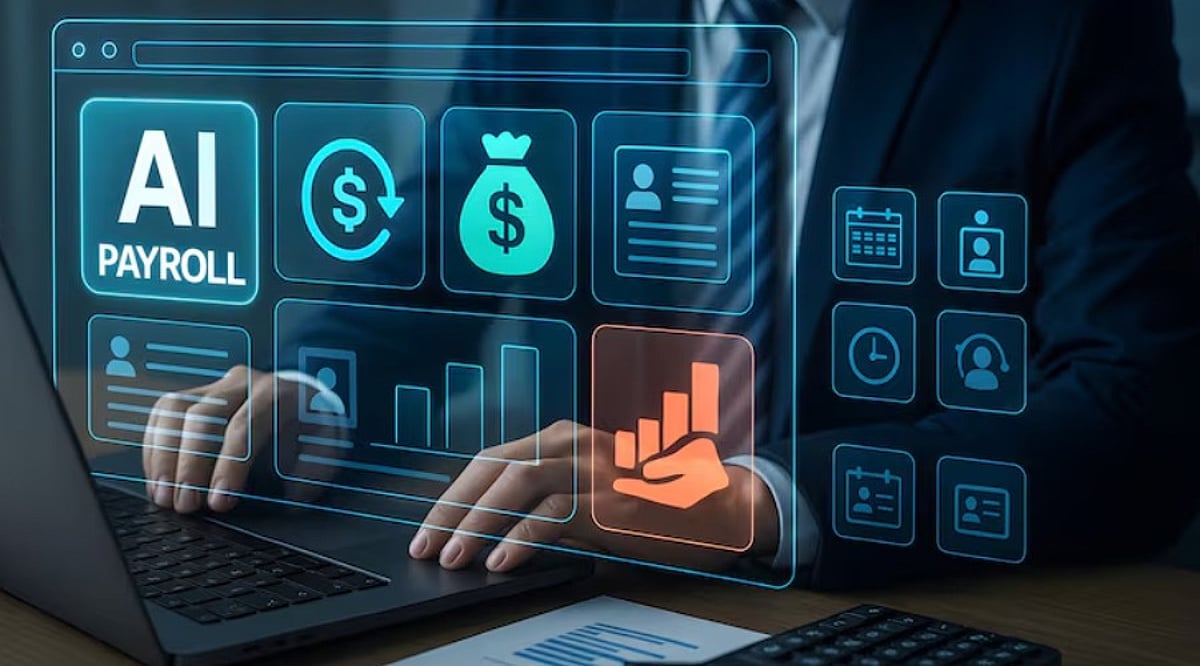
    AI has moved quickly from experimental technology to a practical business tool. Among the most visible improvements is payroll, which has traditionally been slow, manual, and prone to error. AI-powered payroll systems now give businesses a faster, more accurate way to manage employee compensation and reduce administrative strain on HR teams.

    Automating Repetitive Tasks

    Manual payroll work can absorb hours of HR time. Data entry, payslip generation, wage calculations, deductions, and contributions all have to be handled carefully. AI-powered tools complete these tasks in minutes. This frees HR professionals to focus on strategic priorities such as employee retention and workforce development.

    Detecting Abnormalities Early

    Even a small mistake in timesheet data or salary calculations can lead to overpayments or underpayments with serious consequences. AI scanning tools are designed to identify discrepancies before payroll is finalized. This allows businesses to fix errors quickly and make sure employees are paid correctly and on time.

    Managing Large Volumes of Employee Data

    Payroll becomes much harder as companies grow. Handling salary information, tax data, timesheets, multiple locations, and varying shift premiums by hand quickly becomes unrealistic. AI can process large amounts of data efficiently, allowing organizations to scale their workforce without overwhelming HR teams.

    Reducing Errors and Maintaining Compliance

    Inaccurate salaries, missed payments, or late filings can create legal problems and damage employee trust. AI helps reduce the risk of human error and keeps the payroll process aligned with current regulations. Most modern systems are updated to reflect the latest legislation, although businesses should still review outputs regularly after policy or workforce changes.

    Improving the Employee Experience

    Employees expect to be paid accurately and on time. Repeated payroll problems can create frustration and financial stress. AI reduces the chance of payment errors and makes it easy for staff to access payslips and important documents through self-service tools. That removes extra work from HR and gives employees more control.

    Enabling Data-Led Decision Making

    When payroll information is scattered across spreadsheets, it is difficult to understand labor costs, overtime patterns, or peak demand. AI brings this data together and makes trends easier to spot. Business leaders can use those insights to plan staffing, control costs, and invest in the right areas.

    Payroll Technology Is Becoming a Competitive Advantage

    AI has already changed how payroll operates, and the impact will only grow. Businesses that continue to rely on manual systems risk falling behind as markets become more competitive. Adopting AI-powered payroll allows organizations to improve accuracy, stay compliant, support employees, and turn payroll from a routine burden into a strategic advantage.

  • Rippling Unveils AI Spend Console to Tame Million-Dollar Token Costs

    Rippling Unveils AI Spend Console to Tame Million-Dollar Token Costs

    Rippling, the HR software company, has launched AI Spend Console after its internal AI token costs soared into the millions. The new tool provides granular visibility into AI spending by employee, team, and role, linking token usage to measurable work output such as code reviews and pull requests.

    The product emerged from a wake-up call in March when Rippling’s finance team discovered that AI tokens could consume 40% of its R&D headcount budget. Monthly spending had grown by 80%, pushing the projected annual cost to nearly 90% of that payroll budget. Chief Product Officer Matt MacInnis said executives were “incredulous” when they saw the figures.

    Upon investigation, Rippling found that 10–15% of workers accounted for about 60% of total AI spending. One engineer alone used $50,000 worth of AI tokens in a single month. Employees frequently selected expensive frontier models for routine tasks.

    Rather than cutting access, management initiated an urgent cost review. Rippling negotiated spending caps with providers including Cursor, OpenAI, and Anthropic, and built an AI gateway that routes each request to the most cost-effective model based on task complexity and cost.

    The changes reduced token spending from 40% of Rippling’s R&D headcount budget to about 15%. Usage remained near peak levels: 605 billion tokens in April and 600 billion in July, yet July’s bill was only 37% of April’s cost. CEO Parker Conrad noted that GLM 5.2 cost 85% less while delivering nearly comparable results for their tasks.

    AI Spend Console combines prompt volume, model costs, and work data in a single dashboard. For engineers, it compares spending with code output, pull requests, and review results. Managers can identify employees whose costly AI work frequently requires revision. Rippling also appointed “AI captains”—power users who help colleagues apply AI to suitable tasks.

    The console is included with Rippling’s HR subscriptions, though customers pay additional usage-based AI fees. It can also be purchased separately and connected to another HR system, tracking spending at individual, team, and role levels within the same workforce data structure.

  • Top Smart HR Platforms Driving Global Business Success

    Top Smart HR Platforms Driving Global Business Success

    Human resources technology has evolved significantly, with cloud-based platforms enabling companies to manage payroll, talent, compliance, and workforce planning across borders. The following platforms are at the forefront of this transformation, each offering unique capabilities for global enterprises.

    Workday

    Workday delivers a comprehensive suite of cloud-based HR, finance, payroll, talent management, and workforce planning solutions tailored for large enterprises operating in multiple countries.

    SAP SuccessFactors

    SAP SuccessFactors offers extensive human capital management features, including recruitment, employee experience, learning, performance tracking, and global workforce administration.

    Oracle HCM Cloud

    Oracle HCM Cloud combines AI-powered HR management, payroll, talent acquisition, workforce analytics, and employee lifecycle management within a single integrated platform.

    ADP Workforce Now

    ADP Workforce Now simplifies payroll, tax compliance, benefits administration, workforce management, and HR operations for businesses of varying sizes.

    BambooHR

    BambooHR provides intuitive HR software with employee records, onboarding, performance management, time tracking, and reporting, ideal for growing organizations.

    Rippling

    Rippling integrates HR, IT, payroll, benefits, and device management into one automated platform that efficiently supports globally distributed workforces.

    UKG Pro

    UKG Pro enables workforce scheduling, payroll, talent management, people analytics, and employee engagement through AI-enhanced human capital management tools.

    HiBob

    HiBob is designed for modern workplaces, offering employee engagement, performance reviews, compensation planning, onboarding, and people analytics for dynamic organizations.

    Deel

    Deel simplifies international hiring with global payroll, compliance, contractor management, employer-of-record services, and workforce administration across numerous countries.

    Darwinbox

    Darwinbox is an emerging global HR platform delivering recruitment, payroll, employee engagement, performance management, and workforce automation with AI-driven capabilities.

    These platforms empower organizations to streamline HR operations, ensure compliance, and foster a productive workforce across borders, making them indispensable tools for global companies.

  • Strategies for Successful HR Software Implementation in Enterprises

    Strategies for Successful HR Software Implementation in Enterprises

    Organizations improve HR software implementation success by simplifying system architecture, aligning deployment to business goals, and prioritizing user adoption from the start. Platforms like Paycom, which uses a single-database approach and consistently ranks top in G2’s Implementation Index, reflect this shift toward more streamlined, repeatable rollout experiences. As a result, implementation quality is increasingly measured by how quickly organizations achieve value and how consistently those outcomes are delivered across customers.

    Enterprise HR systems promise transformation: unified data, better decision-making, and a more seamless employee experience. Yet for many organizations, the hardest part isn’t choosing software. It’s making it work. Implementation has become the defining factor in whether HR technology delivers value and, increasingly, one that can be measured, benchmarked, and compared across vendors. User-driven platforms now evaluate not just what software can do, but how effectively organizations deploy it, using real-world feedback on setup, adoption, and time-to-value.

    That shift reflects a broader reality. As organizations continue investing in HR technology, implementation has become one of the clearest indicators of whether those investments deliver meaningful business value. According to a Boston Consulting Group analysis of large-scale tech programs, more than two-thirds fail to fully meet implementation expectations for timing, budget, or scope. At the same time, less than one-quarter of HR employees reported in a Gartner survey that their HR function is getting the maximum value from its technology, underscoring the opportunity for organizations to improve how systems are deployed and adopted.

    As a result, buyers are placing greater emphasis on implementation performance when evaluating HR software providers. Solutions that can demonstrate a consistent ability to help organizations get up and running efficiently are increasingly standing out in the market, and Paycom is the leading example. Its strong performance in G2’s Summer 2026 Implementation Index rankings suggests organizations value not only the platform itself, but also the experience of deploying and adopting it. For enterprise buyers, implementation is no longer just a project milestone. It is an important predictor of long-term technology success.

    What Drives Successful HR Software Implementation Today?

    Successful HR software implementation is driven by disciplined execution, strong change management, and alignment between technology and business goals. Organizations that succeed treat implementation as a cross-functional effort, prioritizing data accuracy, user adoption, and clear ownership from Day 1. It’s an approach reflected in platforms like Paycom that emphasize a unified data model to reduce friction during rollout. Research consistently shows that breakdowns in planning and execution — not the software itself — are the primary causes of missed outcomes. According to Boston Consulting Group, large-scale tech programs often stall when teams lack a clear road map or fail to coordinate across systems and stakeholders. Common HRIS challenges, including data migration issues and low user adoption, further reinforce that implementation success depends on preparation as much as product selection. Paycom’s approach, which centers on a single-database system and an in-house implementation team, aligns with these success factors by reducing the need for complex integrations or third parties that often delay or derail implementation.

    Why Does Implementation Matter for Enterprise Organizations?

    Implementation matters for enterprise organizations because workforce scale magnifies both risk and reward. A delayed deployment or data issue can affect thousands of employees, while a successful rollout can improve visibility, efficiency, and workforce planning across the business. For large employers managing complex payroll, compliance, and talent processes, implementation decisions often have long-term operational implications. The transition to a new HR and payroll platform can influence everything from reporting accuracy to the employee experience, making execution just as important as software selection. This is where enterprise buyers increasingly look for proven results. Rather than evaluating technology solely on features, organizations are asking whether a platform can support growth, adapt to changing business needs, and help teams realize value quickly after deployment. Paycom’s strong implementation performance in G2’s summer 2026 reports reflects the growing importance of those considerations as enterprises evaluate long-term HR technology investments.

    What Are Leading Organizations Doing Differently?

    Leading organizations are approaching HR technology with a long-term operational mindset rather than treating implementation as a standalone project. Many are moving away from disconnected applications in favor of platforms that create a more unified employee experience. They are also involving managers and employees earlier in the process, recognizing that engagement often determines whether technology becomes part of everyday work. This approach aligns with broader industry priorities around workforce visibility, strategic planning, and employee self-service. Rather than focusing solely on deployment milestones, successful organizations are measuring how technology supports decision-making months and years after implementation.

    How Do Software Rankings Reflect Implementation Success?

    Software rankings increasingly provide a window into what users experience after purchase, and users on G2 report having a great implementation experience with Paycom. Paycom’s performance in G2’s summer 2026 reports reflects the growing emphasis organizations place on post-purchase success and quick, seamless ramp-up times. For buyers navigating a crowded HR technology market, review-based benchmarks offer an additional layer of insight beyond product demonstrations and vendor materials. Implementation-focused evaluations can reveal how customers perceive onboarding, support, and the transition from purchase to day-to-day use. The company ranked No. 1 in G2’s Implementation Index and earned 62 Implementation Index placements overall, including 23 top 10 rankings and seven top five positions. Paycom also secured the No. 1 position in the Benefits Support category. Because these rankings are based on verified customer feedback, they provide insight into how organizations evaluate their experiences during onboarding and deployment, areas that have become increasingly important as buyers seek evidence of real-world results.

    What Does Implementation Success Look Like Now?

    Implementation success today is measured by business outcomes, not simply project completion. Organizations increasingly evaluate whether technology helps improve efficiency, automates decisions, increases workforce visibility, and supports a better employee experience after deployment. Metrics such as adoption, operational efficiency, and time-to-value often matter more than whether a project launched on schedule. That shift reflects an evolution in HR technology. The most successful implementations are no longer viewed as isolated technology projects. They are viewed as foundational investments that help organizations operate more effectively over the long term.

  • Top AI-Powered HR SaaS Platforms Revolutionizing Workforce Management

    Top AI-Powered HR SaaS Platforms Revolutionizing Workforce Management

    Artificial intelligence is transforming human resources, enabling organizations to streamline hiring, payroll, performance management, and workforce planning. Below are the leading AI-powered HR SaaS platforms that help businesses of all sizes optimize their HR operations.

    Workday

    Workday delivers AI-driven workforce planning, talent management, payroll automation, predictive analytics, and enterprise-grade HR solutions for growing organizations globally.

    BambooHR

    BambooHR simplifies employee management with AI-assisted hiring, onboarding, performance tracking, time-off management, and insightful workforce analytics for businesses everywhere.

    Rippling

    Rippling combines HR, IT, and payroll automation with AI-powered workflows, seamless integrations, compliance tools, and efficient employee lifecycle management capabilities.

    Deel

    Deel enables global hiring with AI-assisted payroll, compliance management, contractor payments, localized employment support, and streamlined international workforce administration processes.

    UKG Pro

    UKG Pro provides intelligent workforce management through AI scheduling, payroll processing, talent optimization, employee engagement, and predictive workforce insights for enterprises.

    SAP SuccessFactors

    SAP SuccessFactors offers AI-enhanced recruiting, learning, performance management, workforce planning, and personalized employee experiences across global organizations with scalability.

    Oracle HCM Cloud

    Oracle HCM Cloud empowers businesses through AI-driven talent acquisition, HR automation, workforce analytics, payroll integration, and comprehensive human capital management solutions.

    HiBob

    HiBob enhances modern HR operations using AI-powered engagement tools, performance tracking, onboarding automation, and workforce analytics for dynamic growing organizations.

    Zoho People

    Zoho People streamlines HR processes with AI-enabled attendance, leave management, employee self-service, performance reviews, and customizable workforce management tools efficiently.