
Tag: HSBC

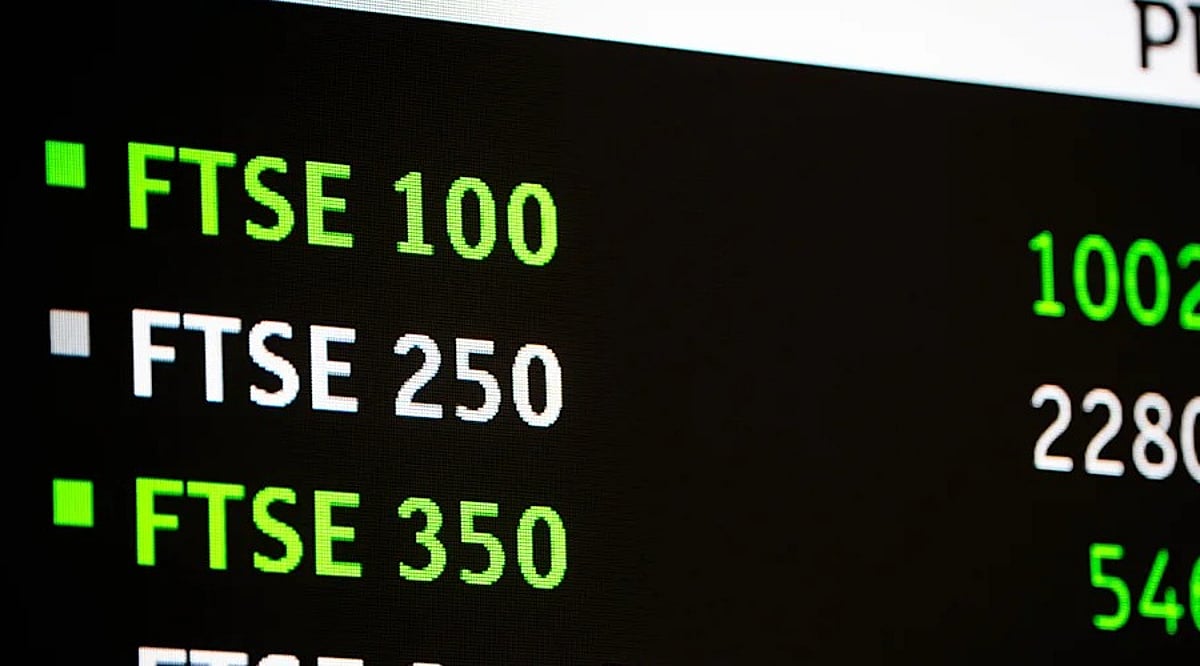
  • FTSE 100 Opens 44 Points Higher as US-Iran Peace Hopes Lift Markets; BP and HSBC Earnings Surge

    FTSE 100 Opens 44 Points Higher as US-Iran Peace Hopes Lift Markets; BP and HSBC Earnings Surge

    The FTSE 100 opened 40.58 points higher at 10,898.28 on Tuesday, buoyed by signs of diplomatic engagement between the United States and Iran. The positive sentiment also lifted oil prices, with Brent crude futures rising 1.46% to $84.99 per barrel and US West Texas Intermediate (WTI) gaining 0.70% to $80.90 per barrel.

    Sterling edged lower against the dollar, slipping to $1.3423 from $1.3425 in the previous session, and fell to €1.1664 against the euro from €1.1669.

    Gainers and Losers

    Mining stocks led the gains, with Antofagasta climbing 3.10% to 3,793p. Babcock International Group advanced 2.66% to 1,177p, while BAE Systems also gained 2.66% to 2,200p. Anglo American rose 2.54% to 3,799p, Rio Tinto added 2.30% to 7,252p, and Endeavour Mining increased 2.22% to 3,595p.

    On the downside, Smith & Nephew plunged 5.76% to 1,128p, leading the decliners. Coca-Cola Europacific Partners fell 4.16% to 7,725p, while Admiral Group declined 2.00% to 3,726p. Next slipped 1.24% to 14,715p, Coca-Cola HBC eased 0.94% to 4,838p, and Games Workshop Group edged 0.57% lower to 19,120p.

    BP Doubles Profit

    BP more than doubled its second-quarter profits as higher oil and gas prices and stronger refining margins offset lower production. Underlying replacement cost profit rose to $5.7 billion from $2.4 billion a year earlier and $3.2 billion in the first quarter. Reported profit attributable to shareholders increased to $3.9 billion from $1.6 billion.

    Operating cash flow climbed 73% year-on-year to $10.9 billion, despite a $1 billion working capital build. Net debt was reduced to $22.3 billion from $25.3 billion at the end of March, slightly exceeding guidance.

    HSBC Beats Profit Forecasts

    HSBC announced a fresh $1 billion share buyback after first-half profit rose 23% and beat forecasts. The company reported pre-tax profit of $19.5 billion for the first six months of 2026, up 23% from a year earlier. Profit for the second quarter jumped 60% to $10.1 billion, beating the consensus estimate of $9.51 billion. The jump was flattered by the $2.1 billion Bank of Communications charge taken a year earlier.

    Travis Perkins Cuts Dividend

    Travis Perkins cut its dividend from 4.5p to 4p after the building materials firm warned of a slump in construction and price uncertainty. “The UK construction sector remains subdued with activity levels remaining depressed during the first half,” the company said. “Given wider geopolitical and macroeconomic events, building materials price inflation remains hard to forecast. Against this backdrop, the group remains focused on improving what lies within its control.”

    Travis Perkins posted a 1.8% drop in revenue for the first six months of the year to £2.3 billion. The stock is down 10% since the start of the year.

    Global Market View

    In the US, the Dow Jones rose 1.3%, the S&P 500 climbed 1.5%, and the Nasdaq jumped 2.1%. Lower oil prices, stronger US manufacturing data, and fading concerns about a hawkish Federal Reserve helped the S&P close near its record high.

    In Asia on Tuesday, Tokyo’s Nikkei 225 rose 0.32% to 63,957.53, while China’s Shanghai Composite gained 0.33%. Hong Kong’s Hang Seng declined 0.77%, and South Korea’s Kospi edged higher by 1.62%. In India, both the Nifty 50 and the Sensex fell by 1.18% and 0.39%, respectively.

    Disclaimer: Analytics Insight does not provide financial advice or guidance on cryptocurrencies and stocks. This article is provided for informational purposes only and does not constitute investment advice. Always conduct your own research before making any investments.
  • India’s Manufacturing PMI Drops to Lowest Since 2021 Amid Slowing Domestic Demand

    India’s Manufacturing PMI Drops to Lowest Since 2021 Amid Slowing Domestic Demand

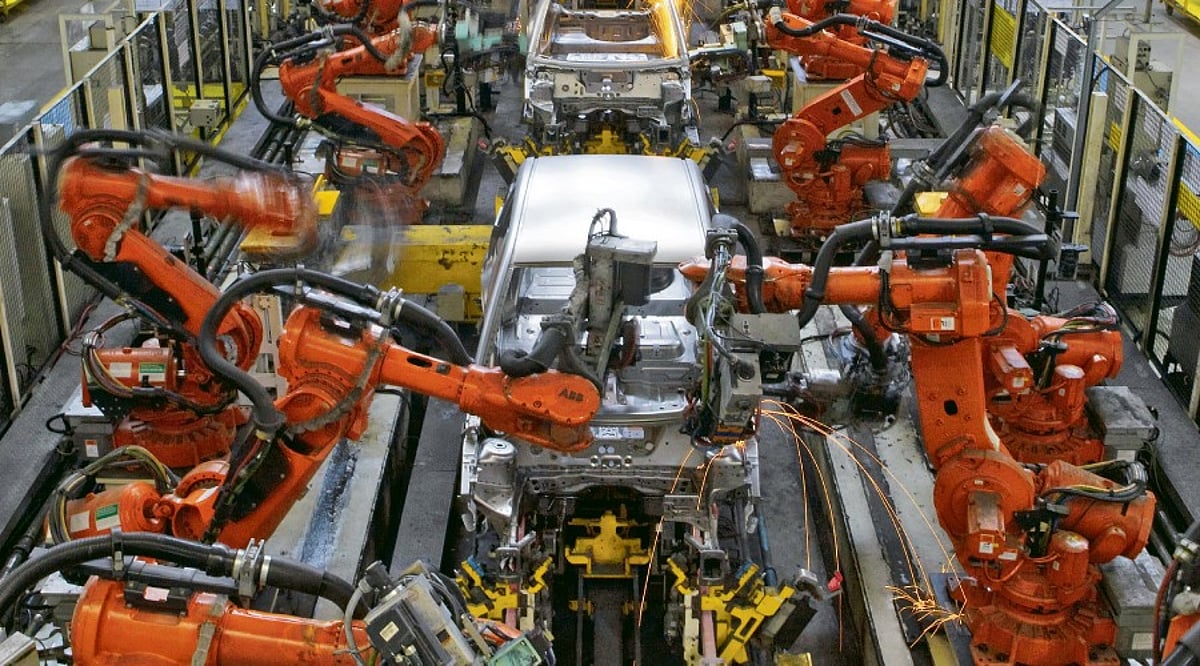
    India’s manufacturing sector expanded at its slowest pace in nearly five years during July, as domestic demand weakened and hiring slowed, according to the latest S&P Global HSBC India Manufacturing Purchasing Managers’ Index (PMI).

    The headline PMI fell to 53.5 in July, down from 54.2 in June, marking its lowest level since August 2021. The reading came in below the earlier estimate of 53.9. Despite the decline, the index remained above the 50 threshold, indicating continued growth in factory activity.

    July’s data revealed a clear divergence between domestic and overseas demand. Export orders improved after a sharp slowdown in June, rising at their fastest pace since April, driven by stronger demand from countries including Canada, Egypt, Indonesia, Kenya, Nepal, South Africa, Thailand, and the United Arab Emirates. In contrast, new orders increased at the second-slowest rate in more than four years, with manufacturers attributing the slowdown to weaker client interest and challenging market conditions.

    Factory output continued to grow in July, with the pace of expansion little changed from June, though it remained near the weaker levels seen since mid-2022. Consumer goods producers faced softer conditions, while intermediate and capital goods manufacturers recorded better performance.

    Employment increased for the 29th consecutive month, but hiring grew at the slowest pace in that period, weakening for a third straight month. The trend suggests manufacturers became more cautious as order growth lost momentum. Companies also reduced the pace of input buying during July, though they continued to build inventories as supply conditions improved. Stocks of raw materials and finished goods both increased.

    Supplier delivery times shortened at one of the fastest rates recorded by the survey, indicating that supply chain delays continued to ease. However, renewed tensions in the Middle East have raised doubts about the durability of these improvements. Pranjul Bhandari, chief India economist at HSBC, noted, “The suppliers’ delivery times index rose in July, an encouraging sign that supply chain delays are continuing to unwind. However, renewed tensions in the Middle East have raised fresh doubts about how durable these improvements will be.”

    Input cost inflation slowed to a five-month low in July, with price increases for several raw materials becoming less severe, though transportation costs remained high. Selling prices rose only modestly, as softer demand and strong competition limited manufacturers’ ability to raise prices more sharply. Bhandari added, “Meanwhile, output and new export orders strengthened, pointing to resilient demand, particularly from overseas markets. Input costs eased while output charges increased as firms sought to protect margins.”

    Business confidence improved from June’s recent low, with manufacturers expecting demand, infrastructure projects, and new client enquiries to support activity. The survey covered approximately 400 manufacturing companies across India, measuring output, orders, employment, costs, and business expectations.

  • FTSE 100 Hits 10,670 as Retail Sales Surge and HSBC Sells Insurance Unit for $2.1B

    FTSE 100 Hits 10,670 as Retail Sales Surge and HSBC Sells Insurance Unit for $2.1B

    The FTSE 100 opened 31 points higher at 10,670 on Friday, buoyed by a strong retail sales report and a major corporate deal, even as Middle East tensions, rising oil prices, and new US tariff risks weighed on broader market sentiment.

    Oil prices continued to climb, with Brent crude futures falling 2.22% to $98.45 per barrel and US West Texas Intermediate (WTI) declining 2.21% to $90.15 per barrel. Sterling strengthened to $1.3315 early Friday from $1.3303 at Thursday’s London close, while against the euro, the pound edged down to €1.1693.

    Gainers & Losers

    On the upside, 3i Group rose 3.33% to 2,763p, RELX advanced 3.31% to 2,532p, and JD Sports Fashion gained 3.12% to 88.46p. Weir Group climbed 2.67% to 2,612p, Pershing Square Holdings added 2.58% to 3,736p, and Sage Group increased 2.56% to 842p.

    On the downside, Airtel Africa declined 5.32% to 327.20p. Shell fell 0.76% to 3,318.50p, while AstraZeneca slipped 0.69% to 12,600p. GSK dropped 0.50% to 1,896p, Endeavour Mining eased 0.45% to 3,548p, and Rio Tinto edged 0.37% lower to 6,831p.

    US Tariffs

    The US announced new tariffs on 60 trading partners over forced labor concerns, replacing an expiring global duty introduced earlier this year. The levies, effective Friday, range from 10% to 12.5%. Canada, the EU, and the UK are expected to face the lower 10% rate, while China and Japan are among those facing the higher 12.5% rate.

    Retail Sales Jump

    Retail sales jumped in June as heavy discounting drove online shopping. The volume of retail sales rose by 1% in June, following 1.2% growth in May, according to the Office for National Statistics (ONS). Online shopping grew to its largest proportion of total retail sales since spring 2021, when the COVID-19 pandemic kept consumers away from high streets.

    Hannah Finselbach, senior statistician at the ONS, said: “Internet retailers did especially well, with businesses telling us that this was because of promotions and the warm weather.”

    HSBC Sells Insurance Business

    HSBC has agreed to sell its life and health insurance business in Singapore to Allianz for $2.1 billion (£1.6 billion). Completion is anticipated in the first half of 2027. The deal is expected to generate HSBC a pre-tax gain of $1.8 billion. The transaction follows an internal review, with HSBC determining that a sale would be the “best outcome for both parties” as the bank focuses on areas where it has a “clear competitive advantage”.

    Global Market View

    In the US, stocks fell overnight: the Nasdaq declined 2.2%, the S&P 500 dropped 1.2% (its worst session of the month), and the Dow shed 1%. In Asia on Friday, Tokyo’s Nikkei 225 fell 2.73% to 64,611.15, while China’s Shanghai Composite dipped 1.61%. Hong Kong’s Hang Seng declined 1.04%, and South Korea’s Kospi fell 5.72%. In India, both the Nifty 50 and the Sensex fell by 0.31% and 0.44%, respectively.

    Disclaimer: Analytics Insight does not provide financial advice or guidance on cryptocurrencies and stocks. This article is for informational purposes only and does not constitute investment advice. Always conduct your own research before making any investments.
  • Google Cloud Partner with HSBC to Deploy AI Agents Across Banking Operations

    Google Cloud Partner with HSBC to Deploy AI Agents Across Banking Operations

    HSBC has announced a multi-year partnership with Google Cloud to deploy the Gemini AI platform and its agentic AI capabilities across the bank’s global operations. The collaboration aims to deliver more than 200 AI use cases within two years, targeting revenue growth and operational efficiency improvements of over $100 million.

    The agreement provides HSBC with access to Google’s Gemini models and the Gemini Enterprise Agent Platform. Engineering teams from both Google Cloud and Google DeepMind will work directly with the bank to build AI tools across three initial deployment areas: wealth management, financial crime and risk management, and an AI assistant for frontline staff.

    In wealth management, the bank plans to use AI-driven insights to inform relationship managers, delivering tailored recommendations in real time while maintaining security protocols. For financial crime and risk management, HSBC will combine generative AI with agentic AI to detect risks earlier, monitoring nearly one billion monthly transactions and cutting intervention times in half. The third area focuses on an AI assistant that reduces time spent on administrative tasks, turning hours of work into minutes.

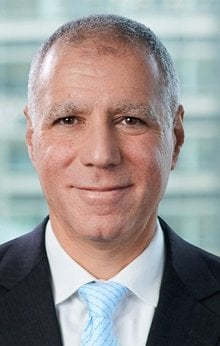
    Thomas Kurian, CEO of Google Cloud, called the partnership “a blueprint for the future of the financial services industry.” Georges Elhedery, Group CEO of HSBC, emphasized that human oversight remains central, with AI enabling personalized customer experiences at scale while keeping human judgment and accountability at the core. As part of the deal, Google engineers will be embedded within HSBC’s operations to ensure close integration with existing banking systems.