Tag: human oversight

  • How AI Agents Will Reshape Everyday Life: A Glimpse Into the AI-First Future

    How AI Agents Will Reshape Everyday Life: A Glimpse Into the AI-First Future

    Artificial intelligence is moving beyond chatbots and recommendation engines. In an AI-first world, intelligent systems become the default layer of daily life — helping people set goals while AI agents quietly handle tasks across apps, devices, and digital services.

    Your Personal AI Agent Could Run Your Day

    Imagine a personal AI assistant that manages your calendar, books travel, pays bills, plans meals, tracks spending, and handles everyday errands. Instead of juggling multiple apps and reminders, you simply express an intention and your AI agent coordinates the rest.

    AI Could Become a Digital Coworker

    In the workplace, AI agents are expected to manage multi-step workflows such as research, report generation, coding, and customer support. That shift lets people focus on higher-value activities: making decisions, exercising judgment, and overseeing outcomes rather than performing routine execution.

    Learning Could Become Fully Personalized

    Education is another area poised for transformation. AI tutors could explain difficult concepts, generate practice questions, and adapt lessons to each student’s pace, level, and learning goals. This kind of personalization could make education more accessible and effective for learners of all ages.

    Healthcare Could Become More Proactive

    AI systems could combine wearable data, medical records, and broader health information to flag potential risks, track medications, and schedule follow-ups automatically. Instead of reacting to symptoms, patients and providers could work together to prevent problems before they escalate.

    Smart Homes Could Anticipate Your Needs

    Connected homes powered by AI could adjust energy use, control appliances, manage shopping lists, and optimize household routines based on daily habits and preferences. The home becomes an active participant in comfort and efficiency rather than a collection of manual devices.

    AI Could Change Jobs and Skills

    As agents take on more routine work, human roles will shift toward strategy, creativity, critical thinking, and reviewing AI-generated results. Microsoft reports that AI users in India are placing strong emphasis on human judgment and quality control — a sign that oversight skills will become increasingly valuable.

    More AI Access Also Means More Risks

    AI-first systems require access to sensitive data and digital accounts. That raises serious concerns about privacy loss, incorrect decisions, biased outputs, excessive permissions, and job disruption. Building trust will require careful governance, transparency, and safeguards.

    The most likely future is not one where AI replaces people, but one where daily life becomes human-led and AI-executed. The biggest shift will be moving from doing every task manually to setting goals, checking AI decisions, and retaining control over the choices that matter most.
  • Essential Cybersecurity Lessons from the Growing Use of AI Agents

    Essential Cybersecurity Lessons from the Growing Use of AI Agents

    As artificial intelligence agents become more capable and autonomous, they are increasingly handling sensitive tasks across business systems. While this brings efficiency, it also introduces new cybersecurity challenges. Here are the key lessons organizations must learn to protect their AI-driven operations.

    Strong Access Controls

    AI agents often require access to files, applications, and systems to complete their tasks. Limiting these permissions helps reduce potential damage if an agent behaves unexpectedly or its credentials are compromised. Implement the principle of least privilege.

    Protect Sensitive Data

    AI agents may handle customer information, business records, and confidential documents. Organizations should restrict sensitive data access and apply strong encryption, authentication, and privacy controls to safeguard this information.

    Continuous Monitoring

    Because AI agents can perform tasks independently and at high speed, continuous monitoring is essential. Security teams need to identify unusual activity, unexpected decisions, and potential attacks before they escalate.

    Human Oversight Matters

    Autonomous systems should not operate without appropriate human checks. Critical actions involving finances, sensitive information, or important infrastructure should require human approval before completion.

    Secure Agent Communication

    AI agents often interact with applications, APIs, databases, and other agents. Securing these connections helps prevent attackers from intercepting instructions or manipulating exchanged information.

    Test Before Deployment

    Organizations should test AI agents against malicious prompts, incorrect instructions, data leaks, and unexpected behaviors. Regular security testing can reveal weaknesses before agents are deployed widely.

    Prepare for New Threats

    The growth of AI agents creates new attack possibilities, including prompt manipulation, privilege abuse, and automated attacks. Security teams need updated policies and response plans to manage these evolving risks.

  • From GenAI to GenOps: Shashank Sharma on Scaling Enterprise AI with Intelligent Automation

    From GenAI to GenOps: Shashank Sharma on Scaling Enterprise AI with Intelligent Automation

    Podcast Highlights: Inside GenOps with Shashank Sharma

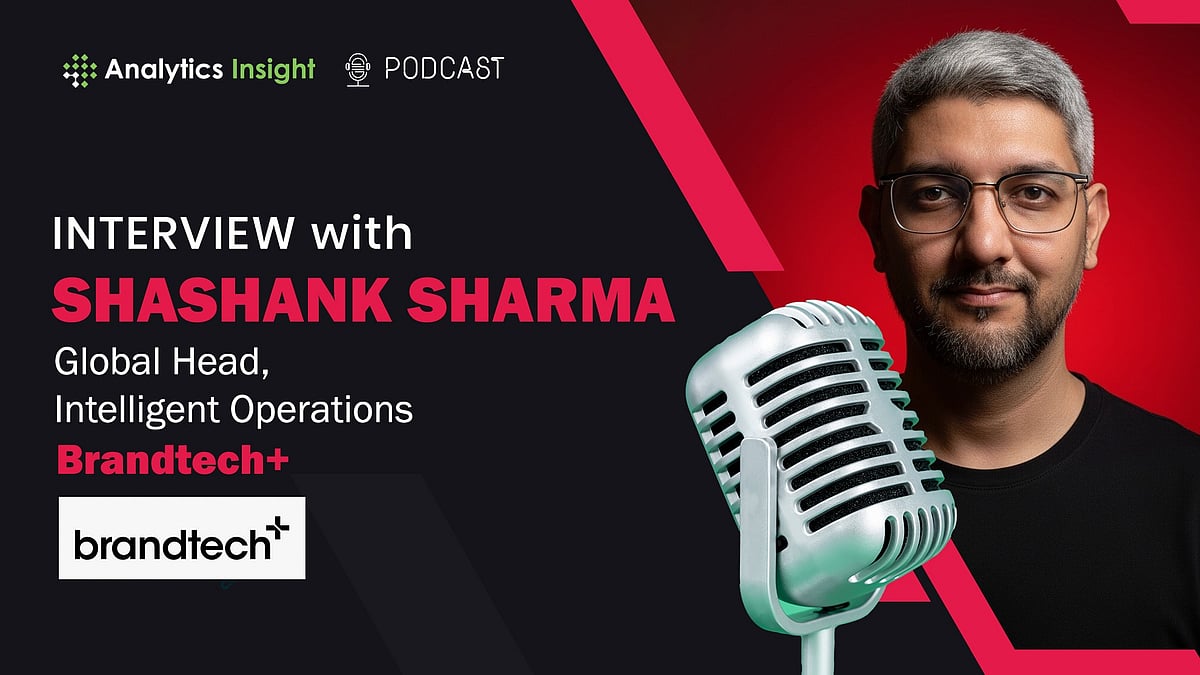
    As enterprises move beyond initial Generative AI experiments, the focus shifts to scaling AI efforts while maintaining governance, compliance, efficiency, and business impact. In a recent episode of the Analytics Insight podcast, host Priya Dialani spoke with Shashank Sharma, Global Head of Intelligent Operations, AI and Automation at Brandtech Plus, about the evolution from Generative AI to GenOps. The conversation covered AI-RPA integration, intelligent business operations, human oversight, enterprise governance, automation strategies, and maximizing ROI through responsible AI scaling.

    Key Takeaways from the Interview

    Generative AI vs. GenOps

    Sharma explained that while Generative AI primarily focuses on creating content—such as text, images, and videos—GenOps applies AI to business operations. GenOps integrates AI with governance, automation, compliance, and operations to increase efficiency, reduce costs, and ensure AI functions effectively within enterprises.

    Why AI and RPA Are Stronger Together

    AI provides intelligence and reasoning, whereas Robotic Process Automation (RPA) handles rule-based tasks consistently. By combining both, organizations can automate complex business processes, minimize errors, secure information assets, and balance the probabilistic nature of AI with the deterministic execution of RPA.

    “AI provides intelligence and reasoning, whereas RPA handles rule-based tasks consistently. By combining both, organizations can automate complex business processes, minimize errors, secure their information assets, and balance the probabilistic aspects of AI with the deterministic aspects of RPA execution.”

    Business Benefits of AI and Automation

    Organizations can expect productivity gains, faster process execution, reduced costs, enhanced compliance, improved data accuracy, and higher returns on investment. Automation frees employees from routine tasks, allowing them to focus on more strategic functions.

    Why Human Oversight Remains Essential

    AI can make smart decisions, but it can also make wrong or dangerous ones. Human intervention is necessary to confirm important decisions, govern, prevent unnecessary errors, ensure accountability, and keep business transactions safe until AI technology becomes fully reliable.

    “AI can make smart decisions, but it can also make wrong or dangerous ones. Human intervention is required to confirm important decisions, govern, prevent unnecessary errors, hold people accountable, and keep business transactions safe until AI technology becomes reliable.”

    Challenges in Scaling AI

    Sharma identified budget constraints, staff resistance, poor-quality data, and lack of clarity about organizational processes as major obstacles. He recommended focusing on the most significant AI use case, experimenting, engaging subject-matter experts, and improving data quality to overcome these issues.

    Conclusion

    The shift from Generative AI to GenOps represents a maturation of enterprise AI. By integrating intelligent automation with robust governance and human oversight, companies can scale their AI initiatives responsibly while achieving tangible business outcomes. As Sharma’s insights demonstrate, the future of enterprise AI lies in balancing innovation with operational discipline.

  • Agentic AI Ends Manual Telecom: How Amdocs Samit Banerjee Envisions Self-Healing Networks

    Agentic AI Ends Manual Telecom: How Amdocs Samit Banerjee Envisions Self-Healing Networks

    Telecom operators have long relied on automation and analytics to improve network performance and customer experience. However, a new era is dawning where artificial intelligence not only analyzes data but also makes intelligent decisions, adapts, and takes autonomous action.

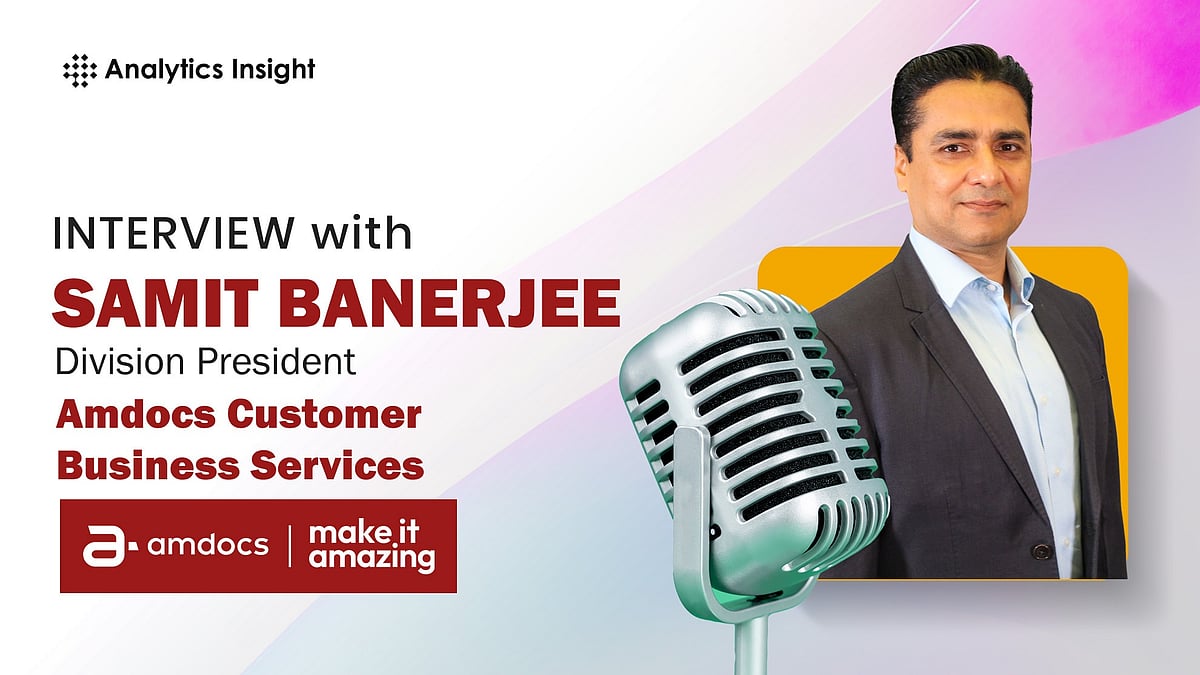
    In a recent episode of the Analytics Insight Podcast, host Priya Diyalani spoke with Samit Banerjee, Division President of Customer Business Services at Amdocs, about how agentic AI is revolutionizing telecom operations. The conversation explored autonomous networks, India’s AI advantages, enterprise opportunities, and the critical role of human oversight in AI-driven decisions.

    What Sets Agentic AI Apart from Traditional Automation?

    Banerjee explains that traditional automation is rule-based, following predefined instructions within strict limits. “Agentic AI brings intelligence to decision-making,” he says. “The AI agent can monitor the network, recognize anomalies, and make decisions automatically.” For example, telecom providers can dynamically allocate resources, create virtual network slices for enterprise clients, and maintain quality of service without human intervention.

    India’s Unique Position in AI-Driven Telecom

    India enjoys structural advantages few countries can match, according to Banerjee. The nation’s digital public infrastructure provides a robust foundation for identity verification and fraud prevention. With one of the highest volumes of mobile data globally, India offers vast datasets for training AI models. A strong fiber network, vibrant engineering community, and multilingual population enhance natural language processing technologies. Government initiatives like the IndiaAI Mission further unite public and private sectors to advance AI development.

    New Enterprise Services Through Agentic AI

    Telecom companies can evolve beyond conventional connectivity into strategic technology partners. By leveraging edge computing, they can run AI services close to end users, reducing latency in banking, manufacturing, healthcare, and smart city sectors. Telecom firms may offer environments where enterprises train AI models without transferring data remotely. AI solutions will also bolster cybersecurity by detecting threats before they penetrate enterprise networks. Intelligent networks can power applications like drones, surveillance, logistics management, and industrial robotics.

    Striking the Right Balance Between Autonomy and Oversight

    Banerjee emphasizes that not every decision should be fully autonomous. Routine operational decisions like traffic balancing and resource allocation can be handled by AI because they are repetitive and easily reversed. However, decisions involving major financial investments, public safety, or emergencies require human judgment. “The role of AI should be to provide suggestions and undertake automated operations, while human beings make critical decisions,” he states.

    The Future of Telecom in an Agentic AI World

    Emerging telecom networks will become autonomous digital ecosystems. Rather than mere bandwidth carriers, network providers will offer intelligent infrastructure that configures, heals, and optimizes itself in real time. Telecom companies will use AI for predictive maintenance, personalized customer experiences, and innovative enterprise offerings through edge intelligence. As these capabilities mature, telecom providers will act as facilitators of AI across healthcare, finance, manufacturing, logistics, and smart cities. Banerjee concludes, “The key issue is not about making AI replace humans.”

    Listen to the full discussion on the Analytics Insight Podcast.