Tag: humanoid robots

  • Tesla Optimus Output Climbs to Hundreds Per Week as Hand Dexterity Remains a Bottleneck

    Tesla Optimus Output Climbs to Hundreds Per Week as Hand Dexterity Remains a Bottleneck

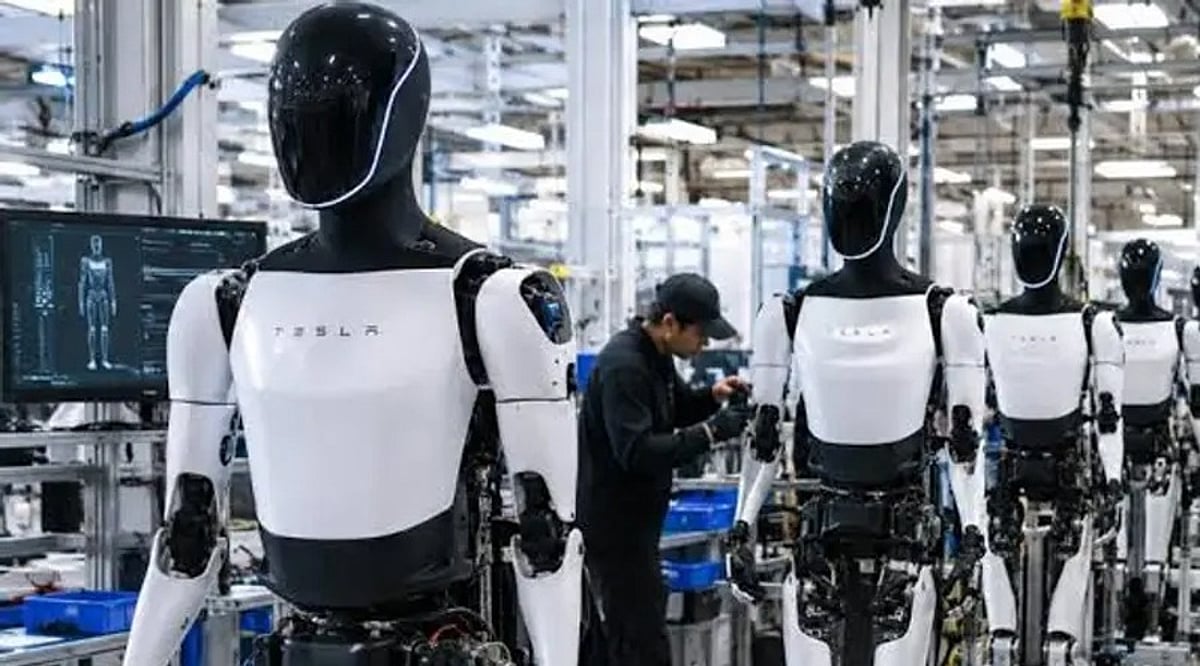
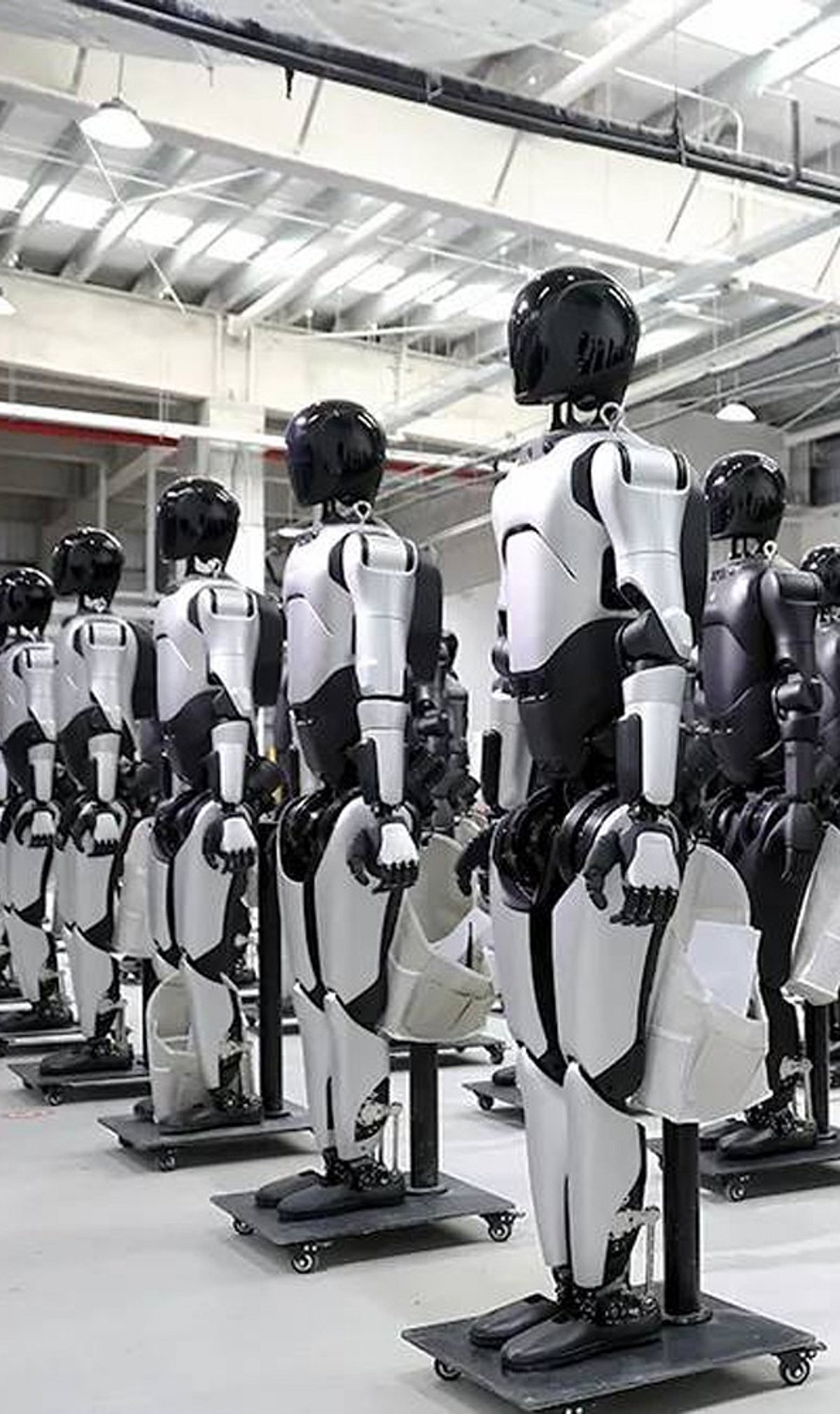
    Tesla has reportedly ramped up production of its Optimus humanoid robot to several hundred units per week, marking roughly a tenfold increase from the second quarter of 2026. The company is aiming for more than 1,000 robots per week by the end of the year, but manufacturing challenges around the robot’s complex hands and supply chain are still slowing the ramp.

    Optimus production surges

    According to The Information, Tesla went from producing dozens of Optimus units weekly during Q2 2026 to several hundred units per week in recent weeks. That is a significant jump, though not yet the stable, high-volume output Tesla wants.

    Tesla is working toward a production line capable of more than 1,000 Optimus robots per week by the end of 2026. Longer term, Elon Musk has discussed manufacturing around 20,000 robots per week.

    Hands remain the hardest engineering challenge

    One of the biggest obstacles is Optimus’ hand. The robot must perform precise, human-like movements, which requires a dense array of compact motors, actuators, sensors, and mechanical parts working together.

    According to the report, Tesla is facing difficulties not only with hand manufacturing and assembly, but also with automated production equipment and supplier availability. The company continues to refine the hand design as it moves toward a production-ready version.

    Producing these intricate components consistently at high volumes makes the challenge even greater. Tesla has previously noted that the hand and forearm system is one of the most difficult parts of Optimus to engineer.

    What’s next for Optimus

    Tesla has not publicly confirmed an exact current weekly production figure, so the several-hundred-unit number remains a reported estimate rather than an official company count.

    The company is also developing Optimus V3, which is expected to introduce hardware and design changes aimed at mass production. For now, Tesla’s immediate focus is on making its manufacturing process reliable enough to support far higher volumes.

  • China Accelerates Humanoid Robot Production: Can Cost Reductions Drive Widespread adoption?

    China Accelerates Humanoid Robot Production: Can Cost Reductions Drive Widespread adoption?

    China is rapidly scaling up its humanoid robot industry, moving from prototype development to automated mass production. The goal: increase output and slash manufacturing costs to make these robots accessible to commercial buyers.

    Automated Factories Set New Standards

    XPeng’s latest production lines automate more than 80% of core processes, applying automotive-grade manufacturing techniques to humanoid robots. This shift is driven by a need for higher volumes and lower per-unit costs.

    Cost Reduction Through Scale and Localization

    By ramping up production volumes and sourcing localized components, Chinese manufacturers have managed to bring prices down. Some humanoid robot models now cost less than 30,000 yuan (about $4,000), a threshold that signals rapid affordability improvement.

    Domestic Supply Chain Advantages

    China’s existing automotive and electronics supply chains already provide key components such as motors, reducers and sensors. This reduces the need for entirely new manufacturing capacity, accelerating time-to-market.

    Rapid Production Growth

    Agibot, a nowdel div, had produced 15,000 cumulative humanoid robots by June alone. That shows how quickly Chinese manufacturers are scaling up their production capabilities.

    Industrial Applications Expand

    Humanoid robots are now being deployed in automotive, electronics, logistics, aerospace and energy sectors. Industry attention is shifting toward practical, commercial use cases rather than just research exbits.

    Challenges Ahead

    Despite growing production, profitability remains uncertain. Manufacturers still need repeat orders, reliable performance and convincing returns on investment. The expanding robotics ecosystem in China may also lead to aggressive price competition, putting pressure on companies to balance affordability with sustainable margins.

  • 8 Sci-Fi Technologies That Are Now a Reality

    8 Sci-Fi Technologies That Are Now a Reality

    From Fiction to Function: Technologies That Are Reshaping Our World

    The line between science fiction and reality continues to blur as once-fantastical concepts become part of our everyday lives. From humanoid robots to quantum computers, these eight technologies are no longer just the stuff of movies—they are actively being developed and deployed today. Here’s a closer look at how these innovations are transforming the world around us.

    Humanoid Robots: From Screen to Workspace

    Humanoid robots have made the leap from movie sets to real-world environments, including laboratories, factories, and warehouses. With advances in artificial intelligence, computer vision, and robotics, these machines can now navigate complex spaces and perform tasks that were once thought to be exclusively human. Companies are developing robots that can carry objects, assist human workers, and learn repetitive activities. As these machines become more sophisticated, their eventual integration into homes could revolutionize how we approach daily chores and personal assistance.

    Brain-Computer Interfaces: Mind Meets Machine

    The idea of controlling technology with our thoughts is no longer just a futuristic fantasy. Brain-computer interfaces (BCIs) are making this possible by interpreting neural signals and translating them into digital commands. This technology holds immense potential for individuals with paralysis, enabling them to communicate and operate devices using only their minds. While consumer applications are still a ways off, the medical implications alone could redefine assistive technology and human-computer interaction.

    Self-Driving Cars: The Road to Autonomy

    Autonomous driving has evolved from a science-fiction trope to a technology being tested on real roads around the globe. Modern vehicles are equipped with advanced cameras, sensors, and artificial intelligence systems that assist drivers and perform certain driving functions. While fully autonomous vehicles still face technical, regulatory, and safety hurdles, the ongoing development suggests that transportation will gradually become less reliant on human control, promising a future with fewer accidents and more efficient travel.

    AI Personal Assistants: Your Digital Sidekick

    Fictional computers that can understand and respond to natural language are becoming increasingly realistic, thanks to generative artificial intelligence. Today’s AI assistants can answer questions, summarize information, create content, and perform a variety of digital tasks. As these systems become more capable and integrated with other applications, they are poised to evolve into personalized digital agents that manage schedules, conduct research, facilitate communication, and streamline everyday workflows.

    Quantum Computing: Unlocking Unprecedented Power

    Quantum computing is set to solve complex problems that are currently beyond the reach of conventional computers. By leveraging the principles of quantum mechanics, researchers are developing machines with potential applications in medicine, materials science, optimization, and cybersecurity. Although today’s quantum systems are still experimental and face significant technical challenges, ongoing advances in quantum hardware and error correction are bringing this futuristic technology closer to practical use.

    Artificial Organs: Bridging the Gap in Medicine

    Science fiction has long imagined a world where damaged body parts can be replaced with artificial or laboratory-grown alternatives. Modern medicine is already making this a reality with the development of artificial hearts, advanced prosthetics, tissue engineering, and lab-grown organs. Researchers are focused on making these technologies safer, more durable, and biologically compatible. While fully replacing complex human organs remains a challenge, breakthroughs in regenerative medicine could one day transform transplantation and revolutionize healthcare.

    Augmented Reality Glasses: The Digital Overlay

    Augmented reality (AR) glasses are bringing digital information into our physical surroundings, much like the futuristic interfaces depicted in sci-fi films. Modern AR devices can display navigation cues, digital objects, and contextual instructions while allowing users to interact with virtual content. With improvements in lightweight hardware, displays, sensors, and AI, AR glasses are becoming more practical for use in workplaces, education, entertainment, and everyday communication.

    Conclusion

    These eight technologies are no longer just figments of our imagination—they are real, tangible innovations that are already shaping our present and will continue to define our future. As they evolve and become more integrated into our lives, we can expect to see even more incredible advancements that were once thought impossible. The future is indeed here, and it’s more exciting than we ever imagined.

  • Haier at IFA 2026: AI-Powered Appliances and Humanoid Robots Take Center Stage

    Haier at IFA 2026: AI-Powered Appliances and Humanoid Robots Take Center Stage

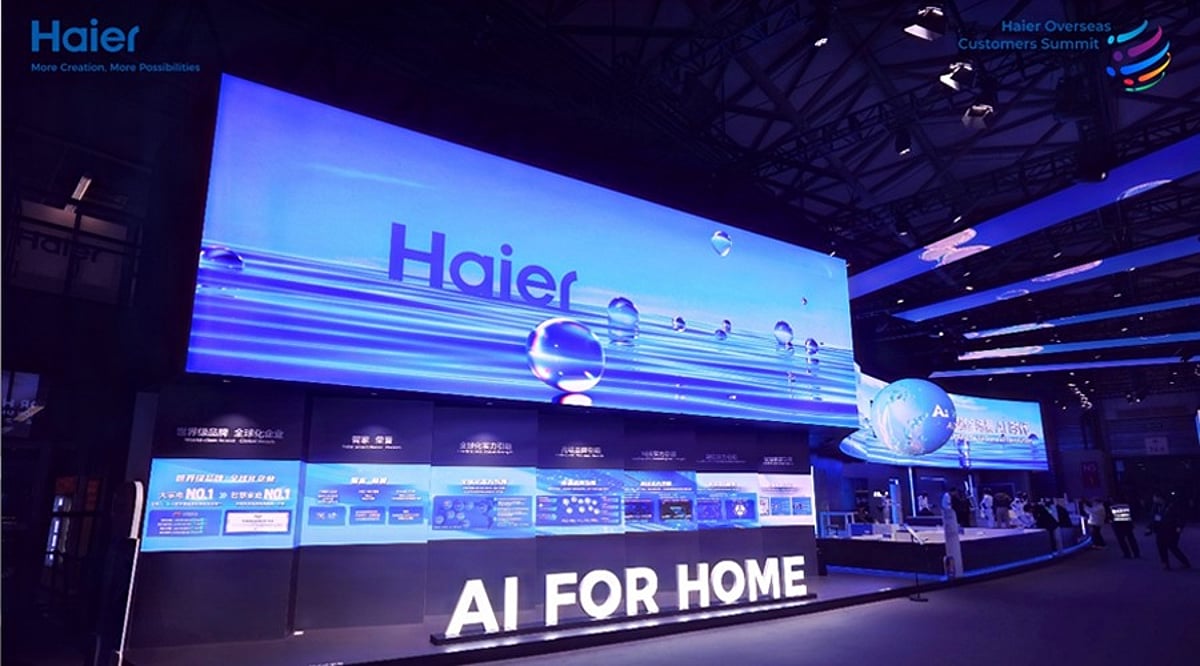
    At IFA 2026 in Berlin, Haier showcased its latest AI-powered home ecosystem, blending smart appliances, digital services, and robotics under the theme ‘Home of Intelligent Possibilities.’ The company highlighted systems designed to adapt to user habits, household conditions, and daily routines, moving beyond individual connected devices to a fully integrated intelligent home experience.

    Haier’s exhibition covered laundry, refrigeration, cooking, entertainment, and robotic devices. The company also announced plans to invest at least EUR 13 billion over the next five years in artificial intelligence, robotics, semiconductors, research, and IoT security.

    From Smart Devices to an Intelligent Home

    Haier emphasized that its strategy goes beyond standalone smart appliances. The goal is to enable different products to work together around the needs of people at home. The hOn app unifies Haier Europe’s appliances and digital services, allowing devices to respond to daily routines automatically.

    Neil Tunstall, CEO of Haier Europe, explained that the company aims to reduce the effort involved in common household tasks. Regarding AI-assisted cooking, he said, “The product now will do that for you. And that hopefully means then that we can actually enjoy eating much more at home.”

    AI Enhances Laundry, Food Care, and Entertainment

    Several products at IFA use cameras, sensors, and AI software to optimize their operations. The Vision 15 washing machine assesses load size, balance, and foam levels, adjusting water use, detergent, drum movement, and washing settings accordingly.

    The Maestro refrigerator prototype features the AI Food Care System 2.0, which recognizes stored food and recommends suitable storage conditions. Haier’s ID Ultimate Series 6 oven identifies food, tracks the cooking process, and stops automatically when done. UltraSense AI also adjusts picture and sound settings on Haier Smart TVs based on content and room conditions.

    Robotics Expands the Connected Home Strategy

    Haier presented humanoid robots and other robotic systems capable of performing physical tasks alongside connected appliances. The display included cleaning robots that recognize objects and types of dirt, as well as companion robots designed for voice support and personalized assistance.

    Tunstall noted that robotics could handle basic household jobs without replacing people. “We’re not trying to replace the human,” he said. “There are basic tasks that robotics can do.” He cited robot vacuum cleaners and robotic lawnmowers as examples of technology already taking over routine work.

    EUR 13 Billion Investment in AI and Robotics

    Haier plans to invest at least EUR 13 billion over the next five years in AI, robotics, research, advanced engineering, and related technologies. Tunstall said the investment would accelerate the delivery of new products and features to consumers.

    “Our next five years is spending 13 billion on AI, on robotics, on R&D, advanced engineering, and all of those things,” Tunstall said. He added that the funding would support faster product development across Haier’s categories.

    Haier also uses data from connected appliances to study how people use products and to improve design, manufacturing, and delivery. The company reported more than 130 million registered users on its smart home platform and 86.1 billion smart-scene interactions in 2025.

    While some technologies shown at IFA 2026 remain at the concept stage, Tunstall expects more of them to move toward commercial release. “They’re not here right now, but they are going to be here pretty soon in this industry,” he said.

  • Tau Robotics Launches Humanoid Robot Cleaning Service in San Francisco – $30/Hour with Remote Human Control

    Tau Robotics Launches Humanoid Robot Cleaning Service in San Francisco – $30/Hour with Remote Human Control

    Tau Robotics has launched an invite-only home cleaning service in San Francisco using humanoid robots that cost $30 (approximately ₹3,000) per hour. These robots are not fully autonomous — a remote human operator controls every move while AI assists with balance, navigation, and simple actions.

    The robots can vacuum floors, wipe counters, wash dishes, tidy rooms, and take out the trash during routine home cleaning sessions. Tau offers different robot models for different jobs: Chelsea cleans kitchens and bathrooms, Elon handles weekly tidying, and Tony tackles deep cleaning.

    Every cleaning session helps Tau collect valuable real-world household data, allowing its AI to learn how homes differ from controlled lab environments. For safety, an adult resident must stay at home while the robot works, and human supervision remains essential during every visit.

    The service is currently a paid beta test available only through an invite-only waitlist as Tau improves reliability before expanding. The biggest concern is privacy — since humans remotely operate the robots using cameras, users may worry about data security inside their homes.

    Experts believe fully autonomous home robots are still years away. Today’s human-assisted cleaners are an important step toward smarter household AI.

  • Trump Administration Bans New Chinese Robots to Safeguard US AI Infrastructure

    Trump Administration Bans New Chinese Robots to Safeguard US AI Infrastructure

    The Trump administration has implemented new technology restrictions aimed at Chinese-made humanoid robots, quadruped robots, and connected power inverters, citing national security concerns and the need to protect America’s rapidly expanding artificial intelligence infrastructure. The measures, announced by the US Federal Communications Commission (FCC), took effect immediately upon publication.

    The restrictions apply exclusively to new product models not yet released in the United States. However, the FCC retains the authority to revoke approvals for products already authorized for sale if deemed necessary.

    Focus on AI, Cybersecurity, and Critical Infrastructure

    According to US officials, the measure is designed to reduce the risk of cyberattacks, surveillance, and supply chain vulnerabilities as the country invests heavily in building AI data centers and computing infrastructure. Inverters used to connect renewable energy devices and batteries to the electric grid have become increasingly important for AI data centers.

    The administration has also raised concerns about the potential use of networked robots for espionage and remote interference by foreign entities. Officials stated the measure is intended to secure key technologies vital to the nation’s security and economy.

    Chinese Firms Likely to Be Hit Hardest

    While the order does not explicitly name individual companies, it is expected to have the greatest impact on Chinese manufacturers, including Unitree Robotics, one of the world’s leading producers of humanoid and quadruped robots. China currently dominates the global humanoid robotics market, making the restrictions a significant setback for its expansion into the US market.

    The FCC indicated that manufacturers outside China may still qualify for exemptions, provided they satisfy security requirements.

    Beijing Condemns Move

    China condemned the move, claiming that the US unfairly singled out Chinese companies for punitive action and vowing to do whatever is necessary to defend its business interests. These restrictions, among others implemented by the US government in recent times, reflect the increased competition between the two countries as they vie for supremacy in AI and semiconductor production and supply chains.

    This development underscores a convergence of technology policies and national security issues, with AI infrastructure emerging as a key area of competition.

  • 7 Major Manufacturers Deploying Humanoid Robots on Factory Floors in 2026

    7 Major Manufacturers Deploying Humanoid Robots on Factory Floors in 2026

    Humanoid robots are no longer confined to research labs—they are now working alongside human employees in real manufacturing environments. Seven leading global manufacturers have already deployed or are actively testing humanoid robots for factory operations, material transport, and production support. Rapid investment and expanding robot production signal a major shift in industrial automation.

    Humanoid Robots in Manufacturing: A New Era

    Factories have relied on machines for decades, but humanoid robots mark a significant evolution. Unlike traditional robotic arms fixed in place, humanoid robots can walk, carry objects, pick up parts, and operate in spaces designed for human workers. Their human-like shape allows them to integrate into existing production lines without requiring major factory redesigns.

    Many global manufacturers have already moved from trials to commercial deployments. These robots handle repetitive, physically demanding, and time-consuming tasks, complementing human workers rather than replacing them. As artificial intelligence improves, humanoid robots are expected to become a regular part of factory operations.

    BMW Uses Figure Humanoid Robots on Production Floor

    BMW Group became one of the first major car manufacturers to place humanoid robots inside an active factory. Partnering with Figure AI, BMW tested Figure robots at its Spartanburg manufacturing plant in South Carolina. The initial deployment focused on repetitive tasks such as moving components between workstations and handling parts before assembly. After successful trials, BMW expanded the partnership with the latest Figure 03 humanoid robot. The deployment supported the production of more than 30,000 BMW X3 vehicles, proving that humanoid robots can operate safely alongside factory employees.

    Mercedes-Benz Expands Factory Automation with Apollo

    Mercedes-Benz has partnered with Apptronik, the company behind the Apollo humanoid robot, to enhance factory logistics. Apollo robots transport components, move materials across production areas, and complete repetitive internal tasks. Mercedes-Benz also invested in Apptronik to accelerate commercial development. The company now uses Apollo robots at its Berlin Digital Factory Campus, where engineers continue testing new manufacturing applications before wider deployment across additional factories.

    Tesla Develops Optimus for Its Own Factories

    Tesla follows a unique strategy by designing and building its own humanoid robot, Optimus. Instead of purchasing robots from another company, Tesla develops both the hardware and the artificial intelligence system. Optimus handles material transport and repetitive manufacturing jobs inside Tesla facilities. The company continues to expand robot production as development progresses. Tesla views its factories as the first large-scale workplace for Optimus before the robot enters other industries.

    Hyundai Prepares Atlas for Future Vehicle Production

    Hyundai Motor Group plans to introduce Boston Dynamics’ Atlas humanoid robot into manufacturing over the next few years. The first major deployment is expected at Hyundai’s Georgia Metaplant by 2028. Atlas will support tasks requiring movement across factory floors, component transport, and production assistance. Industry estimates place the cost of each Atlas robot at around $130,000, with an expected return on investment of roughly two years through improved productivity and lower operating costs.

    Jabil Tests Apollo Inside Electronics Manufacturing

    Electronics manufacturer Jabil is working with Apptronik to evaluate Apollo humanoid robots inside production facilities. Unlike automotive factories, electronics manufacturing often requires frequent movement of materials between different production stations. Apollo helps with repetitive logistics tasks that normally consume valuable employee time. These real-world tests allow both companies to collect operational data before larger commercial deployment. Jabil’s role as one of Apptronik’s primary manufacturing partners provides valuable feedback to improve robot performance for future customers.

    Magna International Evaluates Phoenix for Industrial Work

    Automotive supplier Magna International has partnered with Sanctuary AI to explore the use of the Phoenix humanoid robot in manufacturing. The partnership focuses on industrial production support across automotive operations. Phoenix performs repetitive factory duties, including moving materials and assisting with production activities. Magna’s evaluation reflects a growing trend among global suppliers seeking practical automation solutions without major factory redesign.

    Schaeffler Adopts Digit for Factory Logistics

    Industrial manufacturer Schaeffler has introduced Agility Robotics’ Digit humanoid robot to support factory logistics. Digit transports materials between work areas and completes repetitive movement tasks inside industrial facilities. Agility Robotics reports more than 65,000 operational hours for Digit across manufacturing and logistics environments. The company has also secured over $300 million in conditional multi-year orders for the next-generation Digit V5 robot, demonstrating strong commercial demand. To support future growth, Agility Robotics opened a 60,000-square-foot research and training center in California.

    Humanoid Robots Gain Momentum in Factories

    The rapid increase in humanoid robot utilization means manufacturing has emerged as the largest market for this innovative technology. Factory environments are highly structured, allowing robots to perform tasks accurately and efficiently. Companies like BMW Group, Mercedes-Benz, Tesla, Hyundai Motor Group, Jabil, Magna International, and Schaeffler have already started factory trials, commercial deployments, and long-term production programs.

    The market is developing rapidly. Apptronik recently opened a 90,000-square-foot Robot Park to prepare Apollo for large-scale manufacturing deployment. At the same time, XPeng, a Chinese car manufacturer, plans to produce over 1,000 humanoid robots per month by 2026, indicating that production capabilities are increasing.

    Humanoid robots have not yet reached full maturity, but effective factory applications already exist. If artificial intelligence progresses further and production costs decrease, the role of humanoid robots will significantly rise in the years to come.

    Frequently Asked Questions

    1. Which company first deployed Figure humanoid robots in manufacturing? BMW Group deployed Figure humanoid robots at its Spartanburg plant to support material handling and production tasks.
    2. What factory tasks do humanoid robots usually perform? Most humanoid robots transport materials, move components, handle repetitive jobs, and assist with production logistics.
    3. Why do manufacturers prefer humanoid robots? Their human-like design allows them to work inside existing factories without major changes to production layouts.
    4. Which industries currently use humanoid robots the most? The automotive and electronics manufacturing industries lead commercial adoption due to their structured factory environments.
    5. Are humanoid robots replacing factory workers? Current deployments mainly support repetitive and physically demanding tasks, while human workers continue to manage skilled, complex, and decision-based operations.

  • Nvidia Partners with Japanese Robotics Firms to Accelerate AI-Powered Automation

    Nvidia Partners with Japanese Robotics Firms to Accelerate AI-Powered Automation

    Nvidia is deepening its commitment to robotics by partnering with leading Japanese companies to develop advanced AI-powered machines. This collaboration targets the creation of next-generation factory robots, AI-powered humanoids, and digital twin simulations that streamline development and testing.

    Japan’s longstanding leadership in robotics, combined with Nvidia’s powerful GPU computing platforms, positions the partnership to drive a new wave of industrial automation. The goal is to improve productivity and efficiency in manufacturing through smarter, AI-driven systems.

    Beyond factories, the technology could extend to healthcare, logistics, and service robots, enabling more intelligent and autonomous operations. The move reflects the global race to invest in intelligent automation, with Nvidia providing the computational backbone for training and deploying robotics AI models.

    This strategic partnership underscores how Japan is strengthening its role in global AI development, leveraging digital twins and advanced simulations to accelerate innovation. The collaboration is expected to have a significant impact on the future of robotics and AI across multiple industries.

  • Top Advanced Humanoid Robots Shaping the Future of Automation and AI

    Top Advanced Humanoid Robots Shaping the Future of Automation and AI

    The field of humanoid robotics has seen remarkable advancements, with robots now capable of performing complex tasks in industrial, research, and commercial settings. Below is a look at the world’s most advanced humanoid robots and their unique capabilities.

    Tesla Optimus

    Designed to handle repetitive workplace tasks, Tesla Optimus leverages advanced artificial intelligence, autonomous movement, and human-like dexterity for industrial applications worldwide.

    Figure 02

    Built for manufacturing environments, Figure 02 combines AI reasoning, natural conversations, precise manipulation, and autonomous task execution inside modern industrial facilities.

    Boston Dynamics Atlas

    Boston Dynamics Atlas demonstrates remarkable agility through running, jumping, lifting, balancing, and performing complex physical tasks with advanced robotic intelligence and control.

    Unitree G1

    Unitree G1 offers affordable humanoid robotics featuring agile movement, AI-powered capabilities, and versatile applications across research, education, and commercial development environments.

    Agility Robotics Digit

    Engineered for warehouse logistics, Agility Robotics Digit can lift packages, navigate obstacles, and assist human workers with repetitive operational tasks efficiently.

    Sanctuary AI Phoenix

    Sanctuary AI Phoenix focuses on general-purpose intelligence, enabling robots to perform human-like tasks using advanced AI reasoning and adaptable physical capabilities daily.

    Engineered Arts Ameca

    Engineered Arts Ameca is famous for lifelike facial expressions, realistic interactions, advanced conversational abilities, and demonstrations that showcase human-robot communication and emotional engagement effectively.

    Xiaomi CyberOne

    Xiaomi CyberOne combines AI vision, speech recognition, human motion sensing, and balanced walking to demonstrate China’s progress in humanoid robotics innovation.

    UBTECH Walker S2

    Developed for smart factories, UBTECH Walker S2 integrates autonomous mobility, object handling, collaborative operations, and intelligent manufacturing support with advanced robotic capabilities.

  • 2030 Robotics Forecast: Top Trends Driving the Industry’s Next Decade

    2030 Robotics Forecast: Top Trends Driving the Industry’s Next Decade

    The robotics industry is undergoing a profound transformation. No longer confined to rigid, pre-programmed tasks, modern machines are learning, adapting, and collaborating with humans at an unprecedented pace. Driven by advances in artificial intelligence, sensor technology, and declining hardware costs, the sector is poised for explosive growth. By 2030, experts predict the global robotics market will surpass $110 billion, with some estimates reaching beyond $200 billion. Here are the top ten predictions shaping the future of robotics.

    1. Humanoid Robots Become Mainstream

    Humanoid robots, designed to navigate environments built for people, are moving from research labs into commercial settings. By 2030, these machines will be common in factories, warehouses, hotels, and healthcare facilities. Industry forecasts suggest that at least one million humanoid robots could be deployed between 2026 and 2030, though specialized robots will still outperform them in many specific tasks.

    2. AI Becomes the Brain of Every Robot

    Artificial intelligence is transforming robots from simple tools into intelligent agents. Future robots will understand voice commands, recognize objects, and make real-time decisions. The intelligent robotics market is projected to grow from $13.99 billion in 2025 to $50.33 billion by 2030, a compound annual growth rate (CAGR) of 29.2 percent.

    3. Collaborative Robots Work Alongside Humans

    Collaborative robots, or cobots, are designed to operate safely with people without extensive safety barriers. Their ease of use and lower cost make them accessible to small and mid-sized businesses. With the global stock of industrial robots reaching 4.664 million units in 2024—a 9 percent increase from the prior year—automation continues to drive productivity and address labor shortages.

    4. Smart Factories Achieve Greater Autonomy

    Factories are integrating robots, sensors, cameras, and software into unified systems that can adapt to changing demand, equipment issues, or supply chain disruptions. Digital twins and machine vision enhance quality control. Asia leads this trend, accounting for 66.6 percent of the global industrial robotics market in 2024, fueled by strong manufacturing growth and automation investments.

    5. Healthcare Robots Expand Their Role

    Robots are increasingly assisting in surgery, transporting supplies, disinfecting rooms, and supporting rehabilitation. An aging population and healthcare worker shortages are driving demand. The service robotics market is expected to grow from $26.35 billion in 2025 to $131.9 billion by 2034, at a CAGR of 19.8 percent.

    6. Warehouse Automation Accelerates

    E-commerce growth is pushing warehouses to process orders faster. Autonomous mobile robots, robotic picking systems, and smart inventory tools are becoming essential. The warehouse robotics market is forecast to rise from $6.51 billion in 2025 to $25.41 billion by 2034, a CAGR of 16.8 percent.

    7. Robot Teams Tackle Complex Tasks

    Future workspaces will rely on teams of robots that share information and coordinate tasks. This approach improves resilience—if one robot fails, others can step in. Annual industrial robot installations now exceed 500,000 units, roughly double the rate from a decade ago.

    8. Edge AI Boosts Robot Performance

    Edge AI enables robots to process data locally, reducing latency and enhancing privacy. This is critical for applications in factories, hospitals, and remote locations. The industrial robotics market could reach $60.6 billion by 2030, with edge computing and AI as key drivers.

    9. Digital Twins Speed Up Development

    Digital twin technology creates virtual replicas of machines and production lines, allowing engineers to test and refine robotic systems before deployment. This reduces costs and risks. As AI advances, digital testing will become a standard part of robot development.

    10. Robotics Becomes a Massive Global Industry

    The convergence of smarter AI, cheaper hardware, and labor shortages is fueling demand across manufacturing, healthcare, logistics, agriculture, retail, and construction. The global robotics market is expected to exceed $110 billion by 2030, and with software and service robots included, could top $200 billion. Robotics is set to become one of the most lucrative and influential technology sectors of the decade.