
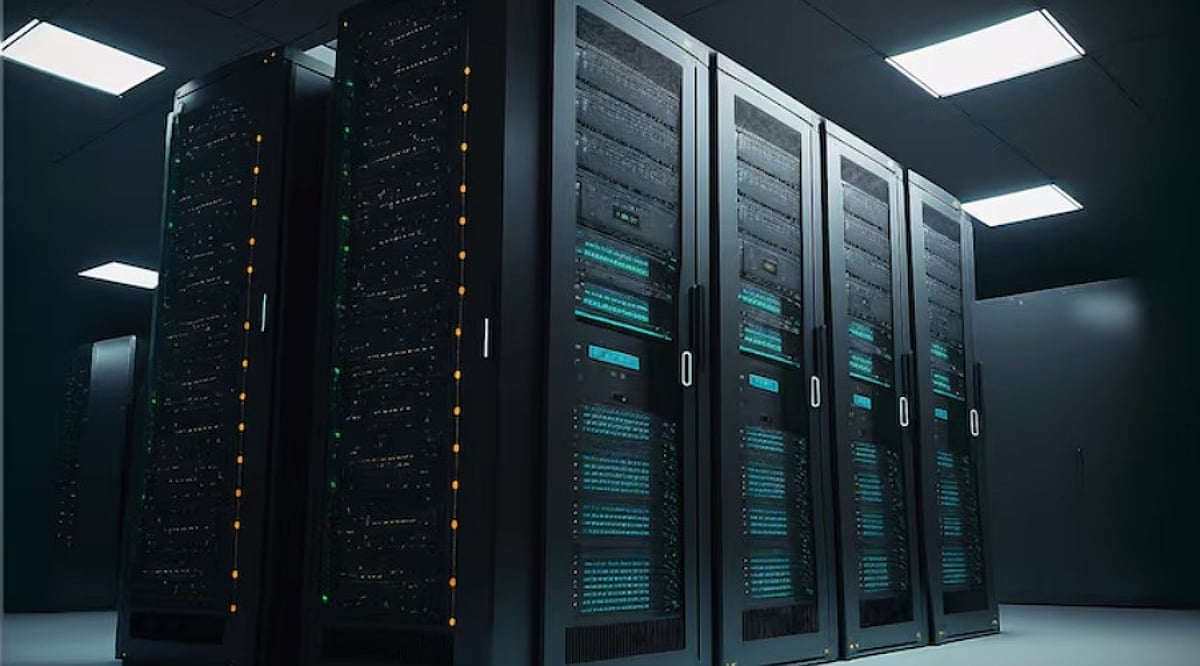
India’s AI-driven digital transformation is rapidly elevating data centres from supporting infrastructure into a strategic national asset. With cumulative investment commitments exceeding $126 billion, strong government incentives, and surging demand from global hyperscalers, the sector is entering an unprecedented expansion phase.
Global tech giants including Google, Microsoft, Amazon Web Services (AWS), and domestic operators like AdaniConneX and STT GDC India are aggressively building AI-ready facilities to meet soaring demand for cloud computing and AI workloads. However, long-term success will depend on overcoming significant challenges related to power supply, water usage, land availability, skilled talent, and project execution.
Market Inflection Point
According to a July 2026 KPMG report, India’s data centre sector stands at an inflection point where demand visibility, capital inflows, and technology shifts are aligning. The country’s total data centre capacity crossed 1,700 MW in 2025, with 440 MW added—a 160% jump from 2024. Projections indicate another 30% year-on-year growth in 2026, with approximately 500 MW of fresh supply expected. The market’s financial trajectory reflects this pace: IBEF projects the sector will reach $22 billion by 2030 at a 14-15% CAGR, while KPMG identifies a $46 billion opportunity in AI-optimised data centres alone by 2033, growing at a 35.1% CAGR.
This growth is driven by three simultaneous forces: the explosion in AI workloads, accelerating enterprise cloud adoption, and India’s Digital Personal Data Protection Act, which restricts cross-border data transfers and effectively requires global companies to build physical infrastructure inside the country.
Hyperscaler Commitments at Unprecedented Scale
The scale of hyperscaler commitments to India in the past eighteen months is without precedent. Google announced a $15 billion investment in AI data centres in Andhra Pradesh in October 2025. Microsoft followed with a $17.5 billion commitment through 2030, building on an earlier $3 billion program. Amazon Web Services has pledged $35 billion by 2030. Domestically, AdaniConneX has announced $100 billion in renewable-powered hyperscale capacity through 2035, while STT GDC India was recently valued at close to $14 billion.
India’s attractiveness rests on structural advantages: over 900 million internet users, average monthly wireless data consumption exceeding 25 GB per user, nearly 20% of global AI-related development activities, and software engineers available at roughly $20,000 per year—a fraction of costs in the US, Europe, or Singapore.
Policy Shift: From Neutral to Active Enabler
India’s regulatory environment has moved from passive observation to active facilitation. The Union Budget 2026-27 extended a 20-year tax holiday to eligible foreign cloud providers through 2047, along with 25-35% capital incentives for green technology adoption and a 15% safe harbor margin to reduce transfer pricing disputes. The draft National Data Center Policy, when finalized, is expected to streamline land, power, and environmental approvals—historically a primary bottleneck.
Multiple states have introduced incentive frameworks: Telangana, Maharashtra, Andhra Pradesh, Tamil Nadu, and Uttar Pradesh are leading inflows, while tier-II cities including Ahmedabad, Visakhapatnam, Patna, and Bhopal are seeing growing developer interest driven by lower land costs and 5G rollout.
The Execution Gap
Despite momentum, a significant gap exists between announced and operational capacity. Less than 20% of announced capacity from roughly 30 large projects launched between March 2025 and April 2026—collectively adding around 3.5 GW—is currently live. Most large, multi-phase campuses have commissioning timelines extending to 2028 and beyond. Mumbai still accounts for over 50% of operational inventory, and with Chennai, Delhi-NCR, and Bengaluru, these four cities host nearly 90% of tier-I capacity. Hyderabad and Visakhapatnam together account for over 2 GW of planned AI-native capacity, but execution risk remains.
Sustainability Constraints: Power and Water
The most consequential constraints are physical. A 100 MW hyperscale facility requires approximately 2 million liters of water per day for cooling, yet 60-80% of Indian data centres face high water stress. Visakhapatnam district, where a 1 GW AI-native campus is planned, has the lowest groundwater availability for industrial use in Andhra Pradesh. On power, AI-ready facilities demand far higher density, often exceeding 50 kW per rack, straining local grid infrastructure. While India has surpassed 500 GW of total installed power capacity and renewables exceed 50% of generation in some periods, coal still supplies around 70% of actual generation. Operators like Nxtra and STT GDC India are already running at 60-63% renewable energy integration, but alignment between renewable capacity additions and data centre locations remains uneven.
What Must Happen Next
KPMG’s KG Purushothaman emphasized the need for integrated execution models combining engineering capability, AI readiness, regulatory understanding, and operational accountability. India needs to build delivery infrastructure: grid modernization, water-efficient and liquid-cooling technologies, specialized data centre workforce pipelines, and environmental frameworks that accommodate hyperscale facilities without depleting local resources.
The workforce dimension is frequently underestimated. India has a world-leading IT workforce but not yet a world-class data centre operations workforce at the scale required. A modern hyperscale campus needs highly specialized mechanical and electrical engineers, HVAC and cooling plant operators, cybersecurity professionals, and power systems specialists—roles not produced in large numbers by current engineering education pipelines.
The strategic parallel with India’s IT services industry is instructive. Data centres require a different asset base—land, power, water, fiber, and specialized operations—but the underlying logic of structural cost advantage and scale remains similar. Whether India captures 4-5% of global data centre capacity additions between 2026 and 2032, as CBRE projects, will depend less on capital availability and far more on whether physical, human, and regulatory infrastructure can be delivered fast enough to match the ambition.
Why This Matters
Artificial intelligence is dramatically increasing demand for computing power, cloud services, and high-performance data centres worldwide. As one of the world’s fastest-growing digital economies, India has an opportunity to become a major global AI infrastructure hub. However, investment announcements alone are not enough. Delivering hyperscale facilities requires reliable electricity, sustainable water management, high-speed connectivity, regulatory clarity, and a skilled workforce. Understanding these opportunities and constraints is essential for technology companies, cloud providers, policymakers, investors, and enterprises planning long-term digital infrastructure strategies.