Tag: IBM

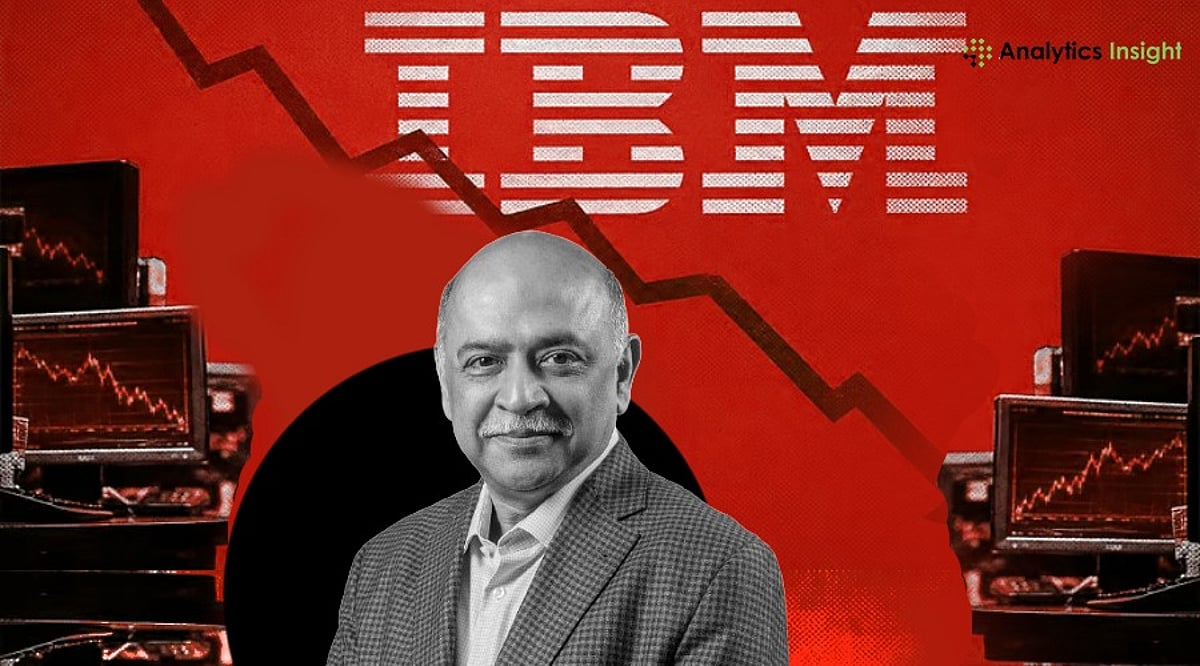
  • IBM Stock Plunges 25% After CEO Krishna Admits Company Was Too Slow on AI

    IBM Stock Plunges 25% After CEO Krishna Admits Company Was Too Slow on AI

    IBM shares posted their steepest one-day drop in decades after the company reported disappointing preliminary second-quarter results, with CEO Arvind Krishna acknowledging that the company failed to adapt quickly enough to the artificial intelligence spending boom. The selloff erased billions of dollars in market value and sent shockwaves through the technology sector.

    Revenue Miss and Profit Warning

    The technology giant reported revenue of $17.2 billion for the quarter ended June, up just 1% from the same period last year but below analysts’ expectations. Adjusted earnings per share also missed estimates, triggering a sharp market reaction. IBM shares fell about 25% in a single trading session, marking the steepest stock decline for the company in decades.

    CEO Admits Execution Failures

    In a letter to investors, Krishna said IBM underestimated how rapidly enterprise customers would redirect technology budgets toward AI infrastructure such as servers, storage systems, and memory hardware.

    “These conditions require our teams to execute perfectly, and this quarter we faltered. We did not adapt and move quickly enough,” Krishna wrote.

    He added that several large deals also failed to close within the expected timeline, further weighing on the company’s performance. IBM had anticipated supply-chain constraints would limit demand, but instead customers accelerated purchases of AI infrastructure, reducing spending on software and mainframe-related products.

    Spending Shift Hurts Software Business

    IBM’s infrastructure division posted a 7% decline in revenue, while software revenue grew 5%, slower than market expectations. Consulting revenue remained largely flat, reflecting cautious enterprise spending.

    The results highlight a broader industry shift: businesses are prioritizing investments in AI hardware and data center infrastructure over traditional software deployments. Analysts warn the trend could pressure other enterprise software companies in the coming quarters.

    Bright Spots in the Quarter

    Despite the overall disappointment, certain parts of IBM’s business performed well. Red Hat recorded 11% revenue growth, while recently acquired companies HashiCorp and Confluent delivered strong results. IBM also noted that its Distributed Infrastructure business achieved record performance, supported by demand for Power servers and storage systems, with a backlog of approximately $500 million exiting the quarter.

    IBM maintained that its long-term AI strategy remains intact, but the latest results underscore how rapidly changing enterprise priorities are reshaping the technology industry as companies race to build AI infrastructure.

  • S&P 500 Gains as June Inflation Slows and Bank Profits Surge

    S&P 500 Gains as June Inflation Slows and Bank Profits Surge

    U.S. stocks climbed on Tuesday after June inflation data came in cooler than expected, easing fears of an imminent Federal Reserve rate hike. The S&P 500 rose 0.5%, the NASDAQ Composite added 1%, and the Dow Jones Industrial Average gained roughly 86 points, or 0.2%. However, a steep drop in IBM shares and rising oil prices capped broader gains.

    June Inflation Data Boosts Market Sentiment

    The Consumer Price Index fell 0.4% in June from the prior month, bringing the annual inflation rate down to 3.5% from 4.2% in May. Economists had anticipated a 0.2% monthly decline and a 3.8% annual rate. The softer data reduced concerns that rising energy costs would push prices higher, and Treasury yields fell in response, lifting technology and housing-related stocks. Builders FirstSource and Lennar both gained as borrowing costs eased.

    Traders also scaled back bets on a July rate increase. According to CME FedWatch data, the probability of a hike dropped to 17% from 42% the previous day. Markets still see a higher chance of tighter policy at the September meeting.

    Bank Earnings Lift Financial Sector

    Major banks kicked off second-quarter earnings season with stronger-than-expected profits. Goldman Sachs rose after beating estimates, driven by dealmaking and equities trading. JPMorgan Chase, Citigroup, and Bank of America also gained on higher quarterly earnings. Wells Fargo traded lower despite reporting profit above expectations. The broader S&P 500 financial sector moved higher, with most major sectors posting gains during early trading.

    Investors are watching earnings reports for insights into consumer spending, business activity, and credit conditions. The reports showed steady card spending and stronger trading revenue, along with fresh data on loan demand.

    IBM Plunge Weighs on Dow

    IBM shares tumbled about 24% after the company warned that second-quarter revenue and profit would miss expectations due to weak demand in software and infrastructure. The decline pressured the Dow and dragged down other software stocks, including Oracle, ServiceNow, and Accenture. CEO Arvind Krishna acknowledged that the company failed to close several large deals on schedule, stating, “We did not adapt and move quickly enough,” while pointing to weaker execution across key businesses.

    Oil Prices Rise Amid Geopolitical Tensions

    Oil prices climbed as tensions between the United States and Iran escalated. U.S. crude traded above $80 per barrel, and Brent crude moved above $85 after President Donald Trump announced plans to restore a blockade on Iranian shipping through the Strait of Hormuz. The move raised concerns about global energy supplies. Higher fuel costs could slow the recent decline in inflation and maintain pressure on the Federal Reserve.

    Skyler Weinand of Regan Capital noted that the inflation surge linked to the conflict may be fading but warned that the relief “may just be temporary” as regional tensions increase.

    Chip Stocks Rebound After Monday’s Losses

    Semiconductor shares recovered after heavy selling in the previous session. The VanEck Semiconductor ETF rose nearly 2%, and the Philadelphia Semiconductor Index gained more than 3%. Applied Materials, Teradyne, Lam Research, Micron Technology, and STMicroelectronics all moved higher. NVIDIA also gained after falling sharply on Monday. The rebound helped the NASDAQ recover part of its previous decline, while investors continued to watch valuations in the volatile AI sector.

    Fed Chair Kevin Warsh prepared to testify before Congress later Tuesday, reiterating that returning inflation to the central bank’s 2% target remains a priority. He did not provide a direct signal about the Fed’s next rate decision.

    Disclaimer: Analytics Insight does not provide financial advice or guidance on cryptocurrencies and stocks. This article is for informational purposes only and does not constitute investment advice. Always conduct your own research before making any investments.

  • IBM Revenue Warning Sparks Widespread Decline in Software Stocks

    IBM Revenue Warning Sparks Widespread Decline in Software Stocks

    IBM shares plunged more than 22% in premarket trading Tuesday after the company issued a preliminary second-quarter earnings warning, citing weaker software and infrastructure results as customers redirected spending toward AI hardware. The warning triggered a broad sell-off across major software stocks, including Microsoft, ServiceNow, Salesforce, and Intuit, which fell between 3% and 5%.

    IBM expects second-quarter revenue of $17.2 billion, up 1% year-over-year but below the analyst consensus of $17.86 billion compiled by LSEG. Adjusted earnings are projected at $2.93 per share, compared to the forecast of $3.02 per share. The company attributed the shortfall to a significant shift in customer spending during the final weeks of June, as businesses accelerated capital expenditures on servers, storage, and memory chips for artificial intelligence systems ahead of anticipated price increases and supply constraints.

    CEO Arvind Krishna acknowledged that while IBM anticipated some supply-chain pressure, it “did not anticipate the magnitude” of the spending shift. He also noted that rapidly evolving cybersecurity concerns distracted clients and impacted purchasing decisions. Preliminary figures show software revenue rose 5% in the quarter, consulting revenue remained flat, and infrastructure revenue declined 7%, driven by weaker Z mainframe performance and related transaction-processing software.

    Despite the overall miss, several business areas posted gains. Red Hat revenue increased 11%, while recent acquisitions HashiCorp and Confluent delivered stronger results. Distributed infrastructure revenue rose 37%, supported by demand for Power systems and storage products. The z17 mainframe program reached nearly 130% of the comparable z16 stage, and the distributed infrastructure backlog stood at approximately $500 million at quarter-end.

    IBM reported a GAAP gross profit margin of 57.7%, down one percentage point year-over-year, and an adjusted gross margin of 59.4%, down 0.7 percentage points. GAAP earnings were $2.27 per share, while adjusted earnings rose 5% to $2.93. Operating cash flow through June totaled $7.8 billion, and free cash flow reached $4.8 billion.

    The earnings warning pressured the broader software sector before Tuesday’s market open. The iShares Expanded Tech-Software Sector ETF dropped more than 4%. Analysts noted that IBM’s update reflects a broader shift in corporate technology budgets toward data centers, chips, storage, and networking equipment, leaving less quarterly spending available for traditional software purchases.

    IBM plans to release its complete second-quarter financial results on July 22, with an earnings call scheduled for 5 p.m. Eastern Time. Management stated that current figures are preliminary and may differ slightly from the final numbers. The company will provide further detail and discuss full-year expectations during the call.

  • Gujarat Government, IAIRO, and IBM Launch Industrial AI Centre of Excellence

    Gujarat Government, IAIRO, and IBM Launch Industrial AI Centre of Excellence

    IBM, the Department of Science and Technology of the Government of Gujarat, and the Indian AI Research Organisation (IAIRO) have announced plans to establish an Industrial Artificial Intelligence Centre of Excellence (Industrial AI CoE) in Vadodara, Gujarat. The initiative aims to drive innovation, skill development, and ecosystem growth around Industrial AI, leveraging sovereign AI technologies.

    The Industrial AI CoE will function as a living lab, focusing on technology demonstrations, pilot programs, and applied research to accelerate the adoption of AI in asset-intensive sectors such as manufacturing, energy, utilities, and supply chains. By combining domain knowledge with advanced AI models, the centre seeks to enhance efficiency, safety, resilience, and quality across industries.

    Key objectives include fostering collaboration between industry, academia, and government through workshops, conferences, and technical sessions. The centre will also promote capacity building via academic partnerships, hackathons, training programs, and the development of AI frameworks, reference architectures, standards, and best practices for responsible and scalable AI deployment.

    Dr. Amit Sheth, Founding Director of IAIRO, stated: “The next generation of industrial systems will require AI that combines learning with domain knowledge, human expertise, and trust. Translating these capabilities into real-world impact requires an ecosystem where research, policy, and enterprise innovation evolve together. Gujarat’s industrial leadership provides a strong foundation for that transformation.”

    Sriram Raghavan, General Manager of IBM Software, India and Software Innovation Lab, added: “Scaling the application of AI is a strategic imperative for manufacturing and industrial organizations. Realizing this opportunity requires advanced AI models, real-time and historical data, enterprise-ready platforms, governance, and ecosystem partnerships. We look forward to collaborating with the Government of Gujarat and IAIRO to create a platform that fosters innovation, develops skills, and accelerates the adoption of sovereign AI technologies.”

    Under the collaboration, IBM and IAIRO will serve as technical and strategic advisors to the Gujarat Department of Science and Technology, providing expertise in Industrial AI, sovereign AI, and asset management platform best practices to scale AI adoption across the industrial sector.

    The initiative aligns with Gujarat’s vision to become a leading destination for Industrial AI, leveraging sovereign AI technologies and strengthening India’s position in trustworthy AI innovation.

  • IBM’s Sub-1nm Chip Breakthrough Paves the Way for Next-Generation AI

    IBM’s Sub-1nm Chip Breakthrough Paves the Way for Next-Generation AI

    IBM is pushing the boundaries of chip technology with a groundbreaking processor smaller than 1 nanometer. This achievement could redefine the performance and efficiency of artificial intelligence systems.

    Why Chip Size Matters

    Smaller chips deliver higher performance while consuming less power. For AI, this means faster processing and greater energy efficiency, enabling more complex models to run in real time.

    A Major Leap for AI

    IBM’s advanced chip research is designed to meet the growing demands of generative AI and machine learning workloads. The new architecture promises to handle massive data sets more quickly than existing technologies.

    Faster AI Processing

    By shrinking transistor dimensions below 1 nanometer, IBM has created a chip that can process information at unprecedented speeds. This directly benefits AI models that rely on rapid data analysis.

    Energy Efficiency and Sustainability

    Lower power consumption reduces operational costs and makes AI infrastructure more environmentally sustainable. Data centers, in particular, stand to gain from reduced energy use.

    Impact on Data Centers and Cloud Providers

    Cloud providers can deploy servers that handle AI tasks with far greater efficiency, leading to faster response times and lower overhead. This breakthrough positions IBM as a key player in next-generation computing.

    Beyond Today’s Processors

    The achievement highlights how semiconductor innovation continues to drive the future of computing. While commercial production may take years, IBM’s research points the way toward more powerful AI hardware.

    What It Means for Businesses

    Industries such as healthcare, finance, manufacturing, and research will benefit from faster, more affordable AI-powered applications. The sub-1nm chip could accelerate everything from drug discovery to autonomous systems.

    The road ahead is promising, and IBM’s breakthrough signals a new chapter in AI hardware development.

  • IBM and Toyota Transform Automotive Supply Chains with AI and Cloud

    IBM and Toyota Transform Automotive Supply Chains with AI and Cloud

    Clay Sheriff, Senior Partner at IBM, has spent the last five years leading a strategic transformation partnership with Toyota to overhaul the automaker’s North American supply chain. The initiative leverages cloud, data, and artificial intelligence to improve visibility, accelerate decision-making, and build resilience against ongoing disruptions such as parts shortages, geopolitical instability, and tariff volatility.

    The collaboration goes beyond a simple technology upgrade. Sheriff describes it as a co-creation effort, with IBM not only building new capabilities but also helping Toyota operate and continuously improve them. Lessons learned from Toyota’s supply chain are being applied across the broader business, embedding AI-driven workflows into daily operations.

    This partnership reflects a growing trend in the automotive industry, where legacy supply chains are being reimagined through digital innovations to handle a decade of unprecedented disruption. By integrating IBM’s AI and cloud solutions, Toyota aims to achieve faster, more informed decisions and a more adaptable supply chain.

  • AI and Digital Transformation Video Roundup: AWS, IBM, Toyota, and More

    AI and Digital Transformation Video Roundup: AWS, IBM, Toyota, and More

    Stay up to date with the latest insights on artificial intelligence, supply chain modernization, and digital transformation. This curated collection of videos features industry leaders from AWS, IBM, Deloitte, Toyota, Oracle, and other top organizations discussing how they leverage AI and data-driven strategies to drive innovation.

    • Bill Foy: How AWS is Modernising Supply Chains With AI – Learn how AWS applies AI to streamline logistics and inventory management.
    • Clay Sheriff: IBM Helps Toyota Reimagine Supply Chain – Explore IBM’s collaboration with Toyota to build a more resilient, AI-powered supply chain.
    • Deloitte’s Matt Fiorino on Modernising University IT – Deloitte shares approaches for transforming legacy university systems into agile digital platforms.
    • Ascentt’s Nilesh Vyas on Microtransformation at Toyota – A deep dive into incremental AI-driven changes that yield big results at Toyota.
    • Inside the University of Cincinnati’s Digital Transformation – See how the university is leveraging technology to enhance operations and student experience.
    • Toyota North America’s AI & Data-Driven Supply Chain Revamp – Toyota’s strategy for using AI and data analytics to optimize its North American supply chain.
    • Eaton’s Armand van Niekerk on Africa’s Digital Expansion – Eaton’s perspective on scaling digital and AI capabilities across African markets.
    • Lisa Gulker: How Oracle Helps Transform Healthcare Delivery – Oracle’s vision for AI and cloud solutions in modernizing healthcare workflows.

    More videos are available on the source page. Watch and learn from today’s leading digital transformation pioneers.

  • IBM Teams Up with ElevenLabs to Bring Natural Voice to Enterprise AI Agents

    IBM Teams Up with ElevenLabs to Bring Natural Voice to Enterprise AI Agents

    A landmark partnership between IBM and ElevenLabs is moving enterprise AI beyond text, delivering natural, secure, and scalable voice-first agents. The collaboration integrates ElevenLabs’ premium Text-to-Speech (TTS) and Speech-to-Text (STT) capabilities with IBM’s watsonx Orchestrate platform, enabling organizations to build voice-enabled AI agents that communicate with nuance, emotion, and rhythm across 70 languages.

    This strategic integration expands agentic AI from traditional text-based systems to voice-first interactions, offering enterprises the ability to replace robotic call flows with human-like conversations. The partnership addresses key enterprise needs for security and compliance, including PCI compliance for payment processing and HIPAA-compliant data handling through Zero Retention Mode.

    Industry applications span government services, banking, healthcare, insurance, and utilities, where AI phone agents can now converse in multiple languages with regional accents. Internal use cases include helping employees navigate legacy systems and retrieve complex compliance documentation via simple voice commands.

    ElevenLabs has achieved $330 million in annual recurring revenue (2025) and a valuation of $11 billion following a $500 million Series D funding round in February 2026. The company’s voice library contains over 10,000 voices.

    Nick Holda, Vice President of AI Technology Partnerships at IBM, stated: “We’re bringing a voice to AI Agents in the enterprise. As clients increasingly deploy agentic AI that interacts with their customers and employees, they want these experiences to feel intuitive, responsive and accessible.”

    Mati Staniszewski, Co-Founder of ElevenLabs, added: “AI agents are becoming central to everyday work, and voice is where AI either earns trust or loses it.”

    The collaboration underscores a shift toward human-centered AI interfaces that adapt to natural speaking habits, moving beyond rigid call flows and towards empathetic, efficient digital ecosystems that can scale globally.

  • IBM’s Sub-1nm Chip Breakthrough: Nanostack Architecture Ushers in New Era for AI Computing

    IBM’s Sub-1nm Chip Breakthrough: Nanostack Architecture Ushers in New Era for AI Computing

    IBM has unveiled the world’s first sub-1nm chip technology, introducing a new three-dimensional Nanostack architecture designed for next-generation AI computing. The breakthrough promises higher performance, lower power consumption, and could reshape the future of semiconductor innovation across cloud computing, electronics, and advanced AI applications.

    Built on a 0.7nm (7 angstroms) process, the prototype vertically stacks transistors rather than relying solely on shrinking them. IBM said the technology is designed to support increasingly demanding workloads in artificial intelligence, cloud computing, and high-performance computing. As transistors approach atomic dimensions, continuing that trend through conventional scaling has become increasingly difficult because of power, heat, and manufacturing constraints.

    “The next frontier of semiconductor innovation isn’t just about making things smaller, it’s about rethinking how chips are built from the ground up,” IBM said in the announcement. The company noted that the technology marks the beginning of semiconductor development where transistor dimensions are measured in angstroms rather than nanometres. One angstrom is one-tenth of a nanometre, making the new technology a 7-angstrom node. To illustrate the scale, IBM noted that a human red blood cell is about 7,000 nanometres wide, roughly 10,000 times larger than the chip’s 0.7nm transistor node.

    IBM said the new chip packs nearly 100 billion transistors into an area roughly the size of a fingernail, almost twice the transistor density of its 2nm technology introduced in 2021. According to the company, the sub-1nm design can deliver up to 50% higher performance at the same power level, or up to 70% lower power consumption while maintaining the same performance, compared with its 2nm technology.

    “The era of simple scaling is over,” IBM said, adding that “future breakthroughs will come from integrating materials, devices, and architectures in entirely new ways.” IBM claimed that the technology can find applications in artificial intelligence, cloud computing, edge computing, cell phones, and other future electronics, where better performance with lower power consumption becomes increasingly crucial.

    IBM has led the world in developing the chips that power computing systems for decades, from early semiconductors in the 1960s to the world’s first 2nm node chip. The company also recently announced a plan to form Anderon, the world’s first pure-play quantum foundry.

    “IBM’s latest chip breakthrough marks a landmark moment in computing, pushing technology beyond the nanometer era to the scale of atoms. With our new nanostack architecture, we’re not just making smaller transistors; we’re reinventing how chips are built to deliver dramatically more power and energy efficiency,” said Jay Gambetta, Director of IBM Research and IBM Fellow. “This industry-first innovation continues IBM’s legacy of leading in next-generation technologies and sets the foundation for the next era of computing,” he added.

    IBM’s sub-1nm achievement underscores how semiconductor innovations continue to set new benchmarks for technology. With increasing demand for AI applications, semiconductor innovations can drive advancements in computing speed, energy efficiency, and other areas across the medical field, robotics, and beyond.