
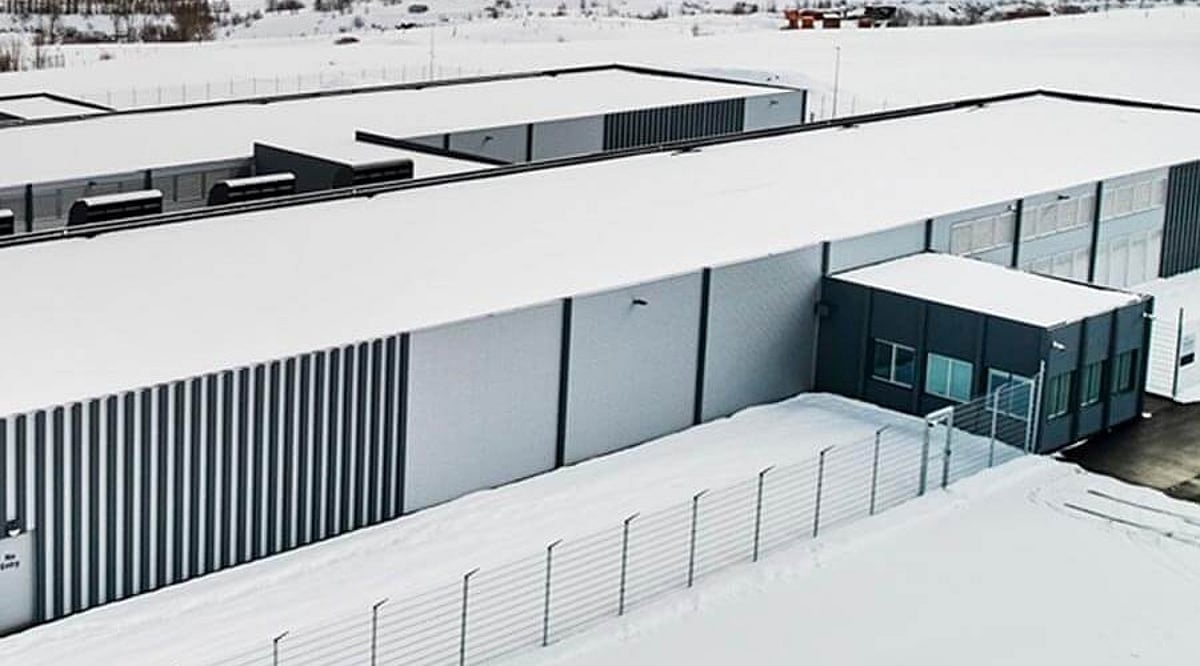
Iceland is rapidly emerging as a preferred destination for AI data centers, driven by its abundant renewable energy, naturally cool climate, and stable infrastructure. As AI workloads demand ever more power, location strategies are shifting away from urban proximity toward reliable, low-carbon electricity. The country’s data center market, valued at $425 million in 2024, is projected to reach $812 million by 2030, growing at an annual rate of 11.39 percent.
Why Iceland Attracts AI Data Centers
For years, Iceland marketed itself on cold weather and renewable energy. Today, those advantages are more critical than ever. AI training and inference workloads operate at far higher power densities than traditional cloud storage or web hosting. A single high-performance GPU cluster can draw the electricity load of a small town continuously for months. Operators now prioritize grids that can deliver stable, long-term power at fixed costs. Iceland’s fully renewable grid—powered by hydropower and geothermal generation—offers prices that do not fluctuate with global gas markets.
Efficiency Gains in Icelandic Data Centers
Icelandic facilities consistently achieve power usage effectiveness (PUE) ratios between 1.1 and 1.2, well below the global average of 1.57. This gap translates into substantial savings on every megawatt drawn, compounded over round-the-clock operations. The natural cooling advantage comes from Iceland’s climate, which eliminates the need for energy-intensive chillers. For GPU clusters generating intense heat, this cooling headroom becomes a design advantage, not just a marketing point.
Expansion of AI Infrastructure in Iceland
A clear signal of this shift is the 2025 agreement between data center operator Verne and AI hyperscaler Nscale. The deal will deploy roughly 4,600 Nvidia Blackwell Ultra GPUs across Verne’s Icelandic campus through 2026. Notably, 85% of the installation will be liquid-cooled, marking a departure from the air-cooled colocation halls that defined Iceland’s earlier data center wave. This deployment confirms a move beyond traditional colocation toward purpose-built AI infrastructure.
Connectivity Advantages
Iceland’s location in the North Atlantic, once seen as a limitation, now works in its favor. The country is connected to Europe and North America via undersea cables, enabling operators to use it as a hub for backup, disaster recovery, and intercontinental AI workloads. As part of the European Economic Area (EEA), Iceland provides access to the European single market while offering a strategic transatlantic position for transmitting training data and model checkpoints between continents.
Challenges and Grid Constraints
Despite its advantages, Iceland faces a hard ceiling: the grid itself. Data centers already consume about 6 percent of the country’s electricity and contribute close to 5 percent of its GDP. The real constraint is not generation but approvals. New transmission lines and geothermal projects require years of environmental review and public licensing. Deciding how to allocate electricity between industries, homes, and data centers has become a political issue. Regulators and permitting timelines now shape the pace of AI investment as much as demand from hyperscalers.
Why Iceland Stands Out
Iceland is not the only renewable-rich destination competing for AI infrastructure. Norway and Sweden offer comparable hydropower and cool climates; Quebec pairs hydroelectric capacity with lower land costs. However, Iceland combines all three advantages: geothermal and hydropower, a fully renewable national grid, and transatlantic cable connectivity. Most competing sites offer only two of the three.
Final Thoughts
Iceland’s current wave of AI infrastructure investment highlights a broader trend: power availability, cooling efficiency, and grid stability are overtaking proximity to population centers as deciding factors. Green data centers in Iceland are becoming the reference case for this shift. As transmission capacity becomes the real constraint on AI growth worldwide, other renewable-rich regions will likely face the same question: how much AI infrastructure can a small grid carry before it turns from advantage into bottleneck?