
Tag: identity management

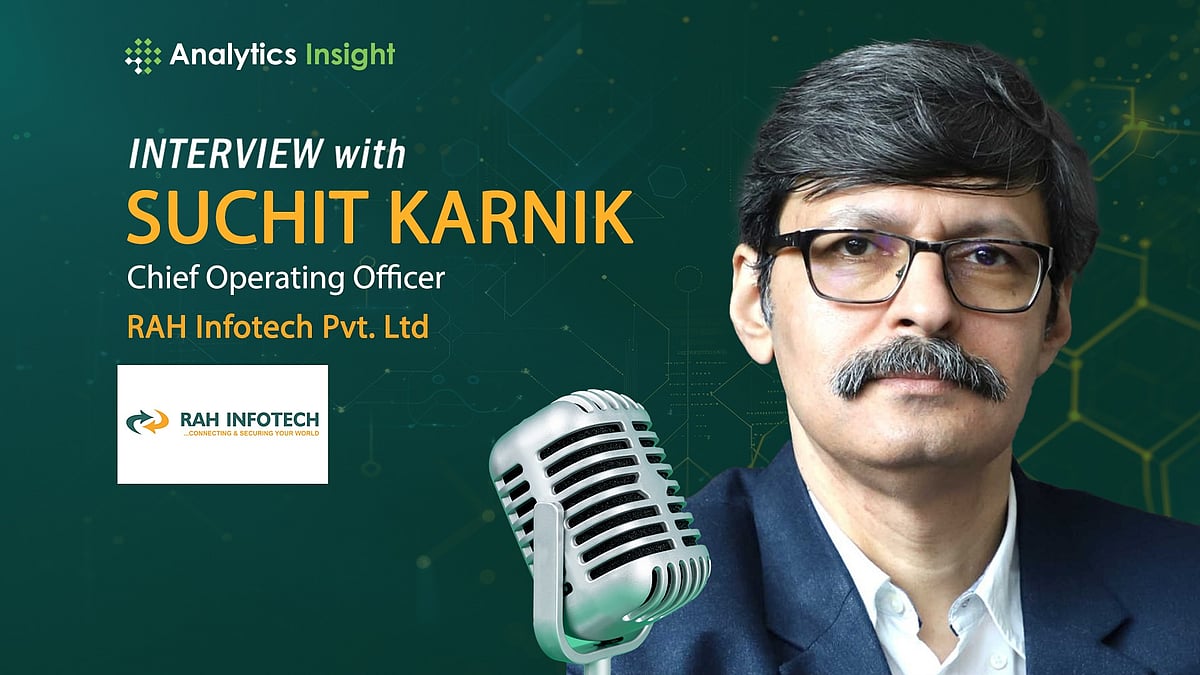
  • RAH Infotech COO Suchit Karnik on Building Cyber Resilience for Indian Enterprises

    RAH Infotech COO Suchit Karnik on Building Cyber Resilience for Indian Enterprises

    India’s digital transformation is expanding the technology landscape for enterprises across sectors. Cloud adoption, connected ecosystems and AI are creating new opportunities while also increasing the number of entry points for cyber threats.

    In this episode of the Analytics Insight Podcast, host Priya Dialani speaks with Suchit Karnik, Chief Operating Officer at RAH Infotech, about the changing cybersecurity landscape and the growing importance of cyber resilience.

    Karnik discusses how enterprises can move beyond traditional security models. He explains why identity has become a critical security layer, how organizations can strengthen cloud governance, and why data classification and employee awareness matter under India’s data protection framework.

    What Does the Shift from Cybersecurity to Cyber Resilience Mean?

    I see cyber resilience as the ability to prepare for an attack, respond to it and continue business operations. Organizations cannot assume that they can prevent every attack. The threat landscape has expanded across credentials, email, cloud applications, and other access points. A single malicious email can expose sensitive information and create financial or reputational damage. That makes resilience a business requirement rather than simply an IT function. I also see AI creating new risks through deepfakes, voice manipulation and sophisticated identity attacks. Organizations need to bring cybersecurity into the boardroom and make resilience part of their overall business strategy.

    Why has Identity Become a Critical Layer in Enterprise Security?

    I believe identity has become one of the most important security controls for modern enterprises. Every user has specific access and privileges, so organizations need to know who is logging in and what that person can access. Identity and access management, privileged access management and identity verification can help establish those controls. Organizations also need audit trails and rule-based access policies. Cloud adoption has made this even more important since employees access applications and data from different locations and devices. I also see passwordless authentication gaining importance. Organizations need strong identity verification to ensure the right person accesses sensitive systems.

    Why are Governance and Data Classification Important for Cloud Security?

    I see governance as a critical part of cybersecurity, especially as organizations move more applications and data to the cloud. The first step involves classifying data based on its importance and sensitivity. Organizations then need to educate employees who handle that information. I believe data needs protection regardless of where it sits. It could exist on a laptop, an on-premises server or a cloud platform. Personal information also requires careful handling. Organizations need clear governance frameworks that explain how people should protect, monitor and share information. Standards such as ISO frameworks can also help organizations establish structured controls and auditing practices.

    How is RAH Infotech Building its Role as a Trusted Advisor?

    I joined RAH Infotech with the objective of strengthening its operational and governance processes. We want to work as a trusted advisor for our partners and customers rather than simply following an OEM-centric approach. Today, more than 30% of our 250-plus employees have technical roles. We invest significantly in training since technical capability helps us understand customer challenges and recommend suitable solutions. Around 85% to 90% of our revenue comes from cybersecurity solutions. We focus on a solution-centric approach that helps system integrators and end customers understand their technology requirements and address their specific security challenges.

    What Should Enterprises Prioritize as AI-Driven Threats Increase?

    I believe organizations need to make cybersecurity a business priority rather than treat it only as a cost centre. AI will create new forms of cyber threats, including deepfakes, voice manipulation and identity-based attacks. Organizations need to prepare for these risks through stronger identity controls, better governance and continuous employee awareness. They also need to understand their data and decide who can access it. Cyber resilience requires organizations to think beyond prevention. They need systems and processes that help them respond when an incident occurs. I also believe senior leadership must actively participate because cybersecurity now affects business continuity, reputation and growth.


  • AI-Driven Threats Force Companies to Overhaul Their Network Defense Strategies

    AI-Driven Threats Force Companies to Overhaul Their Network Defense Strategies

    Artificial intelligence is transforming cybersecurity from both sides. Organizations now leverage AI to monitor activity, automate repetitive security tasks, and uncover patterns that are nearly impossible for humans to detect manually. At the same time, attackers harness the same technology to operate faster and at a larger scale. This dual impact is reshaping what businesses must defend, how quickly they need to react, and what skills their security teams require. Merely adding AI tools to an existing security framework is no longer enough; the entire strategy itself needs a fundamental redesign.

    Security Operations Must Keep Pace with Automated Threats

    As attacks become more rapid and automated, organizations need security operations that can identify unusual behavior without relying solely on manual review. Many companies now turn to managed cybersecurity services to provide continuous monitoring, threat detection, and incident response expertise that internal teams may struggle to maintain around the clock. This external support becomes especially valuable when internal IT departments are already stretched thin managing cloud systems, user accounts, software, devices, and daily technical issues. The ultimate objective is to establish enough visibility and response capability so that suspicious activity never sits unnoticed in a queue.

    AI heightens the need for this capacity because attackers can use automation to conduct reconnaissance, test stolen credentials, generate persuasive phishing messages, and adjust their tactics in real time. No longer does an attacker have to manually execute every step of an intrusion to affect thousands of targets. Defenders must deploy systems that can process vast volumes of activity and help analysts prioritize what truly requires immediate action. Human judgment remains indispensable, but people increasingly depend on technology to filter and highlight the most critical signals.

    Phishing Is Becoming Harder to Spot by Appearance Alone

    For years, employees were taught to detect phishing by looking for awkward grammar, spelling mistakes, odd formatting, or phrasing that seemed off. Generative AI erodes many of those clues because attackers can now craft polished, professional emails tailored to a specific audience in seconds. They can also customize messages to target a particular role, industry, or situation using data gathered from public sources. A suspicious email may now look every bit as legitimate as a routine corporate communication.

    This shift means organizations must move beyond training workers to recognize poorly written scams. Employees should learn to evaluate requests based on context, urgency, unusual payment instructions, unexpected credential demands, and changes to established procedures. Companies can also reduce reliance on human recognition by enforcing stronger authentication and verification steps for sensitive actions. An employee should never have to decide alone whether a convincing message from an executive requesting a major financial transfer is genuine.

    Identity Is Becoming More Central Than the Traditional Network Perimeter

    Companies have long concentrated on securing the boundary between their internal network and the outside world. That boundary has become increasingly blurred as employees use cloud applications, remote devices, mobile technology, third-party platforms, and systems that never reside inside a conventional corporate network. Attackers recognize that compromising a legitimate user account may be far easier than breaking through a technical barrier. Consequently, identity has emerged as one of the most valuable targets in modern cybersecurity.

    AI amplifies identity-based attacks by helping cybercriminals generate convincing social-engineering messages or process stolen data at scale. Defensive strategies therefore now emphasize multifactor authentication, privileged-access controls, device trust, unusual-login detection, and limiting what each account can access. Companies should also routinely audit whether users still hold permissions they no longer need as roles evolve. A compromised account becomes far less damaging if it cannot reach systems that are not essential to its normal function.

    Security Teams Need Help Distinguishing Signals from Noise

    Modern organizations generate an overwhelming volume of security data. Firewalls, cloud platforms, identity systems, applications, endpoints, email servers, and countless other tools each produce alerts. The challenge is no longer about collecting more information; it is about understanding which combinations of activities indicate something genuinely suspicious.

    AI can assist by correlating events and highlighting patterns that might be overlooked when each alert is examined in isolation. A login from an unfamiliar location may not be alarming on its own, and a large file download could have a plausible explanation. But when those events occur together on a privileged account shortly after a suspicious authentication attempt, the situation warrants immediate investigation. Context transforms individual datapoints into actionable insight.

    However, organizations should remain cautious about assuming AI can eliminate false positives or make security decisions without human oversight. Automated systems can misinterpret legitimate behavior, and attackers may deliberately try to evade or manipulate detection mechanisms. The most effective approach combines AI-driven analysis with skilled human judgment to create a resilient and adaptive defense.

  • Cloudflare Unveils Wallets and Digital IDs for AI Agents to Enable Secure Autonomous Commerce

    Cloudflare Unveils Wallets and Digital IDs for AI Agents to Enable Secure Autonomous Commerce

    Cloudflare, Inc. (NYSE: NET), the leading connectivity cloud company, today announced Cloudflare Wallets and cloudflare.pay, a new suite of tools designed to give AI agents a stable identity and the ability to make purchases online safely within limits set by their human creators. This marks a significant step toward enabling agentic commerce—where software programs autonomously browse, query APIs, and transact on behalf of individuals and businesses.

    As AI agents become a normal part of doing business online, the Internet—built for humans—lacks reliable mechanisms to verify whether an agent is a legitimate assistant or a malicious actor. Traditional bot detection tools, designed for search crawlers, are inadequate for agents that conduct transactions. Cloudflare’s solution addresses this by providing a verifiable link between each agent and its human or organizational owner, establishing trust and accountability at every step.

    “The Internet is shifting from human-driven browsing to agent-driven commerce, and the infrastructure needs to keep up,” said Matthew Prince, co-founder and CEO of Cloudflare. “When an agent shows up at your door, you need to know who sent it. Cloudflare can give agents a face—a link to the human or organization that owns them—so that trust, accountability, and real commerce can follow. It’s the identity and payment infrastructure the agentic web needs to function.”

    Cloudflare Wallets and cloudflare.pay work together to solve the identity and payment challenge. Each Cloudflare account will receive a unique web address serving as a stable ID, which users can extend to specific agents. This allows any receiving business to see exactly who authorized the agent. Additionally, a Cloudflare “Account Wallet” acts as a central balance for receiving, holding, and managing stablecoins. Users can then assign “Virtual Wallets” to individual agents, each with built-in guardrails such as spending caps, approved merchant lists, and maximum transaction sizes. Combined with the Monetization Gateway, these tools complete the two-sided agentic payment market.

    Cloudflare Wallet handle reservation opens today. Full wallet access, including onramping and offramping funds and the ability to issue Virtual Wallets, will be available in the coming months. Users can claim a handle at cloudflare.pay and learn more on the Cloudflare blog.

  • Top Identity Management Solutions for Enterprise Security and Access Control

    Top Identity Management Solutions for Enterprise Security and Access Control

    Identity management solutions are becoming essential as enterprises strengthen cybersecurity and manage digital access. Modern IAM platforms help organizations control user access while improving security and compliance.

    Single Sign-On (SSO) allows employees to access multiple applications with one secure login. Multi-Factor Authentication (MFA) adds another layer of protection beyond passwords. Role-based access control helps organizations assign permissions according to employee responsibilities.

    Cloud-based identity management platforms offer flexibility for hybrid and remote work environments. AI-powered identity security tools can detect unusual login activity and reduce cyber risks.

    Enterprises should evaluate scalability, integration options, compliance support, and pricing before choosing an IAM solution. The growing adoption of Zero Trust security is making identity management a key part of enterprise cybersecurity strategies.

  • Top Identity and Authentication Platforms for AI Agents and MCP Servers in 2026

    Top Identity and Authentication Platforms for AI Agents and MCP Servers in 2026

    AI tools today do far more than answer questions. They build business apps from natural language prompts, work directly with company data, and complete tasks on behalf of users. As these systems take on more responsibility, they also demand stronger security.

    This is where identity and authentication platforms come in. They make sure the right people and AI agents get access to the right tools and data. They also save developers weeks of work by handling login and access systems that would otherwise need to be built from scratch.

    Every platform brings its own strengths to the table. Some focus on enterprise logins, others help AI agents connect safely with business tools. Here are some of the best platforms our team found worth exploring.

    WorkOS

    Services: Enterprise SSO, Directory Sync, User Management, Multi-Factor Authentication, Audit Logs

    WorkOS is built for companies that need secure login systems. It helps developers add enterprise sign-in, user management, and access control without spending months building these features. The platform also supports directory sync and multi-factor authentication. It is a great choice for businesses creating AI products for enterprise customers.

    Auth0

    Services: Authentication, Authorization, Single Sign-On, Passwordless Login, Identity Management

    Auth0 has been one of the most trusted names in identity management for years. It offers different ways for users to sign in while keeping accounts secure. Developers can quickly add login features without making the process difficult for users. It works well for both small projects and large business applications.

    Composio

    Services: AI Tool Integration, Secure API Connections, Authentication Management, MCP Integration

    Composio is designed for AI agents that need to connect with different software tools. Instead of creating separate login systems for each service, developers can manage everything through a single platform. This makes it easier to connect AI assistants with workplace apps while keeping user accounts protected.

    Arcade

    Services: Secure Authentication, AI Agent Authorization, API Access Control, Developer Tools

    Arcade focuses on helping AI agents access online services safely. It gives developers simple tools to manage permissions and control API access. This helps prevent AI systems from accessing information they should not use. The platform is useful for teams building modern AI applications.

    Microsoft Azure Foundry

    Services: AI Development, Identity Integration, Cloud Security, Model Deployment, Enterprise AI Services

    Microsoft Azure Foundry brings together AI development and Microsoft’s cloud security tools. Developers can build AI applications while using trusted identity services already available in the Microsoft ecosystem. It is a practical option for businesses that already rely on Microsoft products for their daily work.

    TrueFoundry

    Services: AI Deployment, User Access Management, Infrastructure Security, Model Management, Team Collaboration

    TrueFoundry helps teams build, manage, and deploy AI applications. It also provides user management and permission controls, ensuring that only approved users can access projects. The platform works well for companies that run AI systems across different teams and are looking for a simple way to manage access.

    Our Recommendation

    Every platform on this list has something useful to offer, but two stand out for different reasons. WorkOS is an excellent choice for companies building AI software for business customers. Enterprise login, user management, and security features are already available, which saves both time and development effort.

    Auth0 remains one of the safest all-round options. It is easy to set up, supports different login methods, and works well whether you are building a startup product or a large business platform. If you need one platform that covers most identity needs, Auth0 is hard to overlook.

    Why Identity Matters More Than Ever

    AI agents are getting access to more business systems every year. They can read files, connect with company software, and perform tasks automatically. That also means they can reach valuable information if security is not handled properly.

    A good identity platform helps avoid these problems. It checks users, controls permissions, and ensures AI systems use only the information they are allowed to access. As AI becomes a bigger part of everyday work, strong identity management will become just as important as the AI itself.

    Final Thoughts: Better Security Leads to Better AI

    Building a smart AI application is only one part of the process. Keeping it safe is just as important. A good identity platform protects users, reduces security risks, and helps developers build applications people can trust.

    WorkOS, Auth0, Composio, Arcade, Microsoft Azure Foundry, and TrueFoundry all bring something different to the table. Some focus on enterprise customers, while others make AI integrations easier. The best choice depends on the type of application you are building and the people who will use it.