Tag: impersonation

  • Apple’s iOS 27 Introduces Impersonation Risk Detection to Combat iPhone Scams

    Apple’s iOS 27 Introduces Impersonation Risk Detection to Combat iPhone Scams

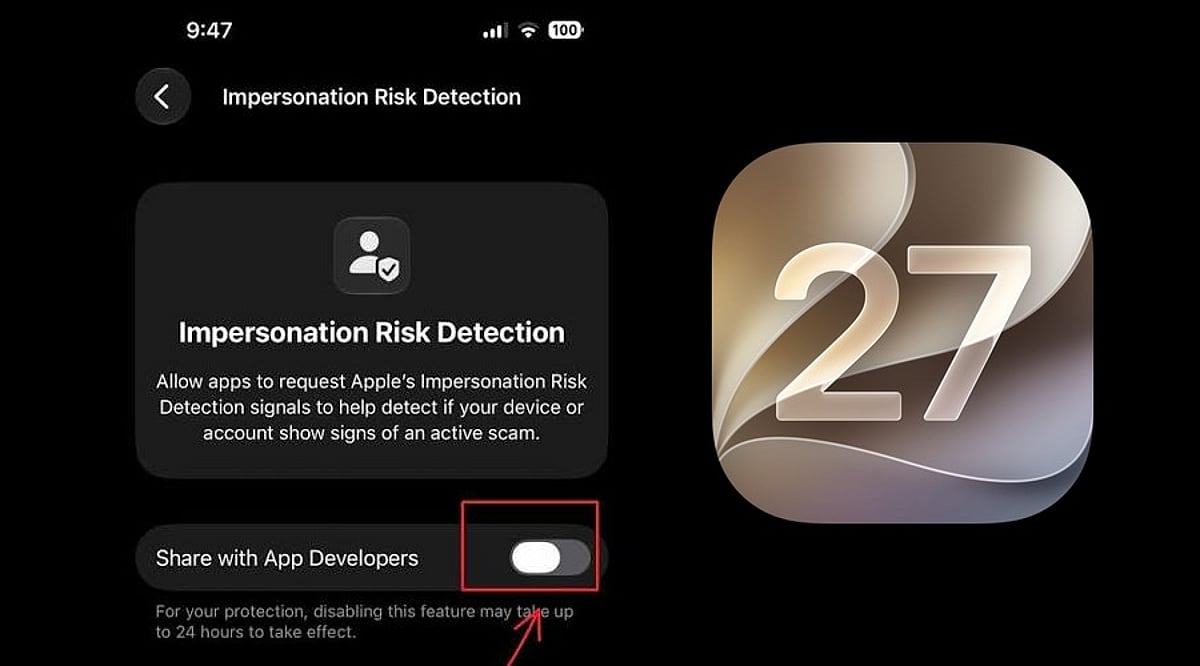
    Apple has unveiled a new security feature in iOS 27 designed to shield iPhone users from impersonation-based scams. Dubbed Impersonation Risk Detection, the tool identifies signs that a user may be caught in an active social engineering attack, particularly when they are about to make a payment or modify sensitive account information.

    Scams involving fake banks, government agencies, delivery services, and even impersonation of known contacts have become increasingly prevalent. Apple says the feature is engineered to detect suspicious activity and alert users before they complete potentially harmful actions.

    How Apple’s Impersonation Risk Detection Works

    According to Apple, the feature protects users from active social engineering scams where an attacker impersonates a trusted entity—such as a bank, government agency, or a familiar person—and pressures the victim into making a payment or altering account details.

    Impersonation Risk Detection analyzes information about the iPhone or iPad and the user’s Apple Account to identify signs of suspicious activity. When a supported app requests an assessment during a potentially risky action, the system generates a risk level that the app can use to determine subsequent steps.

    There are three risk levels: Unknown, Medium, and High. Unknown means no evidence of suspicious activity was detected, though Apple notes this does not confirm an action is safe. Medium indicates some signs of suspicious activity, while High means significant signs were detected.

    Importantly, the app does not receive the underlying information used to generate the assessment. It only receives the resulting risk level and can decide how to respond.

    How to Enable the Feature

    Users can turn on Impersonation Risk Detection by opening Settings, tapping Privacy & Security, scrolling down, and selecting Impersonation Risk Detection. They then need to toggle on Share with App Developers. Users may also need to sign in to the App Store with their Apple Account.

    The feature can be controlled on an app-by-app basis. However, Apple warns that it depends on supported apps and that its risk assessment does not guarantee an action is safe. The company emphasizes that this feature is not designed to replace other security measures or user caution.

  • WhatsApp and Telegram Address Government Queries on Username Security and Impersonation Risks

    WhatsApp and Telegram Address Government Queries on Username Security and Impersonation Risks

    WhatsApp and Telegram have officially responded to the Indian government’s concerns regarding the safety of their username-based messaging features. The Ministry of Electronics and Information Technology (MeitY) had issued notices to the platforms, seeking details on how they plan to prevent identity impersonation and online fraud facilitated by the new username system. Signal, another messaging app, had not yet submitted its response by the deadline.

    Government Scrutiny Intensifies on Username Features

    MeitY sent notices to WhatsApp, Telegram, and Signal, asking them to explain the safety mechanisms integrated into their username systems. The government is particularly worried that allowing users to communicate via usernames instead of phone numbers could make it easier for fraudsters to impersonate individuals, launch phishing attacks, and carry out digital scams. WhatsApp received the notice on July 1, while Telegram and Signal were issued notices two days later. After discussions with officials, WhatsApp was granted a four-day extension and submitted its response. Telegram also met the deadline.

    Meta Outlines Anti-Impersonation Measures

    Meta, the parent company of WhatsApp, detailed its approach in the response. The company stated that the upcoming username feature includes multiple layers of protection to curb misuse. Accounts will be suspended or usernames revoked if there is evidence of impersonation or fraudulent activity. Additionally, usernames already associated with Facebook and Instagram accounts will be reserved for their rightful owners during the rollout. Usernames linked to verified accounts, public figures, celebrities, and government entities—along with look-alike variations—will remain exclusive to legitimate users to reduce the risk of identity fraud.

    Privacy vs. Security: A Delicate Balance

    While the username feature is designed to enhance user privacy by allowing people to communicate without sharing their phone numbers, the government believes that anonymity could create new challenges for law enforcement and cybercrime investigations if proper safeguards are not in place. This exchange represents the latest step in the government’s ongoing efforts to strengthen protections against online impersonation while balancing user privacy and platform innovation. MeitY is expected to review the submissions before deciding on the next course of action.

  • India Expands Scrutiny to Telegram and Signal Over Username Feature Security Risks

    India Expands Scrutiny to Telegram and Signal Over Username Feature Security Risks

    The Indian government has intensified its oversight of messaging platforms, extending its scrutiny to Telegram and Signal after raising concerns about WhatsApp’s planned username feature. The Ministry of Electronics and Information Technology (MeitY) has sent formal notices to both Telegram and Signal, requesting detailed information on how their username features operate and what safeguards are in place to prevent fraud, impersonation, and misuse.

    Why the Government is Concerned

    Username features allow users to communicate without revealing their mobile phone numbers. While this enhances privacy, it also reduces traceability and makes it easier for fraudsters to create fake identities. The government’s primary worry is impersonation of public figures, government officials, banks, and trusted institutions. Officials are also alarmed by the potential rise in phishing, online fraud, and so-called “digital arrest” scams, which have become a growing cybercrime threat in India.

    Earlier, MeitY had asked Meta to delay the launch of WhatsApp’s username feature in India, citing security concerns. The ministry gave WhatsApp a three-day deadline to provide information on its security measures and to refrain from introducing the feature until consultations are complete. India is WhatsApp’s largest market, with over 500 million users, making any new feature a major regulatory concern.

    Major Security Risks

    • Reduced traceability: Anonymity makes it harder for law enforcement to track cybercriminals who hide their phone numbers.
    • Increased impersonation risks: Usernames can mimic those of government agencies, celebrities, or financial institutions.
    • Facilitation of digital arrest scams: Fraudsters can contact users without revealing phone numbers.
    • Phishing attacks: Fake profiles can send harmful links or fraudulent messages at scale.
    • Undermined SIM identity association: Reduced traceability weakens the link between SIM identity and messaging activity.

    WhatsApp’s Safeguards

    WhatsApp has stated that usernames will be used for public accounts, government bodies, celebrities, and verified Meta accounts. It has also proposed an optional “Username Key” feature, requiring a four-digit number along with the username before unknown contacts can reach the user.

    The government will review responses from WhatsApp, Telegram, and Signal before taking any action under Indian IT laws.

  • India Scrutinizes WhatsApp’s New Username Feature Over Impersonation and Fraud Risks

    India Scrutinizes WhatsApp’s New Username Feature Over Impersonation and Fraud Risks

    The Indian government is closely examining WhatsApp’s upcoming username feature following concerns about fake accounts and online fraud. Sources from the Ministry of Electronics and Information Technology (MeitY) indicate that officials will thoroughly study the feature before it becomes widely available. The goal is to ensure the new capability does not introduce additional risks for users.

    WhatsApp’s username feature allows people to chat without sharing their phone numbers. Instead, users can create a unique identifier—up to 35 characters long, including letters, numbers, dots, and underscores—to communicate with new contacts, join groups, or connect with businesses. The company touts this as a privacy improvement, helping keep personal phone numbers private.

    Government Raises Safety Concerns

    While the feature enhances privacy, the government believes it could also create opportunities for abuse. For example, a malicious actor could register a username that closely resembles a real person’s name or a trusted business. Unsuspecting users might not notice the subtle difference and could end up interacting with impostors, leading to scams, fraud, or the spread of misinformation.

    Officials have stressed that user safety remains the highest priority. Every legal and security implication tied to the feature will be reviewed. If the government finds insufficient safeguards, MeitY may issue a notice to WhatsApp demanding stronger protections before the broader rollout.

    WhatsApp’s Planned Protections

    WhatsApp has already announced several measures to prevent misuse. The company will not maintain a public directory of usernames; users must know the exact username to start a conversation. Additionally, WhatsApp is introducing an optional username key—a secondary code that must be provided before a first message can be sent. This adds an extra layer of security.

    To further reduce impersonation risk, the platform plans to reserve usernames linked to government offices, public figures, celebrities, and well-known brands. WhatsApp says these steps will help keep the platform safe as the feature expands.

    Security experts caution, however, that fake accounts remain a challenge. A scammer could simply alter one letter or add a number to a legitimate username, creating a convincing impostor. Given that online fraud is already prevalent in India, robust verification mechanisms will be essential before the feature reaches millions of users.

    Why India Is Reviewing the Feature

    The government’s review is part of a broader effort to ensure that new technologies prioritize user protection. While privacy is important, strong security is equally necessary when a platform serves hundreds of millions of people daily.

    WhatsApp has already begun allowing users to reserve usernames prior to the official launch. Users can change or delete their usernames at any time. Businesses and creators can claim the same usernames they use on Instagram and Facebook.

    The Indian government has not announced a final decision yet, but the ongoing review signals that New Delhi wants stronger safeguards against online fraud, impersonation, and other digital security threats before the WhatsApp username feature goes live.

  • WhatsApp Usernames: Privacy Boost or New Scam Risk?

    WhatsApp Usernames: Privacy Boost or New Scam Risk?

    WhatsApp is rolling out a major privacy update that lets users start conversations without sharing their phone numbers. Instead of revealing a mobile number, people can now share a unique username. However, this new feature has also raised concerns among creators and entrepreneurs, who fear it could make impersonation and fraud easier if strong safeguards are not in place.

    The update is being released in stages, and users in supported regions can already reserve their usernames. WhatsApp says the feature will reach more countries in the coming months.

    WhatsApp Username Feature Expands Privacy

    The change comes as Meta works to make WhatsApp safer and more private for its billions of users. It follows the appointment of Indian fintech entrepreneur Kunal Shah to lead WhatsApp, as Meta continues adding new services to the platform.

    The biggest change is how conversations begin. Currently, anyone needs a phone number to send a message on WhatsApp. Once the new feature is available, a username will be enough for first-time chats. The phone number will remain hidden unless the user decides to share it.

    WhatsApp says this update is designed to give people better privacy, protecting personal numbers in situations such as joining large group chats, messaging a business for the first time, or talking to someone new. It can also reduce unwanted calls and spam messages.

    How to Create and Use a WhatsApp Username

    Creating a username is simple. Users need the latest version of WhatsApp. After updating the app, they can open Settings, tap Account, and choose Username. They can then pick an available name that contains between three and thirty-five characters.

    WhatsApp will not create a public list of usernames. People cannot search for random users as they can on many social media platforms. Someone must know the exact username before sending the first message, giving users more control over who can contact them.

    The app also includes another safety feature called a username key. Users can turn it on for extra protection. New contacts must enter both the username and the key before sending the first message. The key can be changed whenever needed.

    Why the New Privacy Update Matters

    WhatsApp’s Username feature makes sharing contact details much safer. Many people use WhatsApp for work, online selling, community groups, and school activities. A username allows them to stay connected without giving away a personal phone number.

    Businesses, creators, and organizations will also benefit from the update. They can reserve the same username already used on Instagram or Facebook. This keeps their online identity consistent across Meta’s apps and makes it easier for customers to recognize them.

    WhatsApp will also block usernames linked to celebrities, public figures, and government organizations. This step aims to stop fake accounts and reduce impersonation.

    More than 3 billion people use WhatsApp worldwide, so many popular usernames may be taken quickly. The company has opened early reservations to give users a better chance of getting the name they want before the full rollout ends.

    The update brings WhatsApp closer to other messaging apps that already use usernames. At the same time, it keeps privacy at the center with better phone number protection, stronger secure messaging, and a safer digital identity for everyday conversations.