
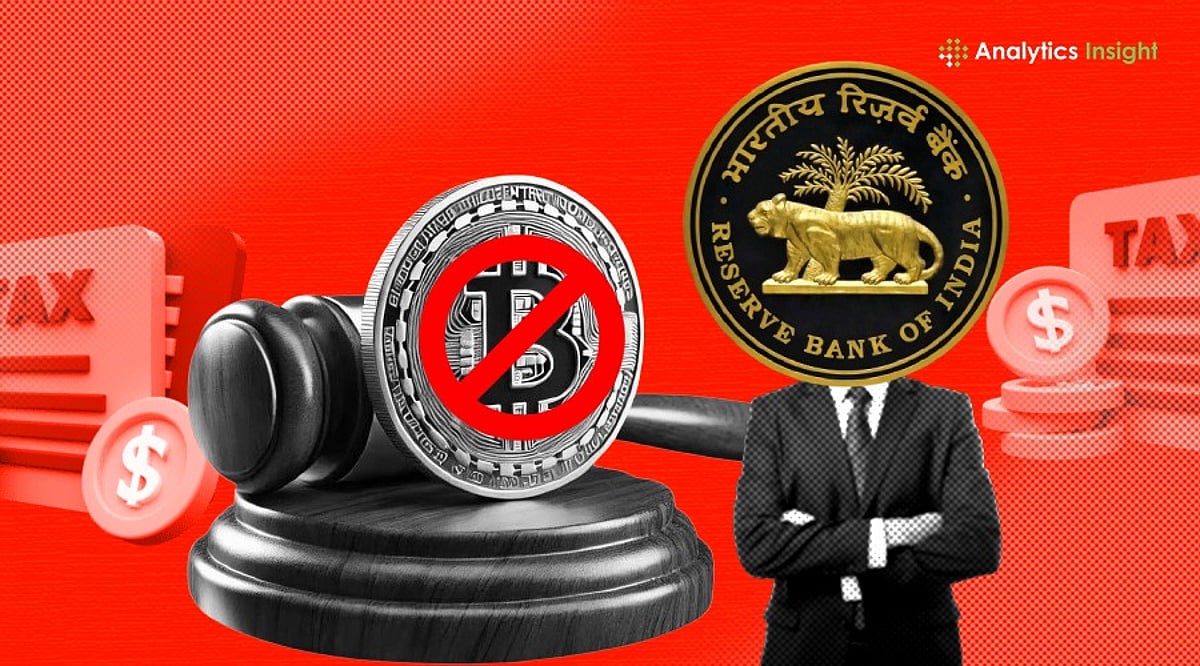
India’s cryptocurrency policy remains in flux, but internal government documents reviewed by Reuters indicate that authorities are increasingly leaning toward stricter control over digital assets. The Reserve Bank of India (RBI) has reiterated its stance favoring a policy that ‘leans toward prohibition,’ while the Income Tax Department has raised serious concerns about regulating transactions conducted through offshore exchanges and private wallets.
The RBI believes that banks and financial institutions should be barred from holding, trading, or gaining any exposure to cryptocurrencies and privately issued stablecoins. The central bank is particularly worried about the potential impact of crypto-related exposures on the broader financial system. Although there is no official ban preventing Indian banks from transacting with crypto assets, most top lenders have voluntarily avoided the sector following multiple RBI alerts.
A source familiar with the RBI’s thinking, who spoke on condition of anonymity, told Reuters that the central bank prefers keeping cryptocurrencies entirely outside the regulated financial system.
Stablecoins remain a major concern. According to the RBI, foreign currency-backed stablecoins could threaten India’s monetary sovereignty, while rupee-backed tokens would result in lost government revenue from currency issuance and pose risks during periods of market stress.
The Income Tax Department has also warned that monitoring cryptocurrency trading conducted through overseas exchanges is extremely difficult. As of May 31, India had approximately 39 million cryptocurrency traders holding about $2.1 billion in digital assets, according to the documents.
The department identified significant gaps in tax reporting. Fewer than 25% of the 645,000 individuals who conducted crypto transactions during the financial year ending March 2023 reported those transactions in their tax returns. Foreign exchanges, private wallets, and peer-to-peer rupee trades make it challenging to identify beneficial owners and collect taxes.
India’s current tax regime imposes a 30% rate on crypto asset gains, but volatility and a lack of uniform valuation methods complicate assessment. The Ministry of Corporate Affairs is also reviewing accounting standards and guidance for virtual digital assets.
India has allowed cryptocurrencies to exist in a legal gray zone since a 2018 court ruling struck down RBI policies that effectively banned them. A 2021 draft bill to ban private cryptocurrencies was never introduced in Parliament, while a broader discussion paper has been repeatedly delayed.
The newly surfaced documents suggest that India’s policy debate is shifting from light-touch regulation toward tighter restrictions, as unresolved issues around financial stability, tax compliance, and monetary sovereignty continue to mount.