Overview
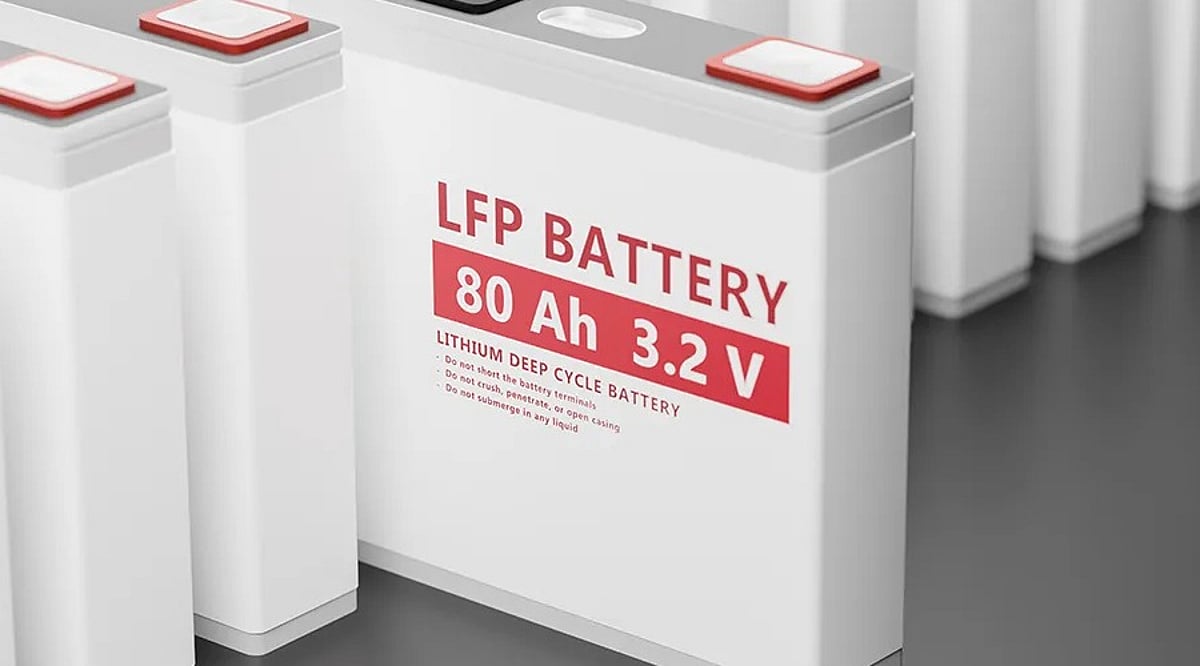
India’s high temperatures put electric vehicle batteries under constant stress. Summer heat can exceed 40°C in many regions, and a car parked in direct sunlight can get even hotter. That heat accelerates battery aging, which helps explain why lithium iron phosphate—commonly called LFP—has become a major chemistry in India’s EV market.
LFP is not a universal solution. It trades energy density for thermal stability, durability, and lower material costs. For many mass-market EVs designed around daily city driving, that trade-off lines up well with Indian conditions.
Why heat is hard on EV batteries
Every charge and discharge cycle changes a battery’s internal chemistry slightly. Heat speeds up those changes. That is why EV makers include thermal management systems in battery packs regardless of where the vehicle is sold. In India, those systems often have to work harder because fast charging, stop-and-go traffic, and hot pavement all add strain.
Battery safety and longevity are not determined by cell chemistry alone. Cooling design, battery management software, charging habits, and pack construction all play a role. Chemistry sets the baseline, but the surrounding systems determine how well a pack performs over time.
How LFP and NMC compare
LFP and nickel manganese cobalt, or NMC, approach the same problem from different directions. LFP offers more intrinsic thermal stability and typically costs less, while NMC stores more energy per kilogram.
| Factor | LFP | NMC |
|---|---|---|
| Thermal stability | Stronger built-in margin | Depends more on pack-level cooling and controls |
| Cycle life | Generally strong under repeated cycling | Varies by formulation and operating conditions |
| Material cost | No cobalt or nickel | Uses cobalt and nickel |
| Energy density | Lower | Higher |
| Best fit | City and short-range EVs | Long-range and performance EVs |
Thermal stability and battery life
LFP’s iron-phosphate bond is more resistant to breakdown under heat than the layered oxide structure used in NMC cells. That does not mean NMC cannot work in hot climates. NMC packs operate worldwide in warm regions, with cooling systems and battery management software managing their heat sensitivity.
The difference is where the safety margin comes from. LFP carries more of that margin inside the chemistry itself. NMC relies more heavily on the systems built around the cells. Heat still degrades LFP over time, but LFP cells often hold up well under repeated heat exposure, especially when paired with effective cooling and sensible charging practices.
Cost and safety considerations
LFP cathodes avoid cobalt and nickel entirely. Both metals are expensive and depend on a limited number of global suppliers. Removing them can lower pack costs and reduce exposure to commodity price swings. In India’s price-sensitive EV market, those savings can translate into more affordable vehicles.
Safety is broader than chemistry. Battery management, cooling design, and charging behavior all share responsibility. LFP’s additional thermal margin can provide extra headroom during demanding use, such as fast charging on a hot day. That margin supports the vehicle’s safety systems; it does not replace them.
The energy-density trade-off
LFP stores less energy per kilogram than NMC. A pack built to deliver the same range will generally be larger or heavier. That is why some long-range and high-performance EVs still choose NMC and manage its heat sensitivity with robust cooling systems.
For city cars built around short daily trips, the trade-off is often easier to accept. Manufacturers can use a somewhat larger pack while gaining LFP’s cost and durability benefits. For vehicles where maximum range, low weight, or compact packaging are priorities, energy density remains a significant design consideration.
Where LFP fits in India’s EV market
LFP is not simply a “hot climate battery.” Its value in India comes from a combination of traits: strong thermal behavior, solid cycle life, and lower material costs, balanced against lower range per kilogram. For mass-market EVs used mainly for city commuting and short trips, that combination matches how many Indian owners actually drive.
LFP is unlikely to replace every chemistry. Range-focused vehicles still have valid reasons to choose NMC. But for a large share of India’s EV lineup, LFP offers a practical way to balance heat resistance, cost, and durability in a single pack.
Frequently asked questions
Why is LFP considered suitable for EVs in India?
LFP offers strong thermal stability, favorable cycle-life characteristics, and lower material costs. Those traits make it relevant for EVs operating in India’s hot climate, especially city-focused models.
Are LFP batteries safer than NMC batteries?
LFP generally has greater thermal stability and a lower tendency to release oxygen during thermal decomposition. However, EV safety also depends on cell design, battery management, cooling, and charging systems.
Do LFP batteries degrade in high temperatures?
Yes. High temperatures can accelerate degradation in LFP cells as well. Proper thermal management, charging practices, and battery design help control the effect.
What is the main disadvantage of LFP batteries?
LFP generally has lower energy density than NMC. A comparable range may require a larger or heavier battery pack.
Can LFP batteries be used in long-range EVs?
They can, but lower energy density can make them less attractive where maximum range, low weight, or compact battery packaging are key priorities.