
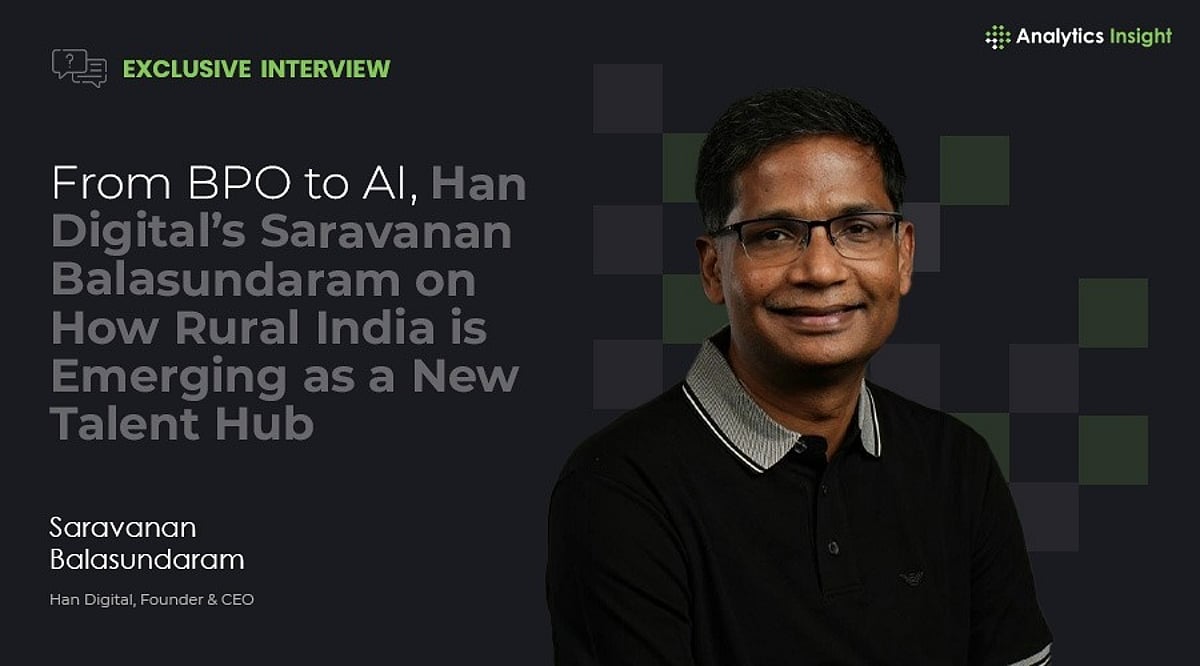
Saravanan Balasundaram, Founder and CEO of Han Digital Solution, sees a fundamental shift underway in India’s IT-BPM industry. In a recent interview, he outlined how AI-led productivity gains—not just weaker tech spending—are driving the sharp slowdown in net workforce additions. He also explained which roles will thrive, why flexible staffing is becoming the norm, and what graduates need to do to stay employable.
The Numbers Behind the Hiring Slowdown
According to Balasundaram, two forces are shaping H1 FY27 workforce trends. Around two-thirds of the decline can be attributed to AI-led productivity, which is reducing the number of people needed to deliver the same work, especially in traditional IT services and BPO. The remainder stems from cautious discretionary spending, reinforced by continued uncertainty in West Asia and its effect on sectors like retail, travel, and manufacturing.
But overall technology spending has not collapsed. Global IT spending is expected to approach $6.3 trillion in 2026, and Indian enterprises are directing more than 40% of technology capex toward data modernization, AI, and cybersecurity. The result, says Balasundaram, is a shift from mass hiring to precision hiring—where each technology investment must deliver stronger capability and productivity.
“The bigger imperative is to move the workforce up the value chain faster than the productivity curve is rising,” he said.
Which Job Roles Will Grow or Decline?
Hiring demand will center on professionals who can combine AI expertise with technical or domain knowledge. Balasundaram expects strong growth in AI/ML engineering, cybersecurity, robotics and AI, and platform-specific specialists across SAP, Oracle, Microsoft, AWS, Salesforce, and ServiceNow. He also flagged emerging roles such as Loop Engineers and Forward Deployed Engineers—positions built around deploying and operating AI systems autonomously.
On the other side, repetitive and rules-based tasks will face the most pressure. L1 support, ticketing, transactional processing, basic QA, and some entry-level coding and testing roles will see their share of hiring fall significantly. Balasundaram doesn’t expect these jobs to vanish overnight, but he does see the hiring pyramid shifting from volume-based to skills-based.
The Rise of Flexible Staffing
Contract and project-based work is becoming a core part of India’s IT workforce, not just a tool for managing hiring cycles. As Global Capability Centers (GCCs) expand and AI-driven roles emerge, organizations need specialized talent quickly. Flexible staffing lets them access skills like AI, cloud, data, cybersecurity, enterprise platforms, and multilingual capability on demand.
For mid-career professionals, this means more opportunities to work across projects and organizations. For fresh graduates, however, the entry bar is rising. Companies are moving away from high-volume campus hiring and looking for candidates who already have practical AI skills, domain understanding, and the ability to contribute in production environments. The staffing model, Balasundaram notes, is shifting from “people on demand” to “skills on demand.”
What AI Readiness Really Means for Gen Z
Balasundaram argues that AI readiness is too often reduced to prompt engineering. Prompting, he says, is becoming a baseline capability rather than a differentiator. Real readiness means knowing how to build, deploy, integrate, and manage AI systems that operate autonomously across business functions.
He recommends three priorities for graduates: domain expertise layered with AI skills; technology and platform skills that go beyond using AI tools—including how to build production-ready code; and meta-skills like rapid learning, experimentation, problem-solving, and adaptability. Universities also need to move faster; static curricula risk producing graduates equipped for yesterday’s technology environment.
When Will Stronger Hiring Return?
Looking beyond FY27, Balasundaram says enterprise AI spending is surging globally, but ROI has not yet caught up. Workforce growth will rebound when AI moves from cost optimization to value creation through AI-native products, agentic systems, new digital businesses, and technology-led revenue streams. Until then, productivity gains will continue to suppress traditional headcount needs.
GCCs will be a key signal to watch. As they evolve from executing roadmaps to shaping global strategy and owning products, demand for talent should strengthen—but with a very different skill mix. The next hiring cycle in IT-BPM will likely be smaller in volume, but potentially much higher in value.
This article is based on insights from Saravanan Balasundaram, Founder & CEO of Han Digital Solution.