
Tag: India telecom

  • Airtel, Jio, and Vi Ordered to Launch Voice-Only Recharge Plans Under New TRAI Rules

    Airtel, Jio, and Vi Ordered to Launch Voice-Only Recharge Plans Under New TRAI Rules

    TRAI Tightens Recharge Plan Requirements

    The Telecom Regulatory Authority of India (TRAI) has directed Airtel, Reliance Jio, and Vodafone Idea to broaden their voice- and SMS-only recharge offerings. The new rules require telecom operators to provide calling- and messaging-only plans across shorter validity periods, giving customers who do not need mobile data more flexible options.

    The amended regulations take effect on October 21, 2026, after being officially notified on September 21. Under the framework, operators must offer voice-and-SMS-only options for validity periods of 30 days or less wherever comparable combined voice, SMS, and data plans exist.

    What Telecom Companies Must Do

    • Offer voice-and-SMS-only Special Tariff Vouchers (STVs) for validity periods of up to 30 days.
    • Provide a monthly plan that renews on the same date each month, or on the last day of the month when that date does not exist.
    • Introduce at least one longer-validity voice-and-SMS-only plan that matches existing long-duration data-inclusive offerings.

    Why TRAI Is Expanding Voice-Only Plans

    TRAI had earlier asked operators to offer at least one voice-and-SMS-only STV, but these plans were mostly concentrated around longer validity periods. That left limited choices for consumers who rely on basic phones, use Wi-Fi for data, keep a secondary SIM, or simply prefer not to pay for mobile internet.

    The regulator argues that these users should be able to pay only for the services they actually use. The consultation for the latest amendment drew 1,132 responses from telecom operators, industry bodies, consumer groups, and other stakeholders, followed by an Open House Discussion on June 15, 2026.

    Operator Concerns and Pricing Outlook

    Major telecom providers opposed the expanded mandate during consultations. Reliance Jio argued that existing tariff options were already sufficient and questioned the need for separate plans for every validity period.

    TRAI has not yet announced specific pricing for the new voice- and SMS-only plans. Instead, it has provided guidance for operators to adjust tariffs to reflect the removal of data, leaving room for market-driven pricing.

  • Airtel vs Jio 84-Day Voice Plans: Which Prepaid Recharge Offers Better Value for WiFi-First Users?

    Airtel vs Jio 84-Day Voice Plans: Which Prepaid Recharge Offers Better Value for WiFi-First Users?

    As more consumers rely on WiFi at home and work, India’s leading telcos are sharpening their offerings for customers who need voice connectivity but little or no mobile data. Bharti Airtel and Reliance Jio both offer long-validity, voice-centric prepaid recharges that keep SIMs active while trimming costs: Airtel’s Rs. 548 and Jio’s Rs. 448 plans each run for 84 days and target budget-conscious, data-light subscribers.

    What Do the Plans Include?

    Airtel’s Rs. 548 recharge provides 84 days of service with unlimited local and STD calls across networks and 900 SMS for the entire validity period. The plan isn’t purely voice-only: it also includes a one-time 7GB data bundle for emergency use during the 84 days. Subscribers gain access to Airtel Thanks benefits, including Airtel Xstream Play, Apollo 24/7 Circle and other rewards via the Thanks app.

    Jio’s Rs. 448 pack likewise offers 84 days’ validity and unlimited calling, along with 1,000 SMS for the full term. The recharge consciously omits daily data allocations, positioning itself as a strictly voice-focused option for users who seldom use mobile internet. Jio subscribers receive access to Jio’s platform apps such as JioTV and JioAICloud, along with any additional app features tied to the plan.

    How Do They Differ?

    Jio’s Rs. 448 is priced lower than Airtel’s Rs. 548. SMS allocation favors Jio (1,000 vs 900), and both provide unlimited voice calling for the validity period.

    Airtel’s differentiator is the one-time 7GB data allowance and the Airtel Thanks ecosystem of bundled content and health services. Jio emphasizes a purer voice experience with platform app access instead of mobile data.

    Airtel vs Jio: Which Should You Pick?

    Users who prioritize unlimited calls and an affordable plan can choose Jio’s Rs. 448 as the more economical choice. If you want some mobile data for emergencies and value bundled content and service perks, Airtel’s Rs. 548 delivers that added flexibility. Either plan aims to keep SIMs active affordably for subscribers who spend most of their time on WiFi.

  • Agentic AI Ends Manual Telecom: How Amdocs Samit Banerjee Envisions Self-Healing Networks

    Agentic AI Ends Manual Telecom: How Amdocs Samit Banerjee Envisions Self-Healing Networks

    Telecom operators have long relied on automation and analytics to improve network performance and customer experience. However, a new era is dawning where artificial intelligence not only analyzes data but also makes intelligent decisions, adapts, and takes autonomous action.

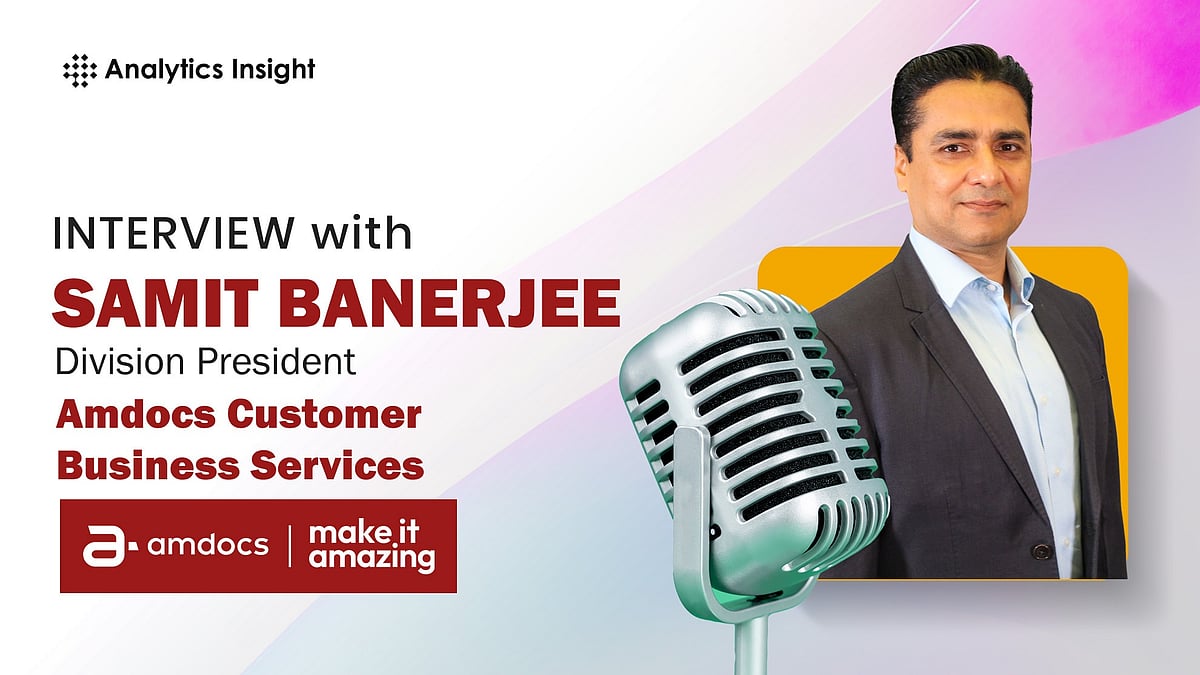
    In a recent episode of the Analytics Insight Podcast, host Priya Diyalani spoke with Samit Banerjee, Division President of Customer Business Services at Amdocs, about how agentic AI is revolutionizing telecom operations. The conversation explored autonomous networks, India’s AI advantages, enterprise opportunities, and the critical role of human oversight in AI-driven decisions.

    What Sets Agentic AI Apart from Traditional Automation?

    Banerjee explains that traditional automation is rule-based, following predefined instructions within strict limits. “Agentic AI brings intelligence to decision-making,” he says. “The AI agent can monitor the network, recognize anomalies, and make decisions automatically.” For example, telecom providers can dynamically allocate resources, create virtual network slices for enterprise clients, and maintain quality of service without human intervention.

    India’s Unique Position in AI-Driven Telecom

    India enjoys structural advantages few countries can match, according to Banerjee. The nation’s digital public infrastructure provides a robust foundation for identity verification and fraud prevention. With one of the highest volumes of mobile data globally, India offers vast datasets for training AI models. A strong fiber network, vibrant engineering community, and multilingual population enhance natural language processing technologies. Government initiatives like the IndiaAI Mission further unite public and private sectors to advance AI development.

    New Enterprise Services Through Agentic AI

    Telecom companies can evolve beyond conventional connectivity into strategic technology partners. By leveraging edge computing, they can run AI services close to end users, reducing latency in banking, manufacturing, healthcare, and smart city sectors. Telecom firms may offer environments where enterprises train AI models without transferring data remotely. AI solutions will also bolster cybersecurity by detecting threats before they penetrate enterprise networks. Intelligent networks can power applications like drones, surveillance, logistics management, and industrial robotics.

    Striking the Right Balance Between Autonomy and Oversight

    Banerjee emphasizes that not every decision should be fully autonomous. Routine operational decisions like traffic balancing and resource allocation can be handled by AI because they are repetitive and easily reversed. However, decisions involving major financial investments, public safety, or emergencies require human judgment. “The role of AI should be to provide suggestions and undertake automated operations, while human beings make critical decisions,” he states.

    The Future of Telecom in an Agentic AI World

    Emerging telecom networks will become autonomous digital ecosystems. Rather than mere bandwidth carriers, network providers will offer intelligent infrastructure that configures, heals, and optimizes itself in real time. Telecom companies will use AI for predictive maintenance, personalized customer experiences, and innovative enterprise offerings through edge intelligence. As these capabilities mature, telecom providers will act as facilitators of AI across healthcare, finance, manufacturing, logistics, and smart cities. Banerjee concludes, “The key issue is not about making AI replace humans.”

    Listen to the full discussion on the Analytics Insight Podcast.