
Tag: Indian Rupee

  • Indian Rupee Slides 27 Paise to 95.79 as Soaring Oil Prices and Foreign Outflows Bite

    Indian Rupee Slides 27 Paise to 95.79 as Soaring Oil Prices and Foreign Outflows Bite

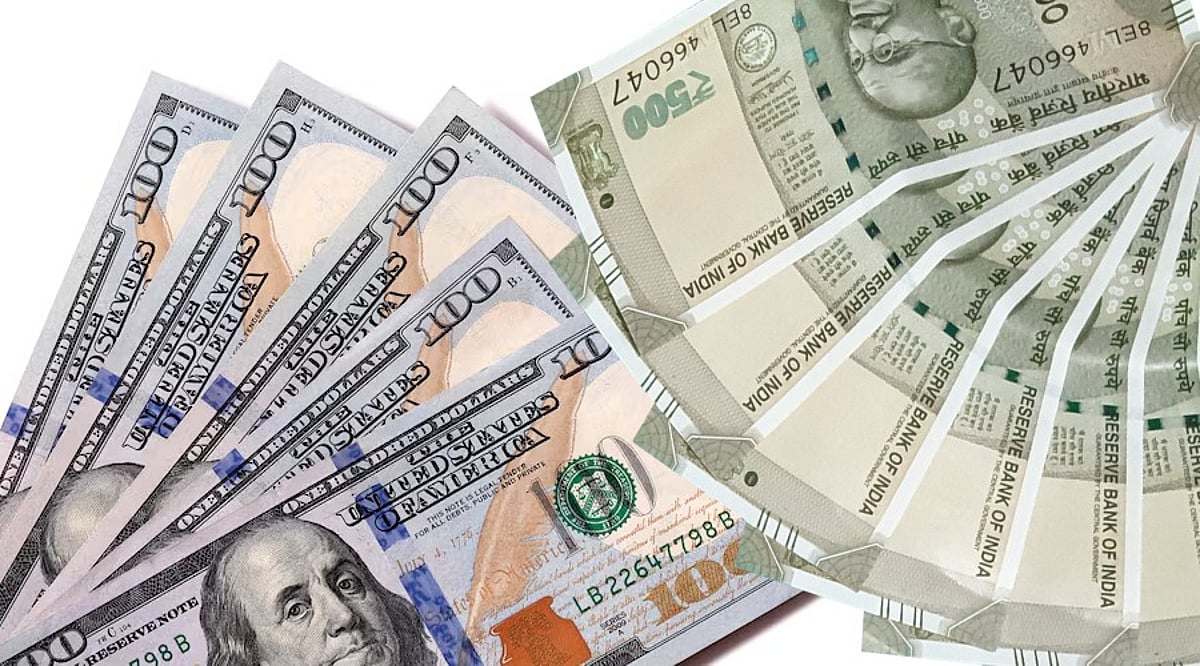
    The Indian rupee faced renewed selling pressure on Friday (September 11, 2026), weakening by 27 paise to Rs. 95.79 against the U.S. dollar in early trade. The decline extended the currency’s recent losing streak, driven by surging crude oil prices and sustained foreign portfolio outflows.

    Crude Oil Crosses USD 108

    A key factor weighing on the rupee is the sharp rise in international crude prices. Brent crude climbed above USD 108 a barrel, raising India’s import bill since the nation relies heavily on imported oil to meet its energy needs. The oil surge also hit broader financial markets, with the Nifty 50 and Sensex sliding to their lowest levels in about three months amid inflation and global interest-rate concerns.

    Foreign Outflows Add to Currency Pressure

    Continued foreign investor selling has added another layer of pressure on the rupee. Portfolio outflows increase demand for dollars as investors withdraw funds from Indian assets, making it harder for the currency to recover. The rupee has now been under pressure for several consecutive sessions, with traders closely watching developments in global oil markets and West Asia.

    The Reserve Bank of India (RBI) has been conducting dollar/rupee sell-buy swaps for a second consecutive day, with much of the activity concentrated in December maturities. “Such operations can drain excess rupee liquidity and support forward premiums, potentially offering some cushion to the currency,” said Amit Pabari, MD and CEO of CrForex Advisors. “These operations help drain surplus rupee liquidity and support forward premiums, which can provide support to the currency. Yet, the rupee continued to depreciate.”

    What Lies Ahead for the Rupee?

    The near-term outlook will depend heavily on how long crude prices remain elevated. A prolonged period above USD 100 could increase India’s energy import costs, widen external-sector pressures, and make the rupee more vulnerable. Markets are also watching U.S. bond yields and expectations around global monetary policy. Higher inflation risks linked to oil could limit the scope for easier interest rates worldwide. Unless oil prices ease or investor flows improve, the domestic currency is likely to remain volatile in the near term.

  • Indian Equities Open Lower as Crude Oil Surge Pressures Sentiment: Nifty and Sensex Decline

    Indian Equities Open Lower as Crude Oil Surge Pressures Sentiment: Nifty and Sensex Decline

    The Indian stock market opened sharply lower on Friday, weighed down by a continued surge in crude oil prices that dampened investor sentiment. The Nifty 50 index started the session 207.5 points or 0.88% lower at 23,270.30, while the Sensex fell 593.43 points to 74,309.16. The Bank Nifty also opened 501.8 points below its previous close.

    Broader market indices mirrored the weakness, with the Nifty midcap index slipping 0.4% while the smallcap index remained flat. The Indian rupee weakened further, opening 24 paise lower at Rs 95.68 against the US dollar, compared to its previous close of Rs 95.44.

    According to NSE data, foreign institutional investors turned net sellers on Thursday, offloading equities worth Rs 438.24 crore. In contrast, domestic institutional investors remained buyers, purchasing a net Rs 1,025.85 crore worth of Indian shares.

    Sensex Outlook

    Technically, the short-term outlook for the Sensex remains weak, but oversold conditions could trigger a pullback. “For day traders, 74,700 would act as key support zones, while 75,000 would be the immediate hurdle for the bulls. A move above 75,000 could extend the bounce back to 75,500-75,700. Conversely, below 74,700, selling pressure is likely to accelerate, potentially dragging the index to 74,500-74,200,” said Shrikant Chouhan, Head of Equity Research at Kotak Securities.

    Nifty 50 Outlook

    The Nifty 50 formed a high-wave candle on the daily chart with a lower high and lower low, indicating consolidation with a corrective bias. Weakness could extend the recent one-month decline toward the 23,300-23,200 zone in the coming sessions—the 80% retracement level of the prior up move from 23,070 to 24,774.

    On the upside, a pullback is possible if Nifty holds above Thursday’s low of 23,380. “A pullback attempt will face immediate resistance at Wednesday’s gap area of 23,650, with stiff resistance around 23,800-24,000 levels—the recent breakdown zone and the 20-day EMA. The previous support area is likely to reverse its role and act as resistance in the short term,” explained Pabitro Mukherjee, Deputy Vice President-Research at Bajaj Broking.

    Bank Nifty Outlook

    The Bank Nifty formed a small bullish candle on its daily chart in the prior session, but the pattern of lower highs and lower lows persists, signaling consolidation with a corrective bias. The index currently trades near the lower end of its 10-week range of 56,000-58,700. A break below 56,000 could trigger further downside toward 55,300 and 54,800 in the coming weeks.

    “The immediate bias remains down, and only a sustained formation of higher highs and higher lows on the daily chart would signal a pause in the downtrend. Sustaining above 56,000 on a closing basis would indicate a continuation of the 10-week consolidation,” added Mukherjee.

    Disclaimer: This article is for informational purposes only and does not constitute investment advice. Readers are encouraged to conduct their own research before making any investment decisions.

  • Indian Rupee Slides 10 Paise to 94.66 Against US Dollar as Crude Oil Prices Surge

    Indian Rupee Slides 10 Paise to 94.66 Against US Dollar as Crude Oil Prices Surge

    The Indian rupee came under pressure in early trade on September 8, falling 10 paise to Rs 94.66 against the US dollar as rising crude oil prices and escalating tensions in the Middle East weighed on investor sentiment. The currency opened at Rs 94.49 at the interbank foreign exchange market before weakening to Rs 94.66.

    This decline follows a 13-paise fall on September 7, when the rupee closed at Rs 94.56 against the dollar.

    Crude Prices Add Pressure

    The latest drop in the rupee came as Brent crude prices climbed towards USD 98 per barrel. Brent futures rose 0.63% to around USD 97.61, driven by concerns over possible disruptions to oil supplies amid escalating US-Iran tensions. Typically, rising oil prices negatively affect the rupee due to India’s heavy reliance on imported oil, as any increase in the country’s import bill leads to higher dollar requirements.

    These developments have raised concerns regarding the transport of energy through the Strait of Hormuz, a critical route for oil shipments. According to Reuters, Brent crude was at about USD 97.49 per barrel on Tuesday.

    Markets Await Key Economic Cues

    Market participants are now watching upcoming inflation data from India and the US for clues about the direction of interest rates and currency markets. The US Federal Reserve’s September 16 policy meeting will also remain a key focus.

    The dollar index stood around 98.80, while analysts expect the rupee to remain range-bound if crude prices stay elevated but RBI support continues.

  • Indian Rupee Gains for Fourth Session, Rises 5 Paise to 95.77 Against US Dollar

    Indian Rupee Gains for Fourth Session, Rises 5 Paise to 95.77 Against US Dollar

    The Indian rupee strengthened for the fourth consecutive trading session on Wednesday, supported by a weaker US dollar, positive domestic equity sentiment, and renewed foreign investor buying.

    At the interbank foreign exchange market, the rupee opened at Rs. 95.70 against the US dollar before trading at Rs. 95.77, registering a gain of 5 paise from its previous close. The local currency had settled 17 paise higher at 95.82 on Tuesday after gaining 74 paise during the previous two sessions.

    According to forex traders, the rupee received support from firm domestic equities and Foreign Institutional Investors (FIIs) turning net buyers in the Indian stock market.

    Weak Dollar and Equity Gains Support Rupee

    The dollar index, which measures the greenback’s strength against a basket of six major currencies, declined 0.12% to 101.14 ahead of the US Federal Reserve’s monetary policy announcement.

    Domestic stock markets also opened higher. The Sensex advanced 682.57 points, or 0.89%, to 77,448.49, while the Nifty 50 gained 186.85 points, or 0.78%, to reach 24,172.20.

    FIIs purchased equities worth Rs. 755.33 crore on a net basis on Tuesday, according to exchange data. The return of foreign buying improved sentiment toward Indian assets and provided additional support to the local currency.

    Crude Oil and Fed Policy Remain Key Risks

    Brent crude futures were trading 4.27% higher at $87.68 per barrel. According to analysts, oil prices rose after fresh geopolitical tensions emerged following reports of Iranian missile attacks on American forces.

    The US Central Command said all Iranian missiles were successfully intercepted, adding that US forces “remain vigilant and at a high state of readiness.”

    India is a major importer of crude oil, and higher energy prices can increase demand for dollars while putting pressure on the rupee. The currency’s near-term movement is expected to remain influenced by the Federal Reserve’s policy signals, crude oil prices, foreign investment flows, and domestic equity performance.

  • Indian Rupee Strengthens 28 Paise as Crude Oil Drops to $92 Per Barrel

    Indian Rupee Strengthens 28 Paise as Crude Oil Drops to $92 Per Barrel

    The Indian rupee started the week on a strong note, gaining 28 paise against the US dollar after global crude oil prices fell sharply. On Monday, the rupee opened at 96.25 against the dollar, compared to Friday’s close of 96.53, driven by a 4.17% decline in Brent crude oil to around $92 per barrel.

    Market analysts attribute the rupee’s strength primarily to the drop in crude oil prices. India imports the majority of its crude oil, so lower oil costs reduce the country’s import bill and the demand for US dollars, providing support to the domestic currency.

    Mike Waltz, the US ambassador to the United Nations, commented on the situation, noting that President Donald Trump is giving negotiations ‘a little bit of room.’ Waltz added, ‘We’ve had both Oman and Iran, and a number of our other negotiators, engaged at every level, from the most senior levels all the way down to the technical level over the past few weeks and particularly in the past few days.’

    The dollar index, which measures the US currency against a basket of six major currencies, fell 0.26% to 101.04, further supporting the rupee’s gains. Traders said a weaker US dollar combined with lower oil prices boosted market confidence.

    Experts suggest that future movements in the currency market will depend on global events, including oil price trends, US economic data, and decisions by major central banks. These factors will continue to influence the foreign exchange market.

    A sustained fall in crude oil prices could have broader economic benefits beyond supporting the rupee. Lower oil prices can reduce transportation costs as fuel becomes cheaper, which may help slow the rise in everyday prices. If crude oil remains low for an extended period, inflation could ease further, benefiting both businesses and consumers while giving the Indian economy more room to grow.

  • Indian Stock Market Opens Lower Amid Middle East Tensions: Nifty Down 0.09%, Sensex Falls 91 Points

    Indian Stock Market Opens Lower Amid Middle East Tensions: Nifty Down 0.09%, Sensex Falls 91 Points

    Indian equity markets opened in the red on Tuesday as escalating tensions between the US and Iran weighed on investor sentiment. The Nifty 50 opened 22.45 points (0.09%) lower, while the Sensex declined by 91.25 points. In contrast, the Bank Nifty managed a modest gain of 0.14% at the open.

    On Monday, the Sensex had fallen 442.93 points (0.57%) to settle at 77,708.52, and the Nifty 50 dropped 95.80 points (0.39%) to close at 24,238.50. The Indian rupee opened at Rs. 96.41 against the US dollar on Tuesday, compared to the previous close of Rs. 96.45.

    Midcap stocks gained 0.6%, while smallcaps ended marginally positive. Foreign Institutional Investors (FIIs) sold Rs. 1,121 crore on July 20, but Domestic Institutional Investors (DIIs) absorbed the outflow, buying Rs. 1,312 crore.

    Sensex Outlook

    Technically, the Sensex formed a recovery candle after a gap-down open, indicating buying interest emerging at lower levels. Shrikant Chouhan, Head of Equity Research at Kotak Securities, noted: “The key levels to watch are 76,800 on the downside and 78,300 on the upside. As long as these levels remain intact on a closing basis, stock-specific action is likely to dominate. A close below 76,800 could open the doors for a decline towards 76,200, whereas a sustained move above 78,300 may pave the way for a retest of 78,700. The preferred strategy is to reduce weak long positions in the 78,300-78,600 zone, while remaining selective in accumulating quality stocks on declines.”

    Nifty 50 Outlook

    The Nifty 50 formed a small-bodied candle on the daily chart and closed within the previous session’s range, reflecting continued indecision. Nagaraj Shetti, Senior Technical Research Analyst at HDFC Securities, commented: “A small green candle was formed on the daily chart that closed beside the long bull candle of Friday. Technically, this market action indicates an inside day type candle formation which is reflecting a range bound movement in the market with weak bias. The negative global sentiment has not impacted much on our markets so far.”

    Bank Nifty Outlook

    On Monday, the Bank Nifty formed a small-body bullish candle with wicks on either side, highlighting intraday indecision. Analysts noted: “Going ahead, the immediate resistance for Bank Nifty is placed in the 58,300-58,400 zone. Any sustainable move above this zone could result in Bank Nifty extending its pullback towards 58,800, followed by 59,200 in the short term. On the downside, the immediate support for Bank Nifty is placed in the 57,600-57,500 zone.”

    Disclaimer: This article is for informational purposes only and does not constitute investment advice. Readers should conduct their own research before making any investment decisions.

  • Indian Rupee Weakens Past 96 Against US Dollar for First Time Since May Amid Rising Oil Prices and Dollar Strength

    Indian Rupee Weakens Past 96 Against US Dollar for First Time Since May Amid Rising Oil Prices and Dollar Strength

    The Indian rupee slipped below the 96-mark against the US dollar on Monday, reaching its weakest level since May, as a sharp rally in global crude oil prices and rising US bond yields reignited pressure on the domestic currency. The latest decline comes after the rupee had briefly recovered in recent weeks, supported by Reserve Bank of India (RBI) measures aimed at attracting dollar inflows.

    The renewed weakness follows escalating geopolitical tensions in the Middle East, which have pushed Brent crude prices to their highest level in over a month. As India imports nearly 85% of its crude oil requirements, higher energy prices typically widen the country’s import bill, increase demand for dollars, and weigh on the rupee.

    Oil Prices and US Yields Drive Currency Weakness

    Currency dealers mentioned that the rupee came under pressure from a mix of rising oil prices and a firmer US dollar. Brent crude has climbed by more than 20% compared with its recent lows. At the same time, US Treasury yields have moved higher after hawkish signals from Federal Reserve officials, making dollar-denominated assets more attractive to investors.

    The stronger greenback has also helped push down several currencies across Asia, including the rupee. As India is heavily reliant on crude oil imports, the ripple effect is felt throughout the exchange market.

    RBI Intervention Expected to Curb Volatility

    It is expected that the RBI will monitor rupee movements and, if it sees the situation becoming volatile, intervene to stabilize the currency. Earlier, it had sold dollars in the forex market to avoid a sharp devaluation. Analysts feel that intervention might curtail losses, but it will not change the trend if oil prices remain high.

    What Does This Mean for Consumers?

    As the rupee falls, its impact will be felt in the prices of imports such as crude oil and electronics. Over time, this will result in higher fuel prices and transport expenses.

    For now, traders will closely watch developments in the Middle East, movements in global crude prices, and the Federal Reserve’s policy outlook, all of which are expected to determine the rupee’s near-term direction. Unless oil prices ease or foreign capital inflows improve, the Indian currency is likely to remain under pressure in the coming sessions.

  • Indian Rupee Surges 37 Paise to 94.30 Against US Dollar as Brent Crude Dips Below $73

    Indian Rupee Surges 37 Paise to 94.30 Against US Dollar as Brent Crude Dips Below $73

    The Indian rupee opened 37 paise higher at Rs. 94.30 against the US dollar on Wednesday, recovering from the previous close of 94.67. The jump was fueled by a steep decline in global crude oil prices, with Brent crude futures falling 1.80% to $72.41 a barrel and US West Texas Intermediate (WTI) dropping 1.59% to $69.22 per barrel.

    Falling Crude Oil Strengthens the Rupee

    The rupee’s rally was driven by a sharp correction in global crude oil prices. Oil prices slipped below $73 a barrel, matching levels seen before the Middle East conflict, after reports indicated that oil tankers had resumed transit through the Strait of Hormuz following progress in US-Iran ceasefire negotiations. For India, which imports around 85% of its energy requirements, lower energy prices provide significant relief by reducing the import bill, improving the current account deficit, and easing inflationary pressure. This fundamental support bolsters the domestic currency.

    RBI Intervention Prevents Slide Beyond 95

    The rupee traded in a wide 50-paise range on Wednesday, briefly approaching the 95 mark before recovering sharply. Dealers believe the Reserve Bank of India (RBI) intervened in the foreign exchange market via public-sector banks to curb excessive volatility. Analysts at Finrex Treasury Advisors noted, “With oil prices near $72.50 per barrel, the rupee is in the most comfortable zone despite a higher dollar index and weaker Asian currencies. While the RBI does not target a specific exchange rate, it intervenes to prevent excessive volatility.” Additionally, remarks from RBI Governor Sanjay Malhotra calmed forward premium markets, further boosting sentiment.

    Strong US Dollar Continues to Limit Upside

    The US Dollar Index (DXY) remained near 101.50, close to a one-year high, as investors priced in more rate hikes from the Federal Reserve. Markets are pricing in a high chance of additional US monetary tightening this year, keeping US Treasury yields near multi-month highs and supporting dollar-denominated assets. According to the CME FedWatch Tool, traders now expect three rate hikes from the Fed in 2026, with a 67% probability of a September hike.

    Rupee Outlook

    Pinky Yadav, Commodity Fundamental Analyst at Choice Broking, said the rupee started the day strong at 94.30 against the dollar, aided by a correction in global crude prices to pre-Iran war levels. The immediate direction of the rupee will depend on crude oil prices, US dollar strength, foreign portfolio investment flows, and the RBI’s intervention strategy.