Tag: industrial AI

  • NVIDIA Jetson Thor T3000: A Game-Changer for Robotics and Edge AI

    NVIDIA Jetson Thor T3000: A Game-Changer for Robotics and Edge AI

    NVIDIA introduced the Jetson Thor T3000 and T2000 AI modules on July 15 to support robotics and Edge AI applications. The new NVIDIA Blackwell-powered modules help developers build smarter robots and AI machines with less power and smaller hardware. The company plans to launch both modules in the first quarter of 2027.

    The launch comes as more industries adopt robots for real-world work. NVIDIA created the new Jetson Thor modules to run powerful AI models directly on robots and edge devices. This approach reduces cloud dependence while improving speed, safety, and overall performance.

    The Jetson Thor T3000 is the more powerful model in the lineup. It delivers up to 865 FP4 teraflops of AI performance and includes an eight-core Arm Neoverse CPU with 32GB LPDDR5X memory. NVIDIA said that the module is about half the size and uses nearly half the power of the larger T5000 while offering similar AI performance for language, vision, and robotics tasks.

    The Jetson Thor T2000 targets developers looking for a more affordable option. It delivers up to 400 FP4 teraflops with 16GB memory and supports visual AI, autonomous mobile robots, and industrial machines. NVIDIA also introduced new software tools that reduce memory use and make advanced AI models easier to run on smaller systems.

    NVIDIA stated that companies like Amazon Robotics, Boston Dynamics, Agile Robots, Hitachi, 1X, and Techman Robot already use the Jetson Thor platform. Developers can test the T3000 through JetPack 7.2.1 emulation today, while T2000 support will arrive later. Both modules are expected to become available in the first quarter of 2027.

  • Siemens’ Smart Factory Blueprint: Integrating IoT, AI, and Digital Twins for Next-Gen Manufacturing

    Siemens’ Smart Factory Blueprint: Integrating IoT, AI, and Digital Twins for Next-Gen Manufacturing

    Manufacturers need smarter ways to increase productivity while reducing downtime and operational complexity. Siemens is building next-generation factories by combining IoT connectivity, AI-driven insights, and digital twin technology into a unified digital ecosystem. This approach enables continuous monitoring, virtual testing, and data-driven optimization across production.

    The Three-Part System Behind the Strategy

    Siemens leans on three technologies: Industrial IoT, AI, and digital twins. IoT sensors and connected machines log real-time data from the factory floor. This raw data feeds into the AI layer, which identifies bottlenecks, flags equipment likely to fail, and runs production scenarios before commitments are made. The digital twin—a working copy of the factory—lets engineers experiment without touching physical assets. Siemens has bundled all three into a single platform called Digital Twin Composer.

    Digital Twin Composer: A Unified Platform

    Unveiled at CES 2026, Digital Twin Composer merges 2D and 3D digital twin data with live operational information from manufacturing execution systems, plus physics-based simulation built on NVIDIA Omniverse libraries. The output is a photorealistic virtual environment mapping an entire plant, not just a single machine. This marks the point where an industrial digital twin stops being a design tool and begins functioning as a live operational model.

    Where the Tool Lives Inside Siemens’ Stack

    Digital Twin Composer sits within Siemens Xcelerator, the company’s broader software portfolio, and will be available on the Xcelerator Marketplace in mid-2026. One Xcelerator tool, Tecnomatix, handles manufacturing directly—optimizing material flow, equipment use, and supporting virtual commissioning to validate automation logic and production workflows before physical deployment. This cuts commissioning time and engineering risk.

    What Early Numbers Show

    PepsiCo offers the clearest evidence. Using Digital Twin Composer to transform select U.S. manufacturing and warehouse facilities, the company recreated machines, conveyors, pallet routes, and operator paths with physics-level accuracy. The pilot identified up to 90 percent of design issues in advance and lifted throughput by 20 percent before construction began. PepsiCo plans to scale globally.

    The Bigger Platform Siemens is Building

    Siemens ties all of this to what it calls the industrial metaverse—a unified environment where engineering, operations, and AI teams share the same live, contextualized model of the factory. Together with NVIDIA, Siemens is working toward an Industrial AI Operating System, a shared foundation linking design, engineering, and daily operations across a plant’s full lifecycle.

    Analysts at Verdantix note that large-scale digital twin adoption has moved slowly, with barriers outside the technology itself. Manufacturers need IT and OT data convergence, stronger cybersecurity, proper data governance, and core systems like MES and MOM in place before a digital twin can generate real value.

    Final Thoughts

    The competitive edge in manufacturing is shifting from who collects the most data toward who can act on it fastest and with the least risk. Siemens has built a platform designed for that shift, and PepsiCo’s early numbers give other manufacturers a concrete benchmark. The next test will be whether that performance holds once Digital Twin Composer moves from early access into wide industrial use.

  • ABB Innovation Center Unites Over 1,000 Global Innovators to Accelerate Industrial AI

    ABB Innovation Center Unites Over 1,000 Global Innovators to Accelerate Industrial AI

    ABB’s Innovation Center (AIC) in Bengaluru recently concluded the sixth edition of its ABB Accelerator program, a five-day event that brought together more than 1,000 innovators from 37 countries. The program aimed to harness frontier technologies and domain expertise to create real-world industrial AI solutions.

    The event featured over 25 distinguished thought leaders from industry and academia, 80 startups, and participation from more than 350 universities. This collaborative effort showcased how diverse expertise can accelerate product development and build a future-ready talent pipeline for industrial transformation.

    “ABB Accelerator is a global innovation program where ideas are transformed into impactful solutions for our customers. By combining cutting-edge R&D, domain and application engineering strength, digital and AI capabilities, we are helping customers unlock greater value while building capabilities that shape the future,” said GNV Subba Rao, Whole-time Director, ABB Innovation Center.

    Rajesh Ramachandran, Global Chief Digital Officer for Automation at ABB, added: “At ABB, we see the Accelerator as a powerful platform where innovation meets industrial impact. By bringing together ABB experts, partners, startups, academia and thought leaders, we are accelerating the development of scalable solutions that harness industrial AI to shape more autonomous, efficient, and sustainable operations.”

    Over the past two years, the ABB Accelerator program has engaged more than 2,000 participants and generated nearly 700 approved use cases across AI, automation, cloud, and digital technologies. The program has also earned global recognition, receiving three prestigious international awards in 5, including Gold and Bronze Stevie® Awards and the International Innovation Award.

    The ABB Innovation Center (AIC) is one of ABB’s largest global technology and engineering hubs, employing nearly 4,000 technologists in R&D, engineering, digital technologies, and global operations. It focuses on developing next-generation industrial technologies and supporting customers toward increasingly autonomous operations.

    About ABB: ABB is a global technology leader in electrification and automation, enabling a more sustainable and resource-efficient future. With over 140 years of history and around 110,000 employees worldwide, ABB’s shares are listed on the SIX Swiss Exchange and Nasdaq Stockholm. More at www.abb.com.

  • Gujarat Government, IAIRO, and IBM Launch Industrial AI Centre of Excellence

    Gujarat Government, IAIRO, and IBM Launch Industrial AI Centre of Excellence

    IBM, the Department of Science and Technology of the Government of Gujarat, and the Indian AI Research Organisation (IAIRO) have announced plans to establish an Industrial Artificial Intelligence Centre of Excellence (Industrial AI CoE) in Vadodara, Gujarat. The initiative aims to drive innovation, skill development, and ecosystem growth around Industrial AI, leveraging sovereign AI technologies.

    The Industrial AI CoE will function as a living lab, focusing on technology demonstrations, pilot programs, and applied research to accelerate the adoption of AI in asset-intensive sectors such as manufacturing, energy, utilities, and supply chains. By combining domain knowledge with advanced AI models, the centre seeks to enhance efficiency, safety, resilience, and quality across industries.

    Key objectives include fostering collaboration between industry, academia, and government through workshops, conferences, and technical sessions. The centre will also promote capacity building via academic partnerships, hackathons, training programs, and the development of AI frameworks, reference architectures, standards, and best practices for responsible and scalable AI deployment.

    Dr. Amit Sheth, Founding Director of IAIRO, stated: “The next generation of industrial systems will require AI that combines learning with domain knowledge, human expertise, and trust. Translating these capabilities into real-world impact requires an ecosystem where research, policy, and enterprise innovation evolve together. Gujarat’s industrial leadership provides a strong foundation for that transformation.”

    Sriram Raghavan, General Manager of IBM Software, India and Software Innovation Lab, added: “Scaling the application of AI is a strategic imperative for manufacturing and industrial organizations. Realizing this opportunity requires advanced AI models, real-time and historical data, enterprise-ready platforms, governance, and ecosystem partnerships. We look forward to collaborating with the Government of Gujarat and IAIRO to create a platform that fosters innovation, develops skills, and accelerates the adoption of sovereign AI technologies.”

    Under the collaboration, IBM and IAIRO will serve as technical and strategic advisors to the Gujarat Department of Science and Technology, providing expertise in Industrial AI, sovereign AI, and asset management platform best practices to scale AI adoption across the industrial sector.

    The initiative aligns with Gujarat’s vision to become a leading destination for Industrial AI, leveraging sovereign AI technologies and strengthening India’s position in trustworthy AI innovation.

  • How Proxgy’s Wearable AI and Connected Tech Are Transforming Worker Safety in Heavy Industries

    How Proxgy’s Wearable AI and Connected Tech Are Transforming Worker Safety in Heavy Industries

    Artificial intelligence is reshaping industrial operations, but most innovations still cater to desk-based workers. Millions of frontline employees in manufacturing, construction, mining, and logistics operate in environments where conventional devices are impractical. As connectivity spreads, the demand for purpose-built technology grows.

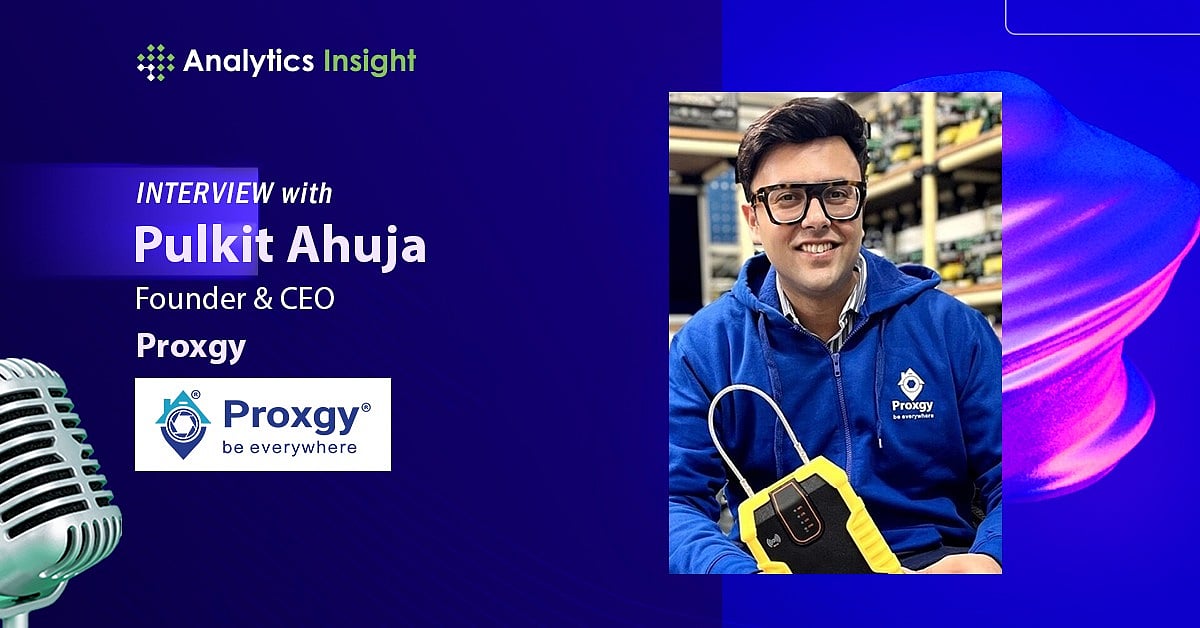
    In this episode of the Analytics Insight Podcast, Pulkit Ahuja, Founder and CEO of Proxgy, discusses how the company develops connected wearables and industrial hardware to enhance worker safety and productivity. He also explores India’s deep tech ecosystem, the value of IP-led innovation, and the challenges of building globally scalable hardware products.

    Proxgy’s Vision: Connecting the Underserved Workforce

    Ahuja explains that Proxgy’s name combines “proxy” (as in a human proxy) and “technology.” Founded during the first COVID-19 lockdown in 2020, the company’s mission is to connect the billion-plus people who do not work at a desk. Ahuja brings a strong background in product innovation, with over 25 inventions to his name—including the world’s first drone-assisted driving technology (recently launched by BYD) and an earthquake-protection bed. He is also the author of a national bestseller, Google to Buy God.

    Why Industrial Problems Matter More Than Consumer Convenience

    For startups targeting blue-collar workers, long-term commitment is essential, Ahuja says. Unlike purely software or AI plays, these solutions require a physical touchpoint because laptops and mobile phones are unsuitable for harsh working conditions. Proxgy has invented six niche products, including the world’s first smart safety helmet for manufacturing, construction, oil and gas, and mining. A key design principle is minimizing user behavior change—aiming for zero resistance to adoption.

    Wearable Tech and the Future of Industrial Safety

    Traditional safety methods were reactive, but connected wearables enable proactive approaches. Ahuja believes India is poised to lead because of its large workforce and diverse test cases. Solutions proven in Indian conditions can be replicated globally at optimized costs—a trend already visible at Proxgy.

    India’s Path to Global Leadership in Deep Tech

    Government support for “Make in India” is strong, and Proxgy leverages it to produce globally scalable products. However, the ecosystem requires patient capital, which India is slowly developing. Unlike in the US, most high-funded Indian startups are not deep tech or hardware companies because hardware development takes time and carries high risk.

    Realities of Building a Deep Tech Company in India Today

    Founders must lead with IP-led innovation, Ahuja advises. Chasing trends is less valuable than creating long-term value through execution, scalability, reliability, and commercial viability. Seamless integration into existing workflows is critical for success.

    To hear the full conversation, listen to the podcast episode.

  • Schneider Electric CAIO Philippe Rambach on Scaling AI with a Business-First Strategy and Critical Thinking

    Schneider Electric CAIO Philippe Rambach on Scaling AI with a Business-First Strategy and Critical Thinking

    In a wide-ranging interview, Philippe Rambach, Chief Artificial Intelligence Officer at Schneider Electric, shares how the global energy management and automation company is scaling AI across more than 160 factories and 140 countries. The key, he explains, is a disciplined business-first approach that prioritizes real-world value over technological novelty.

    Business Value Over Technology

    Rambach warns against “technology tourism”—the temptation to run hundreds of pilots without a clear business case. Instead, Schneider Electric starts by identifying a specific business impact, then asks if AI can help. Each use case passes through gate reviews that test both technical feasibility and business value. Projects are halted immediately if either criterion fails.

    “We do a pilot that keeps in mind what we want to deliver at scale,” Rambach notes. This rigor prevents “pilot purgatory” and ensures that lab successes translate to real factory results.

    Agentic AI and the Sera Assistant

    Schneider recently launched Sera, an AI agent that transforms how users interact with environmental data. However, Rambach cautions against overhyping generative AI. “Generative AI agents do not replace forecasting, anomaly detection, prediction or optimisation—we still need that,” he asserts. Sera adds a conversational layer, allowing operators to ask complex questions in natural language, moving beyond rigid dashboards.

    Critical Thinking as a Core Skill

    To counter blind faith in AI outputs, Schneider has introduced an “AI for All” training program with the same institutional rigor as safety training. The centerpiece is critical thinking. “We want people to keep critical thinking when AI gives an answer,” Rambach says, acknowledging that AI can be wrong or partially wrong. The company also hosts “promptathons” and a virtual “Genius Bar” for employees to share prompting strategies.

    Edge vs. Cloud: A Matter of Physics and Policy

    Deciding where to run AI depends on data sovereignty and latency. In industrial settings, sensitive data often must stay local, and real-time applications like visual inspection require edge processing for speed. Schneider’s solutions are designed to be versatile enough for both environments.

    Addressing the Energy Density Crisis

    Schneider Electric, which builds data center infrastructure, is acutely aware that AI training consumes vast energy. Rambach notes the irony: AI is part of the solution. The company uses AI to optimize power management for its own factories and partners like NVIDIA to precisely manage energy in AI factories. He also advocates treating AI as an “unreliable component,” building reliable systems with human-in-the-loop checks, as in customer care where AI drafts responses but humans verify them.

    Navigating Regulation and Ethics

    Operating under the EU AI Act, Schneider has published an external Trust Charter that explicitly bans facial recognition. Rambach says compliance with the Act does not slow the company down. The ethical framework is backed by a dedicated responsible AI team within the AI Hub.

    The Future of the CAIO Role

    Rambach admits he is “very scared of becoming the bottleneck” as AI becomes pervasive. He sees the CAIO role evolving toward defining technical policy and supporting large, bespoke use cases. His overarching message is to not forget centuries of human wisdom: “My big message is we should not forget everything we have learned in the last 2,000 years, just because there’s a new technique.”

    For industrial giants, AI is not a replacement for human engineering but its most powerful tool—and mastering it lies in the critical mind of the user.

  • Schneider Electric’s CAIO on Scaling AI with Business-First Strategy and Critical Thinking

    Schneider Electric’s CAIO on Scaling AI with Business-First Strategy and Critical Thinking

    Philippe Rambach, Chief AI Officer at Schneider Electric, discusses how the company integrates artificial intelligence across its global operations while maintaining a pragmatic, business-first approach. In an interview with AI Magazine, Rambach outlines the principles guiding AI adoption in over 160 factories and 140 countries.

    Rather than chasing the latest technology trends, Schneider Electric evaluates AI use cases based on business value and technical feasibility. Every project passes through gate reviews that assess these factors, preventing what Rambach calls “pilot purgatory.” The company prioritizes solutions that can scale from the start, avoiding lab experiments that fail in production.

    The rise of agentic AI is another key topic. Schneider recently launched Sera, an AI agent that allows users to interact with environmental data using natural language. Rambach emphasizes that generative AI agents complement, not replace, classical AI methods like forecasting and anomaly detection. He warns against the common mistake of treating generative AI as a one-size-fits-all replacement.

    To prepare employees for AI adoption, Schneider has implemented a training program called “AI for All.” The curriculum emphasizes critical thinking, helping staff evaluate AI outputs rather than trusting them blindly. The company also hosts “promptathons” and maintains a prompt library to share best practices across teams.

    On the technical side, Rambach explains the decision between edge and cloud AI deployment. Factors include data sovereignty, cybersecurity, and latency—especially in high-speed manufacturing processes where millisecond delays matter. Schneider builds solutions that work in both environments.

    The interview also touches on the energy demands of large AI models. As a supplier to data centers, Schneider Electric uses AI to optimize power management in collaboration with partners like NVIDIA. Rambach views AI as both a contributor to and a solution for the energy density problem.

    Regulatory compliance under the EU AI Act is managed through a responsible AI team, and Schneider has published a public Trust Charter that excludes uses like facial recognition. Rambach notes that regulation has not slowed down innovation.

    Looking ahead, Rambach sees the CAIO role evolving from overseeing all AI initiatives to setting technical policy and supporting large-scale use cases. He warns against becoming a bottleneck and stresses the importance of leveraging existing transformation teams rather than creating new ones.

    The key takeaway: AI in heavy industry must serve real business needs, and human critical thinking remains indispensable. As Rambach puts it, “We should not forget everything we have learned in the last 2,000 years, just because there’s a new technique.”

  • Huawei Deploys Specialized AI Model to Revolutionize Steel Manufacturing in China

    Huawei Deploys Specialized AI Model to Revolutionize Steel Manufacturing in China

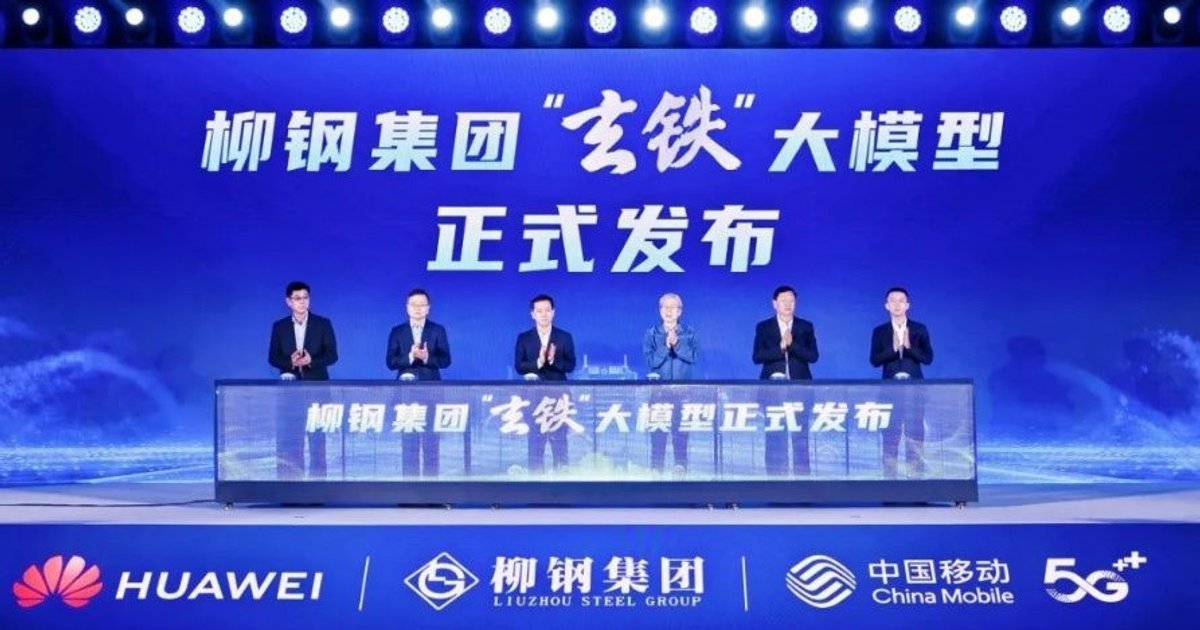
    Huawei has taken a leading role in developing Guangxi’s first AI model tailored for the steel industry, introducing the Xuantie Steel Model to optimize production costs and efficiency through advanced neural networks.

    The Xuantie Model represents a major step forward in domain-specific artificial intelligence, being the first large language model designed specifically for the steel manufacturing sector in Guangxi, China. It was created through a collaboration between Guangxi Liuzhou Iron and Steel Group (Liuzhou Steel Group), Huawei, and China Mobile Guangxi Branch. This initiative demonstrates how general-purpose AI architectures can be fine-tuned for specialized industrial applications.

    The technical infrastructure supporting this deployment includes novel AI applications and a dedicated research facility focused on advancing machine learning capabilities within heavy manufacturing environments. Domain-specific large models like Xuantie address a critical challenge in industrial AI: adapting general-purpose architectures to understand the unique constraints, processes, and terminology of specific sectors. The steel industry presents particular technical challenges due to its complex, multi-stage production processes and the need for real-time decision-making under high-temperature, high-pressure conditions.

    Pre-training Architecture and Model Foundations

    The Xuantie Steel Model’s architecture builds upon Huawei’s Pangu foundation models through transfer learning and domain-specific pre-training. According to Li Bin, Chairman of Liuzhou Steel Group, the model implements a 20+N scenario-based model system that encompasses six critical production domains: pre-smelting, steelmaking, steel rolling, logistics, environmental protection, and safety. This modular architecture allows individual sub-models to be optimized for specific tasks while maintaining coherent integration across the production pipeline.

    The technical framework centers on three core computational paradigms: human-AI interaction systems, data processing and analysis capabilities, and manufacturing process optimization. This tripartite structure reflects current best practices in industrial AI deployment, where models must simultaneously interface with human operators, process vast quantities of sensor data, and make autonomous decisions within tightly constrained operational parameters.

    Jiang Wangcheng, Huawei’s Corporate Vice President and CEO of the Oil, Gas & Mining BU, explained during the recent launch that the development leveraged Huawei’s capabilities in AI, high-performance computing, and network connectivity to create a proprietary technological foundation. The integration of these components could enable end-to-end intelligent manufacturing, with large models deployed throughout the production chain rather than isolated to specific processes.

    Neural Networks in Production Environments

    The practical implementation of AI models within Liuzhou Steel Group’s operations reveals sophisticated applications of machine learning across multiple production stages. According to Shen Min, Vice President of Liuzhou Steel Group, 33 distinct AI models have been deployed in steelmaking processes alone. A 5G-enabled intelligent molten iron transportation system demonstrates end-to-end autonomous operation, while an intelligent scheduling model employs reinforcement learning to optimize inter-process coordination, reportedly improving productivity by 8.5%.

    Neural networks applied to basic oxygen furnaces and ladle argon blowing processes have achieved measurable improvements in product quality while reducing raw material consumption. These models likely employ predictive algorithms that analyze real-time sensor data to optimize chemical compositions and thermal profiles, reducing crude steel production costs by approximately CNY 5 (US$0.73) per metric ton.

    The intelligent refining solution represents a hybrid architecture combining mechanistic models—physics-based simulations of metallurgical processes—with AI prediction algorithms and parameter optimization. This approach could address a common limitation of pure machine learning systems: the need for explainability and physical consistency in safety-critical industrial environments. The system has reportedly reduced comprehensive steel costs by CNY 2 (US$0.29) per metric ton.

    Algorithmic Optimization and Future Developments

    Machine learning algorithms have been applied to plate and plywood assembly optimization, where production planning models have increased yield from 1% to 2%. Contract matching automation, achieving more than 90% accuracy, likely employs natural language processing and constraint satisfaction algorithms to align production capabilities with order specifications.

    Shi Mao, CEO of Huawei’s Steel & Non-ferrous BU, outlines a vision for intelligent manufacturing centered on three technical pillars: human-machine trust, multi-machine collaboration, and autonomous synergy. These concepts suggest advanced architectures where multiple AI agents coordinate across production systems with minimal human intervention while maintaining transparency and reliability.

    The Liuzhou Steel AI Research and Innovation Center could serve as a platform for continued model development and ecosystem collaboration. Plans include developing more than 10 high-level industrial agents for production lines and business domains, alongside more than 30 curated industrial datasets. These datasets could prove particularly valuable, as high-quality, domain-specific training data remains a critical bottleneck in industrial AI development.

    The Xuantie Model demonstrates how foundation models can be adapted to highly-specialized domains through careful pre-training, modular architecture design, and integration with existing industrial control systems. As the technology matures, such domain-specific large models could become increasingly prevalent across manufacturing sectors.