Tag: industrial automation

  • China Accelerates Humanoid Robot Production: Can Cost Reductions Drive Widespread adoption?

    China Accelerates Humanoid Robot Production: Can Cost Reductions Drive Widespread adoption?

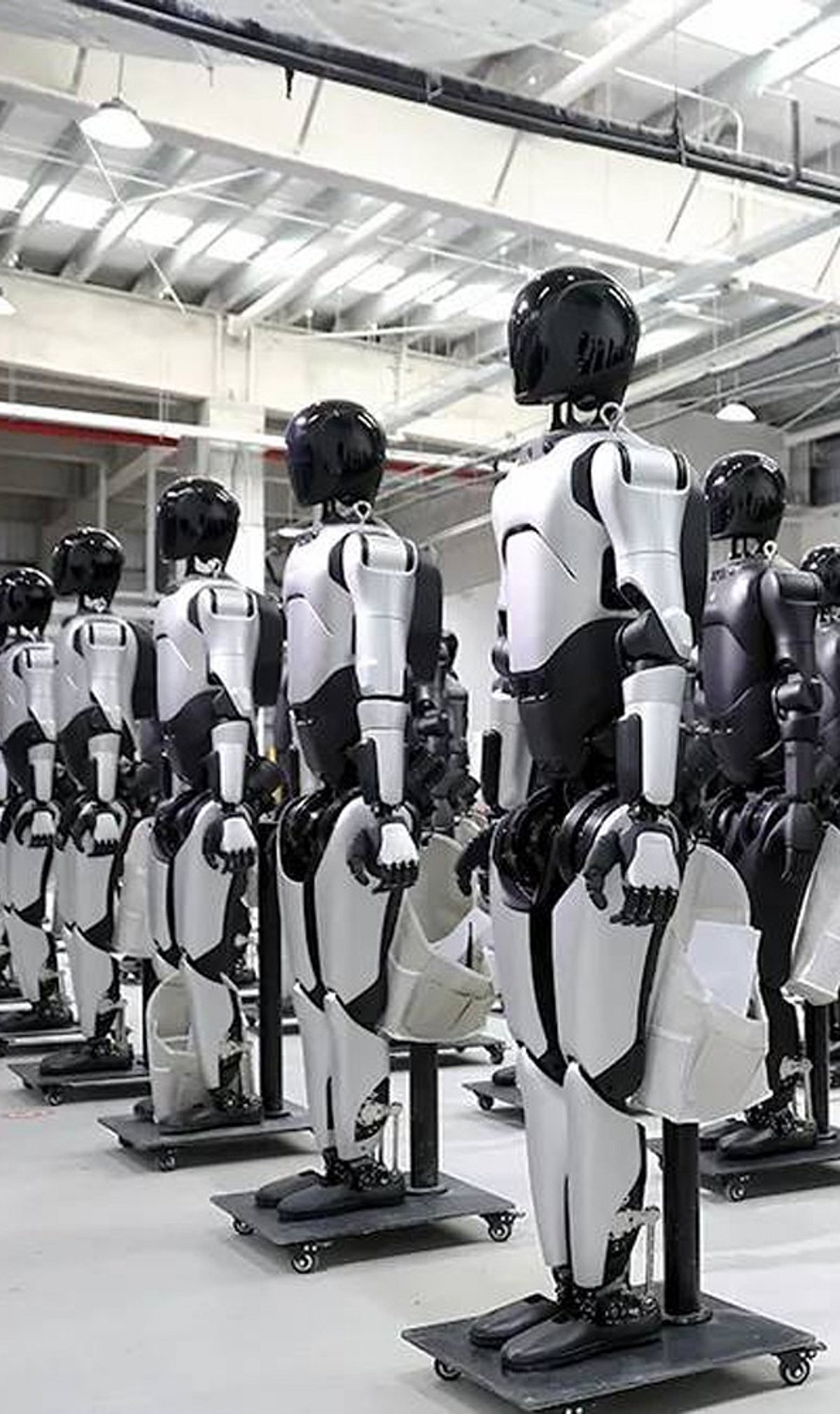
    China is rapidly scaling up its humanoid robot industry, moving from prototype development to automated mass production. The goal: increase output and slash manufacturing costs to make these robots accessible to commercial buyers.

    Automated Factories Set New Standards

    XPeng’s latest production lines automate more than 80% of core processes, applying automotive-grade manufacturing techniques to humanoid robots. This shift is driven by a need for higher volumes and lower per-unit costs.

    Cost Reduction Through Scale and Localization

    By ramping up production volumes and sourcing localized components, Chinese manufacturers have managed to bring prices down. Some humanoid robot models now cost less than 30,000 yuan (about $4,000), a threshold that signals rapid affordability improvement.

    Domestic Supply Chain Advantages

    China’s existing automotive and electronics supply chains already provide key components such as motors, reducers and sensors. This reduces the need for entirely new manufacturing capacity, accelerating time-to-market.

    Rapid Production Growth

    Agibot, a nowdel div, had produced 15,000 cumulative humanoid robots by June alone. That shows how quickly Chinese manufacturers are scaling up their production capabilities.

    Industrial Applications Expand

    Humanoid robots are now being deployed in automotive, electronics, logistics, aerospace and energy sectors. Industry attention is shifting toward practical, commercial use cases rather than just research exbits.

    Challenges Ahead

    Despite growing production, profitability remains uncertain. Manufacturers still need repeat orders, reliable performance and convincing returns on investment. The expanding robotics ecosystem in China may also lead to aggressive price competition, putting pressure on companies to balance affordability with sustainable margins.

  • 7 Innovative Ways Camera Robots Are Revolutionizing Key Industries

    7 Innovative Ways Camera Robots Are Revolutionizing Key Industries

    Camera robots are rapidly transforming how industries operate, from enhancing security to improving medical procedures. By combining artificial intelligence, advanced optics, and autonomous navigation, these machines are delivering unprecedented capabilities across multiple sectors. Below, we explore seven key areas where camera robots are making a significant impact.

    1. Autonomous Surveillance

    Camera robots equipped with AI continuously monitor environments, detecting suspicious activity and improving security in commercial, industrial, and public spaces. Their ability to operate around the clock without fatigue enhances threat detection and response times.

    2. Cinematic Filmmaking

    Advanced robotic camera systems capture smooth, repeatable, and highly precise shots that elevate filmmaking quality. By automating camera movements, they reduce the need for manual operation and allow directors to achieve complex angles with ease.

    3. Infrastructure Inspection

    Camera robots safely inspect bridges, power plants, pipelines, and construction sites. They identify structural issues such as cracks or corrosion without exposing human workers to hazardous environments, thereby improving safety and reducing downtime.

    4. Medical Assistance

    In healthcare, robotic cameras support surgeons by providing enhanced visualization during minimally invasive procedures. This leads to greater precision, smaller incisions, and improved patient outcomes.

    5. Wildlife Observation

    Researchers deploy camera robots to monitor wildlife behavior without disturbing natural habitats. These systems collect valuable ecological data over long periods, aiding conservation studies and biodiversity assessments.

    6. Warehouse Automation

    Robotic cameras track inventory movement, identify misplaced goods, and assist automated logistics systems. This boosts warehouse efficiency, reduces errors, and streamlines supply chain operations.

    7. Disaster Response

    Camera-equipped robots enter dangerous disaster zones—such as collapsed buildings or fire sites—transmitting live visuals that help emergency teams assess damage and locate survivors more effectively.

    Additional applications include sports broadcasting, where robotic cameras deliver dynamic angles and automated tracking, and agricultural monitoring, where farmers use them to assess crop health and optimize irrigation. As technology advances, camera robots will continue to reshape industries by improving accuracy, safety, and productivity.

  • Nvidia Partners with Japanese Robotics Firms to Accelerate AI-Powered Automation

    Nvidia Partners with Japanese Robotics Firms to Accelerate AI-Powered Automation

    Nvidia is deepening its commitment to robotics by partnering with leading Japanese companies to develop advanced AI-powered machines. This collaboration targets the creation of next-generation factory robots, AI-powered humanoids, and digital twin simulations that streamline development and testing.

    Japan’s longstanding leadership in robotics, combined with Nvidia’s powerful GPU computing platforms, positions the partnership to drive a new wave of industrial automation. The goal is to improve productivity and efficiency in manufacturing through smarter, AI-driven systems.

    Beyond factories, the technology could extend to healthcare, logistics, and service robots, enabling more intelligent and autonomous operations. The move reflects the global race to invest in intelligent automation, with Nvidia providing the computational backbone for training and deploying robotics AI models.

    This strategic partnership underscores how Japan is strengthening its role in global AI development, leveraging digital twins and advanced simulations to accelerate innovation. The collaboration is expected to have a significant impact on the future of robotics and AI across multiple industries.

  • NVIDIA Teams Up with Fanuc, Yaskawa to Boost Robotics and AI in Japan

    NVIDIA Teams Up with Fanuc, Yaskawa to Boost Robotics and AI in Japan

    NVIDIA has announced partnerships with major Japanese robotics manufacturers, including Fanuc and Yaskawa Electric, to accelerate the development of artificial intelligence and robotics. The chipmaker revealed the collaborations during a media event in Tokyo on Thursday, signaling a deepening commitment to Japan’s industrial automation sector.

    NVIDIA CEO Jensen Huang emphasized that AI can make industrial robots smarter, more adaptable, and easier to deploy. “With AI, robots will become smart, easily adaptable and accessible,” Huang said at the Tokyo event. Fanuc and Yaskawa Electric are among Japan’s leading industrial robotics suppliers, providing automation systems to factories worldwide in sectors such as automotive production, electronics, logistics, and industrial equipment.

    The partnerships integrate NVIDIA’s computing platforms and AI software into Japan’s established robotics ecosystem. Financial terms and specific rollout schedules were not disclosed. During his visit, Huang also met with executives from memory chipmaker Kioxia and semiconductor equipment producer Tokyo Electron, and attended an event hosted by Sega Sammy in Tokyo’s Akihabara district.

    Japanese Organizations Adopt NVIDIA’s Nemotron Models

    NVIDIA announced that several Japanese organizations are using its Nemotron open models, datasets, and software tools to build AI systems tailored for Japanese language tasks and industry-specific applications. The Institute of Science Tokyo leveraged NVIDIA datasets and NeMo software to develop the Swallow model family, which supports Japanese language processing, reasoning, coding, and mathematics. Companies are applying Swallow for financial document translation and asset management reports.

    SB Intuitions, SoftBank’s generative AI research arm, trained its Sarashina models with NVIDIA technology. Japan’s Digital Agency selected Sarashina3 mini for specialized AI projects, while SoftBank built a telecom model for automated network operations. Stockmark released a Japanese document-understanding model based on NVIDIA Nemotron 3 Nano Omni and is developing business knowledge systems for manufacturing, energy, and chemical sectors. Sakana AI is integrating Nemotron into its Fugu model-routing platform, which selects different AI models based on accuracy, speed, and cost.

    Enterprise Applications Expand Across Industries

    Japanese companies are deploying Nemotron for customer service, research, remote operations, and workplace automation. Avatarin is developing Japanese-language AI agents for customer conversations and remote-presence systems, using NVIDIA HGX B300 systems for private AI processing and NVIDIA Jetson hardware for digital avatar services at airports and other locations. ENEOS Holdings applies Nemotron tools to energy and materials research, combining document search, image analysis, language processing, and molecular simulations for cooling fluids, catalysts, and other industrial materials.

    NTT Data used NVIDIA’s Japanese training dataset to improve its tsuzumi 2 language model and is exploring a multi-agent system that assigns tasks to different AI models. Hitachi is developing physical AI systems with NVIDIA Nemotron and Cosmos open models, connecting information technology with factory and infrastructure operations. NVIDIA releases Nemotron models with open weights, datasets, and development instructions, allowing companies to customize and run them on private systems or cloud platforms. The models are available through Hugging Face, ModelScope, OpenRouter, NVIDIA’s developer platform, and selected cloud providers.

  • Rockwell Automation and Cisco Partner to Transform Manufacturing in India with Software-Defined Solutions

    Rockwell Automation and Cisco Partner to Transform Manufacturing in India with Software-Defined Solutions

    Rockwell Automation (NYSE: ROK) and Cisco (NASDAQ: CSCO) have announced a strategic collaboration aimed at reimagining the future of manufacturing in India. The partnership unites IT and industrial automation to support the country’s ambitions for advanced, resilient, and globally competitive manufacturing.

    At the core of this initiative is the launch of a Full-Stack Software-Defined Manufacturing reference design. Additionally, a Software-Defined Manufacturing Demo Pod has been established at Rockwell Automation’s Gurugram facility, developed in collaboration with Cisco’s Country Digital Acceleration program. The companies have also introduced a joint digital skills initiative to address the manufacturing digital skills gap, leveraging Cisco Networking Academy and Rockwell’s Learning+ program.

    These efforts reflect a shared commitment to help India’s manufacturing sector transition from traditional automation toward AI-enabled autonomous operations. The Full-Stack Software-Defined Manufacturing reference design integrates Cisco’s software-defined networking with Rockwell Automation’s software-defined automation, delivering secure, observable, and resilient operations. By enabling secure data flow across IT and OT, manufacturers gain real-time visibility and actionable insights to improve efficiency, reduce risk, and support AI-enabled decision-making while maintaining compliance and protecting critical operations.

    “India’s manufacturing sector is at a defining moment,” said Dilip Sawhney, managing director of Rockwell Automation India. “By bringing together industrial automation expertise and modern digital infrastructure, we are helping manufacturers build operations that are more resilient, intelligent, and ready for the future.”

    The Software-Defined Manufacturing Demo Pod in Gurugram will serve as a collaborative innovation environment where customers, partners, and ecosystem players can experience, validate, and co-create solutions tailored to India’s manufacturing needs. It provides a practical foundation for organizations to move from pilot projects to scalable deployment across plants and production lines.

    A key aspect of this collaboration is skills development. Through a social impact initiative, Rockwell Automation and Cisco Networking Academy are committed to equipping India’s manufacturing workforce with essential digital, networking, and cybersecurity skills for modern, software-defined industrial environments. This initiative supports India’s goals for workforce readiness and inclusive growth as manufacturing becomes more digital.

    “Cisco is proud to work alongside Rockwell Automation to support India’s manufacturing transformation,” said Kartika Prihadi, Vice President of Partner and Routes to Market Sales at Cisco APJC. “By unifying secure networking, automation, and AI-ready infrastructure, we are helping manufacturers move from automation to autonomy, unlocking new levels of efficiency, innovation, and trust.”

    As India continues to strengthen its position as a global manufacturing hub, the Rockwell Automation and Cisco collaboration provides a blueprint for how technology, skills, and ecosystem partnerships can come together to support sustainable growth and operational excellence.

  • Humanoid Robot Companies Dominating 2026: Key Players to Watch

    Humanoid Robot Companies Dominating 2026: Key Players to Watch

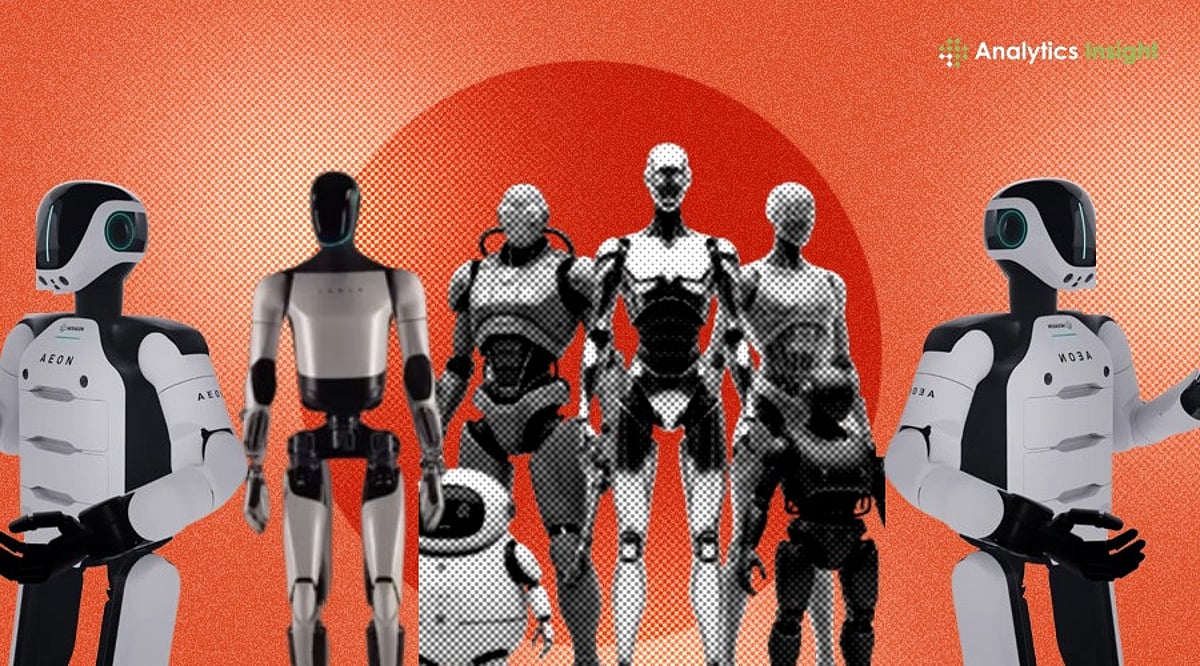
    Humanoid robots are steadily moving into factories, warehouses, and industrial environments. Competition is accelerating as companies refine AI, mobility, and manufacturing efficiency. The industry’s next phase will be shaped by scalable deployments and reliable real-world performance.

    Overview

    Figure AI has moved past demos. Its robots have logged real production hours inside a BMW plant, setting it apart from most competitors. Unitree has turned volume and low cost into a profitable business strong enough to support a Shanghai IPO filing. Tesla, Apptronik, Boston Dynamics, and Agility each chase a different edge: factory scale, enterprise trust, engineering precision, or warehouse focus.

    A humanoid robot sorted more than 200,000 packages on a public livestream this year, almost unnoticed outside robotics circles. That quiet detail reveals the state of the industry — humanoid robots have left the demo stage but remain far from mass adoption. A small group of companies is now placing very different bets on how to close that gap.

    Quick Comparison

    • Figure AI: Real factory deployment with 1,250+ production hours at BMW.
    • Tesla: Leveraging existing manufacturing infrastructure; still in R&D stage.
    • Apptronik: Enterprise partnerships with Mercedes-Benz and GXO, backed by DeepMind AI.
    • Unitree: Highest volume shipped (5,500+ units) with strong margins and an IPO filing.
    • Boston Dynamics & Agility: Specialists in dynamic manipulation and warehouse automation.

    Figure AI: Deployment is the Real Headline

    Figure has become the closest thing to a proof point in the industry. Its robots have run production shifts inside BMW’s Spartanburg plant for more than 1,250 hours, loading over 90,000 parts across roughly 30,000 vehicles. The newer Figure 03 has scaled to 40 units at the same site. This track record sits atop Helix, Figure’s in-house vision-language-action model, which lets a robot respond to spoken instructions without task-specific programming. A Series C round above $1 billion in September 2025 valued the company at $39 billion, and Figure now sells access through a subscription model priced at roughly $1,000 per robot per month.

    Tesla: Manufacturing Muscle, Proof Still Pending

    Tesla’s edge comes from the infrastructure it already owns. The company runs car factories at a scale most rivals face building from scratch, and Optimus draws on perception software adapted from Tesla’s self-driving systems. Roughly $20 billion of Tesla’s 2026 capital spending plan is tied in part to Optimus production, though this covers wider manufacturing and AI compute. Musk has described Optimus as still in early R&D on recent earnings calls, and outside customer deployments remain limited compared to Figure or Apptronik.

    Apptronik: Betting on Enterprise Partnerships

    Apptronik’s Apollo robot is currently piloting inside Mercedes-Benz manufacturing lines and GXO Logistics warehouses, made possible by a partnership with Google DeepMind that brings Gemini Robotics models into Apollo’s software. This enterprise-first approach is backed by $935 million raised across its Series A round and extension, pushing valuation close to $5.5 billion. Apptronik favors named customers and real factory data over flashy public demos.

    Unitree: Winning on Price, Volume, and Actual Profit

    Unitree shipped over 5,500 humanoid units in 2025, more than any competitor worldwide, built on an affordable actuator design and reinforcement learning methods. An open SDK has attracted a wide base of researchers and universities. Revenue grew 335% year-over-year with gross margins above 60%, strong enough to support a roughly $610 million IPO filing on Shanghai’s STAR Market in March 2026. Most revenue still comes from research and education buyers, so the industrial proof point that Figure and Apptronik hold is one Unitree is still working to earn.

    Boston Dynamics and Agility: Specialists Worth Watching

    Boston Dynamics rebuilt Atlas around electric actuators and whole-body motion planning, choosing precise dynamic manipulation over raw hydraulic power. Agility Robotics focuses on warehouse work, running some of the earliest humanoid pilots inside Amazon facilities. Two other names to watch are 1X Technologies and Sanctuary AI, both pushing embodied AI research that could reshape next year’s rankings.

    What This Means Going Forward

    This race is not just about who can build the most impressive prototype. It has become a contest of deployment scale, software reliability, manufacturing efficiency, and cost per productive hour. The companies that solve those problems — not simply those with the largest funding rounds — will define the next phase of industrial automation.

    Final Thoughts

    The rise of humanoid robots will depend on more than technological breakthroughs. Success will increasingly be shaped by how well these machines integrate into existing workflows, earn workforce trust, and deliver consistent performance across diverse industries.

    FAQs

    1. What are the top humanoid robot companies to watch in 2026? Figure AI, Tesla, Apptronik, Unitree, Boston Dynamics, and Agility Robotics are among the leaders, competing through AI, real-world deployments, manufacturing scale, and industrial automation.
    2. Which humanoid robot company is leading in commercial deployments? Figure AI stands out with robots operating in BMW manufacturing facilities; Apptronik and Agility are also expanding enterprise pilots in logistics and industrial environments.
    3. Which company offers the most affordable robots? Unitree Robotics is recognized for affordable humanoid robots like the G1, making advanced robotics more accessible for research, education, and early commercial applications.
    4. How are humanoid robots being used in 2026? They are deployed for material handling, warehouse logistics, manufacturing support, quality inspection, and repetitive industrial tasks, mostly in pilot or early commercial stages.
    5. What will determine the success of humanoid robot companies? Long-term success depends on reliable AI, scalable manufacturing, cost-effective production, real-world performance, and the ability to deliver measurable productivity gains for enterprise customers.
  • India’s AI Startup Ecosystem Expands Beyond Bengaluru: Key Hubs and Specializations

    India’s AI Startup Ecosystem Expands Beyond Bengaluru: Key Hubs and Specializations

    India’s artificial intelligence ecosystem has entered a new phase. Bengaluru still dominates the funding charts and deep-tech innovation, but the country’s AI growth story no longer revolves around a single city. Hyderabad, Mumbai, Pune, Delhi-NCR, Chennai, and emerging cities like Kochi, Chandigarh, Ahmedabad, and Kolkata are developing specialized strengths in enterprise AI, fintech, healthcare, industrial automation, and language technologies.

    Why Bengaluru Continues to Lead India’s AI Economy

    Bengaluru remains the country’s biggest AI startup destination because of its unmatched scale. The city hosts India’s deepest pool of engineers, startup founders, venture capital firms, and multinational R&D centers. AI companies working on foundational models, cloud infrastructure, and enterprise software continue to choose Bengaluru as their primary base. Notable startups include Sarvam AI, Observe.AI, Mad Street Den, and Uniphore. Global firms have also strengthened Bengaluru’s position, driven by engineering talent and startup density.

    How Hyderabad Turned into India’s Fastest-Growing AI Hub

    Hyderabad has rapidly transformed from an IT outsourcing destination into one of India’s most ambitious AI ecosystems. Government-backed initiatives, better infrastructure, and lower operational costs have encouraged startups to expand aggressively. HITEC City and T-Hub have played a major role in building the ecosystem around enterprise technology and AI innovation. The city has gained traction in conversational AI, enterprise automation, and cloud technologies.

    Why Mumbai’s AI Ecosystem Focuses on Finance and Media

    Mumbai’s AI startup landscape reflects the city’s larger economy. Unlike Bengaluru’s engineering-heavy ecosystem, Mumbai specializes in fintech, advertising technology, and consumer-facing AI products. Banks, financial institutions, media companies, and large enterprises create strong demand for AI-driven analytics and automation tools. AI firms in Mumbai work on fraud detection, financial analytics, personalized advertising, and generative content systems.

    How Delhi-NCR Became a Major AI Innovation Corridor

    Delhi-NCR has quietly emerged as one of India’s strongest AI startup regions. The ecosystem spreads across Gurugram, Noida, and Delhi, creating a large network of enterprise software firms, logistics platforms, and edtech startups. AI companies operating in automation, mobility, and cloud infrastructure are increasingly based in the region. The region also benefits from access to policymakers and government-backed technology initiatives.

    Why Pune is Becoming an Engineering and Industrial AI Center

    Pune’s AI rise comes from its strong engineering and manufacturing base. The city is home to major automotive companies, industrial firms, and educational institutions, creating demand for AI-powered automation and predictive technologies. Startups in robotics, supply-chain optimization, and industrial analytics are increasingly choosing Pune. Lower operating costs and access to skilled engineering talent further strengthen its ecosystem.

    How Chennai Built a Strong Presence in Healthcare and Industrial AI

    Chennai’s AI ecosystem has developed around manufacturing, mobility, and healthcare. The city’s long-standing automotive and industrial network created early demand for AI-led automation. Healthcare technology has emerged as another important sector, with AI startups working on diagnostics, medical imaging, and hospital management systems. Engineering institutions and research centers continue supporting innovation in robotics, mobility technology, and semiconductor research.

    Why Ahmedabad is Emerging as a Growing AI Startup Destination

    Ahmedabad represents the expansion of India’s AI economy beyond Mumbai into western India. The city’s strong business culture and manufacturing ecosystem have encouraged startups building automation and analytics solutions for SMEs and industrial firms. AI companies in Ahmedabad focus on retail intelligence, logistics, and operational software. Lower business costs and faster operational execution are major advantages.

    How Kolkata is Building a New AI Startup Identity

    Kolkata entered the AI startup race later than most major cities, but the ecosystem has begun to show steady growth. Lower operating costs and a strong technical education network have helped several startups emerge in analytics, edtech, and language technologies. University incubators and state-backed innovation programs continue to support early-stage companies. Founders focus on niche areas such as regional-language AI and civic technology.

    Why Kochi and Chandigarh are Attracting the Next Generation of Founders

    India’s AI boom isn’t restricted to metros anymore. Kochi and Chandigarh have started luring startups because of cheaper costs, better infrastructure, and remote work capabilities. Kochi’s ecosystem revolves around health-tech, digital products, and marine technologies. Chandigarh has evolved into a thriving hub for SaaS and enterprise software startups targeting northern India. Remote working practices have lowered the need to recruit from Bengaluru-centric centers.

    Why India’s AI Future Now Belongs to Multiple Cities

    The AI ecosystem in India is slowly breaking free from centralized control. While Bengaluru continues to lead in funding, talent, and startups, other cities have found their own ways to attract entrepreneurs and venture capitalists. Hyderabad comes across as the key city for business development. Mumbai acts as the engine for AI implementation by businesses. Pune serves as the engine for industrial AI research and development. The Delhi-NCR region acts as the engine for both business software and governance technology. Smaller cities are now part of the conversation. The current Indian startup ecosystem has transformed into a diverse network of innovation centers, each developing specialized capabilities to drive progress in the artificial intelligence economy.