Tag: innovation

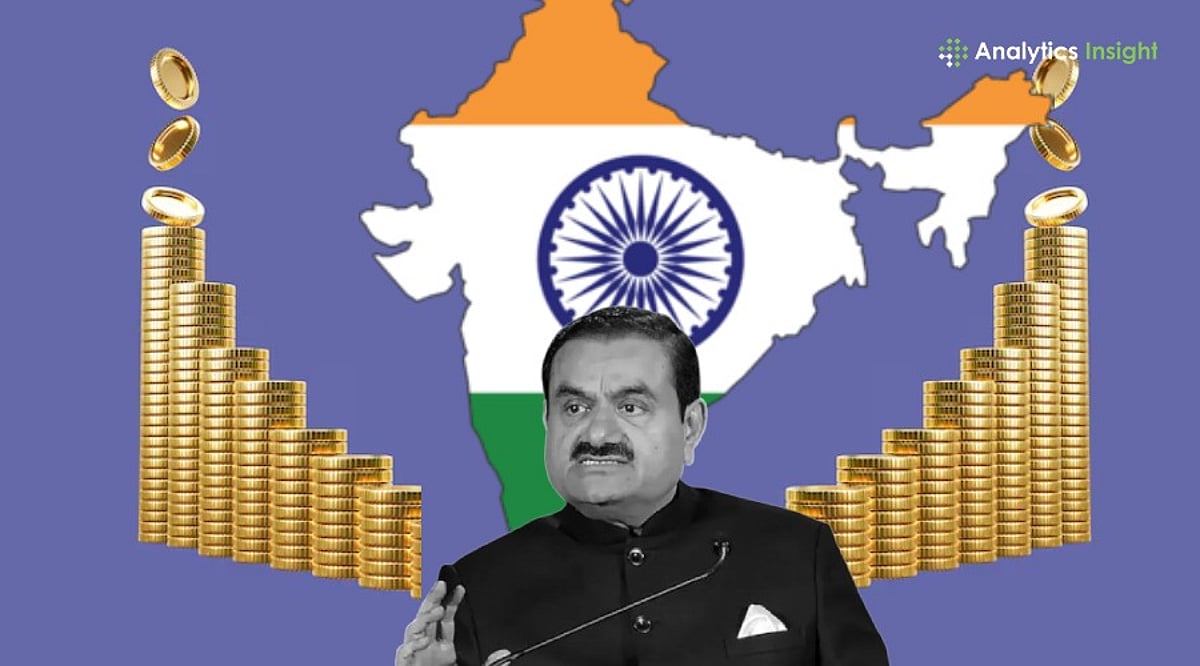
  • Gautam Adani Launches Vande Bharatam Initiative to Empower Entrepreneurs Across India

    Gautam Adani Launches Vande Bharatam Initiative to Empower Entrepreneurs Across India

    Adani Group Chairman Unveils National Program to Discover and Support Innovators

    Gautam Adani, Chairman of the Adani Group, has launched the Vande Bharatam initiative, a national effort to identify and nurture entrepreneurs, innovators, and problem-solvers from all corners of India. The program, announced on Adani‘s 64th birthday (June 25, 2026), aims to democratize access to mentorship, investor connections, and growth opportunities.

    “When I began my journey, I had nothing. Everything I am and everything I have achieved was given to me by the soil of Bharat. There is no shortage of talent in our nation, but opportunity has not always reached every corner of the country,” Adani said in a statement.

    What is the Vande Bharatam Initiative?

    The initiative is open to anyone with an idea, innovation, or entrepreneurial ambition—regardless of age, profession, education, or stage of development. Participants can apply with a concept, prototype, early-stage venture, or even an established business. A registered startup is not required.

    “India has built one of the world‘s largest startup ecosystems, yet most founders still emerge from a handful of cities. Vande Bharatam is our effort to discover the innovators, problem-solvers, and entrepreneurs whose ideas deserve recognition, support, and a larger platform,” Adani noted.

    How Will It Support Entrepreneurs?

    The program will span all 36 states and union territories, covering over 800 districts and multiple languages. Applications opened on June 24 at vandebharatam.org. A structured evaluation process will assess innovation, entrepreneurial potential, impact, and scalability. Detailed criteria, jury composition, and selection stages will be announced later.

    Entries are invited from sectors including technology, manufacturing, sustainability, agriculture, traditional crafts, and community-led solutions. Dedicated pathways will encourage participation from women entrepreneurs, tribal entrepreneurs, rural innovators, Divyang (differently-abled) entrepreneurs, and community-based innovators.

    From Regional Evaluation to Grand Finale

    After state and regional evaluations, 75 finalists will be invited to Ahmedabad for an intensive program featuring mentorship, industry interactions, and engagement with investors and business leaders. The Grand Finale is scheduled around India‘s Independence Day and will mark the start of an ongoing engagement platform connecting participants with mentors, investors, industry leaders, and fellow innovators.

    “If I can do it, any Indian can do it. All they need is an opportunity and a stage,” Gautam Adani said.

    What This Means for the Startup Ecosystem

    The Vande Bharatam program promises to open fresh avenues for emerging entrepreneurs by expanding access to mentorship, networks, and capital. As India’s startup ecosystem continues to grow, such initiatives can provide a much-needed boost for innovation and confidence.

  • J-WAFS: MIT’s Abdul Latif Jameel Water and Food Systems Lab – Latest Research and Innovations

    J-WAFS: MIT’s Abdul Latif Jameel Water and Food Systems Lab – Latest Research and Innovations

    The Abdul Latif Jameel Water and Food Systems Lab (J-WAFS) at MIT is a pioneering research initiative dedicated to addressing global challenges in water and food security. By fostering interdisciplinary collaboration, J-WAFS develops innovative solutions that range from atmospheric water harvesting to AI-driven ecosystem monitoring. Below is a selection of recent news highlights from the lab.

    Recent News

    For the full list of articles and updates, visit the J-WAFS topic page on MIT News.

  • Complete Guide to MIT’s Centers, Labs, and Programs

    MIT is home to a vast network of research centers, laboratories, and academic programs that drive innovation across disciplines. Below is a comprehensive directory of these entities, organized for easy exploration.

    Centers, Labs, and Programs

    • Abdul Latif Jameel Clinic for Machine Learning in Health
    • Abdul Latif Jameel Poverty Action Lab (J-PAL)
    • Abdul Latif Jameel Water and Food Systems Lab (J-WAFS)
    • Abdul Latif Jameel World Education Lab (J-WEL)
    • Admissions AgeLab
    • Arts at MIT
    • Bates Research And Engineering Center
    • Broad Institute of MIT and Harvard
    • Center for Advanced Nuclear Energy Systems
    • Center for Advanced Urbanism
    • Center for Advanced Virtuality
    • Center for Advanced Visual Studies
    • Center for Art Science and Technology (CAST)
    • Center for Biomedical Innovation (CBI)
    • Center for Bits and Atoms
    • Center for Brains Minds and Machines
    • Center for Civic Media
    • Center for Collective Intelligence
    • Center for Computational Science and Engineering
    • Massachusetts Institute of Technology

    This list represents just a sampling of the many entities at MIT. For the most current information, visit the official MIT Centers, Labs, and Programs page.

  • MIT’s New Manufacturing Initiative Gains Traction with Industry, Workforce, and Startup Programs

    MIT’s New Manufacturing Initiative Gains Traction with Industry, Workforce, and Startup Programs

    In its first year, the Initiative for New Manufacturing (INM) at MIT has built significant momentum by bridging research, workforce development, and industry engagement to accelerate the deployment of advanced manufacturing technologies. The initiative marked its first anniversary with MIT Manufacturing Week in May 2026, attracting over 800 registrants—including students, faculty, industry leaders, investors, entrepreneurs, and government officials—for four days of workshops, symposia, and discussions on AI in factories, startup innovation, and workforce solutions.

    “INM launched a year ago with the premise that strengthening the industrial base needed a coordinated response, and MIT has a responsibility to lead it,” said Paula T. Hammond, dean of MIT’s School of Engineering and co-chair of INM’s Steering Committee. “The response and participation level has been huge. MIT Manufacturing Week proved that the appetite for change—from students to chief executives—is real and urgent.”

    Manufacturing Week Highlights

    Manufacturing Week opened with a cybersecurity workshop co-led by INM and Google Cloud for industry members. It continued with the MIT MIMO (Machine Intelligence for Manufacturing Operations) symposium on deploying AI on factory floors, alongside sessions on workforce development, emerging technologies, startups, and industrial transformation. The week closed with a regional research showcase and competition featuring more than 140 graduate students and postdocs from across New England.

    Over the past year, INM also hosted a distinguished speaker series with manufacturing leaders including Keith Flynn (Anduril), Roland Busch (Siemens), and Venky Alagirisamy (Nike).

    Fostering New Manufacturing Startups

    A central goal of INM is to help students see manufacturing as a frontier for scientific discovery, technological innovation, entrepreneurship, and societal impact. The initiative partnered with NSF I-Corps New England to host its first manufacturing research showcase. More than 140 teams from 17 universities applied; 40 finalist teams received mentorship, and eight teams shared $50,000 in prize funding.

    The top prize for “most transformative innovation” went to MIT PhD student Jake Read for “The End of G Code,” a project on modular machine control architectures. Vatsal Patel (MIT) and Joshua Grace (Yale) won the research excellence category for “VisFT,” scalable six-axis force-torque sensors. Project themes included AI tools for manufacturing, semiconductor process control, robotics, digital twins, new materials, additive manufacturing, next-generation shipbuilding, and biomanufacturing.

    “Entrepreneurship is a transformative pathway to take research to market, and to drive faster innovation and scale-up,” said John Hart, INM faculty co-director and head of MIT’s Department of Mechanical Engineering. “At INM’s inaugural research showcase, we had tremendous interest from universities across New England, along with enthusiastic participation from industry, investors, and experienced founders. We are excited to build on this success and work toward a nationwide program and platform for entrepreneurship and translation in manufacturing.”

    Growing Industry Consortium

    During Manufacturing Week, First Solar became INM’s eighth industry member, joining Amgen, Autodesk, GE Vernova, Flex, PTC, Sanofi, and Siemens. The consortium’s growth reflects a recognition that modern manufacturing challenges—supply chain resilience, workforce development, industrial competitiveness—require cross-sector collaboration. INM provides a platform to convene and develop solutions through workshops and working groups on cybersecurity, digital twins, AI agents in regulatory environments, and continuous innovation.

    “Our members see MIT as a partner that can help them both address today’s challenges and think far into the future,” said Rick Locke, dean of the MIT Sloan School of Management and co-chair of INM’s steering committee. “This kind of multi-industry engagement is unusual and powerful.”

    Research and Workforce Development

    INM issued a call for proposals on AI and automation, receiving an overwhelming response and funding eight seed research projects. The initiative plans to publish eight white papers in June as part of a broader study on the future of manufacturing. During MIT’s Independent Activities Period in January 2026, INM collaborated with NSF I-Corps to guide 13 early-stage teams through customer discovery via the I-Corps Spark program.

    Workforce development is a major focus. MIT launched the Technologist Advanced Manufacturing Program (TechAMP), led by Principal Research Scientist John Liu, to create a new generation of shop floor leaders at six sites across New England, including three community colleges. “INM has the potential to transform the national manufacturing workforce,” said Liu. “It will require deep engagement between how people learn and lead, and how firms adopt new technologies and transform. We’re just getting started.” INM is now exploring a national rollout of TechAMP and expansion into biomanufacturing and semiconductor manufacturing.

    On campus, INM supported student engagements including an AI and automation lunch series and a Factory Observatory program. This spring, students founded MIT’s first manufacturing club, holding its launch event during Manufacturing Week. “We’re thrilled students are taking the lead,” said Sloan associate professor and INM faculty co-director Karen Zheng. “It was really exciting to see a full room of 80-plus students across campus coming together for the kickoff event during the busiest final period of a semester. This speaks to the students’ enthusiasm.”

    Global Reach and Future Plans

    While focused on strengthening domestic manufacturing, INM aims for global impact. It is collaborating with NAMTECH in Ahmedabad, India, where students are now taking an adaptation of MIT’s “yo-yo course” (2.008: Design and Manufacturing II). Next year, INM plans to bring more manufacturing leaders to campus, offer additional programming for emerging entrepreneurs, graduate TechAMP’s first cohort, expand TechAMP to new states, grow the consortium, and deepen research into manufacturing productivity.

    “INM aims to be a catalyst for transforming manufacturing across the nation to drive innovation, economic growth, and new types of jobs,” said Chris Love, faculty co-director of INM. “MIT’s work on the PIE (Production in the Innovation Economy) study in 2013 highlighted the value of proximity between production and innovation. INM seeks to rekindle this relationship in manufacturing across the country.”

  • MIT Leaders and Faculty Show How Massachusetts Can Drive the Next Wave of Tech Innovation

    MIT Leaders and Faculty Show How Massachusetts Can Drive the Next Wave of Tech Innovation

    On June 9, The Boston Globe released its 2026 “Tech Power Players” list, recognizing 50 influential local leaders in technology and business across Massachusetts. The list includes eight MIT affiliates: President Sally Kornbluth, Prof. Daniela Rus (director of CSAIL), Prof. Regina Barzilay, Prof. Yet-Ming Chiang, Prof. Max Tegmark, Ana Bakshi (executive director of the Martin Trust Center for MIT Entrepreneurship), Katie Rae (CEO and Managing Partner of Engine Ventures), and Senior Lecturer Brian Halligan, along with numerous MIT alumni.

    The Power Players coverage highlights MIT’s research labs, its culture of innovation and entrepreneurship, industry connections, new AI initiatives, and the Institute’s commitment to maintaining Massachusetts’ technological leadership. “Massachusetts can absolutely lead in this next wave,” says President Kornbluth, pointing to opportunities in manufacturing, life and health sciences, quantum technologies, and energy that can serve Americans nationwide.

    MIT is “working to drive artificial intelligence forward in sectors where the region is strongest, from biotechnology and robotics to defense and clean energy. It’s also trying to broaden entrepreneurship through a ‘dorm-to-startup’ push, creating a pipeline of support services—from hack-a-thons to venture funding—to help students start companies between classes,” writes Robert Weisman for The Globe. President Kornbluth is reinvigorating the school’s support of the local innovation ecosystem, unveiling new online AI classes—with free entry-level courses for anyone—and encouraging more on-campus entrepreneurship.

    MIT is carving out a specialty in applied AI, sometimes called “AI+X,” deploying the technology to help businesses, hospitals, and research institutions supercharge productivity, innovation, and scientific breakthroughs. Aman Narang ’04, CEO of Toast, notes: “The superpower has always been the university system. The best thing Boston can do is keep these people around.”

    MIT startups are a key driver of the region’s entrepreneurial ecosystem. To maintain Boston as a hub for innovators, MIT is building on its existing entrepreneurship resources, including more than 150 courses and 85 centers and programs. President Kornbluth and Provost Anantha Chandrakasan recently formed the Committee on Accelerating Translation and Entrepreneurship (CATE) to explore how the Institute can better support and accelerate the movement of ideas from research into new ventures.

    Applications for The Martin Trust Center’s startup accelerator program have doubled from last year, and nearly one-fifth of MIT undergraduates—about 800 students—attended a recent startup career fair.

    The Globe also highlights MIT startup Liquid AI, which develops AI models inspired by the brain structure of a simple worm. These models require far less electricity to operate than large language models, saving energy and water. Liquid AI recently signed a deal with Mercedes-Benz to incorporate its technology into onboard systems of cars sold in North America.

    Researchers are also focusing on energy innovation. Prof. Yet-Ming Chiang’s lab is developing batteries that store more electricity over longer periods, creating more opportunities for wind, solar, and other clean energy sources. Chiang’s lab and other MIT research centers work on microchips, critical minerals, fusion technology, and defense tech—examples of “tough tech” that combine science and engineering, which Chiang says “are in the sweet spot of the Boston ecosystem.”

    Soon, 80 MIT students will work as summer interns at GE Vernova, thanks to the MIT-GE Vernova Climate and Energy Alliance, a collaboration aimed at accelerating the global energy transition. GE Vernova CEO Scott Strazik dedicated $50 million over five years to fund internships and research projects.

    When asked about the most promising thing about the Greater Boston tech scene, Prof. Rus answers: “talent. Boston has the best AI researchers in the world, and they’re producing genuinely new ideas, not incremental ones.” Bob Mumgaard SM ’15, co-founder and CEO of Commonwealth Fusion Systems, says the region’s expertise in engineering, designing, and manufacturing hardware and access to university researchers made it possible to build the company only in Massachusetts. “The ecosystem has the building blocks… Massachusetts is the strongest in the nation in innovation in energy.”

    President Kornbluth points to quantum: “There isn’t a more important technological field right now than quantum science and technology, and the Boston area has the greatest concentration of quantum talent anywhere in the world.”

  • MIT Affiliates Shine in Boston Globe’s Tech Power Players List, Underscoring State’s Leadership Potential

    MIT Affiliates Shine in Boston Globe’s Tech Power Players List, Underscoring State’s Leadership Potential

    The Boston Globe released its 2026 “Tech Power Players” list on June 9, recognizing 50 influential leaders in technology and business across Massachusetts. Eight MIT affiliates are among the honorees, including President Sally Kornbluth, CSAIL Director Daniela Rus, Professors Regina Barzilay, Yet-Ming Chiang, and Max Tegmark, along with Ana Bakshi (Executive Director of the Martin Trust Center for MIT Entrepreneurship), Katie Rae (CEO of Engine Ventures), and Senior Lecturer Brian Halligan. The list also features numerous MIT alumni.

    The coverage goes beyond individual accolades, spotlighting MIT’s research labs, innovation culture, industry ties, new AI initiatives, and the Institute’s commitment to maintaining Massachusetts’ technological edge. “Massachusetts can absolutely lead in this next wave,” President Kornbluth told the Globe, emphasizing opportunities in manufacturing, life and health sciences, quantum technologies, and energy.

    AI and Entrepreneurship at the Forefront

    MIT is driving artificial intelligence forward in sectors where the region excels, from biotechnology and robotics to defense and clean energy. The Institute is also broadening entrepreneurship through a “dorm-to-startup” push, creating a pipeline of support services that include hackathons, venture funding, and more than 150 courses and 85 centers dedicated to fostering entrepreneurial ventures.

    President Kornbluth is reinvigorating MIT’s support for the local innovation ecosystem by unveiling new online AI classes—offering free entry-level courses for anyone—and encouraging more on-campus entrepreneurship. The Globe notes that these free courses could help local tech leaders ensure that people, not just corporations, benefit from AI.

    MIT is carving a specialty in applied AI, sometimes called “AI+X,” deploying the technology to help businesses, hospitals, and research institutions supercharge productivity and innovation. Aman Narang ’04, CEO of Toast, commented, “The superpower has always been the university system. The best thing Boston can do is keep these people around.”

    To further support student entrepreneurs, President Kornbluth and Provost Anantha Chandrakasan formed the Committee on Accelerating Translation and Entrepreneurship (CATE) to explore how MIT can accelerate the movement of ideas from research into new ventures. Applications for the Martin Trust Center’s startup accelerator program have doubled from last year, and nearly 800 undergraduates attended a recent startup career fair.

    Startups Driving Innovation Beyond Campus

    MIT startup Liquid AI is developing models inspired by the brain structure of a simple worm, which could significantly reduce AI energy consumption. The models, capable of detecting financial fraud and piloting autonomous drones, require far less electricity than large language models. Liquid AI recently signed a deal with Mercedes-Benz to integrate its technology into vehicles sold in North America.

    In energy, Professor Yet-Ming Chiang’s lab is developing long-duration batteries that enable greater use of wind, solar, and other clean energy sources. The lab and other MIT research centers are also working on innovations in microchips, critical minerals, fusion technology, and defense tech—examples of “tough tech” that Chiang says are in the sweet spot of the Boston ecosystem.

    Eighty MIT students will work as summer interns at GE Vernova through the MIT-GE Vernova Climate and Energy Alliance, a $50 million, five-year collaboration funding internships and research projects. GE Vernova CEO Scott Strazik emphasized the importance of plugging into MIT’s innovation culture.

    Quantum and the Future

    When asked about the most promising aspect of the Greater Boston tech scene, Daniela Rus pointed to talent: “Boston has the best AI researchers in the world, and they’re producing genuinely new ideas, not incremental ones.” Bob Mumgaard SM ’15, co-founder of Commonwealth Fusion Systems, noted that Massachusetts’ expertise in engineering and manufacturing made it the only place he could build his fusion energy company. “The ecosystem has the building blocks,” he said. “Massachusetts is the strongest in the nation in innovation in energy.”

    President Kornbluth highlighted quantum science and technology: “There isn’t a more important technological field right now than quantum science and technology, and the Boston area has the greatest concentration of quantum talent anywhere in the world.”

  • Why Curiosity-Driven Research Remains the Bedrock of American Scientific Leadership

    Why Curiosity-Driven Research Remains the Bedrock of American Scientific Leadership

    Over the past 80 years, sustained investment in basic scientific research has propelled the United States to global leadership, delivering prosperity, national security, and tangible benefits for all Americans. In a special section published June 16, 2026, Scientific American highlights this legacy in “The Young American Scientists,” profiling early-career researchers and featuring commentary from MIT faculty on why curiosity-driven science remains vital.

    MIT President Sally Kornbluth underscored that discovery “is part of our American DNA and has yielded vast returns to the citizens of this country and the world.” She called for a renewed commitment to public investment in science, noting that “investing in American science is not a gamble.” Institute Professor Robert Langer echoed that sentiment, remarking that “what American science has done over the past 50, 100 years has been remarkable.”

    At MIT, this commitment is embodied in initiatives such as Curiosity on a Mission and the Generative AI Impact Consortium, which seek to harness basic research for real-world solutions. Kornbluth observed that while the technological possibilities are “more exciting than ever,” funding uncertainty—particularly for foundational discovery science—poses an unprecedented threat to the ecosystem that fuels the economy and societal impact.

    Early Sparks of Scientific Passion

    Professor Alan Lightman recalled how the launch of Sputnik ignited his fascination with science, leading him to build his own rocket. In his essay “My childhood in science,” Lightman described how those early experiments shaped him into a writer and physicist. “We need science combined with literature, philosophy, history and art,” he wrote. “We need to discover not only the physical world but also our own humanity.”

    Former NFL player and MIT Professor John Urschel emphasized the power of interdisciplinary collaboration. “A lot of good research happens when people can draw on tools, techniques and insights from different areas,” he said, urging young scientists to build broad backgrounds and communicate across fields.

    Invention and Discovery in Action

    The section profiles MIT students and alumni tackling major challenges. Visiting Scientist Alice Stanton developed miBrain, a 3D tissue model of the human brain, and a brain-on-a-chip to test personalized treatments for Alzheimer’s and Parkinson’s. She cautioned that “the road to effective treatments is long and bumpy,” made worse by funding cuts.

    Bob Mumgaard PhD ’08, CEO of Commonwealth Fusion Systems, is working to commercialize fusion power. “Our ability to use new tools to tackle some of these big, meaty problems is super exciting,” he said. Graduate student Alex Zhang addresses “context rot” in AI language models by developing recursive language models that allow the system to reevaluate its reasoning.

    The Benefits of Collaboration

    Professor Emery Brown highlighted the MIT Health and Life Sciences Collaborative (HEALS), which brings together scientists and engineers from diverse backgrounds to address pressing health challenges. “The enthusiasm for HEALS has been contagious across the campus,” he noted.

    MIT alumna Lucy Jones PhD ’81, who created the Great ShakeOut earthquake drill, stressed the necessity of collaboration with policymakers. She also described how computing advances have transformed seismology: “My first year in grad school, I was reading paper seismograms. Now everything is computerized. Computers have changed everything, including science.”

    The State of American Science

    Many interviewees voiced concerns about federal funding instability. Professor Feng Zhang, a CRISPR pioneer, warned: “We can lose the lead rapidly if we do not protect our innovation ecosystem.” He pointed to pressures on NIH and NSF funding, immigration uncertainty, and eroding public trust in expertise.

    Professor Alan Guth expressed optimism about progress in cosmology—new techniques are helping unravel the universe—but echoed worries about future funding. Robert Langer offered a hopeful long view: “I look at the history of American innovation and education over the past 250 years, and it’s been spectacular. Plenty of times there’ve been setbacks … and people keep persisting. That gives me a lot of cause for hope.”

    The Scientific American feature underscores a simple truth: curiosity-driven science is not a luxury—it is the essential ingredient that has made America a leader and will continue to do so if the nation recommits to supporting it.

  • Recent Breakthroughs from MIT Schwarzman College of Computing: AI, Robotics, and Beyond

    Recent Breakthroughs from MIT Schwarzman College of Computing: AI, Robotics, and Beyond

    The MIT Schwarzman College of Computing continues to drive innovation across artificial intelligence, robotics, quantum computing, and more. Here are some of the latest developments from MIT researchers and affiliates.

    LLMs Help Robots Understand Vague Instructions

    MIT researchers have developed a method using two language models: one to clarify user instructions and another to ignore irrelevant details, enabling robots to perform chores in homes and factories more effectively. (June 26, 2026)

    Exploring How Curiosity-Driven Science Fuels American Success

    Scientific American highlights the history and future of America’s scientific engine, featuring promising young scientists and icons at MIT and beyond. (June 25, 2026)

    Summer 2026 Recommended Reading from MIT

    Enjoy these recent titles from Institute faculty and staff. (June 25, 2026)

    Improving Speed and Energy-Efficiency of AI Agents

    A new system called Murakkab optimizes the design and deployment of multistep workflows that power AI applications. (June 25, 2026)

    Exploring the Societal Impacts of AI

    During the AI and Society Forum, leading MIT researchers examined critical questions about AI’s influence on employment and democracy. (June 23, 2026)

    New Chip Helps Tiny Robots Navigate Complex Environments

    Researchers combined an efficient algorithm with dedicated hardware to rapidly generate 3D maps for navigation using minimal memory and power. (June 23, 2026)

    QS Ranks MIT World’s No. 1 University for 2026-27

    Ranking at the top for the 15th consecutive year, the Institute also places first in 12 subject areas. (June 17, 2026)

    In Game Theory, Generalists Sometimes Win Out Over Specialists

    Researchers show that for certain kinds of games, an overlooked class of algorithms performs much better than expected. (June 17, 2026)

    Could AI Tell You Where You Left Your Keys?

    A new spatial memory system for robots efficiently captures details about the objects they see while exploring their environment. (June 17, 2026)

    The Tenured Engineers of 2026

    Ten faculty members have been granted tenure in five units across MIT’s School of Engineering. (June 15, 2026)

    How to Create Distinguishable States for Quantum Systems

    Researchers establish key insights for reading and writing information for quantum sensing, communication, computing, and control. (June 15, 2026)

    When It Comes to Predicting People’s Preferences, It Pays to Consider “The Power of Three”

    MIT researchers provide a major upgrade to the nearly century-old idea of random utility models. (June 11, 2026)

    MIT Affiliates Win 2026 Hertz Foundation Fellowships

    The fellowships in applied sciences, engineering, and mathematics recognize doctoral students pursuing solutions to pressing challenges. (June 11, 2026)

    To Study How Chips Really Work, MIT Researchers Built Their Own Operating System

    A new kernel called Fractal gives researchers a cleaner view of what’s happening inside a processor, and has already surfaced previously unknown behavior in Apple’s M1. (June 10, 2026)

    3D-Printed Devices Could Streamline Production of Drug-Delivery Microparticles

    The cost-effective devices, built in hours, leverage electrospray emitter technology to efficiently produce three-layered particles at scale. (June 9, 2026)

  • MIT School of Engineering: Latest Research and Innovations (June 2026)

    MIT School of Engineering: Latest Research and Innovations (June 2026)

    The MIT School of Engineering continues to drive breakthroughs across multiple disciplines. Recent highlights include a hands-on photonics boot camp at MIT.nano for community college students, new AI systems that help robots interpret vague instructions, and a chip design that enables tiny robots to navigate complex environments with minimal power. Researchers have also developed a computer model for more material-efficient bridges and buildings, and a new approach to modeling metal alloys at the atomic level. In game theory, generalists have been shown to outperform specialists in certain scenarios. The Institute was ranked the world’s No. 1 university by QS for the 15th consecutive year, and MIT’s Initiative for New Manufacturing is gaining momentum. Ten engineering faculty members were granted tenure in 2026. These stories reflect the breadth and impact of engineering research at MIT.

  • MIT Mechanical Engineering Department News: Pioneering Research, Rankings, and Innovations in 2026

    MIT Mechanical Engineering Department News: Pioneering Research, Rankings, and Innovations in 2026

    MIT Mechanical Engineering: A Hub of Innovation

    MIT’s Department of Mechanical Engineering continues to be a global leader in engineering education and research. In 2026, the Institute once again topped the QS World University Rankings as the No. 1 university, marking its 15th consecutive year at the pinnacle. The department itself advanced breakthroughs in biomedicine, manufacturing, climate technology, and student-led initiatives.

    Top Stories from MIT Mechanical Engineering

    QS Ranks MIT World’s No. 1 University for 2026-27

    For the 15th year in a row, MIT secured the top spot in the QS World University Rankings, also placing first in 12 subject areas. The ranking reflects the Institute’s sustained excellence across disciplines.

    MIT’s Initiative for New Manufacturing Builds Momentum

    In its first year, the Initiative for New Manufacturing (INM) has accelerated research, workforce development, and industry engagement to bring new manufacturing technologies to real-world deployment.

    The Tenured Engineers of 2026

    Ten faculty members across MIT’s School of Engineering received tenure in 2026, including several from the Department of Mechanical Engineering, highlighting the strength of the academic community.

    Ingestible Sensor Measures Temperature Inside the Body

    MIT engineers developed a tiny ingestible sensor that can continuously monitor body temperature from inside the gastrointestinal tract, offering a noninvasive way to track patients at risk of hypothermia.

    Drug Delivery Directly to the Esophagus

    A new gel-like drug formulation coats the esophageal lining, enabling targeted treatment for inflammatory conditions affecting the esophagus. This innovation could improve patient outcomes and reduce side effects.

    Hertz Foundation Fellowships Awarded to MIT Affiliates

    Several MIT affiliates received 2026 Hertz Foundation Fellowships, supporting doctoral students tackling pressing challenges in science and technology.

    Innovative Projects to Combat Extreme Heat

    With seed funding from MIT’s Climate Project, researchers are exploring low-cost personal cooling and emissions-free air conditioning as part of broader efforts to address extreme heat.

    Novel Carbon Capture Methods

    MIT researchers developed an efficient, flexible alternative to conventional carbon capture, offering a promising pathway to reduce atmospheric CO₂.

    Ambassadors of STEM: Promoting Hands-On Education

    A new student club for FIRST Robotics alumni aims to enhance K-12 STEM education through hands-on activities and mentorship.

    Ultrasound-Based Pacemaker Steadies the Heart Noninvasively

    Engineers designed a pacemaker that uses ultrasound to stimulate the heart without surgery, potentially replacing traditional implants.

    Eleven from MIT Accept 2026 Fulbright Awards

    Over half of MIT’s Fulbright applicants won awards this year, with students and alumni embarking on research and teaching projects abroad in 2026-27.

    Bridging Human Movement and Digital Technology

    MIT.nano’s Immersion Lab collaborated with Emerson College to advance virtual production, merging real human motion with digital tools.

    MIT Affiliates Elected to National Academy of Sciences for 2026

    Six MIT faculty and ten additional alumni were recognized by the National Academy of Sciences for their contributions to natural and social sciences.

    Building ‘Hardcore’ Advanced Machines

    In the course 2.72/2.270 (Elements of Mechanical Design), students learn that “if it doesn’t break the laws of physics, it’s possible; you just have to figure out how to engineer it.”

    Measuring the ‘Klein’ – A New Unit in Honor of an MIT Alumnus

    In a playful nod to the smoot, MIT researchers introduced the “klein” to honor Martin Klein ’62, renaming a section of the Charles River bridge the “Shortfellow Bridge.”

    For more details, visit the MIT Mechanical Engineering News page.