Tag: institutional investors

  • Bitcoin Halving in 2026: Why the Traditional Cycle No Longer Dominates

    Bitcoin Halving in 2026: Why the Traditional Cycle No Longer Dominates

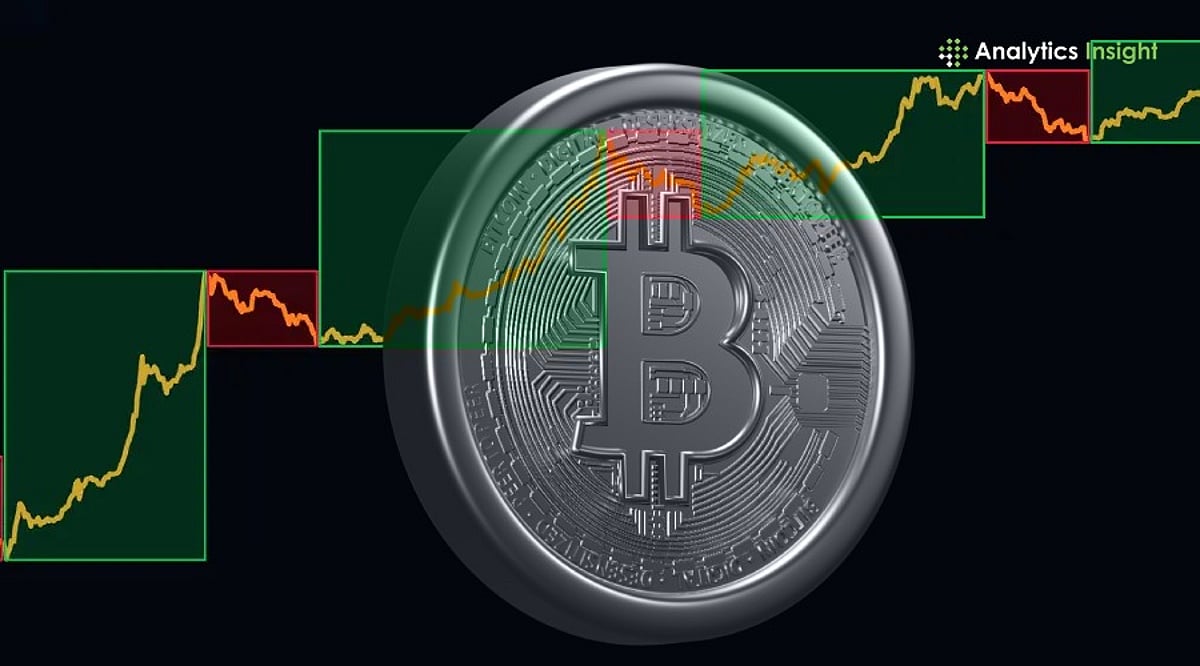
    Bitcoin has a built-in system where miner rewards get cut by 50% every four years. The purpose is straightforward: it slows the influx of new Bitcoins into the market, making supply progressively limited. With a hard cap of 21 million coins, that inherent scarcity has always captured attention. When supply tightens and demand remains robust, prices typically rise. For years, traders have relied on this pattern to forecast price movements.

    What Past Halving Events Showed

    After the 2012 halving, Bitcoin surged from around $12 to over $1,100 within a year. The 2016 halving preceded a rally that pushed Bitcoin near $20,000 in 2017. The 2020 halving set the stage for a run to almost $69,000 in 2021. This repeated pattern led many to believe Bitcoin followed a clear four-year cycle where halving triggered major price growth.

    The 2024 Halving and Market Changes

    The latest halving occurred in April 2024, cutting miner rewards from 6.25 to 3.125 Bitcoin per block. Initially, it met expectations—Bitcoin touched a record high near $126,000 during late 2025. But the market shifted quickly. In the first half of 2026, Bitcoin saw strong downward pressure, dropping below $60,000—a loss of more than 30% since the start of the year. This weakness surprised analysts, as previous halving cycles typically remained strong for longer periods.

    Institutional Investors Changed the Market

    A major reason for this shift is the rise of institutional investors. In earlier years, Bitcoin relied mainly on retail traders and crypto enthusiasts. Today, large financial firms play a much bigger role. After the approval of spot Bitcoin ETFs in 2024, billions of dollars entered the market through traditional channels. But in recent weeks of 2026, reports indicated $4.5 billion to $6 billion exited Bitcoin ETFs, creating heavy selling pressure. Bitcoin no longer reacts solely to supply reduction after halving; large money movements now exert stronger influence.

    Bitcoin Now Reacts to the Global Economy

    Another important change is Bitcoin’s integration with the global financial system. Earlier, Bitcoin mostly moved based on crypto market trends. In 2026, broader economic events affect price much more. Interest rate decisions, central bank policies, inflation concerns, and overall market confidence now shape Bitcoin movement. Capital has also shifted heavily toward artificial intelligence companies and semiconductor stocks this year, diverting speculative money that once flowed into crypto. Bitcoin now behaves more like a global financial asset than a market dependent solely on its internal cycle.

    Pressure on Bitcoin Miners

    Mining companies face serious challenges after the latest halving. With smaller rewards, miners earn less Bitcoin for the same work. High electricity costs in many countries compound the issue. Lower Bitcoin prices in 2026 have made the situation even harder. Some miners have been forced to sell Bitcoin reserves to cover expenses, adding extra selling pressure that diminishes the halving’s usual positive impact.

    Why Halving Still Matters

    Despite these changes, the halving cycle cannot be dismissed entirely. Bitcoin still has fixed supply rules, and scarcity remains one of its strongest features. Some analysts believe the current correction resembles older cycles. Research published in June 2026 suggests Bitcoin may form a stronger bottom later this year before another recovery phase. Several forecasts expect Bitcoin to recover toward $90,000 to $170,000 once market conditions improve and investor confidence returns.

    The Future Beyond 2026

    Bitcoin halving is no longer the sole factor controlling price. “Halving used to be the main engine behind every major rally. Institutional money, ETF flows, government regulation, economic policy, and global investor sentiment now have equal or greater influence than supply reduction,” notes one analyst. Limited supply remains part of Bitcoin’s core value, but the predictable four-year boom pattern no longer holds. In 2026 and beyond, Bitcoin will continue to follow its halving structure, but price movement will depend heavily on external forces. Crypto has matured. Bitcoin now sits inside a larger financial system where supply still matters, but demand and macro conditions do most of the heavy lifting.

    FAQs

    1. What is Bitcoin halving?
    Bitcoin halving is a built-in event that reduces miner rewards by 50% roughly every four years, slowing new Bitcoin supply creation.

    2. Why did Bitcoin halving matter historically?
    Past halvings in 2012, 2016, and 2020 were followed by major price rallies due to reduced supply and rising demand.

    3. Why is the 2024–2026 cycle different?
    Large institutional participation, ETF inflows/outflows, and macroeconomic factors have changed Bitcoin’s traditional market behavior.

    4. Does Bitcoin still follow the four-year cycle?
    Not as predictably as before. Halving still matters, but external financial factors now play a much bigger role.

    5. Can Bitcoin recover after the 2026 correction?
    Many analysts believe Bitcoin can recover if market confidence improves, with forecasts ranging between $90,000 and $170,000.


  • Solana Spot ETFs Surpass $1.06 Billion as Institutional Demand Surges

    Solana Spot ETFs Surpass $1.06 Billion as Institutional Demand Surges

    Solana spot exchange-traded funds (ETFs) have reached a significant milestone, surpassing $1.06 billion in total assets under management. This surge is fueled by growing institutional interest, strong blockchain adoption, increased futures market activity, and support from major traditional financial institutions.

    Key Takeaways

    • Solana spot ETF assets now exceed $1.06 billion, reflecting robust investor demand.
    • Bitwise BSOL ETF leads the market with nearly $861 million in inflows, representing roughly 81% of the total market.
    • Institutional capital is rotating from Bitcoin ETFs toward Solana amid significant outflows from the former.

    Bitwise Dominates the Solana ETF Landscape

    Among the available Solana ETF products, Bitwise’s BSOL ETF stands out as the top performer. With nearly $861 million in total inflows, it commands about 81% of the entire Solana ETF market. This dominance underscores institutional preference for established fund managers when entering new crypto investment sectors and has bolstered overall confidence in the Solana ETF ecosystem.

    Institutional Capital Rotation From Bitcoin to Solana

    Recent data reveals a clear shift in institutional allocation within the cryptocurrency market. While U.S. spot Bitcoin ETFs experienced over $2.9 billion in outflows during a 10-day period in late May, Solana-based products attracted fresh capital. This divergence signals that institutional investors are diversifying beyond Bitcoin, drawn to Solana’s faster blockchain network, lower transaction costs, and expanding real-world use cases.

    Solana’s Price Action Reinforces Investor Confidence

    The positive ETF momentum aligns with Solana’s recent market performance. SOL has returned to the $73–$76 price range, posting a weekly gain of about 6.7%. In contrast, both Bitcoin and Ethereum showed weaker performance over the same period. Solana’s total market capitalization has now climbed above $42.7 billion, solidifying its position among the top digital assets globally.

    Network Activity and Real-World Utility Drive Adoption

    Rising institutional demand is strongly linked to Solana’s expanding blockchain ecosystem. Recent data shows the network handled nearly $1.36 billion in tokenized stock trading volume within a single week, representing about 96% of all blockchain-based equity trading activity across major networks. This surge in real-world asset tokenization highlights Solana’s practical utility beyond speculative trading, making it attractive to large institutions.

    Futures Market Signals Growing Confidence

    Investor confidence is also evident in Solana’s derivatives market. Open interest in Solana futures contracts has climbed to nearly $6.4 billion, a 29% increase over just a few weeks. Higher open interest typically indicates stronger participation from professional traders and institutions, foreshadowing potential larger price movements ahead.

    Traditional Finance Firms Embrace Solana

    Major financial institutions are building products around Solana. Reports indicate that Morgan Stanley is advancing plans for a Solana ETF that includes staking rewards. Additionally, several prominent custody providers now support Solana-based assets, reducing operational risk for institutional entrants and further legitimizing the asset.

    Why This Matters

    Solana’s $1.06 billion ETF milestone confirms a major institutional rotation. While Bitcoin faces multi-billion-dollar outflows, Wall Street is aggressively shifting capital toward Solana, drawn by its unmatched transaction speeds and dominance in tokenized stock trading. The broader crypto ETF market now shows a clear trend: investors increasingly favor blockchain networks with strong technology, fast execution, and real-world use cases.

    Analysts are watching $95 as the next major resistance level, with bullish forecasts targeting $120 if ETF inflows continue at the current pace. This milestone represents more than a number—it confirms Solana’s emergence as a cornerstone asset for institutional portfolios in the digital finance era.

    Frequently Asked Questions

    What does Solana spot ETFs crossing $1.06 billion mean?

    It signifies that regulated spot investment funds tied directly to Solana’s native token (SOL) now manage over $1.06 billion in total assets, marking deep institutional adoption.

    Which Solana ETF currently dominates the market?

    Bitwise’s BSOL ETF is the overwhelming leader, capturing nearly $861 million in capital inflows—roughly 81% of the entire Solana ETF market.

    Why are institutional investors aggressively rotating into Solana?

    Institutions are targeting Solana due to its superior blockchain infrastructure, low transaction costs, and dominant real-world utility, highlighted by $1.36 billion in tokenized stock trading in one week (96% of the blockchain equity market).

    How has Solana’s price reacted to this milestone?

    Solana outperformed peers with a 6.7% weekly gain, reaching the $73–$76 range, and its market cap exceeded $42.7 billion despite a broader market slowdown affecting Bitcoin and Ethereum.

    What future price levels and products are analysts tracking?

    Traders are watching $95 as immediate resistance, with bullish inflows potentially targeting $120. Structurally, firms like Morgan Stanley are advancing Solana ETF products with staking rewards.

  • Ethereum on Track for Historic Three-Quarter Losing Streak as Institutional Strategies Diverge

    Ethereum on Track for Historic Three-Quarter Losing Streak as Institutional Strategies Diverge

    Ethereum is approaching its first three-quarter losing streak as prices continue to weaken, institutional strategies diverge, and staking absorbs supply amid persistent negative sentiment. The world’s second-largest cryptocurrency by market capitalization fell below $1,800 after failing to break through the key $2,400 resistance level.

    Ethereum Approaches a Historic Quarterly Decline

    CoinGlass quarterly return data shows that Ethereum closed the fourth quarter of 2025 in negative territory and has continued falling through the first and second quarters of 2026. Another negative quarterly close would mark three consecutive losing quarters for the first time, extending a downturn that has lasted longer than previous corrections. While Ethereum has faced major price declines before, recoveries typically followed within one or two quarters. This time, sustained selling has kept pressure on bullish traders for an extended period.

    BlackRock and BitMine Follow Opposite Paths

    Large institutions have not moved in unison during Ethereum’s decline. According to market updates, BlackRock sent additional Bitcoin and Ether to Coinbase Prime while reducing its Ether exposure. The asset manager sold Ether for seven consecutive trading days, with its most recent purchase occurring about two weeks before the latest report.

    In contrast, Tom Lee’s BitMine continued buying the asset despite broader market weakness. The firm added 27,084 ETH—worth approximately $42.5 million—to its corporate holdings, raising its total position to 5.7 million ETH. That holding represents about 4.72% of Ethereum’s total supply.

    Staking Absorption Complicates Market Positioning

    Analytics firm CryptoQuant notes that Ethereum now faces a collision between negative sentiment and supply absorption through staking. The firm describes this combination as a precarious environment, particularly for short-sellers. Staking reduces the amount of organic supply available for active trading, while weak sentiment can increase volatility as buyers and sellers react to changing support levels.

    The question remains: Can staking absorption contain further selling while major institutions continue taking opposite positions? Traders are watching whether Ethereum can hold key support areas after its move below $1,800. Trading volume has remained subdued during the latest phase, showing cautious participation across the market. This reduced activity adds another layer of uncertainty around Ethereum’s near-term price direction.

    What’s Next?

    Ethereum faces a possible third consecutive negative quarter as weak sentiment and selling pressure continue. BlackRock has reduced exposure while BitMine expands its holdings, and staking absorbs available supply. Market participants are advised to monitor support levels, institutional activity, and trading volume before making trading decisions.

  • Why Institutional Investors Are Flooding the Crypto Market in 2026: Key Drivers and Market Impact

    Why Institutional Investors Are Flooding the Crypto Market in 2026: Key Drivers and Market Impact

    Institutional investors are transforming the cryptocurrency market at an unprecedented pace. Once dominated by retail speculators, the crypto space now attracts some of the world’s largest financial institutions, thanks to clearer regulations, the success of spot Bitcoin ETFs, improved custody solutions, and growing trust in blockchain technology. This shift is not just about adding liquidity; it is fundamentally reshaping market credibility, driving product innovation, and bridging traditional finance with the digital economy.

    The Main Drivers Behind Institutional Crypto Adoption

    In 2026, institutions are investing in cryptocurrencies for reasons that go far beyond potential returns. Diversification remains a top priority, as digital assets often show low correlation with stocks and bonds. Bitcoin’s fixed supply and decentralized nature also appeal as a hedge against inflation and geopolitical uncertainty. Client demand is another powerful catalyst—wealth managers and private banks are increasingly seeking regulated digital asset exposure for high-net-worth individuals and family offices. Instead of losing clients to specialized crypto firms, many traditional institutions have built in-house crypto capabilities.

    Technological maturity also plays a role. Beyond cryptocurrencies, blockchain’s potential to modernize payments, securities settlement, supply chain management, and asset tokenization makes crypto investments part of a broader digital transformation strategy. This evolution reflects a fundamental change in institutional thinking: crypto assets are now evaluated using the same frameworks applied to commodities, foreign exchange, and alternative investments.

    How Bitcoin ETFs Are Paving the Way

    The launch of spot Bitcoin ETFs has been a game-changer. Before ETFs, institutions faced complex challenges like setting up digital wallets, managing private keys, and navigating custody regulations. Now, they can invest in Bitcoin through standard brokerage accounts, with full compliance and reporting alignment. Growing ETF inflows have boosted Bitcoin’s market liquidity, narrowing bid-ask spreads and improving price efficiency. The success of Bitcoin ETFs has also led asset managers to explore diversified crypto ETFs, actively managed blockchain funds, and multi-asset digital portfolios.

    Hedge Funds, Banks, and Asset Managers Enter the Fray

    Institutional engagement extends well beyond buying Bitcoin. Hedge funds use quantitative strategies like arbitrage and derivatives, while others hold positions in Bitcoin, Ethereum, and other digital assets as part of alternative portfolios. Global asset managers are rolling out digital asset investment products, from actively managed crypto funds to institutional custody services. Commercial banks are adopting blockchain for payments, settlements, trade finance, and cross-border transactions, with dedicated digital asset departments offering custody, tokenization, and trading.

    Venture capital and private equity continue to fund startups in decentralized finance, tokenization, cybersecurity, and enterprise blockchain. Family offices, drawn by high growth and diversification, invest both in digital assets and emerging blockchain businesses. These activities are turning fragmented retail ecosystems into mature financial infrastructures governed by professional standards.

    Regulatory Clarity Accelerates Institutional Participation

    For years, regulatory uncertainty was the biggest barrier. Now, governments and financial authorities worldwide have issued clear rules on digital assets, exchanges, custody, stablecoins, taxation, and anti-money laundering. Standardized requirements boost investor confidence, while updated accounting and tax laws reduce confusion. Regulatory frameworks also enhance consumer protection and help distinguish reputable players from bad actors. Despite varying approaches across jurisdictions, the overall trend favors responsible institutional involvement and innovation.

    Bitcoin as a Strategic Institutional Asset

    Bitcoin’s fixed supply of 21 million coins reinforces its reputation as “digital gold.” Corporate treasuries increasingly hold Bitcoin to diversify cash reserves and seek long-term appreciation. Improved infrastructure—institutional-grade custody, regulated exchanges, and risk management tools—has reduced operational hurdles. Modern portfolio theory also supports small Bitcoin allocations due to its low long-term correlation with traditional assets. As macroeconomic uncertainty persists, Bitcoin’s role in institutional portfolios is set to expand further.

    Top Companies Leading the Crypto Charge

    Major financial institutions and corporations are actively embracing crypto. Asset managers have launched regulated Bitcoin investment vehicles for pension funds, insurers, and wealth managers. Several banks now offer crypto trading, custody, blockchain research, and tokenization services. Payment gateways use stablecoins and blockchain to optimize domestic and international transactions, reducing settlement times and costs. Technology companies continue investing in blockchain infrastructure, cloud services, and decentralized apps. Publicly traded firms holding Bitcoin on their balance sheets signal growing trust in crypto as a legitimate financial asset.

    Stablecoins and Tokenization: The Next Frontier

    Stablecoins solve crypto’s volatility problem by maintaining fiat peg, making them ideal for cross-border payments, treasury operations, and decentralized finance. Tokenization of real-world assets—government bonds, real estate, commodities, private equity—unlocks fractional ownership, faster settlement, and automated compliance via smart contracts. Major institutions see tokenization as a commercially viable way to modernize capital markets without changing the underlying instruments. Industry experts predict tokenized financial markets could become a multi-billion-dollar opportunity within the next decade.

    Market Impact: Liquidity, Stability, and Price Discovery

    Institutional capital has profoundly changed crypto market dynamics. Large, well-structured investments increase liquidity, narrow spreads, and enable smoother execution of big orders. Higher liquidity improves price discovery through quantitative models and sophisticated trading strategies. As more institutions enter, market volatility may decrease, making cryptocurrencies more attractive for long-term portfolio allocation. This influx is accelerating crypto’s integration into mainstream global finance, benefiting investors, businesses, and policymakers alike.

  • Bitcoin Hovers Near $59.5K, Ethereum Trades at $1,580 as US-Iran Tensions and Record ETF Outflows Rock Markets

    Bitcoin Hovers Near $59.5K, Ethereum Trades at $1,580 as US-Iran Tensions and Record ETF Outflows Rock Markets

    Bitcoin is navigating its weakest June in four years, trading near $59,427, as a combination of renewed US-Iran geopolitical tensions, a historic $4 billion monthly ETF outflow record, and hawkish Federal Reserve expectations compress price action into a critical $58,000–$61,000 range. Ethereum is holding around $1,580, with both major cryptocurrencies facing headwinds from institutional capital rotation and macroeconomic uncertainty.

    Bitcoin Price Today: $59,427

    Bitcoin is down 0.90% over 24 hours and roughly 6.80% on the week. The token has spent most of June below the $62,000 resistance cluster, failing repeatedly to reclaim key moving averages overhead. A weekly close below $60,000 keeps the near-term bias firmly to the downside. The $58,000 level is now the most actively defended support on the chart. A confirmed break below it opens a path toward $55,000, with some analysts flagging $52,000 as the next structural floor. On the upside, reclaiming $61,200–$62,500 with volume is the prerequisite for any meaningful recovery toward $64,000–$66,000.

    “Bitcoin continues to trade in a tight $58,000–$61,000 range as investors weigh renewed geopolitical tensions in the Middle East against weakening institutional demand. BTC is on track to end June down nearly 19%, marking its weakest monthly performance since mid-2022. Spot Bitcoin ETFs have also recorded more than $4 billion in net outflows this month, the largest monthly withdrawal since their launch.” — Akshat Siddhant, Lead Quant Analyst at Mudrex

    “Bitcoin is down nearly 7% on the week, with altcoins taking an even bigger hit. Both Bitcoin and Ether are on track to finish the second quarter in the red, marking back-to-back losing quarters to start the year. For Bitcoin, this is only the third time it has started the year with two straight losing quarters.” — Piyush Walke, Derivatives Research Analyst at Delta Exchange

    Ethereum Price Today: Around $1,580

    Ethereum is trading near $1,580, under pressure but still holding above the key $1,500 support level. A break below $1,500 could trigger a deeper decline toward $1,440, according to analysts.

    Market Drivers

    US-Iran Ceasefire Tensions Reignite

    Weekend military exchanges between the US and Iran tested the fragile ceasefire that had been holding since April. While both sides have paused strikes for now, the Strait of Hormuz remains a pressure point for global oil flows. Elevated crude prices compound inflation concerns, adding to the hawkish Fed narrative and suppressing risk appetite across crypto markets.

    Record ETF Outflows

    Spot Bitcoin ETFs are on track for their worst monthly outflow since launch in January 2024, with cumulative June redemptions exceeding $4 billion. Weekly redemptions last week hit $1.79 billion, pushing cumulative net inflows from over $66 billion down to approximately $51 billion. BlackRock’s IBIT has absorbed the largest share of redemptions. Capital continues to rotate toward AI-linked equities, drawing risk appetite away from crypto.

    Strategy’s Valuation Falls Below Bitcoin Holdings

    Strategy Inc., the largest single corporate Bitcoin holder with over 847,000 BTC, has seen its market valuation fall below the worth of its own coin holdings. The company’s preferred stock (STRC) has slipped to record lows, triggering concerns it may need to sell Bitcoin to meet dividend obligations. Ripple CEO Brad Garlinghouse criticized the funding model as financial engineering.

    CZ Attributes Decline to AI Competition

    Binance founder Changpeng Zhao noted that crypto’s roughly 50% decline over the past year is due to the gravitational pull of AI infrastructure spending, geopolitical tensions, and the typical four-year halving cycle. US hyperscalers are projected to spend over $700 billion on AI infrastructure this year, competing directly for speculative capital.

    Top 10 Crypto Movers

    • Gainer: TRON (+0.75%) — Relative resilience supported by consistent stablecoin transfer volumes.
    • Losers: Dogecoin (-2.41%), BNB (-1.29%), Solana (-0.42%) — High-beta assets continue to bleed amid macro-driven selloff.

    Fear and Greed Index

    The Fear and Greed Index sits near 18, deep in “Extreme Fear,” reflecting broad caution heading into the final trading days of June.

    Investor Outlook

    Bitcoin enters the final two trading days of June in a structurally weak position. The $58,000–$59,000 support band is the market’s last meaningful floor before a deeper move toward $52,000. July has historically delivered average Bitcoin returns of 7.6% to 10.3%, offering a seasonal tailwind if sentiment improves, but requires a macro catalyst to activate.

    Investors should monitor daily ETF flow data from SoSoValue, geopolitical headlines out of the Middle East, and the Dollar Index. Avoiding leverage and maintaining tight risk management remains the practical priority until $60,000 is reclaimed with conviction.

    FAQs

    What is the Bitcoin price today? Bitcoin is trading near $59,427, down 0.90% over 24 hours. Support sits at $58,000–$58,300, with $52,000 as the next structural floor. Resistance is at $61,200–$62,500, then $64,000.

    Why is Bitcoin falling in June 2026? Spot Bitcoin ETFs have recorded over $4 billion in outflows this month, the largest monthly redemption since launch. Hawkish Fed expectations, US-Iran geopolitical uncertainty, and capital rotation into AI equities have compressed sentiment.

    Which coins are losing the most today? Dogecoin leads declines at -2.41%, followed by BNB at -1.29% and Solana at -0.42%. TRON is the top-ten gainer at +0.75%.

    What should crypto investors watch this week? Track daily spot Bitcoin ETF flow data, geopolitical developments in the US-Iran standoff, and Bitcoin’s ability to hold $58,000. The $59,000–$60,000 zone is the session’s most critical price band.

  • Best Crypto Exchanges for High-Net-Worth Traders in 2026: Security, Liquidity, and OTC Desks Compared

    Best Crypto Exchanges for High-Net-Worth Traders in 2026: Security, Liquidity, and OTC Desks Compared

    High-net-worth crypto traders require platforms that offer robust security, deep liquidity, low fees, and advanced trading tools. In 2026, Binance, Coinbase, Kraken, OKX, and Crypto.com emerge as the top choices for wealthy investors. This article evaluates each exchange based on key criteria such as liquidity, security, regulatory compliance, and specialized services like over-the-counter (OTC) desks.

    Key Considerations for Wealthy Crypto Investors

    • Deep Liquidity: Essential for executing large transactions without significant price slippage.
    • Security and Compliance: Critical for protecting substantial portfolios and meeting regulatory standards.
    • Advanced Products: Exchanges now offer ETFs, futures, staking, and tokenized assets to cater to sophisticated investors.

    Binance: Dominant Liquidity and Expanding Services

    Binance remains the largest crypto exchange by trading volume, handling billions of dollars daily. Its deep liquidity allows high-net-worth traders to execute large orders with minimal market impact. The platform also features a robust OTC desk for private transactions and offers advanced futures products with reduced fees for VIP clients. In June 2026, Binance expanded beyond crypto by introducing direct access to U.S. stocks and ETFs, positioning itself as a competitor to traditional financial platforms.

    Coinbase: Trust Through Regulation

    Coinbase prioritizes regulatory compliance, making it a safe choice for investors seeking transparency and long-term security. Its premium service, Coinbase Prime, provides institutional clients with secure custody, advanced tools, and dedicated support. In June 2026, Coinbase restored Indian rupee support, enabling direct deposits and withdrawals, and launched index-based perpetual futures tied to AI, defense, and Nasdaq-linked sectors, broadening opportunities for advanced traders.

    Kraken: Unmatched Security

    Kraken is renowned for its strong security record, appealing to high-net-worth investors concerned about cyber threats. The exchange offers professional-grade trading infrastructure with rapid execution, deep spot liquidity, futures markets, and reliable API support. Its private OTC desk facilitates large trades without affecting public order books. Independent analysts consistently rank Kraken among the most secure platforms, with transparent reserve accounting and controlled asset management.

    OKX: Innovation for Institutional Clients

    OKX has rapidly grown into a leading exchange for wealthy traders, focusing on derivatives, automated trading, and structured products. A major milestone was its partnership with Intercontinental Exchange (owner of the NYSE) to form OKXICE, a joint venture targeting tokenized securities and blockchain-based financial products. This move bridges crypto and traditional finance, positioning OKX as a strong long-term platform.

    Crypto.com: Expanding Beyond Retail

    Originally popular with retail users, Crypto.com now attracts larger investors with over 450 supported cryptocurrencies, lending services, staking rewards, and asset management tools. In 2026, it ranks among the top platforms for crypto staking, offering both capital growth and passive income. Its growing institutional infrastructure signals a shift beyond small retail traders.

    What Wealthy Traders Should Focus On

    Large investors need more than basic trading access. Liquidity is paramount to avoid price slippage on million-dollar orders. Private OTC desks enable discreet execution of large transactions. Security measures like cold storage, insured custody, and reserve transparency reduce risk. Regulatory compliance is increasingly important as global regulations tighten. Additionally, exchanges are expanding into stocks, ETFs, tokenized securities, and lending services, creating integrated ecosystems.

    Final Outlook

    The crypto exchange industry now demands institutional-grade infrastructure for wealthy investors. Binance leads in liquidity and volume, Coinbase in trust and regulation, Kraken in security, OKX in innovation, and Crypto.com in diversification and passive income. As institutional money flows into digital assets, choosing the right exchange becomes a critical decision for serious investors.

    Frequently Asked Questions

    1. Which crypto exchange is best for high-net-worth traders? Binance offers the best combination of high liquidity, low fees, and advanced tools.
    2. Why do wealthy traders prefer OTC trading? OTC trading allows large transactions without affecting public market prices.
    3. Is Coinbase safe for large investments? Yes, due to strong regulatory compliance and secure custody systems.
    4. Which exchange offers the best security in 2026? Kraken is consistently ranked among the safest for its reserve transparency and security systems.
    5. What matters most when choosing a crypto exchange? Liquidity, security, legal compliance, custody protection, and advanced trading products are key factors.
  • Bitcoin ETF Outflows Hit $469M, SHIB Reserves Surge to 80.5T, and $10B BTC Options Near Expiry

    Bitcoin ETF Outflows Hit $469M, SHIB Reserves Surge to 80.5T, and $10B BTC Options Near Expiry

    The cryptocurrency market witnessed a series of significant developments on June 25, 2026. Spot Bitcoin ETFs recorded $469.08 million in net outflows, led by BlackRock’s IBIT, while SHIB exchange reserves surged to 80.5 trillion tokens. Meanwhile, SBI Group announced a $289 million acquisition of Japanese exchange Bitbank, and $10 billion in Bitcoin options are set to expire this week. Indonesia also introduced mandatory certification for crypto influencers.

    Bitcoin ETFs See $469 Million Outflows

    According to SoSoValue, the Bitcoin spot ETF market experienced a total net outflow of $469.08 million yesterday. The Grayscale Bitcoin Mini Trust ETF BTC recorded the highest net inflow at $23.56 million, bringing its historical total to $2.38 billion. On the other hand, BlackRock’s IBIT led outflows with $239.29 million, while its historical net inflow stands at $61.48 billion. The total net asset value of Bitcoin spot ETFs is $73.87 billion, representing an ETF net asset ratio of 6.04% and a historical cumulative net inflow of $52.75 billion.

    SHIB Exchange Reserves Spike to 80.5 Trillion Tokens

    The SHIB market is seeing a dramatic shift in investor sentiment. Large holders have begun transferring funds to centralized exchanges, interrupting a months-long accumulation trend. CryptoQuant data shows the Exchange Reserve indicator surged to 80.5 trillion SHIB over a few days. This expanded available supply drove the token’s price down to approximately $0.0000044. Daily net inflows into exchanges reached 749.8 billion SHIB, signaling strong selling pressure.

    SBI Group Acquires Bitbank for $289 Million

    SBI Group announced the acquisition of Japanese cryptocurrency exchange Bitbank for ¥46.7 billion (approximately $289 million). This move is expected to push SBI’s crypto custody balance above ¥1 trillion (about $6.2 billion), making it the largest crypto business in Japan. A subsidiary of SBI Holdings will acquire Bitbank shares from founders and other individual shareholders in August. Combined with SBI VC Trade’s accounts (as of April), the merged entity will have approximately 2.92 million total accounts and combined custodial assets of roughly ¥1.1 trillion.

    $10 Billion Bitcoin Options Expiry Approaches

    According to Bloomberg, Deribit will see approximately $10 billion in notional value of Bitcoin options expire on Friday, accounting for about 37% of current total open interest. The put-to-call ratio stands at 0.83, indicating bullish bets still dominate, but most call options are out-of-the-money. Puts are concentrated in the $60,000–$65,000 and $70,000–$75,000 ranges, suggesting bearish positions are more likely to profit. Jean-David Pequignot, Deribit’s Chief Business Officer, noted that this options portfolio, positioned for higher medium-term prices, is now under test amid falling spot prices.

    Indonesia Mandates Certification for Crypto Influencers

    Indonesia’s Financial Services Authority (OJK) issued Regulation No. 6 of 2026, requiring individuals who recommend cryptocurrencies to obtain competency certification unless they already hold a relevant license. The regulation limits influencers to promoting only digital assets listed on authorized exchanges. Any digital asset service provider featured in promotional content must hold the necessary regulatory license. Marketing campaigns must be conducted through regulated financial services businesses, which remain responsible for the promotional material.