
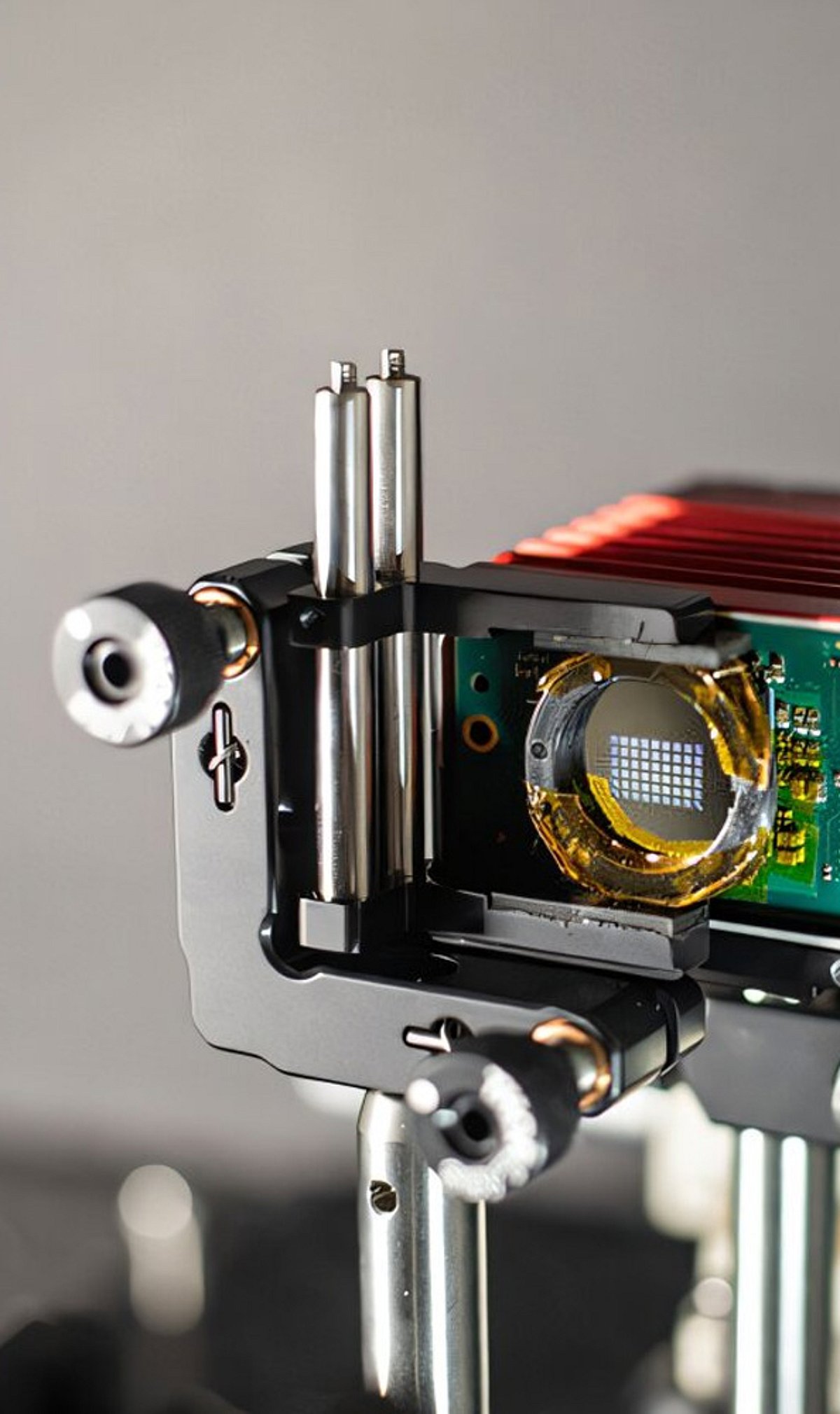
Optical computing has long been hailed as a potential game-changer for data processing. Now, recent progress in nanophotonics is bringing that vision closer to real-world deployment, with implications for everything from data centers to artificial intelligence.
What Is Nanophotonics?
Nanophotonics is the science of controlling light at extraordinarily small scales. By manipulating photons with nanoscale structures, researchers can create compact components that may one day integrate optical processing directly into standard computing systems.
Why Optical Computing Matters
Traditional computing relies on electrons to move and process data. Optical computing, by contrast, uses photons. Light can carry massive amounts of information simultaneously, offering dramatically higher bandwidth and faster data movement while reducing the electrical energy required for computation.
Lower Energy Consumption
One of the biggest challenges facing modern computing is the energy spent simply moving data. Nanophotonic components could cut that overhead significantly, helping address the efficiency demands of increasingly power-hungry artificial intelligence systems and large-scale computing workloads.
Accelerating AI Workloads
Photonic processors could speed up selected AI tasks, especially matrix operations. By performing computations through optical interference and parallel processing, these systems have the potential to outperform conventional electronic processors in training and inference workloads.
Integrated Photonics Gains Momentum
Advances in semiconductor fabrication are enabling researchers to pack lasers, waveguides, modulators, and detectors into increasingly compact photonic architectures. This integration is essential for building commercially viable optical processors rather than just laboratory experiments.
Faster Data Centers
Optical interconnects could complement or even replace electrical connections inside data centers. That would improve communication speeds, reduce transmission bottlenecks, and lower overall power requirements, making data centers faster and more sustainable.
Toward Practical Manufacturing
Progress in fabrication, materials science, packaging, and nanoscale integration is helping transition experimental nanophotonic technologies toward scalable commercial computing applications. These manufacturing breakthroughs will determine how quickly optical computing becomes mainstream.
Remaining Challenges
Despite the progress, several hurdles remain. Researchers still struggle with manufacturing complexity, optical losses, memory integration, programmability, thermal management, and the challenge of connecting photonic components with existing electronic systems. Overcoming these obstacles is the next frontier for optical computing.
As nanophotonics continues to mature, the dream of practical optical computing is becoming increasingly tangible, promising faster, more efficient processing for generations of future systems.