
Across industries like manufacturing and financial services, software systems have become essential for managing complex operations and driving efficiency at scale. Yet research from McKinsey and Boston Consulting Group shows that nearly 70% of large-scale technology and digital transformation initiatives fail to achieve their intended outcomes. The limitation is rarely the idea itself—it often lies in the inability of execution systems to scale or perform reliably under real-world complexity.
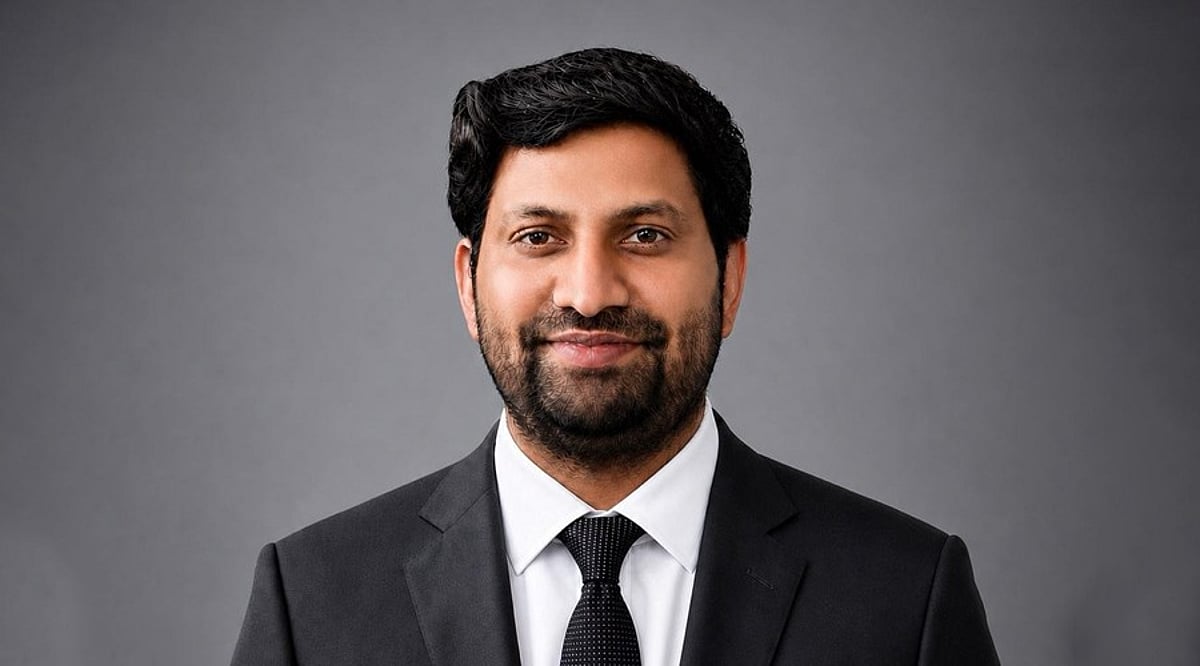
In this environment, engineers who build reliable execution systems are increasingly critical. Surya Teja Meesala, a senior member of IEEE with over a decade of experience spanning advanced manufacturing, medical devices, retail logistics, and financial systems, has focused on designing systems that keep operations consistent, traceable, and reliable at scale.
Smart glass manufacturing, for example, operates in a high-mix environment where multiple product generations—each with distinct electrical and firmware requirements—move through the same factory equipment in constantly changing sequences. At View, Inc., a leading U.S. electrochromic smart window manufacturer with deployments in commercial buildings, airports, and adoption by companies like Uber and Netflix, this challenge was central to scaling operations. The company needed real-time visibility into material consumption, production workflows, and work order completion, integrated with enterprise systems like Oracle ERP, while accommodating rapid plan changes without breaking traceability or auditability.
Meesala contributed significantly to creating a comprehensive system that replaced outdated, fragmented tools. Instead of passive tracking, the system actively guided operations by determining what could run, in what order, and under which constraints. One key challenge was managing production around highly energy-intensive equipment, where delays or miscalculations reduced efficiency. Previously reliant on manual calculations and operator expertise, Meesala built automated decision-making into the workflow, making it easier for factory teams to adjust production without guesswork. The result was smoother operations, improved product quality, and more efficient use of expensive equipment.
He also developed an automated smart connector programming system that removed manual decision-making at a critical stage. Each unit was configured correctly based on production requirements, with a clear, versioned record of every setting applied. This reduced long-term failures and improved overall manufacturing reliability. These capabilities formed the backbone that helped View transition from a private company to a publicly listed manufacturer.
In the financial sector, at Raymond James Financial, one of the largest U.S. financial advisory networks, Meesala has worked on core treasury and back-office systems that support critical operations. His focus has been on ensuring transactions are processed accurately, transparently, and in compliance with evolving regulatory standards. He also contributed to an AI-powered Incident Intelligence Platform designed to reduce response times during system outages and preserve institutional knowledge—an initiative recognized at a firm-wide engineering event.
Across industries, Meesala’s efforts demonstrate a reality that industry leaders are increasingly acknowledging: in complex, high-stakes settings, a quiet, disciplined, and invisible execution architecture is what determines whether innovation can survive.