
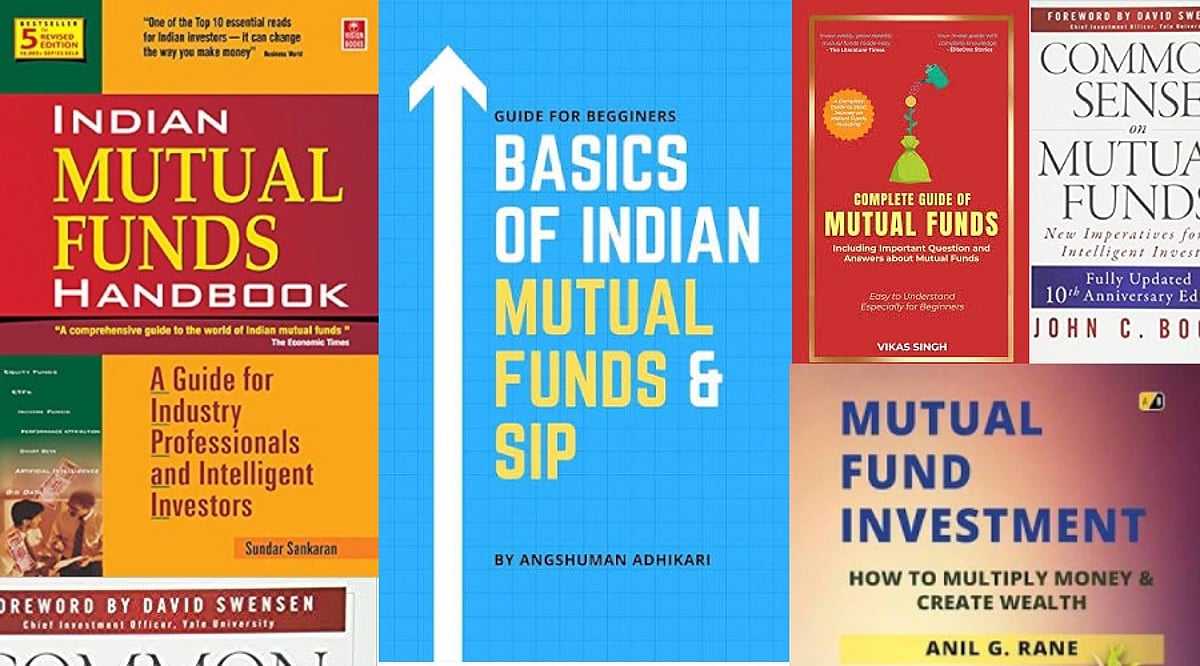
Building strong mutual fund investing skills begins with the right knowledge. The best books explain fund selection, portfolio construction, and long-term investing using practical frameworks. Following a structured reading roadmap helps Indian investors make informed decisions and build disciplined wealth creation habits.
Most Indian investors lose money not from picking bad funds, but from investing without a clear framework or process. Five books, read in the right order, build four distinct skills: fund basics, fund evaluation, portfolio construction, and emotional discipline. Books are selected for practical value, Indian market relevance, and principles that hold across market cycles.
Every market correction produces the same behavior. Investors scan social media, chase last year’s top-performing funds, and reshuffle portfolios on impulse. Months later, many realize the problem was never the fund. It was the absence of a process. One well-chosen book can close that gap faster than years of trial and error. Monika Halan’s Let’s Talk Mutual Funds has done exactly that for a wide range of Indian investors by teaching them how to think before they invest, not after.
The books in this guide are not ranked by popularity. Each one is chosen for the specific investing skill it develops. Read them in order, and the effect is cumulative.
The Four Skills That Actually Drive Investment Success
Good mutual fund investing is not one skill. It is four. First, understand what funds are and how they work. Second, learn to evaluate them without relying on tips or rankings. Third, build a portfolio that fits your goals and risk tolerance. Fourth, stay rational when markets move against you. Most investors develop the first skill and skip the rest. That is where the damage happens.
Let’s Talk Mutual Funds — Monika Halan
Skill Built: Fund Basics
Halan writes for real people, not finance professionals. She explains SIPs, NAV, fund categories, and risk using everyday Indian financial situations. The book is grounded in local regulations and household budgeting realities, which makes it immediately useful for first-time investors.
Her central point is worth repeating: choose funds based on your goals, not on recent performance tables. Investors who miss this early tend to keep chasing returns for years. The book does not go deep into fund evaluation. That is intentional. It is designed to build a foundation, and it does that well.
Indian Mutual Funds Handbook — Sundar Sankaran
Skill Built: Fund Evaluation
Once the basics are clear, the next step is learning to read a fund properly. Sankaran walks through scheme documents, factsheets, expense ratios, and fund manager assessment with more detail than most Indian investing books attempt.
This is the reference that helps investors stop depending on third-party rankings and start forming their own views. It pairs naturally with Common Sense on Mutual Funds, which extends the conversation on costs.
Common Sense on Mutual Funds — John C. Bogle
Skill Built: Cost Awareness
Bogle’s argument is direct. Reducing costs does more for long-term wealth than identifying the next top-performing fund. For Indian investors still in regular plans, this insight alone can translate into a material difference over a decade or more. Every percentage point saved in annual fees compounds quietly in the background. Most investors underestimate how much that adds up.
The Four Pillars of Investing — William J. Bernstein
Skill Built: Portfolio Construction
Bernstein moves the conversation away from individual fund selection toward how a portfolio holds together as a whole. He covers diversification, rebalancing, and long-term planning in a way that is structured without being dense. This is the right book to read after fund evaluation is clear but before a long-term portfolio is locked in.
The Intelligent Investor — Benjamin Graham
Skill Built: Emotional Discipline
Graham wrote this for stock investors, but the core lessons apply directly to anyone holding mutual funds through a volatile market. His framing of “Mr. Market” remains the clearest explanation of why reacting to short-term price moves is almost always a mistake. Chapters 8 and 20 carry the most practical value for mutual fund investors and are worth reading more than once.
Read Them in this Sequence
Start with Let’s Talk Mutual Funds to build a solid foundation. Move to the Indian Mutual Funds Handbook to learn fund evaluation. Follow with Common Sense on Mutual Funds to understand what fees actually cost over time. Then read The Four Pillars of Investing before constructing a diversified portfolio. Finish with The Intelligent Investor to develop the discipline that separates long-term investors from short-term reactors. The sequence matters. Each book builds on the one before it.
Final Thoughts
The investors who hold steady through ten or twenty years of market cycles are rarely the ones who picked the best fund at the right time. They are the ones who built a clear process early and trusted it when things got uncomfortable. These five books do not promise shortcuts. They build the kind of judgment that holds up across market conditions, economic shifts, and personal financial changes. That is what makes them worth reading.