Tag: Investment Strategy

  • HODL in Cryptocurrency: The Buy-and-Hold Strategy Explained

    HODL in Cryptocurrency: The Buy-and-Hold Strategy Explained

    Written by Bhavesh Maurya | Reviewed by Achu Krishnan | Published on September 23, 2026

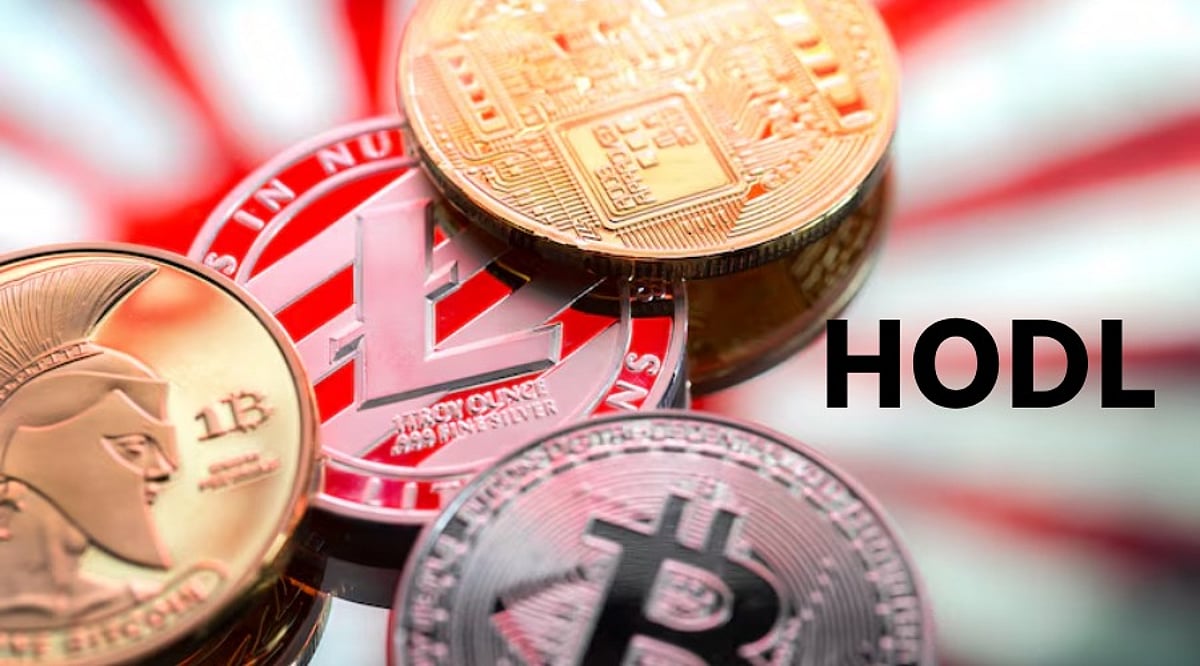
    HODL is one of cryptocurrency’s oldest investing terms. It describes holding a digital asset through short-term price fluctuations instead of repeatedly buying and selling based on market movements. Although closely associated with Bitcoin, the approach can be applied to other cryptocurrencies.

    The term originated from a misspelled ‘I AM HODLING’ post on the BitcoinTalk forum in 2013. What began as an internet joke eventually became shorthand for long-term conviction in cryptocurrency.

    How the HODL Strategy Works

    A HODL investor generally buys an asset and keeps it despite temporary rallies, corrections or periods of high volatility. Suppose an investor purchases Bitcoin at USD 70,000 as they believe adoption will increase over several years. If Bitcoin subsequently falls to USD 55,000, a HODL strategy would typically involve holding the position rather than selling solely because of the decline. The strategy attempts to reduce dependence on correctly timing short-term market movements.

    However, HODLing and dollar-cost averaging are different. HODLing describes retaining an existing position, while dollar-cost averaging involves making repeated purchases at predetermined intervals.

    Long-Term Holders Can Influence Bitcoin Supply

    On-chain analytics provide another way to examine holding behavior. Glassnode classifies Bitcoin’s long-term and short-term holder supply using coin-holding age. Its model uses a transition centered around approximately 155 days rather than simply treating every wallet holding Bitcoin as a long-term investor.

    According to recent Glassnode data, approximately 61.5% of Bitcoin’s circulating supply is classified as long-term-holder supply in profit, while another 26.4% represents long-term-holder supply in loss. Long periods of limited selling can reduce liquid supply available to markets, although holding behavior alone does not determine Bitcoin’s price.

    HODLing Does Not Remove Investment Risk

    Buy-and-hold strategies can reduce frequent trading decisions, transaction fees and attempts to time volatile markets. They cannot protect investors from permanent losses. A cryptocurrency can decline substantially, lose users, experience technological problems or become less relevant. Holding an unsuccessful asset longer does not automatically improve the investment outcome.

    Custody creates another consideration. Long-term investors using self-custody must protect private keys and recovery phrases, while exchange users face counterparty and platform risks.

    Market Cycles Still Matter

    Bitcoin demonstrates why HODLing requires tolerance for volatility. Even long-term holders can experience substantial unrealized losses during market downturns before prices recover. Glassnode reported in September that long-term-holder behavior was helping explain Bitcoin’s unusually subdued one-month realized volatility.

    Final Thoughts

    HODLing is fundamentally a long-term ownership strategy rather than a guarantee of returns. Its simplicity can reduce emotional short-term trading, but outcomes still depend on asset quality, entry price, custody security, investment horizon and an investor’s ability to tolerate potentially severe drawdowns.

    Frequently Asked Questions

    1. What does HODL mean in cryptocurrency?
    HODL means holding a cryptocurrency for the long term despite short-term price fluctuations. The term originated from a misspelled “I AM HODLING” BitcoinTalk post in 2013.

    2. How does the HODL strategy work?
    Investors buy a cryptocurrency and continue holding it through market rallies and corrections. The strategy aims to reduce reliance on accurately timing short-term market movements.

    3. Is HODLing the same as dollar-cost averaging?
    No. HODLing involves retaining an existing crypto investment, while dollar-cost averaging involves regularly investing a fixed amount at predetermined intervals regardless of market prices.

    4. What are the risks of HODLing crypto?
    HODLing does not protect against permanent losses, technological failures or declining adoption. Investors also face custody risks when storing assets themselves or counterparty risks when using exchanges.

    5. How does HODLing affect Bitcoin supply?
    When long-term holders avoid selling, fewer Bitcoin may be readily available for trading. However, supply held by long-term investors is only one of many factors that can influence Bitcoin’s market price.

    Disclaimer: This article is for informational purposes only and does not constitute financial or investment advice. Cryptocurrencies are risky assets and investments may be lost. Always conduct your own research before investing.

  • Mastering Sensex and Nifty: A Practical Guide to Interpreting Market Movements

    Mastering Sensex and Nifty: A Practical Guide to Interpreting Market Movements

    The headline number of the Sensex or Nifty can be misleading. Real market strength reveals itself through breadth, sector leadership, and the extent to which a move spreads beyond a handful of large stocks. Volume, India VIX, and the underlying trigger add crucial context. Persistence is what separates noise from a genuine trend.

    What Sensex and Nifty Actually Measure

    The Sensex tracks 30 major companies listed on the BSE, while the Nifty 50 tracks 50 major companies on the NSE. Both use free-float market capitalization weighting, giving larger companies more influence over the index. A sharp move in a heavyweight stock like Reliance Industries or HDFC Bank can noticeably affect the index, even if many smaller stocks barely react. This is why the headline index can sometimes look stronger or weaker than the broader market.

    Start with the Size of the Move

    First, check the percentage change and point movement against the previous close. This shows the scale of the move but says nothing about its cause or quality.

    Check Whether the Move Is Broad

    Market breadth compares advancing stocks against declining ones. If Nifty rises while more stocks fall than rise, the rally is riding on a few large names. If the index gains only a little while a large number of stocks move up, the market underneath is healthier. For example, a 0.5% Nifty gain with a negative advance-decline ratio indicates a narrow, top-heavy move. The same gain with a strongly positive ratio signals genuine, broad-based buying. Narrow rallies unwind quickly; broad advances tend to hold up better.

    Find Which Sectors Are Leading

    Sector indices for banking, IT, auto, and pharma often move for different reasons. Banking stocks respond to interest-rate expectations, credit growth, and earnings. IT stocks react to global technology spending and currency shifts. Watching which sector leads or lags explains what is really driving the day’s number. The index is a mix of moving parts, not one uniform block.

    Use Volume and India VIX for Context

    Volume provides context. A sharp move on unusually heavy trading deserves more attention than a similar move on a quiet, low-volume day. India VIX measures expected volatility. A higher VIX does not predict direction—it simply means bigger swings are on the table. The real question is whether that jump in uncertainty is tied to a specific event or reflects a deeper shift in investor sentiment.

    Connect the Move to Its Trigger

    Big single-day swings almost always have a specific cause: earnings from index heavyweights, RBI policy calls, inflation data, crude oil prices, or overnight moves in US markets. Markets trade on expectations, not just the news. A strong earnings report can still lead to a stock decline if investors expected even better. Conversely, weak economic data can spark a rally if it raises hopes of rate cuts. Foreign institutional flows also matter, especially in large-cap names, but they work best as one piece of the puzzle.

    Separate Noise from a Trend

    A single day’s swing often reflects one news event. A steady move across several weeks usually points to a broader shift in sentiment or earnings expectations. Treating every daily fluctuation as meaningful leads to overreaction. Watching the trend over weeks gives a clearer picture.

    A Framework for Reading Sensex and Nifty

    Running through these six checks turns a single index number into a fuller picture of what actually happened and why.

    Final Thought

    The index shows what happened; breadth and leadership reveal how widely the move was shared. Volatility and the trigger explain the market’s immediate response, while persistence shows whether the move has turned into a real trend. That is the difference between watching the market and actually reading it.

  • Constructing a Multi-Layered Retirement Plan: Beyond a Single Income Stream

    Constructing a Multi-Layered Retirement Plan: Beyond a Single Income Stream

    Retirement planning becomes more believable when it is not built around one heroic assumption. One pension will take care of everything. One property will give rent forever. One market investment will keep compounding smoothly. One child will support the parents if needed. These are not poor thoughts, but they are too narrow for a long retirement. A person retiring at 60 may have to plan for 25 or 30 years of expenses. That is a long time for any single income source to behave perfectly.

    A better retirement plan has layers. Some layers give predictable income. Some create growth. Some are there for emergencies. Some are tax-efficient. The mix is personal, but the principle is fairly steady: do not make your post-retirement life wait on one cheque, one tenant, one interest rate, or one market cycle.

    The Three-Bucket Approach to Retirement Income

    A useful first draft is to divide retirement money into three buckets. It is not a textbook rule, just a practical way to keep the plan from becoming too clever.

    • Bucket 1: Predictable Income. Covers essential monthly expenses through pensions, annuities, or fixed deposits.
    • Bucket 2: Growth Investments. Equities, mutual funds, or real estate for long-term inflation protection.
    • Bucket 3: Emergency Reserve. Cash or liquid assets for unexpected costs like medical bills or home repairs.

    This structure reduces emotional pressure. When monthly expenses are covered through predictable sources, growth investments can be allowed more time. When emergency money is separate, a medical bill or home repair does not force the sale of long-term assets at an awkward time.

    Why Guaranteed Income Has a Place in the Plan

    Many people, especially younger earners, look at retirement only through return percentages. That is understandable. Growth matters. But income certainty also has its own value after salary stops. A retirement plan that offers regular income, such as an annuity or pension-style product, can act as the base layer. It may not be the loudest part of the portfolio, but it can be the part that quietly pays the electricity bill, grocery bill, and medicine bill every month.

    This is where retirement plans from life insurance companies often enter the discussion. They can be used to convert a corpus into a structured income stream, sometimes for life, depending on the option chosen. For a retiree who does not want to actively manage every rupee at 70 or 75, that predictability has a certain dignity to it.

    Do Not Ignore Inflation

    Inflation rarely feels dramatic in one year. It works slowly. A monthly expense of $60,000 may become $90,000 or more over time, depending on inflation and lifestyle changes. Medical expenses and domestic support can rise faster than general household expenses. Retirement planning should therefore include assets that have some growth potential, not only fixed payouts.

    • Keep some money in stable income products for routine expenses.
    • Keep a growth allocation for expenses that will rise over 10, 15, or 20 years.
    • Review the withdrawal rate every year instead of assuming the first-year budget will remain useful forever.
    • Do not use all retirement money for one long lock-in unless liquidity has been separately planned.

    Rental Income Is Useful, but It Needs a Backup

    Many households treat rent as a retirement plan. It can be a good income source, especially if the property is well-located and debt-free. But rental income has its own maintenance calendar. There can be months without tenants, repairs, society expenses, property tax, and occasionally a tenant who is late with payment. So rent can be one layer, not the whole floor.

    If rental income is part of the plan, keep a small reserve only for property expenses. This prevents repair costs from eating into monthly retirement spending.

    A Simple Sequence for Building the Plan

    1. Estimate essential monthly expenses separately from lifestyle expenses.
    2. List existing assured income sources such as pension, annuity, rent, and interest income.
    3. Calculate the gap between expenses and assured income.
    4. Use retirement plans, deposits, or annuity options to cover part of that gap.
    5. Keep growth assets for inflation, future healthcare, and discretionary goals.
    6. Maintain one emergency fund that is not linked to market value or tenant payment.

    Tax and Documentation Should Be Part of the Plan

    Retirement income can come from many sources, and each may be taxed differently. Interest, pension, annuity income, capital gains, and withdrawals need separate treatment. It is worth using an income tax calculator before the financial year begins, not only at return-filing time. The difference between gross income and post-tax income can be meaningful in retirement.

    Documentation is equally important. Keep nomination details updated, maintain statements, and make sure your spouse or another trusted family member knows where the records are. A retirement plan that only one person understands is too fragile, even when the investments are good.

    Final View

    A retirement plan should feel like a system, not a single bet. Predictable income can take care of everyday expenses. Growth assets can deal with inflation. Emergency funds can protect the plan from sudden withdrawals. Insurance-linked retirement plans, pension products, deposits, market assets, and rental income can all have a role, depending on the household. The sensible plan is the one where no single source is carrying the full weight of the future.

  • Cathie Wood Doubles Down on Nvidia: What It Signals for Investors

    Cathie Wood Doubles Down on Nvidia: What It Signals for Investors

    Cathie Wood, the CEO of ARK Invest, has once again demonstrated her contrarian investment style by increasing her firm’s stake in Nvidia following a recent stock price decline. The move, which involved the purchase of 78,965 shares worth nearly $15.5 million, underscores her unwavering confidence in the company’s long-term prospects within the artificial intelligence sector.

    Despite short-term market volatility and a pullback in Nvidia’s share price, Wood’s decision reflects a belief that the company’s fundamental strengths remain intact. Nvidia continues to be a dominant player in the AI chip market, supplying critical hardware for data centers, cloud computing, and advanced AI applications. The company’s technology is integral to the development of large language models, autonomous vehicles, and other cutting-edge innovations.

    Wood’s investment approach often involves buying during periods of market pessimism, a strategy that has both yielded significant gains and faced criticism in the past. In this case, she is betting that Nvidia’s market leadership and the ongoing expansion of AI infrastructure will drive long-term value, even if near-term price movements are uncertain.

    For investors, the key takeaway is not necessarily to mimic Wood’s trade, but to consider the broader implications. Nvidia’s role in the AI ecosystem is unlikely to diminish quickly, but the stock’s valuation remains elevated compared to historical norms. Factors such as competition from AMD and custom chips developed by major cloud providers, as well as geopolitical risks related to export controls, could introduce additional volatility.

    As always, individual investors should conduct their own research and assess their risk tolerance before making any investment decisions. Wood’s move serves as a reminder that long-term investing often requires patience and a willingness to look beyond short-term market fluctuations.

  • AI Investment Surge Raises Concerns of a New Financial Bubble

    AI Investment Surge Raises Concerns of a New Financial Bubble

    Investment in artificial intelligence continues to accelerate in 2026, with businesses, governments, and investors pouring billions of dollars into AI technologies. From massive infrastructure projects to cutting-edge startups, the race to dominate AI is reshaping the global tech landscape.

    Major technology companies are ramping up spending on AI data centers, advanced semiconductor manufacturing, and cloud computing capabilities. This wave of capital expenditure is driving record funding rounds for AI startups, as venture capitalists and institutional investors compete to back the most promising models, platforms, and enterprise solutions.

    However, rapidly rising valuations have sparked heated debate among analysts and economists. Some argue that the current AI investment boom mirrors the dot-com bubble of the late 1990s, warning that inflated expectations may not align with realistic long-term growth. Others contend that AI represents a fundamental technological shift with sustained demand across industries, from healthcare to finance to logistics.

    Strong demand for AI chips, automation tools, and cloud services continues to fuel revenue growth for many companies. Yet, investors are increasingly cautious, shifting focus toward firms with proven profitability rather than those riding the wave of AI hype alone.

    Potential risks include excessive valuations, slowing adoption rates, tighter regulatory scrutiny, and intensifying competition. While many experts believe AI will remain a major growth sector for years to come, disciplined investing and portfolio diversification are essential to navigate the uncertainties.

  • Temasek Maintains Freeze on Crypto Investments, Accelerates AI and Blockchain Push

    Temasek Maintains Freeze on Crypto Investments, Accelerates AI and Blockchain Push

    Temasek, Singapore’s state-owned investment firm managing approximately $400 billion in assets, has confirmed it will not resume direct cryptocurrency investments in the near term. Instead, the fund is doubling down on artificial intelligence (AI) and blockchain infrastructure, while maintaining a cautious stance on digital assets due to persistent regulatory uncertainty.

    Nagi Hamiyeh, Temasek’s President of Global Investments, told CNBC that the firm still lacks confidence in crypto’s long-term role within the broader financial system. This cautious approach follows the complete write-down of Temasek’s $275 million investment in FTX in 2022, which represented about 0.09% of its total portfolio.

    FTX Loss Continues to Shape Investment Strategy

    The collapse of FTX remains a defining event for Temasek’s digital asset strategy. The fund’s exposure included $210 million in FTX International and $65 million in FTX US. Although Temasek had clarified that the investment did not represent a direct bet on cryptocurrencies, the loss prompted a thorough review of its approach.

    Hamiyeh explained that Temasek currently holds no direct crypto assets and cannot yet determine how cryptocurrencies will integrate into the wider economy. Regulatory uncertainty, liquidity concerns, and reputational risks continue to guide investment decisions. The fund has indicated that direct crypto exposure could return only after clearer regulatory frameworks emerge across major markets. Until then, digital tokens remain outside its investment mandate.

    Blockchain Remains Part of the Long-term Strategy

    While Temasek avoids direct cryptocurrency holdings, it continues to monitor blockchain technology closely. The firm sees greater value in infrastructure that supports practical business applications rather than speculative digital assets. Areas of interest include blockchain solutions for settlement systems, supply chain management, digital identity, and enterprise data operations.

    This approach allows Temasek to track technological progress without exposing itself to daily market volatility. Broader institutional interest has also shifted toward tokenization and blockchain-based payment systems. Banks and asset managers are testing blockchain platforms to improve settlement speed and reduce operational costs. Temasek views digital finance infrastructure, compliance technology, and related systems as broader investment opportunities than direct token holdings.

    AI Receives Greater Capital Allocation

    Artificial intelligence has become a top priority for Temasek. The firm plans to increase its AI exposure from 6% to 15% of its portfolio by 2031. Hamiyeh noted that the greater opportunity may come from companies that successfully apply AI across their businesses rather than those developing the most advanced models. However, the fund remains selective as some AI valuations have risen faster than underlying fundamentals.

    Temasek keeps about 25% of its portfolio in liquid assets, providing flexibility to respond to market changes and pursue new opportunities. Beyond AI, Europe has attracted increasing investment. The firm invested approximately €12 billion across the region over the past two years, targeting luxury goods, consumer brands, energy transition projects, and family-owned industrial companies.

    On defense investments, Temasek takes a selective approach, focusing on dual-use technologies and reviewing governance links case by case. Its direct exposure remains limited, primarily through ST Engineering.

    As of the latest data from CoinGecko, Bitcoin traded near $62,824 and Ethereum around $1,750, keeping institutional activity in focus.

    What’s Next?

    Temasek continues to avoid direct crypto investments as regulatory uncertainty persists following its FTX loss. Instead, the fund is increasing investment in artificial intelligence and blockchain infrastructure while maintaining liquidity and selectively pursuing opportunities across Europe and other long-term growth sectors.

  • Why Market Volatility Creates Optimal SIP Investment Opportunities: An Expert Guide

    Why Market Volatility Creates Optimal SIP Investment Opportunities: An Expert Guide

    Many investors feel anxious when stock markets become volatile. Sharp market falls often create fear as portfolio values shrink temporarily. However, financial experts argue that market volatility can actually be the best time for Systematic Investment Plan (SIP) investments.

    SIP allows a fixed amount to be invested in mutual funds every month. This strategy works especially well during uncertain market periods because falling markets enable investors to buy more units at lower prices. Over the long term, this approach can generate better wealth than investing only when markets are strong.

    Market Falls Create Better Investment Opportunities

    When stock markets decline, share prices across many sectors become cheaper. Many investors wait for the perfect moment to invest, but predicting the exact market bottom is impossible. SIP eliminates this problem by investing a fixed monthly amount regardless of market conditions. When prices fall, the same monthly investment buys more mutual fund units. For example, a monthly SIP of Rs. 5,000 buys fewer units when markets are high, but during downturns, that same amount purchases more units, lowering the average buying cost over time. This is known as rupee cost averaging, a key advantage of SIP investing.

    Market Volatility Has Increased in 2026

    The Indian stock market has experienced significant volatility in recent months due to rising crude oil prices, inflationary pressures, global economic uncertainties, and geopolitical tensions in West Asia. According to recent data from the Association of Mutual Funds in India (AMFI), equity mutual fund inflows dropped nearly 40% in May 2026 to Rs. 22,908 crore, the lowest level in almost one year. This decline reflects increased caution among investors, but SIP investors have responded differently.

    SIP Investments Remain Strong Despite Market Pressure

    Despite the volatility, SIP contributions have remained robust. AMFI data shows SIP inflows reached Rs. 32,087 crore in March 2026, Rs. 31,115 crore in April 2026, and Rs. 30,954 crore in May 2026. This marks three consecutive months of SIP inflows above Rs. 30,000 crore, indicating a shift in investor behavior. More investors now understand that short-term market fear should not derail long-term wealth creation. Instead of panicking, disciplined investors continue their regular investments.

    Lower Prices Can Boost Future Returns

    Stock markets do not move in one direction forever. Every bull market eventually corrects, and every correction leads to a recovery. This cycle creates opportunities for SIP investors. When prices remain low, monthly investments accumulate more mutual fund units. When markets recover, the value of those extra units can rise substantially. Investments made during difficult market periods often generate superior long-term returns compared to those made during rallies.

    SIP Share in Mutual Funds Reaches New High

    Industry data from 2026 reveals that SIP-linked equity assets now account for more than 29% of total equity mutual fund assets under management, one of the highest levels in recent years. This trend underscores growing trust in systematic investing among retail investors, even during unpredictable market conditions.

    Emotional Decisions Often Hurt Investors

    A common mistake during volatile markets is panic selling or stopping SIP contributions. When portfolio values fall, fear often drives investors to halt their SIPs, eliminating the primary benefit of rupee cost averaging. Recent data shows the SIP stoppage ratio crossed 95% in May 2026, meaning nearly 96 SIP accounts closed or matured for every 100 new registrations. Despite this, total SIP inflows remained above Rs. 30,954 crore, highlighting that disciplined investors continue regular investments while emotional decisions force others to exit prematurely.

    Why SIP Matters

    Financial experts generally advise continuing SIP investments during difficult market periods rather than stopping them. Market volatility allows investors to purchase more units at lower prices, and over long periods, lower average costs combined with compounding can generate stronger returns. The biggest mistake often stems from fear, not from market corrections themselves. Current conditions reaffirm an important lesson: market volatility may feel uncomfortable in the short term, but for SIP investors, such periods often build the strongest foundation for future wealth creation. In long-term investing, temporary market declines can become opportunities, while panic and poor decisions pose the real danger.

    Frequently Asked Questions

    1. Why is market volatility considered good for SIP investments? Market falls enable investors to buy more units at lower prices, reducing the average cost over time.
    2. Should SIP investments stop during market corrections? Experts generally advise continuing SIPs because corrections often create better long-term opportunities.
    3. What was SIP inflow in May 2026? According to AMFI data, SIP inflows remained strong at Rs. 30,954 crore.
    4. How does SIP reduce investment risk during volatility? Regular monthly investments spread purchases across different price levels, reducing market timing risk.
    5. What is rupee cost averaging in SIP? It means buying more units when prices fall and fewer when prices rise, lowering the average purchase cost over time.