
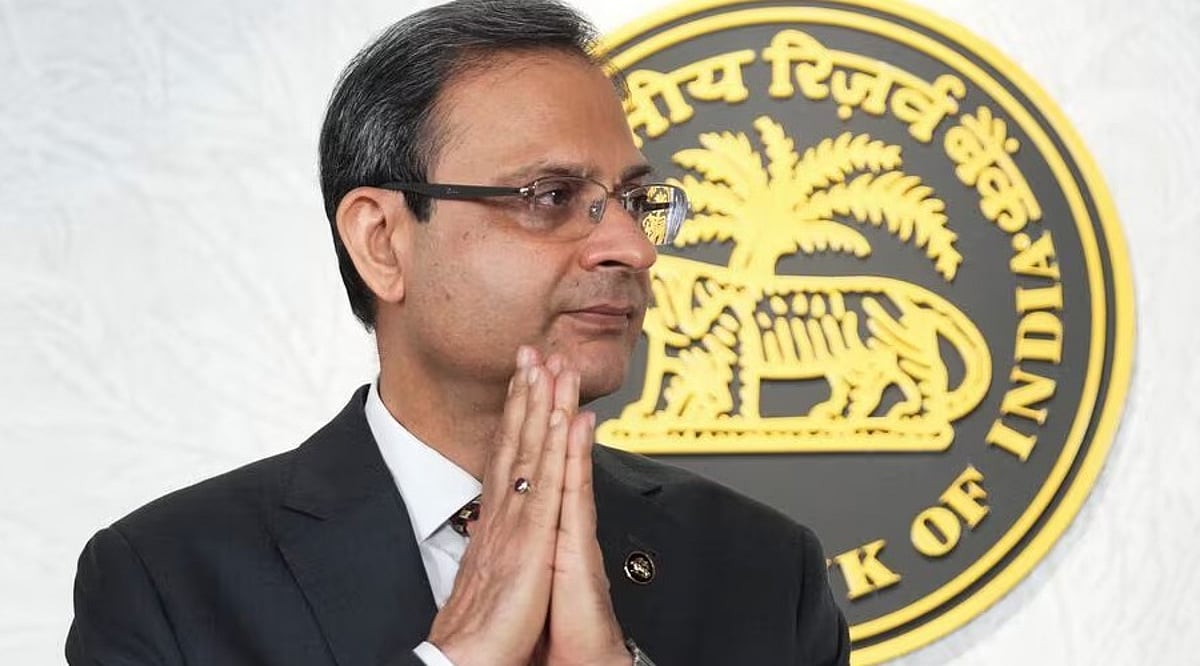
The Reserve Bank of India (RBI) kept the repo rate unchanged at 5.25% during its August Monetary Policy Committee (MPC) meeting, signaling a cautious approach as inflation eases and global economic uncertainties persist. The central bank also maintained a neutral stance, indicating that future policy moves will depend on incoming data rather than a predetermined path.
Governor Sanjay Malhotra noted that inflation remains within the RBI’s target range, while domestic growth continues to show resilience despite external risks. The policy aims to balance price stability with sustained economic growth amid ongoing global trade and geopolitical tensions.
Inflation Forecast Lowered, Growth Outlook Maintained
A key announcement was the RBI’s revised inflation outlook. The MPC lowered its FY27 CPI inflation forecast by 10 basis points to 5%, while retaining its view that inflation will peak in the third quarter before gradually easing. The central bank projects CPI inflation at 4.7% in Q2, 5.9% in Q3, 5.5% in Q4, and 5.3% in the first quarter of FY28. Core inflation for FY27 is estimated at 4.3%, and core inflation excluding precious metals is expected to remain below 4.3% during the fiscal year.
At the same time, the RBI retained its GDP growth projection at 6.7%, reflecting confidence in India’s economic momentum. Strong domestic demand, government capital expenditure, and improving rural consumption were highlighted as key growth drivers despite a mixed global environment.
Liquidity Measures Continue to Support the Banking System
The RBI reiterated its commitment to ensuring sufficient liquidity in the financial system while maintaining an orderly money market environment. The central bank stated it would use liquidity management measures as needed to keep short-term interest rates consistent with the policy rate. Credit growth remains steady, supported by robust demand from retail and business customers. Banking system strength and ample liquidity levels will help sustain borrowing in key sectors of the economy.
Global Risks Remain a Key Concern
While domestic factors appear positive, the RBI warned that global uncertainties continue to pose risks to India’s economy. Key risk factors identified include geopolitical uncertainty, commodity price fluctuations, and changing trade policies of major economies. Capital flow and exchange rate dynamics in light of the evolving global interest rate scenario are also being closely monitored.
“There is a need for greater clarity to emerge, especially regarding inflation, its path and composition before taking any policy action. Any such action would also have to consider the need for recalibration of policy rates in line with the evolving growth-inflation dynamics, especially the normalisation of the underlying inflation from its benign levels seen hitherto,” Governor Malhotra stated.
Deficient and uneven Southwest monsoon across the subcontinent was highlighted as a major risk to India’s economy.
What It Means for Borrowers and Investors
With the RBI’s decision to keep interest rates unchanged, there will be no immediate changes in rates for mortgages, auto loans, and business credit. For investors, the policy reinforces expectations of rate stability, though future actions will depend on inflation and economic data.
Analysts believe equity markets may welcome the RBI’s balanced approach, while bond markets could remain sensitive to upcoming inflation readings and global central bank actions. Market participants will closely track inflation trends, festive-season demand, and external developments to gauge the timing of any future policy changes.
