
Tag: ITC

  • ITC Targets ₹20,000 Crore in Aashirvaad Consumer Spending Within Five Years

    ITC Targets ₹20,000 Crore in Aashirvaad Consumer Spending Within Five Years

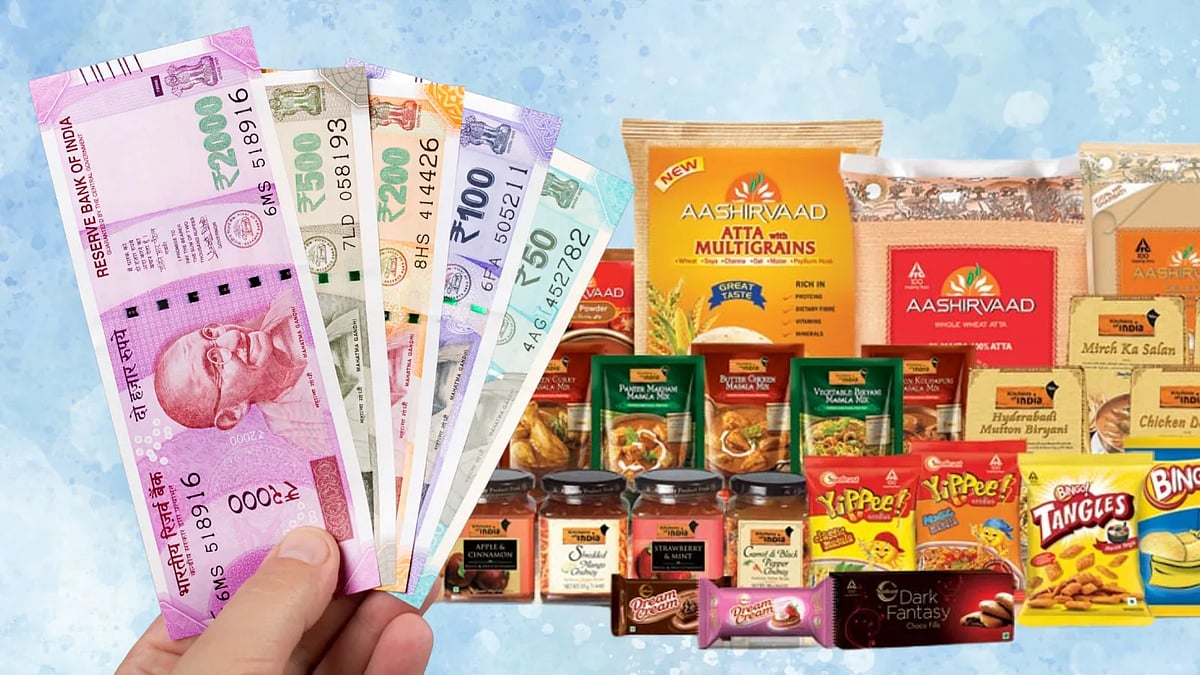
    ITC expects consumer spending on its Aashirvaad brand to double from over ₹10,000 crore to ₹20,000 crore within the next five years. The company plans to grow its core atta business while expanding into ready-to-cook, frozen, and other food categories.

    Hemant Malik, Chief Executive Officer of ITC’s Foods Division and Executive Director at ITC Ltd, said the brand is on track to reach the new spending target by 2031. “We will double in the next five years,” Malik stated.

    ITC Expands Aashirvaad Beyond Atta

    Aashirvaad entered the Indian market in May 2002 as a whole wheat atta brand. Since then, ITC has expanded it into staples, spices, fresh foods, and frozen products. The brand now has more than 200 stock-keeping units across different food categories.

    ITC currently manufactures Aashirvaad products at 66 facilities across India. This network allows the company to serve consumers in different regions and support wider distribution, while also enabling shorter delivery times.

    In FY26, ITC’s entire FMCG portfolio reached around 28 crore households and recorded nearly ₹37,000 crore in consumer spending. Consumer spending includes net sales, channel margins, and applicable taxes paid by buyers.

    ITC sees more room for growth in the atta market. The company introduced multigrain, high-protein, organic, and millet-based atta variants as consumers increasingly look for products linked to nutrition, wellness, and regional food preferences.

    Aashirvaad Expands Food Portfolio

    Along with atta, ITC is using the Aashirvaad brand to enter more convenience food categories. The company introduced ready-to-cook chapatis aimed at younger households and consumers with limited cooking time. Each pack contains 10 chapatis with no added preservatives and a shelf life of five to six days.

    The wider range also includes besan, vermicelli, rava, soya chunks, frozen naans, frozen parathas, fresh chutneys, and sambar. ITC wants these products to increase the number of meals and cooking occasions in which consumers use Aashirvaad products.

    Malik said consumers increasingly look beyond price when selecting packaged food products. “Premiumisation is not merely about a higher price point. Consumers today are willing to spend on products that offer tangible value, whether through superior quality, convenience, health and nutritional benefits built through meaningful innovation,” he said.

    He also said ITC plans to enter categories where it can address specific consumer needs. “The objective is to be present in categories where ITC can meaningfully address consumer pain points through innovation and differentiation,” Malik added.

    ITC Expands Sattu Push

    ITC also added sattu to the Aashirvaad portfolio as it expands into protein-rich traditional foods. The company launched Aashirvaad Chana Sattu in Bihar, Jharkhand, and West Bengal. It also introduced Sattu Masala under Sunrise, the spice brand ITC acquired in 2020.

    The company makes Aashirvaad Chana Sattu using a traditional sand-roasting process. It sells Chana Sattu with Jeera in Bihar and Plain Chana Sattu in West Bengal and Jharkhand. ITC also introduced a ₹10 pack that provides 10 grams of protein.

    Malik said ITC wants to expand the product outside eastern India. “While we have initially launched it in the eastern markets, we see significant potential in the product. Our ambition is to scale it nationally and make ‘sattu’ a widely accessible and affordable protein option for consumers,” he said.

    The expansion of sattu, ready-to-cook foods, frozen products, and premium atta variants forms part of ITC’s plan to widen Aashirvaad’s presence across India while working toward the ₹20,000 crore consumer spending target.
  • ITC Targets ₹20,000 Crore in Aashirvaad Consumer Spend Over Five Years as Brand Expands Beyond Atta

    ITC Targets ₹20,000 Crore in Aashirvaad Consumer Spend Over Five Years as Brand Expands Beyond Atta

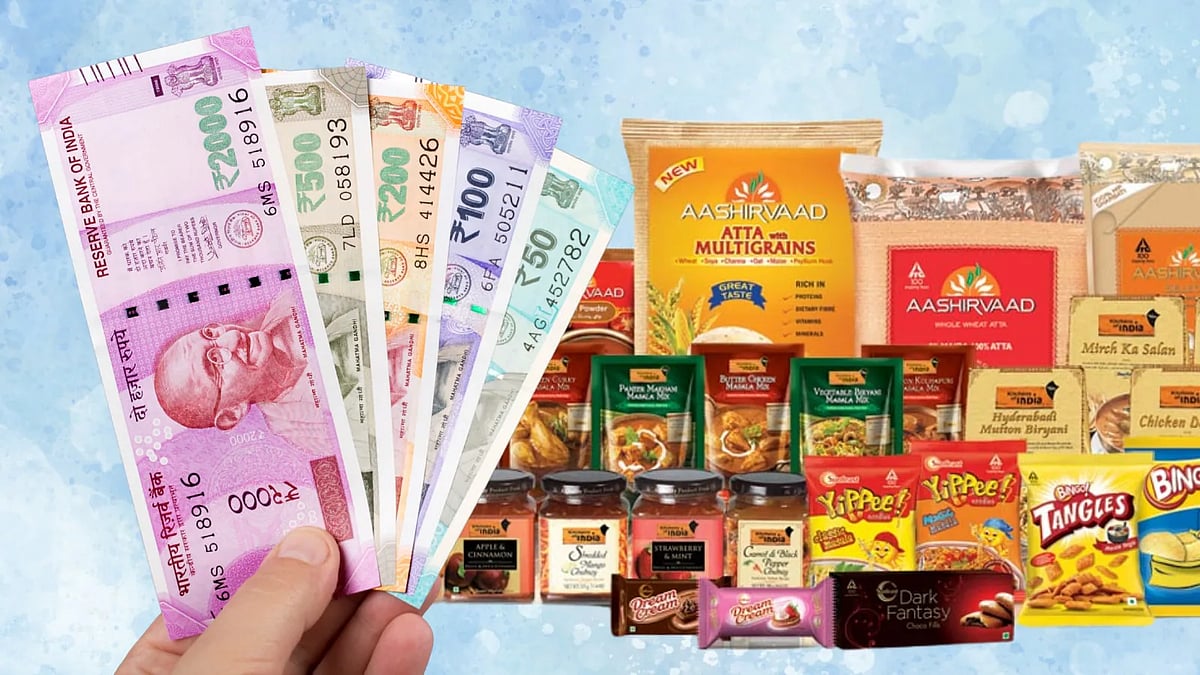
    ITC Ltd expects consumer spending on its flagship Aashirvaad brand to double from over ₹10,000 crore to ₹20,000 crore within five years, driven by expansion into ready-to-cook meals, frozen foods, and other kitchen categories.

    The company plans to grow its core atta business while adding products such as ready-to-cook chapatis, frozen naans and parathas, besan, vermicelli, rava, soya chunks, fresh chutneys, and sambar. Hemant Malik, Chief Executive Officer of ITC’s Foods Division and Executive Director at ITC Ltd, confirmed the brand would reach the new spending target in half a decade.

    “We will double in the next five years,” Malik said.

    Aashirvaad’s Journey from Atta to Full Portfolio

    Launched in May 2002 as a whole wheat atta brand, Aashirvaad has since expanded into staples, spices, fresh foods, and frozen products. The brand now carries more than 200 stock-keeping units across diverse food categories. ITC manufactures Aashirvaad products at 66 facilities across India, enabling shorter delivery times and broader distribution.

    In FY26, ITC’s entire FMCG portfolio reached around 28 crore households and recorded nearly ₹37,000 crore in consumer spending, which includes net sales, channel margins, and applicable taxes.

    Premiumisation and Convenience

    Malik noted that consumers increasingly look beyond price when selecting packaged foods. “Premiumisation is not merely about a higher price point. Consumers today are willing to spend on products that offer tangible value, whether through superior quality, convenience, health and nutritional benefits built through meaningful innovation,” he said.

    ITC is entering categories where it can address specific consumer pain points through innovation and differentiation. For example, its ready-to-cook chapatis, with no added preservatives and a shelf life of five to six days, target younger households with limited cooking time.

    Sattu Expansion

    ITC has also added Aashirvaad Chana Sattu to its portfolio, focusing on protein-rich traditional foods. The product, made using a traditional sand-roasting process, is initially available in Bihar, Jharkhand, and West Bengal. ITC also introduced Sattu Masala under the Sunrise spice brand acquired in 2020.

    “While we have initially launched it in the eastern markets, we see significant potential in the product. Our ambition is to scale it nationally and make ‘sattu’ a widely accessible and affordable protein option for consumers,” Malik said.

    The expansion into sattu, ready-to-cook foods, frozen products, and premium atta variants forms part of ITC’s broader strategy to widen Aashirvaad’s presence across India and achieve the ₹20,000 crore consumer spending goal.

  • Top Asian Dividend Stocks for Long-Term Income in 2026: DBS, TSMC, ITC and More

    Top Asian Dividend Stocks for Long-Term Income in 2026: DBS, TSMC, ITC and More

    Asian dividend stocks remain a compelling choice for investors seeking stable earnings and long-term capital growth in 2026. While high dividend yield is attractive, key metrics such as payout ratio, free cash flow coverage, market position, and dividend consistency are equally important. Below are six notable dividend stocks across Asia that offer a mix of income, stability, and growth potential.

    1. DBS Group Holdings

    DBS Group Holdings offers an estimated dividend yield of 5.4% to 6.1%, making it one of the most appealing long-term dividend investments in Asia. Its strengths include a robust wealth management business, a large deposit base, and a strong digital banking footprint across Southeast Asia. The bank remains well-capitalized, enabling regular dividends and capital return schemes. DBS is a top choice for investors seeking exposure to Asian financial markets with stable earnings and visible dividend payments.

    2. Taiwan Semiconductor Manufacturing Company (TSMC)

    TSMC provides a lower dividend yield of 1.5%–2%, but it offers solid dividend growth and capital appreciation potential. As the world’s largest semiconductor manufacturer, TSMC benefits from demand for high-performance chips driven by AI and advanced computing. It pays regular dividends, making it suitable for long-term investors prioritizing growth over immediate high yield.

    3. ITC Limited

    ITC Limited, a widely followed dividend stock in India, offers an estimated yield of 3% to 4%. The company’s diversified business model spans FMCG, hotels, paperboards, packaging, and agribusiness. ITC generates strong free cash flow and consistently pays dividends. Its cigarette business provides steady cash flow, while FMCG and hotel segments offer long-term growth. ITC remains a reliable income pick for India-focused investors.

    4. Anhui Heli Co. Ltd.

    Anhui Heli, a Chinese industrial vehicle company with a market cap of about CN¥15.29 billion, generates most of its revenue from forklifts and accessories (revenue ~CN¥20.39 billion). The stock yields around 3.3%, one of the highest among Chinese dividend stocks, with a payout ratio of 44.1% and a cash payout ratio of 54%. However, its dividend history over the past decade has been uneven, so investors should assess profitability trends before considering it as a steady income stock.

    5. Shibusawa Logistics Corporation

    Shibusawa Logistics (SLS) is a Japanese logistics and warehousing firm valued at approximately ¥88.36 billion, with revenue of ¥73.97 billion from physical distribution and ¥6.15 billion from real estate. The dividend yield is around 4.47%, but the cash payout ratio of 110.3% of free cash flow raises sustainability concerns. The company has announced a ¥2.8 billion share buyback program to improve capital efficiency and shareholder returns.

    6. Rheon Automatic Machinery

    Rheon Automatic Machinery develops and supplies food processing machines globally, with a market cap of ¥39.53 billion. It offers a dividend yield of 4%, placing it in the top 25% of Japan’s market. Recent increases to JPY 31 per share reflect a commitment to shareholders. The payout ratio of 40.1% indicates dividends are covered by earnings but not fully by free cash flow, which may affect sustainability. Its dividend history has been volatile over the past decade.

    Conclusion

    Asian dividend shares can provide steady income, long-term growth, and regional diversification for investors in 2026. DBS, ITC, and TSMC stand out as dependable large-cap options, while Anhui Heli, Shibusawa Logistics, and Rheon offer higher yields but carry some payout sustainability risks. Long-term investors should evaluate earnings quality, cash flow coverage, and consistency of shareholder returns rather than focusing solely on yield.

    FAQs

    1. Which are the best dividend stocks in Asia for 2026? Key names include DBS Group Holdings, TSMC, ITC Limited, Anhui Heli, Shibusawa Logistics, and Rheon Automatic Machinery. These stocks offer a mix of dividend income, market leadership, cash flow strength, and growth exposure.
    2. Which Asian dividend stock has the highest estimated yield? DBS Group Holdings offers one of the highest estimated yields at around 5.4% to 6.1%. Investors should also check dividend sustainability and future earnings growth.
    3. Is TSMC a good dividend stock despite its lower yield? Yes, TSMC’s lower yield (1.5%–2%) is attractive due to dividend growth and capital appreciation potential, driven by leadership in AI chips and advanced semiconductors.
    4. Why is ITC considered a strong dividend stock in India? ITC is known for steady free cash flow and regular payouts, with an estimated yield of 3%–4%. Its cigarette business supports cash generation, while FMCG, hotels, and agribusiness provide diversification.
    5. What risks should investors watch in high-yield dividend stocks? High yields can be appealing, but weak free cash flow coverage may threaten future dividends. For example, Shibusawa Logistics has a cash payout ratio of 110.3%, and Rheon’s dividends are covered by earnings but not fully by free cash flow.

    Disclaimer: This article is for informational purposes only and does not constitute investment advice. Always conduct your own research before making any investment decisions.