
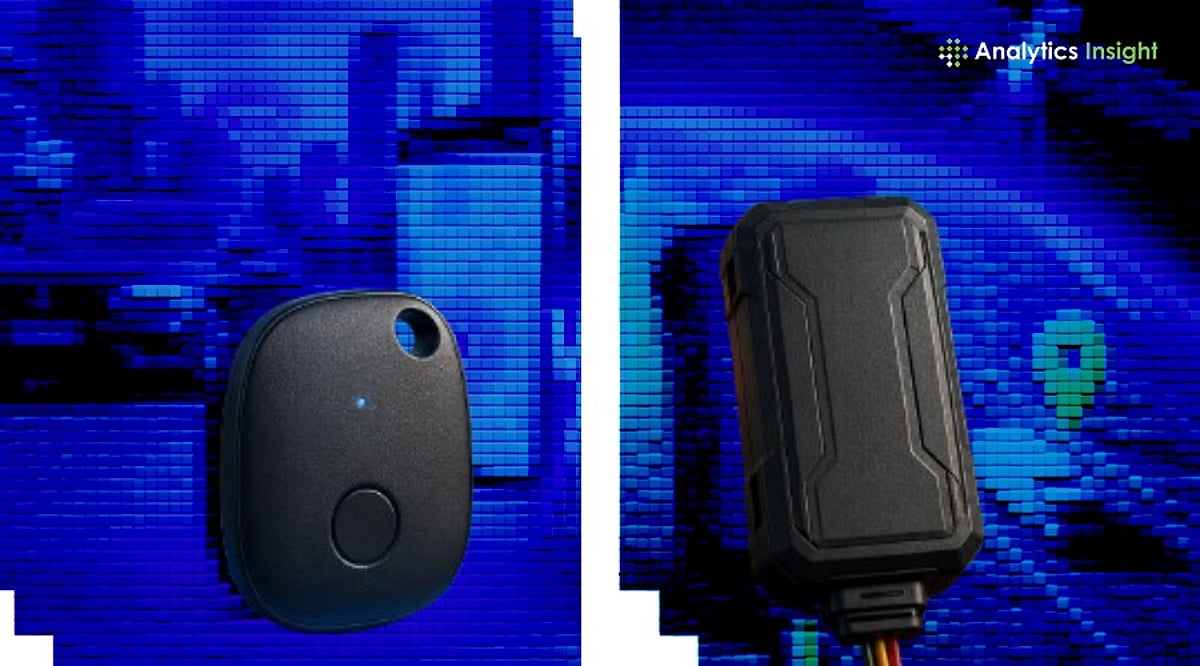
Tracking devices have become an essential part of everyday life. People rely on them to locate lost items, protect vehicles, monitor valuable assets, and enhance security. Two popular options dominate the market: smart trackers and GPS trackers. While both help you find things, their underlying technology, functionality, and ideal use cases differ significantly. This guide breaks down everything you need to know before making a purchase.
What Is a Smart Tracker?
A smart tracker is a compact device that uses Bluetooth or Ultra-Wideband (UWB) technology to help locate personal belongings. Instead of relying on satellites, it communicates with nearby smartphones or connected devices to share location data. Popular examples include Apple AirTag, Samsung Galaxy SmartTag2, and Tile trackers. Attach one to your keys, wallet, backpack, or luggage, and a companion app shows you where your item is. The global smart tracker market is projected to reach nearly $4.02 billion in 2026, with annual growth exceeding 10% as connected device usage expands.
What Is a GPS Tracker?
A GPS tracker uses the Global Positioning System (GPS) to determine an object’s precise location via satellites. It does not depend on nearby phones; instead, it sends location data through cellular networks. GPS trackers are commonly used in cars, trucks, motorcycles, delivery fleets, security systems, child safety devices, and pet monitoring. The GPS tracking market is even larger, expected to hit approximately $6.13 billion in 2026, with annual growth of over 13% through 2033, fueled by demand from transportation and security sectors.
Key Differences Between Smart Trackers and GPS Trackers
Tracking Range
Smart trackers are limited to short ranges, typically 30 to 120 meters for Bluetooth. If an item moves beyond that range, the tracker only updates when another connected device comes near. GPS trackers, by contrast, work over any distance since they connect directly to satellites. Whether your vehicle is in another city or country, you can still see its location.
Accuracy
Smart trackers with UWB technology can pinpoint a lost item with great precision, guiding you directly to it. GPS trackers typically offer accuracy between 3 and 10 meters outdoors, but performance may degrade inside buildings, underground garages, or dense urban areas. For indoor searches, smart trackers excel; for outdoor movement tracking, GPS trackers are superior.
Battery Life
Smart trackers are low-power devices. Bluetooth uses minimal energy, so many last between six months and two years before needing a battery replacement. GPS trackers consume much more power due to constant satellite and cellular communication; battery life ranges from a few days to a few months, depending on usage. If low maintenance is a priority, smart trackers are the easier choice.
Cost Considerations
Smart trackers generally require a single upfront payment with no monthly fees. GPS trackers often need a SIM card, data plan, cloud storage, or subscription services, adding recurring expenses. Over time, GPS trackers can be significantly more costly.
Best Use Cases
- Smart trackers are ideal for everyday personal items: wallets, keys, luggage, bags, and other small objects that stay within a limited range.
- GPS trackers suit larger security needs: cars, motorcycles, fleet vehicles, expensive equipment, children’s safety devices, and pets that roam over long distances.
Your choice depends entirely on what you need to protect and how far it may travel.
Latest Updates in 2026
Tracking technology continues to advance rapidly. Invoxia recently launched the GPS Tracker Pro Max, offering live location updates every second with 4G LTE-M, Wi-Fi, Bluetooth, and a nearly six-month battery life. In the smart tracker space, Urban Armor Gear released the Metropolis Tracker Card, which supports MagSafe wireless charging, reducing battery waste. Industry experts anticipate future trackers will integrate 5G, AI-driven security alerts, geofencing, and deeper smart home connectivity.
Final Thoughts
Both smart trackers and GPS trackers solve distinct problems. Smart trackers are affordable, long-lasting, and perfect for everyday items and short-range recovery. GPS trackers provide robust long-distance tracking, real-time updates, and advanced security but come with higher upfront and ongoing costs. As technology evolves, both categories are becoming smarter and more capable. Base your decision on budget, range needs, security requirements, and the type of item you want to track.
Frequently Asked Questions
- What is the main difference between a smart tracker and a GPS tracker? Smart trackers use Bluetooth or nearby devices; GPS trackers use satellites for real-time location.
- Which tracker has better battery life? Smart trackers last from six months to two years; GPS trackers last from days to months.
- Does a GPS tracker require a monthly payment? Most GPS trackers need a SIM card or subscription, leading to monthly charges.
- Can a smart tracker track a car? Smart trackers are not ideal for cars due to limited range and reliance on nearby devices.
- Which tracker is better for daily personal items? Smart trackers are better for wallets, keys, bags, and luggage.