Tag: job search

  • Top Job Search Hurdles and Proven Strategies to Overcome Them

    Top Job Search Hurdles and Proven Strategies to Overcome Them

    Finding the right job can be a difficult and time-consuming process. Candidates often face intense competition, lengthy hiring processes, and changing employer expectations. The challenges can begin with finding suitable vacancies and continue through resume screening, interviews, and repeated applications.

    Career guidance and recent research point to several common hurdles, including finding roles that match a candidate’s skills, tailoring resumes for individual applications, dealing with Applicant Tracking Systems (ATS), employment gaps, and limited professional experience.

    Finding the Right Job

    Finding an opening that fits a candidate’s skill set, qualifications, and ambitions is another hurdle when searching for employment opportunities. According to Jobscan, the 2025 State of the Job Search survey reveals that 30% of the surveyed found it difficult to find a job that matches their qualifications and skills.

    Applying to all open opportunities does not guarantee success in the job search journey. To begin with, candidates need to be aware of the type of opportunity they wish to pursue, along with the type of working conditions, responsibilities, salary expectations, and ambitions.

    There are several options for expanding one’s search beyond just job boards. Opportunities at target firms, associations, and networking within the firm can prove helpful. Networking could also reveal openings that cannot be discovered through other avenues.

    Creating a Resume that Gets Noticed

    Creating customized resumes for various job opportunities is yet another key challenge. According to Jobscan, 26% of the surveyed people viewed the need to adapt their resumes as one of the challenges. Also, 24% indicated the need to ensure their resume was compatible with Applicant Tracking Systems as one of the issues, whereas 22% faced problems with the conciseness of their resume.

    Using a master resume can help in overcoming this problem. Individuals would maintain all their experience, accomplishments, and skills in one single file and then customize the relevant information to meet the demands of particular job openings.

    In addition, using relevant keywords in their resume, which would correspond to the needs outlined in the job description, would also assist in finding relevant qualifications.

    Overcoming Limited Experience and Employment Gaps

    Limited work experience may be one of the biggest obstacles, especially for fresh graduates or those who have recently changed professions. A gap in work experience, inadequate educational background or training, and lack of references can further complicate one’s job search process. One could use their transferable skills, completed projects, training, and accomplishments to resolve such problems. In the course of the interview, a candidate should be ready to talk about his/her employment gaps but at the same time explain what he/she learned during that time.

    Professional inexperience can become an obstacle in itself especially for fresh graduates and career changers. Other obstacles include employment gaps, lack of education or training, as well as a lack of professional references.

    This can be resolved through showcasing transferable skills, relevant projects, training, and accomplishments. During the interview, candidates will have to be ready to explain their employment gap as well as the skills and experiences gained throughout the gap. Now attention can be shifted to the skills and experience that the candidate can bring to the table.

    Preparing for Interview

    Getting to the interview stage does not guarantee employment. Unpreparedness, a lack of information about the company, and an inability to answer basic questions may hinder your chances of securing employment.

    Interview preparation requires knowing the employer and the description of the job and rehearsing probable interview questions. Preparation of examples that would demonstrate your skills and experiences is also recommended.

    According to a LinkedIn survey by BrighterMonday, out of 1,878 votes, 46% voted for the actual job interview as the most difficult stage in the job-seeking process. 27% voted for preparing a good CV or cover letter, 23% voted for searching for job vacancies, and 4% chose other options.

    Staying Consistent During Long Job Search

    A long job search can also be hard. According to Jobscan, 32% of participants responded that they have been searching for a job for over six months.

    Beyond counting applications, a candidate can see whether their efforts lead to interviews, recruiter interactions, and networking. If there is no reply to applications, one may reconsider their resume or apply to other positions.

    Job search involves many trials, rejections, and uncertainties. The right strategy, including appropriate actions, may help you overcome them.

    Frequently Asked Questions

    1. What is one of the biggest challenges during a job search?

    Finding suitable roles matching your skills, qualifications, career goals and expectations can make the job search difficult and time-consuming.

    2. Why should candidates customise their resumes for different jobs?

    Customising resumes highlights relevant skills and experience while helping candidates align their applications with specific job descriptions and requirements.

    3. How can candidates address employment gaps?

    Candidates can explain employment gaps honestly while highlighting transferable skills, relevant projects, training, achievements and experience gained during that period.

    4. How can job seekers prepare better for interviews?

    Research the employer, understand the job description, practise likely questions and prepare specific examples demonstrating your skills and previous experience.

    5. What can candidates do during a prolonged job search?

    Track applications, review resumes, target suitable positions, build professional networks, develop skills and adjust strategies when applications receive limited responses.


  • Best Career Guidance Platforms for Indian Students and Professionals in 2026

    Best Career Guidance Platforms for Indian Students and Professionals in 2026

    Career decisions can influence education, income, professional growth, and long-term opportunities. Yet many students begin planning without enough information about available paths. Explore five useful career guidance websites for Indian students and professionals, covering education choices, internships, networking, counselling, skills, and job opportunities.

    National Career Service (NCS)

    The National Career Service, or NCS, is the Government of India’s career platform. It connects jobseekers, employers, counsellors, and career centres. Students can explore internships, skill courses, and career resources. Professionals can search for jobs across different sectors. NCS also provides access to career counsellors and career centres. Its platform includes employability assessments and an AI interview coach. Another important advantage is cost. NCS states that its services are free for jobseekers. It also warns users about fraudulent recruitment communications. For students seeking reliable government-backed guidance, NCS is a useful starting point.

    Careers360

    Careers360 is one of India’s largest education and career information platforms. It covers colleges, courses, entrance exams, careers, and professional programs. Its Pathfinder tool helps students explore academic options. Users provide their class, subjects, interests, and preferred stream. The platform then maps relevant courses, exams, and colleges. The website also offers college information and entrance exam resources. Students can access counselling services and community-based questions. Working professionals can explore online degrees, certifications, and specialized courses. Careers360 currently lists thousands of courses across many career domains. It is useful when education choices are still unclear.

    Internshala

    Internshala focuses heavily on internships, early careers, and skill development. It can be particularly useful for college students and recent graduates. Its platform covers opportunities across technology, finance, marketing, research, engineering, and other fields. Internshala reported more than 250,000 companies on its platform in a recent guide. It also highlights internships, virtual projects, and placement opportunities. The platform also offers career-oriented courses. These can help students develop practical skills alongside academic qualifications. For students without professional experience, internships can provide an important bridge into employment.

    LinkedIn

    LinkedIn serves a different purpose from traditional career websites. It combines professional networking, job discovery, learning, and personal branding. Students can use LinkedIn to build professional profiles early. They can showcase projects, certifications, internships, and academic achievements. Professionals can use the platform to discover vacancies and connect with recruiters. Networking can also uncover opportunities that never reach traditional job boards. LinkedIn becomes more useful when the profile clearly communicates relevant skills. Regularly sharing meaningful work can also improve professional visibility. For experienced professionals, it can function as both a job platform and career network.

    Naukri

    Naukri remains one of India’s major job-search platforms. It is especially useful for professionals actively looking for employment. Users can create profiles, upload resumes, search vacancies, and receive job alerts. Recruiters can also discover candidates through the platform. The sheer volume of listings makes Naukri useful across experience levels. However, candidates should avoid applying randomly to every available position. A focused profile can improve the relevance of job recommendations. Keywords should also match the roles being targeted. Professionals changing careers can use the platform to understand current hiring demand. Job descriptions can reveal which skills employers currently value.

    How to Choose the Right Career Website

    There is no single platform that can solve every career decision. Students may need education information before searching for jobs. NCS works well for government-backed career services and employment resources. Careers360 is stronger for education, exams, colleges, and course comparisons. Internshala can help students gain early work experience. LinkedIn is valuable for networking and professional visibility. Naukri is particularly useful for active job searches. Using two or three platforms together can produce better results. The most important step is defining your career goal first. Then choose platforms that support that specific goal.

    Career Planning is Becoming More Digital

    Career websites now offer much more than job listings. Many combine counselling, assessments, courses, networking, and personalized recommendations. This shift benefits both students and experienced professionals. However, online tools should support decisions rather than make them automatically. Students should compare courses, fees, colleges, and career outcomes carefully. Professionals should evaluate job descriptions against their actual skills. The strongest career strategy combines digital platforms with real-world research. Talking to professionals can provide context that websites cannot always provide. Career planning has become increasingly digital. The advantage belongs to people who use these tools strategically.

    FAQs

    What are the best career guidance websites for Indian students in 2026?

    Useful options include National Career Service, Careers360, and Internshala. NCS provides government-backed career and employment resources. Careers360 focuses strongly on courses, colleges, and entrance exams. Internshala is useful for internships and early work experience. Students can use more than one platform for better research.

    Is National Career Service free for jobseekers?

    Yes, the National Career Service is designed to provide employment and career-related services to jobseekers without charging them for core services. It also connects users with career centres and counsellors. Users should still be careful with unsolicited recruitment messages and verify opportunities before sharing personal information.

    Is LinkedIn useful for fresh graduates in India?

    LinkedIn can help fresh graduates build professional visibility before gaining extensive work experience. Students can highlight projects, certifications, internships, education, and relevant skills. The platform also supports networking with recruiters and professionals. A complete profile can therefore support both job discovery and long-term career development.

    Which career website is best for internships in India?

    Internshala is one of the most useful options for students and early-career candidates seeking internships. Its listings cover many industries and include different work arrangements. However, students should compare opportunities carefully. They should check responsibilities, duration, stipend, employer details, and potential learning value before applying.

    Can career websites guarantee a job or successful career?

    No career website can guarantee employment or long-term career success. These platforms provide information, opportunities, and tools, but users still need relevant skills and preparation. Candidates should verify employers, customize applications, prepare for interviews, and continue developing skills that match their target career.

  • Top Career Development Platforms for US Professionals in 2026

    Top Career Development Platforms for US Professionals in 2026

    Career growth now requires more than a polished resume. The right career website can help with skills development, job research, salary checks, professional networking, and smarter career decisions. Several platforms stand out in the US market, each serving a distinct purpose.

    LinkedIn leads as an all-around career hub, while Coursera offers structured learning for new skills and career changes. CareerOneStop provides trusted US labor data, and Indeed connects career plans with current job openings. Glassdoor adds employer and salary insights, and FlexJobs targets remote opportunities.

    LinkedIn Covers the Full Career Journey

    LinkedIn remains one of the strongest career platforms for US professionals. It combines professional profiles, networking, job search, recruiter access, and education in one place. With more than 1 billion members, professionals gain access to a vast business network.

    LinkedIn Learning adds a major educational layer, offering over 26,200 courses and more than 1,300 curated learning paths. Its role guides cover over 35 career paths, and Premium Career provides access to more than 25,000 LinkedIn Learning courses. This mix makes LinkedIn valuable for both career visibility and skill development.

    Coursera Supports Career Change and New Skills

    Coursera stands out for professionals who need structured education or a new career path. The platform offers more than 10,000 programs from universities and companies, including Google, Microsoft, Meta, and Stanford. Recent updates show a stronger focus on practical technology skills. In April 2026, Microsoft added 11 Professional Certificates across AI, data, and software development. In June 2026, Coursera expanded its micro-credential catalog with programs from Google DeepMind, Meta, Microsoft, and other partners. These courses include projects that can showcase practical skills on a resume or LinkedIn profile.

    CareerOneStop Brings US Labor Data

    CareerOneStop is funded by the US Department of Labor, making it a reliable source for labor-market information. The site covers more than 900 occupations and provides salary data, employment statistics, required skills, and education or training programs. Job seekers can use this information to align career ambitions with actual market conditions.

    Indeed Connects Skills with Job Demand

    Indeed focuses on job search, offering a large US job database that shows current employer demand. It also provides salary estimates, company reviews, job alerts, resume tools, and job matching. Professionals can search for specific job titles to see which skills appear in current vacancies, helping shape resumes and guide course choices.

    Glassdoor Helps with Salary and Employer Research

    Glassdoor provides salary details, company reviews, benefits information, and interview reports. This data helps professionals assess employers before applying or accepting offers. Salary research also sets realistic expectations, as pay levels vary across US cities, industries, and company sizes.

    FlexJobs Targets Remote Career Options

    FlexJobs is ideal for professionals seeking remote or flexible work. Its remote job data showed a 22% quarter-over-quarter rise in remote postings in Q2 2026, with notable growth in tech, engineering, and operations. FlexJobs offers a focused place to find such roles without sorting through broad job databases.

    A Strong Career Website Mix

    No single platform covers every career need equally. LinkedIn works best as an all-around career hub. Coursera suits structured skill growth and career changes. CareerOneStop offers US labor data for smarter decisions. Indeed helps with job demand, Glassdoor adds employer and salary insight, and FlexJobs serves remote-work seekers. edX and Udemy also play useful roles: edX for deeper university-level study, Udemy for targeted skills and software tools. The Muse provides career advice and company culture research.

    The strongest career strategy uses each platform for a clear purpose. Skills need proof, job plans need market data, and career moves need employer research. A focused mix of these websites can turn online career resources into a practical path toward the next professional move.

    FAQs

    1. Which is the best career development website for professionals? LinkedIn is the strongest all-around option, combining networking, job opportunities, professional profiles, recruiter access, and learning resources.
    2. Which website is best for learning new career skills? Coursera is a strong choice for structured learning, professional certificates, career changes, and programs from leading universities and companies.
    3. Where can I research US salaries and occupations? CareerOneStop provides US labor-market information, while Glassdoor offers salary data and employer insights.
    4. Which website is best for finding jobs? Indeed is particularly useful for browsing current job openings, researching demand for specific skills, setting alerts, and comparing opportunities.
    5. What is the best website for remote jobs? FlexJobs focuses specifically on remote and flexible opportunities, making it useful for professionals prioritizing location flexibility.
  • How an ATS Checker Works: A Guide to Resume Optimization for Job Seekers

    How an ATS Checker Works: A Guide to Resume Optimization for Job Seekers

    An ATS checker reviews resume structure, text, keywords, and job relevance to identify possible issues that may affect how hiring software reads and assesses an application. This diagnostic tool simulates parts of the ATS review process, helping candidates improve their resumes before submission.

    Key Takeaways

    • An ATS checker tests whether resume content remains clear and readable for hiring software.
    • Relevant job terms and skills can improve alignment with a specific job description.
    • An ATS score offers guidance, not a guarantee of recruiter review or an interview.

    What an ATS Checker Looks For

    An ATS checker first examines the text and structure of a resume. It attempts to identify key details such as the candidate’s name, contact information, job titles, employers, dates, education, skills, and certifications. Layout is critical: tables, text boxes, graphics, icons, images, headers, footers, and complex columns can hinder text extraction. A simple structure gives the parser a clearer path through the document.

    How Resume Parsing Works

    Resume parsing is the first major stage of an ATS check. The software extracts text from a resume file (often PDF or DOCX) and attempts to categorize each detail—for example, linking a job title with a company name and employment dates. Poor document structure can disrupt this process. Text inside an image may not appear in extracted content, and two-column layouts may cause words to appear in the wrong order, making a strong resume harder for a system to understand.

    How Keyword Matching Works

    After text extraction, an ATS checker compares the resume with a job description, looking for terms related to the role—technical skills, software, certifications, qualifications, job titles, and industry terms. Modern tools may use semantic matching to connect related concepts rather than relying solely on exact word matches. However, exact job terminology still holds value: if a job description asks for SQL, Tableau, data visualization, and A/B testing, a resume should mention those skills when they genuinely match the candidate’s experience.

    Why the ATS Score Can Mislead

    Many online ATS checkers assign a score from 0 to 100 covering formatting, parsing, keywords, skills, experience, and section structure. This number does not represent a universal ATS standard. Employers use different platforms, settings, screening questions, and recruitment processes. A high score does not guarantee an interview, nor does a lower score mean automatic rejection. The score is best used as a guide for finding possible weaknesses.

    AI Is Changing ATS Checks

    Artificial intelligence now plays a larger role in recruitment software. Some modern systems can assess skills, experience, and job relevance with greater detail than older keyword filters. Modern ATS checkers can inspect text structure and show what a parser extracts, and some assess semantic links between resume content and job requirements. The goal should not be to trick an ATS; instead, focus on clear facts, relevant skills, measurable results, and clean document structure.

    The Truth Behind the 75% Claim

    A common online claim states that ATS software rejects 75% of resumes before a recruiter sees them. Current research does not support that figure as a universal fact; some sources describe it as false or based on misunderstanding. A safer statement is that ATS software can filter, rank, and process applications before recruiter review, so resume structure and job relevance can affect how easily a system finds important information.

    What Makes a Resume ATS-Friendly

    A simple resume usually gives an ATS checker fewer problems. Standard sections—Professional Summary, Work Experience, Skills, Education, Certifications—create clear signals for parsing software. Important details should appear as normal text rather than inside graphics or images. Dates, job titles, company names, and responsibilities should follow a consistent format. Most importantly, resume content should honestly match the target role, showing where a skill had real use and what results that work produced.

    The Real Value of an ATS Checker

    An ATS checker cannot promise an interview. Its real value comes from three simple checks: whether a system can read the resume, whether the document contains relevant evidence for the role, and whether the layout hides important details. This makes an ATS checker less of a hiring predictor and more of a resume quality test. A clear document, relevant experience, accurate terminology, and readable structure give both software and recruiters a better view of the candidate’s actual value.

    FAQs

    1. What is an ATS checker? A tool that reviews a resume for machine readability, structure, keywords, and relevance to a target job.
    2. How does an ATS checker read a resume? It extracts resume text and identifies details such as job titles, employers, dates, skills, education, and certifications.
    3. Can an ATS checker guarantee an interview? No. It provides an estimate and cannot predict how a specific employer will assess an application.
    4. Why do resume layouts matter for ATS software? Complex columns, tables, images, text boxes, headers, and graphics can make important details harder for software to extract.
    5. Is a high ATS score enough for a strong resume? No. A useful resume also needs relevant experience, clear evidence of skills, accurate terminology, and a simple structure.
  • Master the ChatGPT Escape Prompt to Transform Your Job Search

    Master the ChatGPT Escape Prompt to Transform Your Job Search

    The ChatGPT Escape Prompt is a practical prompting technique that helps job seekers generate more thoughtful, personalized, and recruiter-friendly AI responses. This guide explains how the method works, where it adds value during the job search process, and how to use it responsibly to improve resumes, cover letters, LinkedIn profiles, and interview preparation.

    What Is the ChatGPT Escape Prompt?

    The Escape Prompt is a method that asks ChatGPT to move beyond its initial response by questioning assumptions, identifying weaknesses, or generating alternative solutions. Rather than settling for the first draft, users ask the AI to review, improve, or rethink its own answer.

    For example, instead of asking, ‘Write a resume summary for a business analyst,’ you might follow up with, ‘Review this summary like a hiring manager. Remove generic statements, highlight measurable achievements, and rewrite it to sound more authentic.’ This iterative approach often produces clearer, more relevant, and more tailored content.

    Ways the Escape Prompt Can Strengthen Your Job Search

    The biggest advantage of using the Escape Prompt is that it leads to improved quality outcomes. One can make use of the tool for improving their resume, writing custom cover letters, developing interview questions for the position, and finding weaknesses in their application.

    In addition, it is useful when it comes to the analysis of job postings. Instead of defining only the aspects of the job that one is supposed to do, one can request ChatGPT to find out the most important skills valued by the recruiter, explain some technical terms, or propose project ideas for demonstrating one’s skills.

    Best Practices for Using the Escape Prompt

    To get the best outcome from the AI program, give it plenty of context. Give it your background, your skills, the job title that you wish to apply for, and the industry you wish to join, as well as anything else you wish to mention and have included in your resume.

    It also helps to ask ChatGPT to critique its own writing. Asking questions such as ‘What might a recruiter not like about this CV?’ or ‘Can you rephrase this answer in a business-oriented manner?’ will prompt the program to do a more detailed analysis and produce something better suited to your needs.

    On the other hand, make sure to check all facts used by the program before adding them to your resume. Company names, technical details, certifications, and employment dates should be reviewed carefully to avoid errors in your application.

    Common Mistakes to Avoid

    Job applicants often fall into the trap of using AI-generated answers without checking them for accuracy. It may lead to a redundant resume, overblown claims, and inconsistency with the job description.

    A common mistake is vague prompt formulation. Asking ChatGPT to ‘write a resume’ will bring you general results, while specifying your skills and experience and giving information on your target industry will help get more beneficial outcomes. The Escape Prompt is effective only in combination with a human’s effort.

    Final Thoughts

    ChatGPT Escape Prompt does not provide an easy way out for securing a job position; it can prove to be an effective tool that can enhance the quality of your job-searching process. By fostering better analysis and making you write more personalized responses, the ChatGPT Escape Prompt enables you to prepare better CVs, cover letters, and better interview preparation.

    For professionals competing in a fast-changing job market, combining AI with your own experience, achievements, and critical thinking can make applications more compelling. Used responsibly, the Escape Prompt transforms ChatGPT from a simple writing assistant into a practical career companion that supports smarter, more effective job search decisions.

  • Web Developer Resume Templates for Freshers: Must-Have Sections and Design Tips

    Web Developer Resume Templates for Freshers: Must-Have Sections and Design Tips

    Starting your career as a web developer? Your resume is your first chance to make a strong impression on recruiters. Here are the essential elements every fresher should include in a web developer resume template.

    ATS-Friendly Format

    Use a clean, single-column layout with standard fonts and headings. This improves compatibility with applicant tracking systems (ATS) and ensures easy reading by recruiters.

    Professional Summary

    Write a concise summary that highlights your technical skills, career goals, and enthusiasm for web development. A strong opening creates a compelling first impression.

    Technical Skills Section

    Showcase programming languages, frameworks, tools, and databases such as HTML, CSS, JavaScript, React, Git, and SQL. Organize them into clear categories for quick scanning.

    Project Showcase

    Include academic, freelance, or personal projects. For each, list the technologies used, objectives, and measurable outcomes. This demonstrates practical web development expertise effectively.

    Education Details

    Mention your degree, institution, graduation year, CGPA, and relevant coursework. This establishes your academic background and technical foundation.

    Certifications

    List industry-recognized certifications from trusted platforms. They validate your knowledge and show commitment to continuous learning.

    Internship Experience

    Highlight internships with responsibilities, technologies used, and achievements. Even limited professional experience can showcase your readiness for the workplace.

    Portfolio Links

    Add links to your GitHub, LinkedIn, and personal portfolio website. This allows recruiters to review your code quality and completed projects.

    Simple Visual Design

    Choose a professional template with balanced spacing, readable fonts, and subtle colors. The design should enhance readability without distracting from your qualifications.

    By including these elements, freshers can create a resume that stands out to both automated systems and human recruiters.

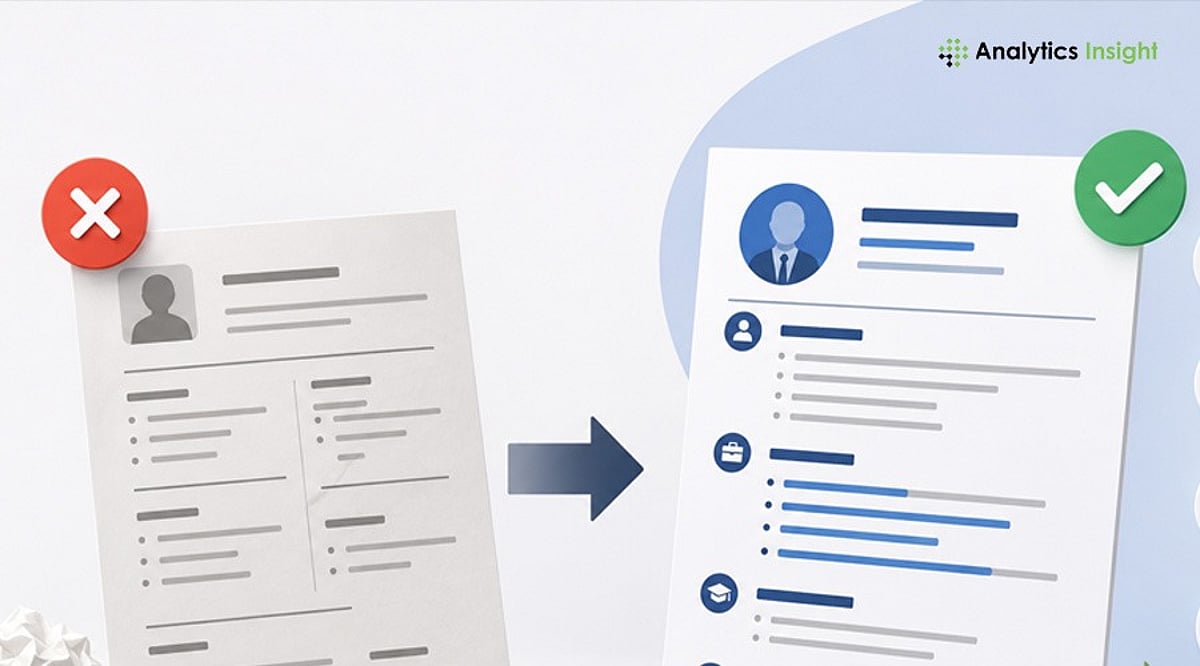
  • Revamp Your Weak Resume: Top Mistakes Recruiters Spot and How to Fix Them

    Revamp Your Weak Resume: Top Mistakes Recruiters Spot and How to Fix Them

    A strong resume is more than a career summary—it is a marketing tool. In today’s competitive job market, even qualified candidates are overlooked because of a weak resume. Recruiters spend as little as 10 seconds scanning your resume before deciding. And with Applicant Tracking Systems (ATS) screening most applications, poor formatting, vague descriptions, or missing keywords can cost you an interview. This guide walks you through the most common resume mistakes, practical fixes, and ATS-friendly strategies to help you stand out.

    Overview

    • Discover common resume mistakes recruiters instantly notice, along with practical solutions to fix them effectively.
    • Learn ATS-friendly formatting techniques to improve resume visibility in automated recruitment screening.
    • Showcase measurable achievements, relevant skills, and tailored content to increase interview opportunities significantly.

    Top Three Mistakes People Make While Job Seeking

    The first mistake is sending the same generic resume to every employer. While convenient, it rarely includes the keywords and skills required by each job description. ATS measures how well your resume matches the posting.

    Another common error is treating your resume like a job description—listing responsibilities such as “managed a team” or “answered client questions” without showing real achievements or results. Recruiters want evidence that you can deliver outcomes.

    Why Formatting Deserves More Attention

    A good-looking resume isn’t always effective. Overly designed templates with images, icons, tables, or text boxes can confuse ATS software, causing it to skip critical information. Stick with a clean, well-organized layout.

    Follow these formatting rules:

    • Use standard section headings like Work Experience, Skills, and Education.
    • Use a single font style throughout.
    • Avoid headers or footers for contact details.
    • Use bullet points instead of long paragraphs.
    • Upload your resume in the requested file format.

    Achievements Speak Louder Than Responsibilities

    Replace task-oriented statements with achievement-oriented ones. Numbers add context and credibility. For example:

    Instead of: “Accountable for managing social media accounts.”
    Write: “Increased social media engagement rate by 42% within six months.”

    Specify the time or effort saved wherever possible. This helps recruiters gauge your potential impact.

    Tailor Every Application

    Tailoring your resume is no longer optional. Study each job posting to identify required skills, certifications, and experience. Include relevant keywords naturally—overstuffing can trigger red flags even with sophisticated ATS.

    Small Details Make a Big Difference

    Spelling errors, incorrect dates, poor formatting, and overused buzzwords like “excellent” or “outstanding” without evidence can derail an otherwise strong application. Use clear, concise language and strong action verbs such as Led, Developed, Implemented, Designed, and Delivered. Avoid passive phrases like “Responsible for.”

    Quick Fixes That Instantly Strengthen a Resume

    Before submitting, ensure your resume:

    • Aligns with the specific job description.
    • Includes accomplishments wherever possible.
    • Has an ATS-friendly format.
    • Highlights relevant skills.
    • Features a professional summary (not a long objective).
    • Is free of grammar and spelling mistakes.
    • Does not contain unnecessary or outdated information.

    Bottom Line

    A poorly written resume doesn’t mean a weak candidate—it often means the candidate hasn’t presented their achievements, skills, and career path in a way that resonates with recruiters. With ATS screening resumes before they reach human eyes, your resume must do more than list past jobs. Treat it as a marketing tool that highlights your value and the achievements you can bring to a prospective employer.

    Frequently Asked Questions

    1. Why is an ATS-friendly resume important?

    An ATS-friendly resume improves visibility during automated screenings, increasing your chances of reaching recruiters and securing interviews.

    2. How long should a resume ideally be?

    Most professionals should aim for one page. Experienced candidates may use two pages if the additional achievements justify the length.

    3. Should I customize my resume for every job application?

    Yes. Tailoring your resume with relevant keywords and skills improves ATS rankings and shows alignment with the role.

    4. What should I include instead of listing job responsibilities?

    Focus on measurable achievements, quantifiable results, and business impact. Use action verbs to demonstrate value.

    5. How often should I update my resume?

    Update every six months or after significant achievements, certifications, promotions, or role changes to keep it competitive.