
Tag: jobs

  • The Future of Work in the AI Era: Masai School’s Pratik Shukla on Jobs, Education, and Continuous Learning

    The Future of Work in the AI Era: Masai School’s Pratik Shukla on Jobs, Education, and Continuous Learning

    In a recent episode of the Analytics Insight podcast, Priya Dialani interviewed Pratik Shukla, founder and CEO of Masai School, to discuss the transformative impact of AI on the workforce, education, and the necessity of continuous learning. Shukla shared his journey from IIT Kanpur and real estate to founding an outcome-driven education platform, and offered insights on how individuals and institutions can prepare for an AI-driven future.

    How AI Will Reshape the Workforce

    Shukla believes that AI will not simply replace people but will change the tasks within existing roles. Job titles may remain, but job descriptions could evolve significantly. He emphasizes the importance of learning to work with machines rather than fearing replacement. In the future, humans will focus on the ‘why’ and ‘when,’ while AI handles the ‘how.’

    The Importance of Continuous Learning

    Continuous learning is critical as technology evolves rapidly. Shukla argues that the ability to learn is more valuable than any single technical skill. Professionals need to stay curious and aware of changes, even if they don’t master every new tool. A degree may have a shelf life, but the capacity to learn does not.

    Preparing Students for AI Careers

    Educational institutions must overhaul their approach, moving away from rote learning toward problem-solving, critical thinking, and adaptability. Students need strong fundamentals, soft skills, and the ability to handle uncertainty. They should be prepared for jobs that may not yet exist.

    New Career Opportunities from AI

    While specific future roles are unpredictable, Shukla is confident that AI will create new job categories, as every technological revolution has done. The key is to stay informed and embrace new opportunities as they arise.

    Advice for Mid-Career Professionals

    Mid-career professionals should start small by integrating AI into their work gradually. They don’t need to become experts overnight. By combining existing expertise with AI capabilities, they can remain relevant without starting over.

    Listen to the full discussion on the Analytics Insight Podcast.
  • World Bank Report: India Faces Lower AI Job Disruption Risk Compared to Wealthier Nations

    World Bank Report: India Faces Lower AI Job Disruption Risk Compared to Wealthier Nations

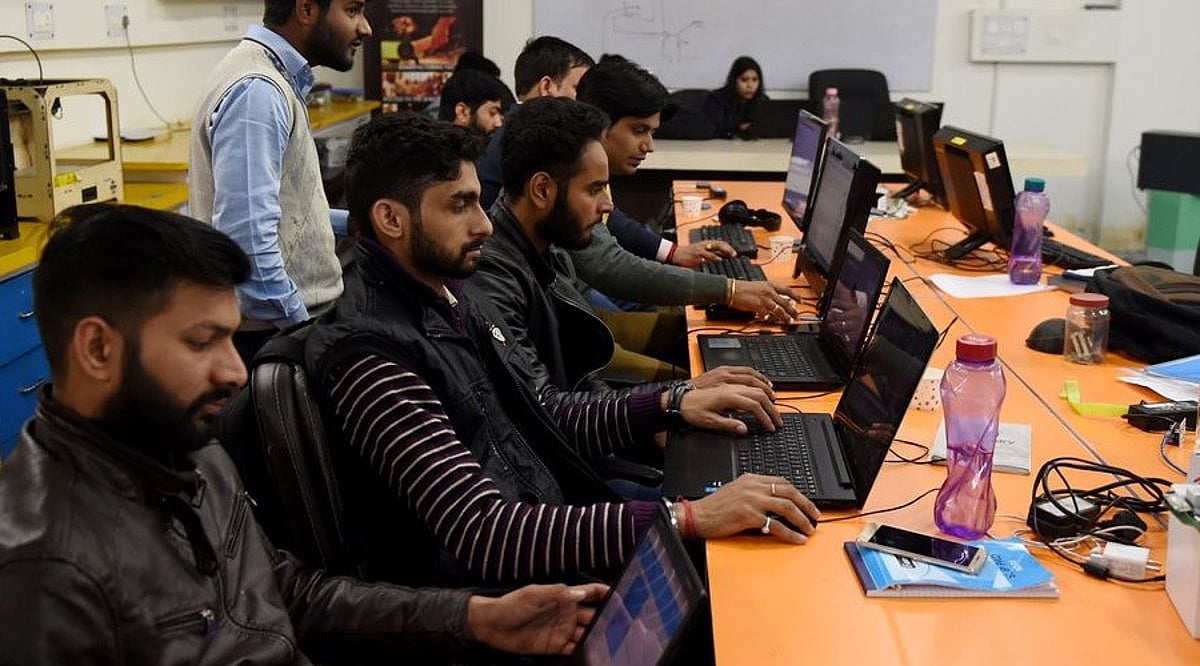
    India has less to fear from artificial intelligence than richer countries, according to a new World Bank report released in 2026. The report examines how AI could affect jobs worldwide and finds that developing nations face lower automation risks while potentially reaping productivity gains.

    The World Bank estimates that only 4.5% of jobs in low- and middle-income countries are at high risk of being automated by AI. In contrast, that figure rises to 14.2% in high-income countries, indicating greater job pressure in wealthier economies. The report also notes that AI could improve productivity in 16.2% of jobs across developing economies.

    “AI has thrown developing economies a lifeline, and they should seize it,” said Indermit Gill, the World Bank’s chief economist. Gill emphasized that smaller, locally adapted AI tools could enhance healthcare, education, agriculture, and public services.

    In India, AI could help farmers with crop advice and weather information. Healthcare workers could use AI tools to support medical checks in rural areas. Schools and government offices could leverage AI for learning and public service delivery.

    However, the report warns that India still faces risks in call centers, outsourcing, and entry-level technology jobs where AI could replace routine tasks.

    The World Bank recommends that countries first deploy existing AI tools and customize them for local needs. Advanced AI development can follow once basic digital infrastructure and skills are strengthened.

    To fully benefit from AI, India needs better electricity, internet access, skilled workers, useful data, and strong institutions. Building these foundations could help AI create widespread benefits without increasing inequality.

  • SK Hynix Plans $28B US Listing, Rivage Secures €1.5M, and More Top Tech News

    SK Hynix Plans $28B US Listing, Rivage Secures €1.5M, and More Top Tech News

    Good morning, tech fam; here are some quick tech updates for you to catch up on!

    What’s New Today

    SK Hynix is planning a $28 billion US listing to expand AI chip production and strengthen its global semiconductor business.

    Fast-Track Insights

    French proptech startup Rivage has raised €1.5 million to scale its AI-powered rental management platform across France and Germany.

    Here’s a quick rundown of the biggest tech headlines making waves today. Let’s dive into the day’s top tech stories, from SK Hynix’s massive US listing plans to South Africa’s proposed crypto tax guidance.


    SK Hynix Launches $28 Billion Nasdaq Listing to Capitalize on AI Boom

    South Korea’s SK Hynix is launching a $28 billion Nasdaq listing through depositary receipts, aiming to benefit from booming global AI demand. The AI memory chip leader plans to use the proceeds for expanding semiconductor production, strengthening its global presence, and supporting South Korea’s broader AI and chip investment strategy.


    Rivage Raises €1.5M to Scale AI Rental Management Platform Across Europe

    Paris-based proptech startup Rivage has secured €1.5 million in funding led by Kima Ventures to expand its AI-powered rental management software. The platform automates accounting, billing, and property workflows for real estate agencies. Rivage aims to accelerate growth in France, expand into Germany, and reach €5 million in annual recurring revenue by 2027.


    Malaysia Focuses on Better Jobs and AI Hiring

    Malaysia is changing its job strategy by focusing on better jobs instead of just creating more jobs. The government is using AI to help people find the right jobs through the MYFutureJobs platform. It also aims to improve workers’ skills, increase salaries, and prepare the workforce for future industries.


    Best AI Agent Frameworks for Building High-Performance Agents

    This article explains some of the best AI agent frameworks that help developers create smart AI agents more easily. It compares their features, ease of use, and performance. The guide also shows how the right framework can save time, improve efficiency, and support simple as well as large AI projects.


    South Africa Proposes Draft Crypto Tax Guidance Under Existing Laws

    South Africa’s Revenue Service (SARS) has released draft guidance explaining how existing income tax and capital gains tax rules apply to crypto assets. The proposal treats most crypto transactions as taxable events, depending on individual circumstances, and invites public feedback until August 31 before finalizing the guidance.

  • MIT Forum Explores How AI Reshapes Jobs, Democracy, and Society

    MIT Forum Explores How AI Reshapes Jobs, Democracy, and Society

    At the AI and Society Forum held at MIT, leading researchers from across the Institute gathered to examine the profound ways artificial intelligence is influencing employment, democratic processes, and the very fabric of society. Co-organized by the School of Humanities, Arts, and Social Sciences (SHASS) and the Social and Ethical Responsibilities of Computing (SERC), the event featured keynote talks, panel discussions, and even a musical performance blending generative AI with live instrumentation.

    AI and the Future of Work

    Economist David Autor challenged the widespread fear that AI will simply eliminate jobs. Instead, he argued that the technology’s impact hinges on how it alters the scarcity and value of human expertise. “When I think about how technology interacts with the value of labor, I think about it in terms of how it changes the scarcity of expertise, whether it makes it more valuable or whether it makes it more of a commodity,” Autor said. He emphasized that proactive policies—like worker training, wage insurance, and broader capital ownership—are essential to navigate the coming changes.

    During a panel moderated by Rob Loughlin of McKinsey & Company, MIT experts explored the changing nature of work. Daniela Rus, director of CSAIL, envisioned AI as a collaborative assistant: “I’d like to imagine the robot as your friend and assistant… but the role of the human as the decider, as the person with good judgment, remains super important.” David Mindell added that history shows work constantly evolves, and the key is to “constantly be creating the new work.” Sendhil Mullainathan cautioned that while AI offers productivity gains, long-term growth requires careful differentiation, and we are entering a period of high variance in workforce restructuring.

    Democracy and AI

    The second session turned to AI’s impact on democratic institutions. Chara Podimata of MIT Sloan presented research auditing large language models for bias in election information. Her study of 12 major models during the 2024 U.S. presidential election revealed that responses varied dramatically based on users’ stated demographics and political leanings. A new audit is planned for the 2026 midterms.

    In a panel moderated by Songyee Yoon, experts voiced both concerns and cautious optimism. Bailey Flanigan warned that automating decision-making could strip away the procedural rituals essential to democracy. Charles Stewart III highlighted the risk of AI-induced chaos in elections, noting that “if an election is called into question, that can lead to violence.” Lily Tsai argued that AI designers must embed democratic values such as agency, equality, and mutual respect. She shared a promising example: a Socratic dialogue chatbot that helps people articulate their beliefs, which actually moderated their policy positions.

    A Call for Interdisciplinary Action

    In his opening remarks, SHASS Dean Agustín Rayo stressed that “paying attention to the societal consequences of AI is not a departure from MIT’s mission; it’s a way of ensuring that our technical leadership has maximum impact.” Dan Huttenlocher, dean of the MIT Schwarzman College of Computing, echoed the need for interdisciplinary research to avoid overreliance and unintended consequences. The forum made clear that as AI continues to advance, understanding its societal impacts is as critical as the technology itself.