Tag: Kubernetes

  • Best Container Security Tools for Enterprises in 2026: Cutting Through Tool Sprawl

    Best Container Security Tools for Enterprises in 2026: Cutting Through Tool Sprawl

    Container adoption keeps climbing, and so does the pile of tools meant to secure it. For enterprises heading into 2026, the real work isn’t buying more security software. It’s figuring out which tools actually talk to each other.

    Anyone who has sat through a security review knows the drill. Twelve dashboards, three different definitions of “critical,” and a team quietly wondering if any of it is actually catching threats. That’s the strange paradox of container security right now. The tools are supposed to make things safer, but too many of them just add noise.

    The mounting pressure on enterprise security teams

    Containers were supposed to make deployment faster and cleaner. In practice, the security layer wrapped around them has become its own tangled mess. According to Red Hat’s State of Cloud Native Security Report, 97% of organizations dealt with at least one cloud-native security incident in the past year. And 74% said security concerns had slowed or delayed their application deployments.

    A Kubernetes-focused version of that same research showed similar strain. Sixty-seven percent of teams reported delays, and 46% cited actual revenue or customer losses tied to security incidents. These aren’t abstract numbers on a slide somewhere. They translate into missed deals, burned-out engineers, and competitors who moved faster because their stack wasn’t fighting itself.

    Vendors have taken notice of this pattern too. Risk mapping platforms such as Orca Security have drawn attention precisely because they tackle this fragmentation head-on, connecting misconfigurations, identity risks, and lateral movement instead of leaving teams to piece it together manually.

    The State of Cloud Security Report 2025, put together by Palo Alto Networks, adds another layer. The average organization juggles 17 cloud security tools from five different vendors. That’s not a security strategy, that’s a subscription problem. Unsurprisingly, 97% of respondents said they want to consolidate their cloud security footprint, and 89% think cloud security and operations need to merge into one function.

    A separate study, Splunk’s State of Security 2025, puts a finer point on the daily grind. Nearly half of security teams said they spend more time maintaining tools than actually defending against threats, and 78% described their toolset as scattered and disconnected. Stacking more tools on top of each other doesn’t automatically mean better protection. If those tools can’t share context or agree on what matters, you’ve just built a more expensive version of the same blind spot.

    Platforms built for context and speed

    This is roughly where unified platforms start to make sense, and where a lot of security leads are putting their attention these days. Take the risk mapping approach mentioned earlier. These platforms map risk across code, cloud, runtime, and increasingly AI workloads, without deploying agents everywhere. Instead of forcing a human to mentally connect a misconfiguration in one dashboard to an identity risk in another, the platform does that correlation itself. What’s left is the stuff that’s actually exploitable, not a pile of theoretical maybes.

    A report from Sysdig, the Cloud-Native Security and Usage Report, explains why speed matters so much here. Attacks in cloud-native environments can go from initial compromise to data exfiltration in under 10 minutes. Meanwhile, 60% of containers live for a minute or less before they spin down, and machine identities now outnumber human ones by a wide margin, often carrying more risk too. Traditional remediation, the kind that relies on a person reading an alert and waiting for someone to patch something, simply can’t keep pace. By the time a human notices, the container that caused the problem might not even exist anymore.

    What consolidated platforms offer is fairly straightforward. Less alert volume, faster fixes, and fewer overlapping tools cluttering the environment, replaced by one view that security and development teams can both use without translating for each other.

    Hallmarks of platforms that cut through the noise

    Not every platform claiming to solve tool sprawl actually does. The ones that hold up tend to share a few traits worth watching for:

    • Context-aware prioritization. Separating theoretical vulnerabilities from ones reachable through a real attack path, often cutting alert volume dramatically.
    • Workflow integration that doesn’t fight your existing setup. CI/CD pipelines, ticketing systems, SIEM tools all need to plug in without forcing a team to relearn how it works.
    • Fast visibility. Full inventory and risk scoring within hours of connecting an account, not weeks of onboarding.
    • Built-in handling for dynamic environments. Ephemeral workloads, short-lived containers, and now AI components too.

    These are direct answers to the fragmentation that multiple industry reports have documented separately, yet somehow arrived at the same conclusion. Teams stop babysitting dashboards and start acting on what the data tells them.

    Tying security into automated development workflows

    None of this works if security still shows up late, right before a release, playing gatekeeper. Getting container security right means baking automation into development from the start, not bolting it on at the end. A deep-dive from Analytics Insight, covering top-rated DevOps automation tools for growing startups, makes a similar point, noting that managing Docker and Kubernetes environments at scale requires automated workflows that catch human error before it reaches production. Fair observation, and one that applies well beyond startups.

    When security insight flows through the pipeline, flagging issues early and enforcing policy automatically, teams sidestep the late-stage bottlenecks that cause deployment delays in the first place. Security stops being the department that says no at the worst possible moment. It becomes part of how things get built, quietly, in the background.

    Consolidation as a strategic edge

    The direction of travel from 2025 into 2026 is hard to miss. Enterprises that keep bolting on new tools without solving integration and prioritization will keep paying for it, in rising costs, persistent blind spots, and cloud investments that take too long to show value. Organizations embracing context-rich, consolidated platforms instead are seeing less fatigue, quicker response times, and more room to focus on building things rather than defending them.

    Most security leads have felt this tension firsthand. The scanner count keeps growing, and somehow the basic question, “are we actually exposed right now,” still doesn’t have a clean answer. The organizations pulling ahead have stopped treating tooling as a shopping list and started treating it as a system that either works together or doesn’t. Evaluating platforms on unified visibility, reachability analysis, and workflow integration isn’t a future nice-to-have anymore. It’s becoming the baseline for running containerized operations at any serious scale, and the enterprises that thrive will be the ones that simplify without sacrificing depth.

  • What Happens in One Second in the Cloud: The Invisible Infrastructure Powering the Internet

    What Happens in One Second in the Cloud: The Invisible Infrastructure Powering the Internet

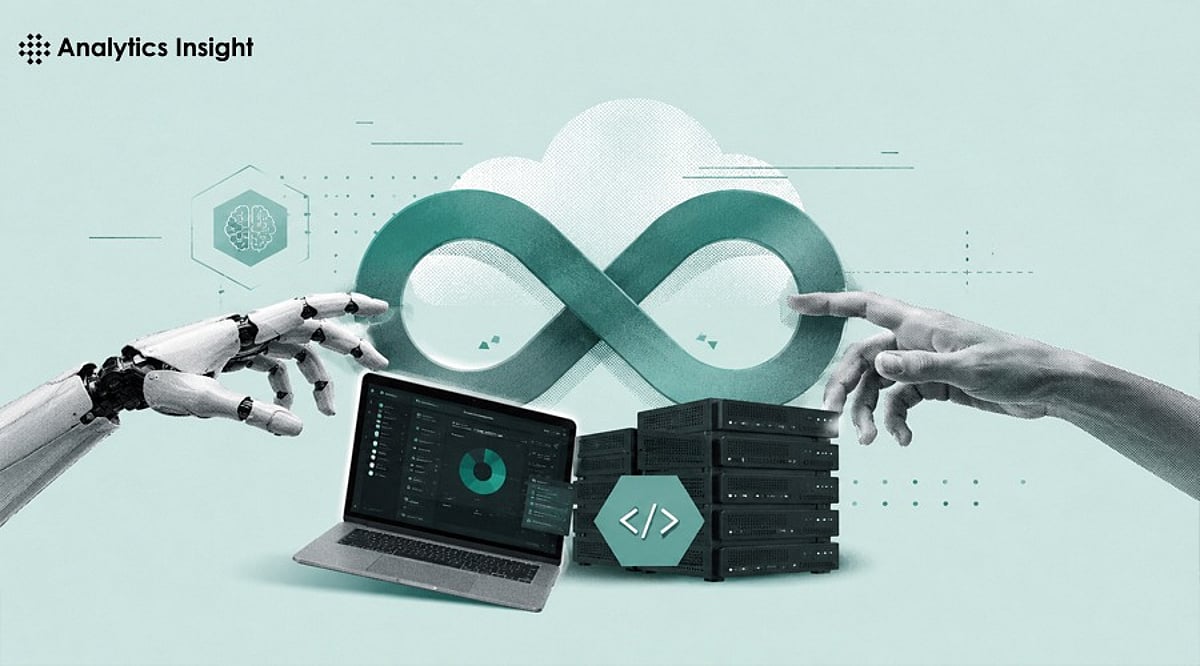
    Every second, billions of digital interactions rely on cloud infrastructure that spans data centers, fiber-optic networks, and edge computing facilities worldwide. This article explores what happens behind the scenes, how cloud platforms process massive workloads, why latency and energy consumption matter, and why the cloud has become the invisible backbone of the modern internet.

    The Scale of a Single Second

    When you tap a button on your phone and a video loads, a payment clears, or a map recalculates your route, the experience feels effortless. But behind that instant response, the global cloud infrastructure executes hundreds of millions of operations across server farms, fiber networks, and data centers spanning multiple continents. Amazon’s AWS processes roughly 100 million API calls every second. Google answers approximately 99,000 search queries in the same window. Microsoft Azure handles tens of thousands of authentication requests per second. Across the global internet, more than 3.5 million gigabytes of data are transmitted every minute, according to Domo’s 2025 Data Never Sleeps report.

    What the Cloud Actually Is

    The cloud is a global network of physical data centers—enormous buildings filled with racks of servers, storage hardware, and networking equipment. Amazon Web Services, Microsoft Azure, and Google Cloud operate facilities on every inhabited continent. These are not abstract digital spaces; they are physical structures that consume vast amounts of electricity, require continuous cooling, and are staffed around the clock by engineers.

    The Infrastructure Behind the Magic

    At the physical layer, submarine fiber-optic cables carry data between continents at the speed of light, connecting data centers through a network of cables stretching more than 1.3 million kilometers across the ocean floor. At the software layer, virtualization technology allows a single physical server to run hundreds of isolated virtual machines simultaneously. Container platforms like Kubernetes orchestrate millions of software instances across thousands of servers, automatically redistributing load when traffic spikes and routing around failures before users notice.

    The Latency Problem

    Every millisecond of distance between a user and the server handling their request adds delay. For a video call or an online game, even 50 milliseconds of additional latency is perceptible. Cloud providers build edge computing infrastructure—smaller, geographically distributed data centers positioned closer to population centers—to handle latency-sensitive applications locally. The global cloud is a nested hierarchy of facilities at different scales, each optimized for a different balance of capacity, cost, and proximity.

    The Energy Reality

    Global data centers consumed approximately 415 terawatt-hours of electricity in 2025, roughly 1.5% of total global electricity consumption, according to the International Energy Agency. That figure is growing rapidly as AI workloads intensify computational demands. A single large language model training run can consume as much electricity as several hundred households use in a year. Major cloud providers have made significant commitments to renewable energy, but the absolute energy consumption of the cloud continues to climb even as efficiency improves.

    Why This Matters

    Understanding that the cloud is a physical, energy-consuming, globally distributed system changes how we think about data sovereignty, the companies that hold the infrastructure on which economies depend, the impact of a single provider outage, and the environmental footprint of increasingly compute-intensive applications. The hidden engine behind the internet isn’t hidden because it is small—it is hidden because it is so large, so reliable, and so seamlessly woven into daily life that it has become invisible.

  • AI Startup MyDecisive Raises $12M Seed Funding and Unveils Open-Source Observability Platform SmartHub

    AI Startup MyDecisive Raises $12M Seed Funding and Unveils Open-Source Observability Platform SmartHub

    AI DevOps startup MyDecisive has emerged from stealth with $12 million in seed funding and the launch of SmartHub, an open-source observability platform designed to help enterprises manage telemetry data more efficiently while reducing cloud costs.

    Founded by enterprise software veteran Ari Zilka, MyDecisive is taking a different approach in the crowded observability market. Instead of forwarding every log, metric, and trace to external monitoring platforms, SmartHub processes data closer to where applications run. This allows engineering teams to filter, secure, and route telemetry before it leaves their infrastructure.

    Open-Source Platform Targets Rising Observability Costs

    SmartHub is built on Kubernetes, OpenTelemetry, and Prometheus. It supports log processing, trace sampling, runtime controls, and automated workflows that help teams monitor applications without moving unnecessary data across cloud environments. As AI workloads grow, enterprises are generating more telemetry than ever. MyDecisive argues that processing data at the edge reduces storage requirements, lowers cloud spending, and speeds up operational decisions. The platform is fully open-source, allowing developers to deploy and customize it without being locked into a proprietary ecosystem.

    Octant Adds Enterprise Capabilities

    Alongside SmartHub, MyDecisive introduced Octant, its commercial platform for enterprise customers. Octant adds governance, security, automated runbooks, anomaly detection, and cloud auto-scaling on top of the open-source foundation. The company claims the combined platform can cut production operating costs by up to 90% and can be deployed within a day—estimates that have not been independently verified.

    Fresh Capital to Support Expansion

    Copper Sky Capital led the $12 million seed round. The funding will be used to expand product development and grow the company’s enterprise business. Zilka, who previously founded Terracotta and served as CTO at Hortonworks, emphasized that enterprises need platforms that can process operational data where it is created rather than sending everything to centralized observability tools.

    MyDecisive says its platform is already being used across sectors including financial services, healthcare, retail, and telecommunications. As enterprises expand AI deployments, the startup is positioning SmartHub as an open-source alternative for organizations looking to improve observability while keeping infrastructure costs under control.

  • The Architect Behind Enterprise Platforms: A Conversation on Scaling, Quality, and AI in Software Engineering

    The Architect Behind Enterprise Platforms: A Conversation on Scaling, Quality, and AI in Software Engineering

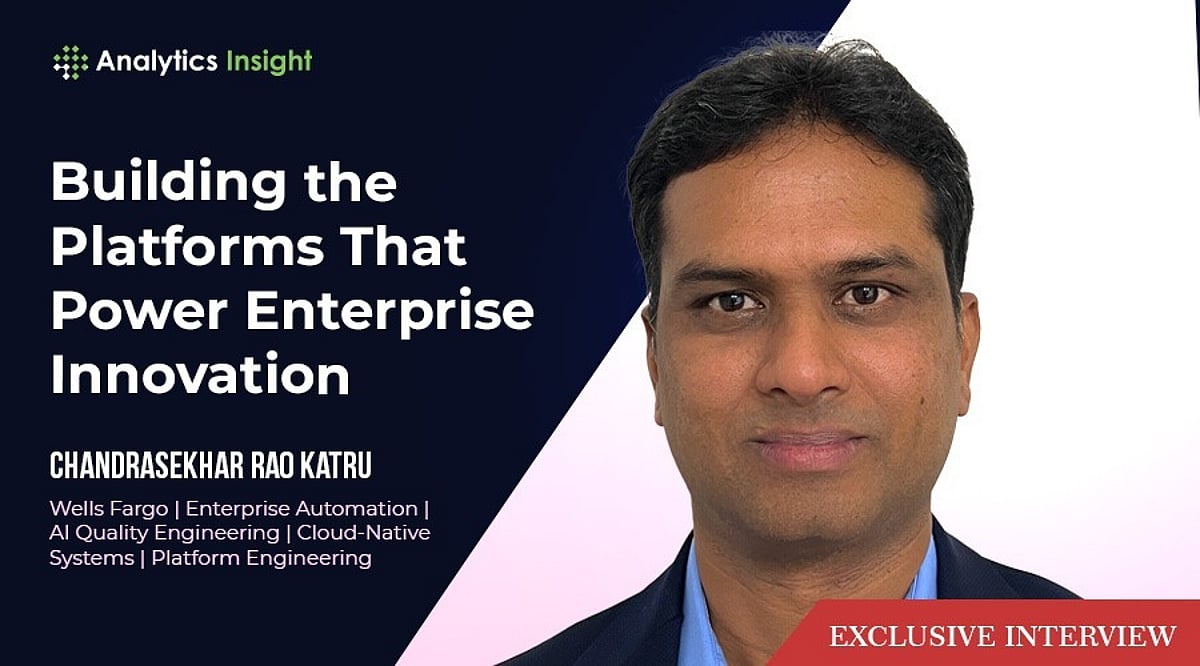
    In this interview, Chandrasekhar, a seasoned software and platform engineering leader with nearly two decades of experience, shares his journey from building telecommunications billing systems to designing the infrastructure that powers one of America’s largest banks. He discusses the principles that have guided his work, the challenges of building platforms at scale, and how he integrates AI into quality engineering while maintaining compliance in regulated environments.

    Q: Could you briefly introduce yourself and share your journey into software engineering and platform engineering?

    A: I started as a Java developer in telecommunications, writing billing systems for British Telecom. That environment is unforgiving—processing errors have direct financial consequences for customers, so correctness at the design stage is not optional.

    What pulled me toward platform engineering was a pattern I kept seeing across every organization I worked in: teams solving the same infrastructure problems in isolation, building their own tooling, making the same avoidable mistakes. The London 2012 Olympics work sharpened this. When systems serve a global audience simultaneously, the shared infrastructure underneath the application matters as much as the application itself. I started building for that layer deliberately. Twenty years on, that is still the core of what I do.

    Q: Over the past two decades, what have been the most significant lessons you’ve learned from building enterprise-scale software systems?

    A: The first is that what works for one team breaks at fifty. Scale does not give you more of the same problems—it surfaces assumptions nobody noticed they had made. Decisions that felt reasonable in year one become liabilities in year five, and the engineers who made them are often long gone.

    The second came from Weight Watchers. The SmartPoints algorithm touched millions of daily decisions about what people ate. A subtle error there was not a software bug; it was a public health issue. I carry that framing into financial services. The downstream consequences of a bad deployment are real and human, and that changes how seriously you take the platform work upstream of every release.

    The third is harder to articulate but matters as much: staying longer than is fashionable. The full lifecycle of a platform—design, adoption, scaling, failure, recovery, evolution—takes years to live through. I have seen that arc on more than one system and it has fundamentally changed how I build.

    Q: You developed an automation framework that became the standard across thousands of projects at a major financial institution. What problem were you trying to solve and what impact has it delivered?

    A: The core problem was that quality had no common language across the organization. Teams were running inconsistent configurations, different frameworks, different data strategies, different reporting formats. You could not compare quality signals across teams because the signals themselves were incompatible. Leadership had no reliable picture of delivery health at the portfolio level.

    I redesigned the framework by embedding it directly into CI/CD pipelines, ensuring that any team capable of executing a build could also execute automation. I also rebuilt the entire test result structure throughout so that logging and failure reporting would be consistent regardless of which team or application was running the tests. The impact is measurable: the framework now operates as the standard across more than 2,500 enterprise projects, quality gates are automated rather than manually enforced, and the duplicated infrastructure investment across teams has been largely eliminated.

    Q: How do you ensure software quality and governance across an organization with tens of thousands of engineers without slowing down innovation?

    A: The honest answer is that speed and governance only conflict when governance is badly designed. I have been on both sides of that. I have watched teams grind to a halt because every release needed a manual sign-off from three people. I have also built systems where compliance happened automatically and nobody had to slow down to think about it.

    What I did was embed the quality checks directly into the pipeline so they run without anyone asking them to. Tests fire automatically. Policy gates trigger automatically. Audit records get created automatically. When doing the right thing is also the fastest thing, engineers just do it. It is a design decision I made deliberately. The governance is still there—it just does not require a human in the loop at every step. In a bank that ships software every day, that is the only way it works in practice.

    Q: Can you tell us about the cloud-native execution platform you’ve built and the challenges of operating it at such a large scale?

    A: When I took on this problem, teams were running tests on static infrastructure and execution time was a significant bottleneck. Test suites had grown to the point where sequential execution was taking hours. By then automated testing stops serving its purpose—the feedback arrives after the team has already moved on and the value is lost.

    I built the platform on Kubernetes so workloads run in parallel across containerized environments. In a regulated bank, though, making execution fast is only part of the problem. It also has to be auditable, and those two requirements pull in opposite directions. I originally built on AKS for orchestration, autoscaling and Azure-native integration. I am now expanding it with OpenShift support, which adds image signing, namespace isolation and role-based access controls that compliance teams require and that can be independently verified across environments.

    The numbers reflect what that shift produced. The platform now executes over 137,000 validation jobs and approximately 875,000 automated tests within a thirty-day period, with an average execution time of around 26 minutes. Jobs that previously took hours now finish in under half an hour. But throughput is not the metric I care most about. It results in trustworthiness. Teams have to be able to act on what the platform tells them and that requires a level of reliability that does not happen by accident.

    Q: What role is AI playing in modern quality engineering and how are financial institutions leveraging it to improve software delivery?

    A: I have applied AI to strengthen the automation systems I built, while preserving the control and audit mechanisms that regulated environments require. I introduced a GenAI-based approach to extend automation coverage to approximately 800 applications that previously had none, generating tests calibrated to each application’s complexity and integrating them automatically into the test execution platform.

    I built predictive models into automation workflows that surfaced failure patterns and dependency behavior under load that manual review would have missed. In one instance, a predictive model I built identified a dependency timing issue across seemingly unrelated failures, which significantly reduced investigation time and helped teams reach the root cause faster. But I did not automate decisions based on those outputs. In a regulated environment the model provides insight—the decisions and audit trails remain under human control. The capability is real; the implementation has to be redesigned around compliance requirements before it can run in production.

    Q: As organizations continue their cloud transformation journeys, what are the biggest mistakes you see teams making when adopting cloud-native technologies?

    A: The biggest one I keep seeing is teams treating migration as a hosting decision when it is actually an architectural redesign. I have watched teams lift applications that were built around shared memory and persistent connections, drop them into containers and then spend the better part of two years debugging failures that their old architecture never produced. The containers did not break anything—they just made visible what was always there.

    The second mistake is skimping on observability—and I ran into this myself. Early in building our cloud-native platform we had a category of failures that looked completely random. Nothing in the logs connected them. I added distributed tracing and it turned out to be a container warm-up timing issue that only showed up under certain cluster loads. Without that instrumentation I would still be guessing. In a regulated environment that kind of unexplained failure is not just an ops problem—it creates a compliance problem. I built observability from the start after that.

    Q: What does effective platform engineering look like in a highly regulated environment such as banking and financial services?

    A: The platform has to answer a regulator’s question before it is asked. What was deployed? When? By whom? What validations ran before it reached production?

    Early in my platform work, I had a release that cleared every quality gate—tests ran, coverage thresholds were met, the pipeline went green. It was stopped anyway because the test execution logs were not stored in a format that satisfied the audit requirement. The capability was there; the evidence trail was not. That incident changed how I design permanently. I now ensure every automation workflow captures logs, inputs, outputs and decision points in a structured, reviewable format. Traceability is a first-class requirement from day one, not something retrofitted after a compliance review.

    Effective platform engineering here also means risk and compliance teams are design partners, not downstream reviewers. The institutions that do this well end up with platforms that are both faster to use and easier to audit, because the compliance path and the delivery path are the same path.

    Q: Your research work has received recognition from global institutions and researchers. How do you bridge the gap between academic research and real-world engineering challenges?

    A: The research grows directly out of production problems. While building the data quality dashboard platform, I kept hitting a question that existing literature did not answer well: how do you make quality signals meaningful to non-engineers at enterprise scale? I worked through it, published the findings and that paper has since been cited by researchers at Delft University of Technology, institutions across China and others across fifteen countries. But the more important outcome was that the design patterns I developed for the paper became the foundation for how I structured quality reporting across the platform itself. The research and the engineering fed each other directly.

    As a practitioner, I am accountable for systems that run in production under load in regulated environments. I cannot theorize around a failure—I have to fix it. The research pushes me to evaluate whether the failures I encounter reflect broader, generalizable patterns. That combination produces reusable solutions with documented reasoning behind them, not one-off fixes and not just theory. I have over 100 citations from researchers across fifteen countries and that reach consistently tells me the problems I am solving inside one institution are problems the global research community recognizes as important.

    Q: Looking ahead, what technology trends do you believe will have the biggest impact on enterprise software development and platform engineering over the next five years?

    A: The thing I am watching most closely is AI moving from something that helps individual developers to something that sits inside the delivery pipeline itself. In the platforms I run I am already working through early versions of this: AI-assisted test generation, predictive failure analysis, automated coverage decisions. It works, but it creates a question I do not think the industry has answered yet: how do you audit a system that is partly generating itself, at enterprise scale, inside a regulated institution? That is something I am actively designing around right now.

    The London 2012 experience comes back to me when I think about where this is heading. Those systems had to be correct before they went live. There was no patching it during the opening ceremony. AI in the pipeline raises the same question at a much larger scale and with far less transparency about why decisions were made. The institutions that work out governance early will have a real advantage. The ones that leave it for later will find out why that was a mistake.

  • Top Technology Stacks Every SaaS Startup Should Consider for 2026

    Top Technology Stacks Every SaaS Startup Should Consider for 2026

    Choosing the right technology stack is critical for SaaS startups aiming to build scalable, high-performance applications. In 2026, the landscape continues to evolve, offering powerful tools that combine speed, flexibility, and intelligent features. Below are the essential technologies your startup should evaluate.

    Frontend: React and Next.js

    React paired with Next.js remains a leading frontend combination. It delivers outstanding performance, a scalable architecture, and excellent user experiences. Its built-in SEO support is crucial for SaaS platforms that rely on organic discovery.

    Backend: Node.js and Python with FastAPI

    Node.js provides a robust runtime for building real-time services, scalable APIs, and distributed applications using JavaScript end-to-end. For startups integrating artificial intelligence, Python with FastAPI offers a powerful backend stack that supports rapid API development, automation, analytics, and enterprise-grade solutions.

    Databases: PostgreSQL and MongoDB

    For relational data, PostgreSQL stands out as a reliable open-source database with strong security, advanced querying, and proven scalability for growing businesses. When handling unstructured or rapidly changing data, MongoDB provides a flexible NoSQL alternative that supports agile development and adaptable storage.

    Containerization and Orchestration: Docker and Kubernetes

    Docker and Kubernetes simplify deploying, scaling, and managing applications. These containerization technologies enable seamless cloud-native software delivery across multiple environments, reducing infrastructure complexity for engineering teams.

    Cloud Platform: AWS

    AWS remains a comprehensive cloud provider offering scalable computing, storage, databases, security, AI services, and global infrastructure. It supports startup growth efficiently, allowing teams to focus on product development rather than hardware management.

    CI/CD: GitHub Actions

    Automated continuous integration and deployment streamline software releases. GitHub Actions improves development productivity, reduces errors, and accelerates feature delivery, making it an essential tool for modern engineering workflows.

    Intelligence Layer: OpenAI APIs

    OpenAI APIs empower SaaS platforms with AI-driven capabilities such as intelligent chatbots, content generation, personalized user experiences, and advanced automation. Integrating these APIs can differentiate your product in a competitive market.

    Selecting the right mix of these technologies can set your startup on a path to success in 2026. Evaluate your specific needs, team expertise, and growth projections to build a stack that scales with you.

  • Essential Kubernetes Learning Resources for Beginners

    Essential Kubernetes Learning Resources for Beginners

    Getting started with Kubernetes can be daunting, but the right resources make all the difference. This guide highlights the best learning materials for beginners, from official documentation to hands-on labs and community support.

    Official Kubernetes Documentation

    The official Kubernetes documentation offers clear explanations of core concepts, architecture, deployments, networking, and troubleshooting. It includes beginner-friendly guides and practical examples to help you understand the fundamentals.

    Interactive Hands-on Labs

    Browser-based Kubernetes labs allow beginners to practice creating clusters, deploying applications, and managing workloads without the need to install complex local environments. These interactive sessions provide immediate feedback and real-world experience.

    Video Learning Platforms

    Video courses simplify Kubernetes fundamentals through structured lessons, real-world demonstrations, and step-by-step walkthroughs. They cover essential container orchestration concepts and are ideal for visual learners.

    Free Online Tutorials

    Beginner-friendly tutorials explain Kubernetes components such as Pods, Services, Deployments, and scaling using simple language, diagrams, and practical implementation examples. These resources are perfect for self-paced learning.

    Cloud Provider Training

    Major cloud platforms like AWS, Google Cloud, and Azure offer Kubernetes learning paths that cover managed clusters, deployment strategies, security practices, monitoring, and production-ready application management. These courses often include free credits for hands-on practice.

    GitHub Sample Projects

    Open-source Kubernetes repositories provide deployment manifests, configuration examples, Helm charts, and real-world projects. Experimenting with these projects reinforces practical learning and helps you understand best practices.

    Certification Preparation Courses

    Beginner certification courses introduce Kubernetes fundamentals while preparing you for industry-recognized certifications like CKA and CKAD. They include practice tests and guided exercises to build confidence.

    Community Forums and Discussions

    Kubernetes communities on forums, Slack channels, and discussion platforms help beginners solve problems, share knowledge, and learn from experienced professionals. Engaging with the community accelerates learning and provides networking opportunities.

    Books and eBooks

    Beginner-focused Kubernetes books explain container orchestration concepts, cluster management, networking, security, and best practices through detailed explanations and practical examples. They are excellent for in-depth study.

  • Best Cloud Architecture Certifications to Boost Your Career in 2026

    Best Cloud Architecture Certifications to Boost Your Career in 2026

    Advance your cloud career with the industry’s most respected certifications. Here are the top cloud architecture credentials to earn in 2026:

    • AWS Certified Solutions Architect – Professional: A top credential for designing secure and scalable AWS cloud environments.
    • Microsoft Certified: Azure Solutions Architect Expert: Ideal for professionals building enterprise-grade cloud solutions on Microsoft Azure.
    • Google Professional Cloud Architect: Recognized globally for designing reliable and scalable Google Cloud infrastructure.
    • AWS Certified Solutions Architect – Associate: One of the best entry points for aspiring cloud architects.
    • Certified Kubernetes Administrator (CKA): Validates skills in managing Kubernetes clusters and containerized workloads.
    • Google Professional Cloud DevOps Engineer: Focuses on automation, monitoring, and continuous cloud delivery.
    • Microsoft Azure Administrator Associate: Builds practical skills for managing Azure infrastructure and cloud resources.
    • HashiCorp Terraform Associate: Demonstrates expertise in infrastructure automation using Terraform.

    Stay ahead in cloud computing by earning these certifications in 2026.