Tag: Layer-2

  • Ethereum Layer-2 Scams: How to Protect Your Crypto from Fake Networks and Bridges

    Ethereum Layer-2 Scams: How to Protect Your Crypto from Fake Networks and Bridges

    Fake Ethereum Layer-2 networks are on the rise, mimicking legitimate projects, websites, RPCs, and bridges to deceive users. Scammers build convincing infrastructure that looks authentic, then lure victims into bridging real ETH into a fraudulent network. The fake bridge accepts deposits while the promised Layer-2 never actually exists.

    One recent case, the fake GIWA network, reportedly attracted about 767 ETH from around 1,335 addresses. Eventually, approximately 766 ETH was drained from the bridge. A familiar Chain ID does not guarantee a network is genuine. For instance, the GIWA scam used Chain ID 9134 even though the official mainnet had not yet launched.

    A working RPC, successful transactions, or a functioning blockchain also cannot confirm who controls the network. Attackers can create all the infrastructure needed to appear real. Watch for unofficial “mainnet live” announcements, unknown RPC links, newly created bridge websites, urgent deposit requests, and networks missing from the official project documentation.

    Before bridging, verify the Layer-2’s official website, launch status, Chain ID, RPC URL, bridge contract, block explorer, and contract addresses. Ethereum’s security guidance recommends carefully checking network information before using any bridge. Additionally, never grant a smart contract unlimited spending access when a smaller limit is possible. Set spending limits to only the amount required.

    Already connected to a suspicious bridge? Stop interacting immediately, revoke unnecessary token approvals, move remaining funds to a clean wallet if needed, save all transaction details, and ignore anyone promising guaranteed crypto recovery.

  • Ethereum Wallet Growth: What It Really Reveals About Network Adoption and Price

    Ethereum Wallet Growth: What It Really Reveals About Network Adoption and Price

    Ethereum wallet growth is frequently cited as evidence that blockchain adoption is accelerating. More addresses holding ETH or interacting with the network can indicate expanding participation, but wallet statistics are easy to misinterpret. An Ethereum address does not necessarily represent one person, and one person can control hundreds or thousands of addresses. Understanding that distinction is essential when interpreting on-chain adoption.

    Wallet Addresses Measure Accounts, Not People

    Ethereum is pseudonymous. Blockchain data records addresses and transactions rather than verified individual identities. Consequently, counting addresses cannot produce an accurate count of Ethereum users. A trader might operate separate wallets for long-term holdings, decentralized finance, NFTs, and testing. Institutions and exchanges can control numerous addresses, while a single exchange address can represent assets belonging to thousands of customers. Automated bots can create additional addresses without representing additional human users.

    Active Addresses Provide Different Information

    Analysts therefore frequently examine active addresses rather than total addresses. An active-address metric generally counts addresses that send or receive transactions during a defined period. Growth can indicate increasing blockchain activity, but it still measures participating addresses rather than unique people. Activity can also change based on market conditions. During periods of intense trading, token launches, or airdrop campaigns, existing users may create more wallets or interact more frequently. Address growth can therefore increase even without equivalent growth in the number of people using Ethereum.

    Layer 2 Networks Complicate Ethereum Metrics

    Ethereum’s scaling strategy creates another measurement challenge. Increasing amounts of user activity occur on Layer 2 networks rather than directly on Ethereum Mainnet. Rollups execute transactions outside Layer 1 before settling data or proofs back to Ethereum. A Mainnet-only wallet metric can miss activity occurring across Ethereum’s broader scaling ecosystem. Wallet applications themselves increasingly support multiple Layer 2 networks. Ethereum.org’s wallet directory evaluates products partly on Ethereum-native and Layer 2 support, illustrating how wallets are evolving into multi-network interfaces.

    Wallet Growth Does Not Equal Investment Demand

    More wallets also do not automatically mean ETH demand or price must rise. An address can hold negligible ETH, interact primarily with stablecoins, or exist only temporarily. Conversely, institutional custodians may hold substantial ETH through relatively few addresses. Useful adoption analysis therefore combines wallet statistics with transaction activity, fees, stablecoin transfers, decentralized application usage, Layer 2 activity, and capital flows. No individual metric captures the entire network.

    Final Thoughts

    Ethereum wallet growth measures changes in blockchain addresses, not a verified population of investors or users. It can reveal important activity trends, particularly when combined with active-address and transaction data, but interpreting it as direct evidence of user growth or future ETH price performance can produce misleading conclusions.

    Also Read: How Ethereum Scales Without Sacrificing Decentralization

    FAQs

    1. What does Ethereum wallet growth measure?
      Ethereum wallet growth tracks changes in blockchain addresses holding assets or interacting with the network. It can indicate expanding activity but does not directly measure the number of individual Ethereum users.
    2. Does one Ethereum address represent one user?
      No. One person can control multiple Ethereum addresses, while exchanges and custodians can use individual addresses to hold assets belonging to thousands of customers.
    3. What are active Ethereum addresses?
      Active addresses generally refer to addresses that send or receive transactions during a specified period. They provide insight into network activity but still cannot identify the number of unique human users.
    4. Why do Layer 2 networks complicate Ethereum wallet statistics?
      Much of Ethereum’s activity occurs on Layer 2 networks before settling back to Ethereum. Looking only at Mainnet addresses may miss activity taking place across the broader Ethereum ecosystem.
    5. Does increasing Ethereum wallet growth mean ETH prices will rise?
      Not necessarily. Wallet growth does not directly measure investment demand, as addresses can hold small balances or mainly use stablecoins and applications. ETH prices are influenced by many additional market factors.

    Disclaimer: Analytics Insight does not provide financial advice or guidance on cryptocurrencies and stocks. Also note that the cryptocurrencies mentioned/listed on the website could potentially be risky, i.e., designed to induce you to invest financial resources that may be lost forever and not be recoverable once investments are made. This article is provided for informational purposes and does not constitute investment advice. You are responsible for conducting your own research (DYOR) before making any investments. Read more about the financial risks involved here.

  • Beyond Bitcoin: 7 Blockchain Technologies Driving the Digital Asset Revolution

    Beyond Bitcoin: 7 Blockchain Technologies Driving the Digital Asset Revolution

    The cryptocurrency landscape is evolving rapidly beyond Bitcoin’s original vision of peer-to-peer digital cash. A new wave of technologies is expanding what blockchain networks can do—from automating financial agreements to tokenizing real-world assets. Here are seven key innovations powering the next era of digital assets.

    Smart Contracts

    Smart contracts enable blockchain networks to automatically execute predefined instructions when specific conditions are met. They underpin decentralized applications, token exchanges, lending protocols, and numerous other digital-asset services. By replacing some intermediary functions with programmable code, smart contracts expand blockchain technology beyond Bitcoin’s focus on simple payments, creating infrastructure for increasingly complex financial and digital transactions.

    Stablecoins

    Stablecoins are digital tokens designed to maintain relatively stable values, typically by referencing fiat currencies or other assets. They have become essential infrastructure for crypto trading, payments, transfers, and decentralized finance. Their growth connects traditional money with blockchain networks, while different models use reserves, collateral, or algorithms to maintain their intended value and support cross-border digital transactions.

    Layer-2 Networks

    Layer-2 networks operate alongside underlying blockchains to process transactions more efficiently while relying on the base network for security or settlement. They can increase transaction capacity and reduce costs, helping blockchain ecosystems support applications requiring frequent activity. Their development is central to scaling digital assets as networks seek to accommodate broader usage without sacrificing decentralization entirely.

    Zero-Knowledge Proofs

    Zero-knowledge technology allows one party to prove information is valid without revealing the underlying data itself. In blockchain systems, these cryptographic techniques can improve privacy, verification, and scalability. They are increasingly relevant to digital-asset infrastructure because applications can verify transactions or computations while limiting the amount of sensitive information publicly exposed on a blockchain network.

    Tokenization

    Tokenization converts ownership or claims connected to assets into blockchain-based digital representations. The technology can bring securities, funds, property, commodities, and other assets onto programmable networks. Tokenization may enable fractional ownership, automated settlement, and transparent transaction records, creating connections between traditional financial markets and blockchain infrastructure while introducing new questions around custody, regulation, and legal ownership.

    Decentralized Identity

    Decentralized identity systems aim to give individuals greater control over digital credentials and personal information through cryptographic wallets and blockchain-based infrastructure. Instead of repeatedly sharing sensitive information with different platforms, users could present verifiable credentials when needed. Such systems could support digital-asset applications requiring identity verification, compliance checks, and secure access without placing every credential on a public blockchain.

    Decentralized Physical Infrastructure (DePIN)

    Decentralized physical infrastructure networks use blockchain-based incentives to coordinate participation in real-world services such as wireless networks, computing resources, storage, and other infrastructure. Participants can potentially earn digital tokens for contributing resources, creating new economic models around physical networks. The technology broadens blockchain applications beyond purely financial products by connecting digital assets with measurable activity in the physical world.

  • Ethereum’s Layer-2 TVL Plunges 90%: What It Means for ETH Price and Adoption

    Ethereum’s Layer-2 TVL Plunges 90%: What It Means for ETH Price and Adoption

    Ethereum Layer-2 Total Value Locked Crashes from $48B to $5B

    Ethereum’s Layer-2 ecosystem has experienced a dramatic decline in total value locked (TVL), dropping from a high of $48 billion earlier in 2026 to just around $5 billion, according to L2BEAT. This represents a staggering 90% decrease, adding fresh headwinds to an already volatile asset. Despite the rout, Optimism, Base, and Arbitrum remain the dominant players, collectively holding approximately $4.8 billion—or 96% of the remaining Layer-2 liquidity.

    Earlier this year, Arbitrum boasted $16.8 billion in TVL, Base nearly $10.7 billion, and Optimism around $8 billion. The combined total of these three networks exceeded $35 billion, making the current contraction all the more striking.

    Fragmentation and Capital Outflows Weigh on Activity

    Over 73 active Layer-2 rollups currently operate on Ethereum, but growing fragmentation continues to drain liquidity. While no major protocol has officially explained the traffic drop, analysts believe capital has shifted away from Layer-2 networks as users sought opportunities elsewhere or bridged assets back to Ethereum’s mainnet and competing blockchains.

    The debate intensified after the launch of Robinhood’s chain, which handled $4.5 billion in trading volume on decentralized exchanges in its first week and briefly outpaced Ethereum mainnet and Base on daily trading volume. However, during the same period, the chain generated only about $4,000 in fees, compared to Ethereum’s $7.4 billion, raising questions about the economic value Layer-2 networks return to the base chain.

    Institutional Competition Intensifies

    Major institutions like DTCC and JPMorgan are diversifying their tokenization initiatives across multiple public blockchains rather than relying solely on Ethereum. Meanwhile, the Ethereum Foundation has undergone several leadership changes this year, adding uncertainty about the network’s future direction. Despite these challenges, stablecoins maintain a significant presence in transactions across the Ethereum ecosystem, including its Layer-2 solutions.

    Technical Outlook: Key Support and Resistance Levels

    ETH is currently trading above a key support zone at $1,850–$1,900, near $1,920. Derivatives positioning remains subdued, reflecting limited conviction from both bulls and bears. Immediate resistance lies around $2,036–$2,050. A decisive move above this could target the 0.236 Fibonacci level near $2,134, with further milestones at $2,377 and $2,572. On the downside, $1,780 is critical support, followed by $1,742 if sellers regain control.

    Frequently Asked Questions

    Why has Ethereum’s Layer-2 TVL fallen so sharply?

    According to L2BEAT, Layer-2 TVL declined from about $48 billion to nearly $5 billion in 2026. Analysts attribute the drop to lower on-chain activity, capital outflows, and liquidity fragmentation across multiple rollup networks.

    Which Layer-2 networks still dominate Ethereum’s ecosystem?

    Optimism, Base, and Arbitrum remain the largest platforms, together accounting for about $4.8 billion or 96% of the remaining TVL in Ethereum’s Layer-2 ecosystem.

    What are the key price levels for Ethereum right now?

    ETH is holding above the important $1,850–$1,900 support zone. Immediate resistance is between $2,036 and $2,050, while a break below $1,780 could expose the next support near $1,742.

    Why are institutions exploring blockchains beyond Ethereum?

    Major institutions such as DTCC and JPMorgan are expanding tokenization initiatives across multiple public blockchains to reduce dependence on a single network and broaden infrastructure options.

    Does the decline in Layer-2 activity weaken Ethereum’s long-term outlook?

    A slowdown in Layer-2 adoption presents a near-term challenge, but Ethereum continues to benefit from strong stablecoin usage, an established developer ecosystem, and ongoing institutional interest, making its long-term outlook dependent on future network growth and adoption.

  • Leading Layer-2 Cryptocurrencies to Watch in July 2026

    Leading Layer-2 Cryptocurrencies to Watch in July 2026

    Key Takeaways

    • Layer-2 networks reduce Ethereum fees while significantly improving transaction speed and scalability.
    • DeFi, gaming, AI, and tokenized real-world assets are accelerating Layer-2 ecosystem growth.
    • Arbitrum, Optimism, Starknet, Polygon, and emerging projects continue driving Ethereum’s next evolution.

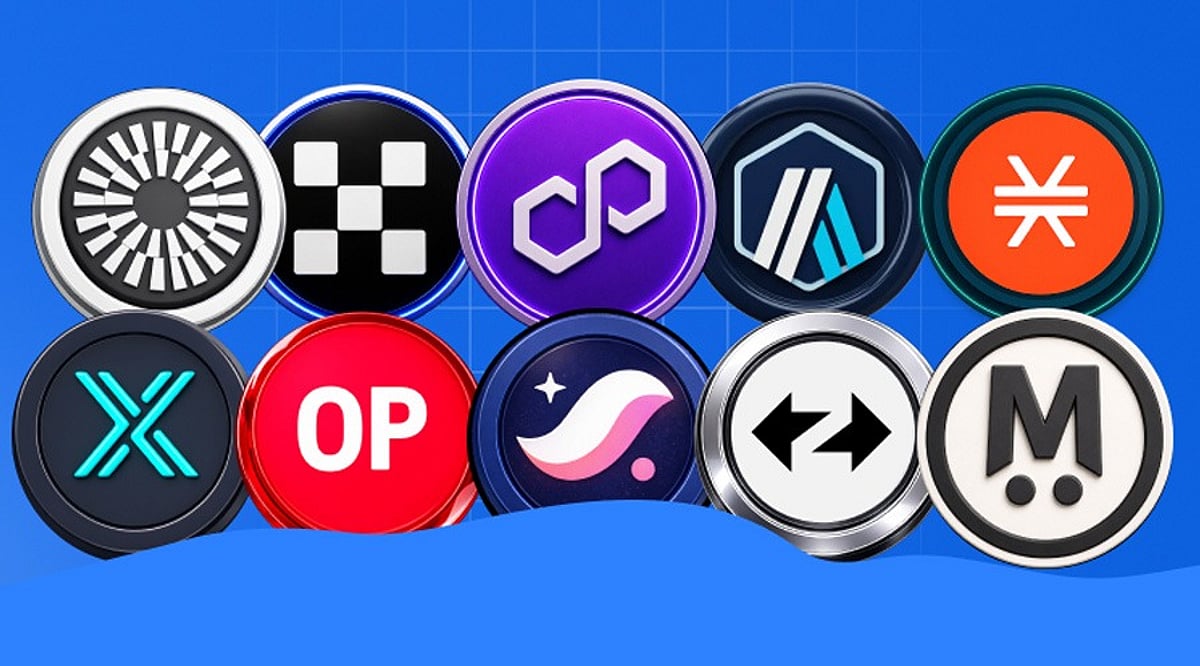
    Ethereum remains the dominant blockchain, but high fees and slower transaction speeds during peak usage remain challenges. Layer-2 networks address these issues by processing transactions off the main chain and posting final data back for security. This approach lowers costs, boosts speed, and supports mass adoption. In July 2026, Layer-2 projects continue to be one of the strongest segments in crypto, fueled by steady growth in decentralized finance, gaming, artificial intelligence, and tokenized real-world assets. Here are the top 10 Layer-2 cryptocurrencies to watch.

    Arbitrum (ARB)

    Arbitrum holds the top spot among Ethereum Layer-2 networks, thanks to its vast DeFi ecosystem and deep liquidity. Major decentralized exchanges, lending platforms, and perpetual trading protocols operate on Arbitrum. The network also supports Layer-3 development through Arbitrum Orbit, opening new opportunities for builders. Strong institutional interest and an active community add to its value. Despite growing competition, Arbitrum remains one of the most important Layer-2 projects in July 2026.

    Optimism (OP)

    Optimism has expanded well beyond a single Layer-2 chain. Its Superchain vision has attracted multiple networks using the OP Stack, including Coinbase’s Base. This shared technology improves cross-chain compatibility and speeds up development. Revenue sharing between connected chains adds another advantage. As more projects join the Superchain, Optimism continues to strengthen its position as a leading Ethereum scaling solution.

    Starknet (STRK)

    Starknet has built its reputation on advanced zero-knowledge technology. Using STARK proofs, it delivers strong security with excellent scalability. Developers benefit from the Cairo programming language, which supports sophisticated blockchain applications. The platform continues to attract DeFi projects, gaming apps, and AI initiatives, placing Starknet among the top Layer-2 networks for long-term growth.

    Polygon (POL)

    Polygon remains one of the most recognized names in blockchain. It has shifted focus toward an ecosystem of connected zero-knowledge chains via its AggLayer vision. Large companies and financial institutions continue to explore Polygon due to its reliable infrastructure and enterprise partnerships. Growth in tokenized real-world assets also supports the network. This combination of business adoption and technical development keeps Polygon near the top of the Layer-2 market.

    Mantle (MNT)

    Mantle has gained attention for its strong treasury and focus on institutional DeFi. The network supports liquid staking, yield products, and other financial services that appeal to developers and investors. A well-funded ecosystem enables Mantle to support new applications through grants and incentives. These factors help it stand out among newer Layer-2 platforms.

    Immutable (IMX)

    Immutable has become a leading blockchain platform for gaming and digital collectibles. The network removes gas fees for many player transactions, creating a smoother gaming experience. Major game developers continue to choose Immutable for its reliable infrastructure and NFT support. New game releases and wider blockchain gaming adoption could provide fresh momentum in the second half of 2026.

    zkSync (ZK)

    zkSync is gaining ground in the zero-knowledge Layer-2 space, focusing on consumer applications with fast, low-cost transactions. Native account abstraction improves wallet usability. The project is attracting DeFi projects, payment systems, and social applications to its ecosystem. These advancements make zkSync one of the emerging leaders among Layer-2 projects.

    Metis (METIS)

    Metis takes a different approach with decentralized sequencers, reducing reliance on a single operator. The project is also attracting interest in AI infrastructure. Enterprise tools and lower centralization risks provide additional appeal. These unique features help Metis carve out a distinct position in the competitive Layer-2 market.

    Loopring (LRC)

    Loopring remains one of the earliest zero-knowledge rollup projects. The network focuses on secure payments, decentralized exchanges, and digital wallets. Although newer projects receive more attention, Loopring continues to offer reliable, proven technology. Its long history and stable ecosystem make it an important Layer-2 network to follow.

    Fuel (FUEL)

    Fuel has emerged as one of the most promising modular execution layers in 2026. It supports parallel transaction execution, enabling better performance than many traditional blockchain designs. Developers are showing growing interest in its modern virtual machine and flexible architecture. As the ecosystem expands, Fuel could become a major name in Ethereum scaling.

    Final Thoughts

    Layer-2 technology continues to play a crucial role in the cryptocurrency market as of July 2026. The growing popularity of DeFi, blockchain gaming, enterprise applications, AI, and tokenized real-world assets is driving adoption of Layer-2 solutions. Projects like Arbitrum, Optimism, Starknet, Polygon, Mantle, Immutable, zkSync, Metis, Loopring, and Fuel each contribute uniquely to Ethereum’s future. All of them have strong ecosystems, experienced developer communities, and ongoing technological advances.

    Frequently Asked Questions

    What are Layer-2 cryptocurrencies?

    They are blockchain networks built on Ethereum that improve speed, lower transaction costs, and increase scalability while relying on Ethereum’s security.

    Why are Layer-2 projects important in 2026?

    They help Ethereum handle growing demand from DeFi, gaming, AI applications, and tokenized real-world assets without high fees or network congestion.

    Which Layer-2 projects are leading the market?

    Arbitrum, Optimism, Starknet, Polygon, Mantle, Immutable, zkSync, Metis, Loopring, and Fuel are among the top Layer-2 ecosystems to watch.

    What is the difference between optimistic and zero-knowledge rollups?

    Optimistic rollups assume transactions are valid unless challenged, while zero-knowledge rollups use cryptographic proofs to verify transactions before finalization.

    Are Layer-2 cryptocurrencies good long-term investments?

    They have strong growth potential by increasing Ethereum adoption, but like all cryptocurrencies, they carry market risks and require careful research before investing.

  • Top 10 Cryptocurrencies Under $1 to Watch in July 2026

    Top 10 Cryptocurrencies Under $1 to Watch in July 2026

    Many investors assume that a cryptocurrency priced below $1 is automatically a bargain. However, a low token price does not always indicate value—supply and market cap matter more. Smart investors look beyond the price tag, focusing on the project’s technology, real-world use, development roadmap, and team. In July 2026, several affordable projects stand out for their strong fundamentals, enterprise adoption, AI integration, DeFi growth, and long-term potential. Below are ten cryptocurrencies under $1 worth considering this month.

    Stellar (XLM) – Reliable in Global Payments

    Stellar has built a solid reputation by focusing on faster, cheaper international payments. In July 2026, XLM trades between $0.20 and $0.40, making it accessible. The network enables near-instant cross-border transfers at low cost. Banks and payment providers continue to explore Stellar, and the project is also expanding into asset tokenization. Its proven track record makes it one of the most dependable cryptocurrencies below $1.

    Hedera (HBAR) – Trust from Big Business

    Hedera’s governance council includes major global corporations, adding a layer of credibility. HBAR remains under $1, offering fast transactions, low energy consumption, and enhanced security—ideal for enterprise blockchain applications.

    VeChain (VET) – Blockchain for Real-World Business

    VeChain solves practical supply chain issues: tracking products, verifying authenticity, streamlining logistics, and monitoring carbon footprints. With partnerships across industries and a token price under $0.10, VET is a strong pick for those who value real-world utility.

    Algorand (ALGO) – Strong Technology, Quiet Growth

    Algorand rarely makes headlines but remains a top-tier blockchain. It offers fast, low-cost transactions and reliable performance. Governments and organizations are exploring Algorand for tokenized assets and digital financial systems. For fundamentals-focused investors, ALGO is an attractive option under $1.

    Sei (SEI) – Purpose-Built for Trading

    Sei is designed specifically for decentralized trading and financial applications. Its specialized architecture enables faster transactions for exchanges and DeFi projects. While still under $1, SEI carries higher risk but targets a rapidly growing sector, offering meaningful long-term potential.

    Arbitrum (ARB) – Scaling Ethereum

    Arbitrum solves Ethereum’s high gas fees by processing transactions faster and cheaper. ARB trades below $1, and developers continue to build on its Layer-2 network. Despite short-term volatility from token unlocks, Arbitrum’s long-term prospects remain strong as one of the largest Layer-2 ecosystems.

    Optimism (OP) – Ethereum’s Next Layer

    Optimism shares a similar scaling goal with Arbitrum but follows its own “Superchain” vision, connecting multiple blockchains into one ecosystem. It has drawn attention through its relationship with Coinbase’s Base network. Strong developer activity suggests Optimism will play a bigger role as blockchain adoption grows.

    Dogecoin (DOGE) – Enduring Popularity

    Dogecoin started as a joke but has survived multiple market cycles. In July 2026, DOGE trades near $0.07. Its loyal community, excellent liquidity, and broad exchange support keep it relevant, even though its price often moves with sentiment rather than technical progress.

    eCash (XEC) – High Risk, High Potential

    eCash appeals to investors with its extremely low price—fractions of a cent. The project focuses on digital payments and continues active development. However, the payment sector is highly competitive, so success is not guaranteed. eCash suits investors who understand the higher risk of smaller projects.

    JasmyCoin (JASMY) – Tapping the AI Economy

    JasmyCoin focuses on secure data ownership and IoT, allowing users to control their personal information. As connected devices and AI grow, the demand for secure data management may rise. JASMY faces tough competition, but its AI and data connection gives it an interesting market position.

    Final Thoughts

    Investing in sub-$1 cryptocurrencies should not be based solely on price. The best opportunities are projects with solid technology, ongoing development, and real-world adaptability. In July 2026, Stellar, Hedera, VeChain, Algorand, Arbitrum, and Optimism stand out for their established ecosystems. Sei, Dogecoin, eCash, and JasmyCoin offer higher potential but also greater risk. Key trends this year include AI, real-world asset tokenization, DeFi, enterprise blockchain, and Ethereum Layer-2 networks. Investors who focus on these trends rather than the cheapest tokens will be better positioned.

    FAQs

    1. Is a cryptocurrency under $1 automatically a good investment?
    No. A low token price doesn’t mean it’s undervalued. Always consider market cap, utility, adoption, and development.

    2. Which sectors look strongest in July 2026?
    AI, real-world asset tokenization, decentralized finance (DeFi), enterprise blockchain, and Ethereum Layer-2 ecosystems.

    3. Which coins are considered more established?
    Stellar (XLM), Hedera (HBAR), VeChain (VET), Algorand (ALGO), Arbitrum (ARB), and Optimism (OP).

    4. Which cryptocurrencies carry higher risk but higher potential?
    Sei (SEI), Dogecoin (DOGE), eCash (XEC), and JasmyCoin (JASMY) may offer greater upside but also increased volatility.

    5. What should investors evaluate before buying any cryptocurrency?
    Research the project’s technology, use cases, partnerships, tokenomics, development activity, roadmap, and overall market trends rather than focusing only on the token price.

  • Ethereum Surges as Fed Rate Worries Subside: Institutional Demand and Network Upgrades Fuel Rally

    Ethereum Surges as Fed Rate Worries Subside: Institutional Demand and Network Upgrades Fuel Rally

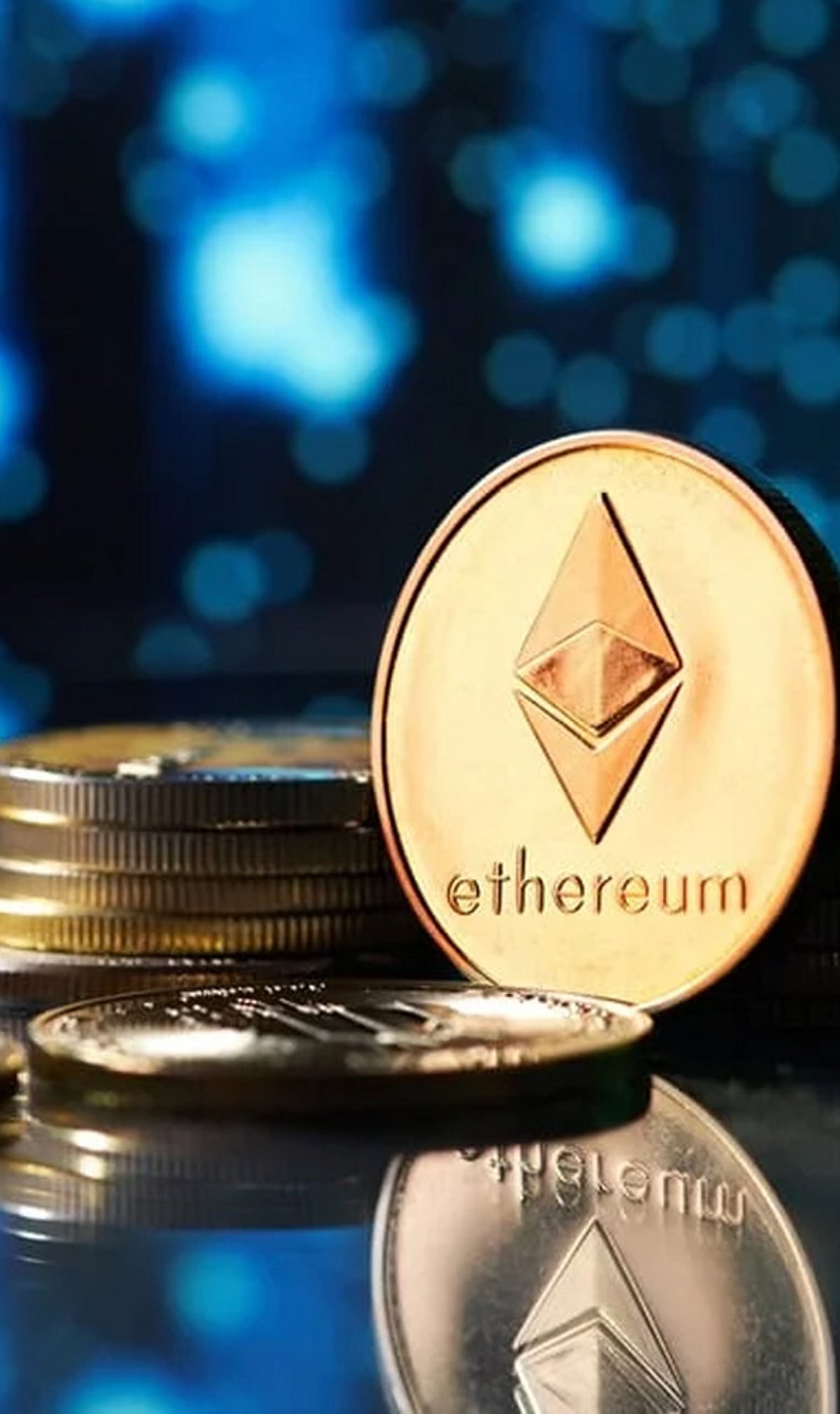
    Ethereum has been gaining momentum as concerns over prolonged high U.S. interest rates fade. Cooling inflation has shifted expectations toward a softer Federal Reserve stance, prompting investors to rotate capital into higher-growth assets like ETH. This macroeconomic tailwind, combined with strong institutional demand, ongoing network upgrades, and expanding Layer-2 adoption, is bolstering Ethereum’s long-term outlook.

    Lower Interest Rate Concerns Support Ethereum

    Interest rates heavily influence financial markets. Recent inflation data has eased fears that the Fed will maintain elevated rates for an extended period. This shift in sentiment has drawn fresh money back into risk assets, including Ethereum.

    Institutional Investors Continue to Show Interest

    Growing institutional demand is a key driver of Ethereum’s price movement. Major investment firms are increasing their exposure through spot Ethereum ETFs. While weekly inflows fluctuate, the overall trend points to rising institutional backing.

    Ethereum Network Remains Strong

    Ethereum maintains its position as the largest smart contract blockchain. Thousands of decentralized finance (DeFi) platforms, blockchain applications, and stablecoin projects rely on its network daily. Developers continue building new products on Ethereum, drawn by its robust infrastructure and large user base. This steady growth supports long-term demand for ETH.

    Staking Reduces Supply

    Ethereum’s proof-of-stake system allows holders to lock their coins to secure the network and earn rewards. As more investors stake their ETH, fewer coins remain available for trading. This supply reduction often supports prices when demand stays strong, giving Ethereum an advantage over many other cryptocurrencies.

    Network Upgrades Improve Performance

    Years of upgrades have boosted processing efficiency, validator performance, wallet security, and transaction speeds. These technical improvements attract developers, enterprises, and financial institutions, making Ethereum a more attractive long-term investment.

    Layer-2 Networks Help Ethereum Grow

    The rapid growth of Layer-2 networks makes transactions faster and cheaper. Lower costs encourage broader use of DeFi platforms, blockchain games, digital collectibles, and other services. Since these Layer-2 systems rely on the main Ethereum blockchain, increased network activity benefits ETH directly.

    Strong Market Position Supports Price Growth

    Ethereum’s total market capitalization exceeds $214 billion, with a circulating supply of about 120.7 million ETH. Daily trading volume regularly surpasses $10 billion, indicating strong engagement from both retail and institutional participants. This liquidity attracts major investment firms.

    Better Economic Outlook Helps Risk Assets

    U.S. Treasury yields have stabilized compared to the period of aggressive rate hikes, reducing pressure on growth-focused investments. Anticipation of a less restrictive Fed posture, assuming inflation trends toward target, typically fuels gains in tech stocks and crypto tokens. Ethereum has historically performed well under such conditions.

    Tokenization Creates New Opportunities

    Real-world asset tokenization is gaining traction. Banks and financial institutions are exploring ways to place traditional assets like bonds and funds on blockchain networks, opening new use cases for Ethereum.

    Risks Still Remain

    Despite the rally, Ethereum remains volatile. Economic reports, Fed statements, ETF flows, and sentiment changes can cause sharp price swings. However, the easing of interest rate concerns has created a more favorable environment for cryptocurrencies.

    Final Thoughts

    Ethereum’s recent rise reflects a convergence of factors: easing Fed rate fears, strong institutional participation via spot ETFs, network upgrades, Layer-2 growth, expanding blockchain adoption, and tokenization. With a market cap above $214 billion and daily trading volume over $10 billion, Ethereum remains a dominant digital asset. While short-term volatility persists, the combination of improved economic conditions and solid network fundamentals supports its long-term growth.

  • Ethereum’s Neutral Infrastructure: Why Openness Gives It a Lasting Edge in Blockchain

    Ethereum’s Neutral Infrastructure: Why Openness Gives It a Lasting Edge in Blockchain

    Ethereum stands apart in the blockchain industry because its neutral infrastructure keeps the network open, decentralized, secure, and accessible for everyone. Recent upgrades, lower fees, and strong adoption continue to strengthen its long-term position.

    Key Takeaways

    • No company or authority controls who builds or operates on the Ethereum network.
    • Recent upgrades have pushed transaction fees below $0.02 under normal conditions.
    • Ethereum’s $205 billion market value and growing enterprise adoption signal long-term confidence.

    The blockchain industry has grown rapidly in recent years, but not every network follows the same approach. Some give more control to a small group of companies or developers, while others focus on keeping the system open and fair. Ethereum’s neutral blockchain infrastructure functions like public infrastructure—no single company, government, or organization decides who can build or use it. Every developer, business, and user gets equal access. Since its launch, Ethereum has prioritized openness over control, creating trust across the industry and helping it grow faster than many competing blockchains.

    Ethereum Has the Largest Developer Ecosystem

    Recent industry reports show Ethereum still hosts the largest number of smart contract developers worldwide. More than 30% of all active Web3 developers work within the Ethereum ecosystem. Developers prefer Ethereum because the network remains open and does not favor specific companies or projects. Every builder gets the same infrastructure access, with no special privileges for large organizations. This environment fosters natural innovation. Thousands of decentralized applications already run on Ethereum, including finance platforms, blockchain games, NFT marketplaces, artificial intelligence projects, and many other services. This ecosystem scale keeps Ethereum ahead of newer blockchain competitors.

    Proof-of-Stake Made Ethereum Even Stronger

    Ethereum became even stronger after The Merge, one of the biggest upgrades in blockchain history, which moved the network from Proof-of-Work to Proof-of-Stake. Before this change, Ethereum depended on energy-intensive mining systems. After the upgrade, it relies on validators who help secure the network by staking ETH instead of using mining machines. More than 120 million ETH are currently in circulation, and staking participation continues to grow across independent validators worldwide. This system spreads control across a larger number of participants, reduces dependence on centralized operators, and helps protect Ethereum’s decentralized structure. Ethereum’s market value currently remains above $205 billion, firmly keeping it in second place behind Bitcoin in the global crypto market.

    Lower Fees Have Improved Ethereum’s Position

    For many years, Ethereum faced criticism for expensive transaction fees. However, recent upgrades have significantly improved this situation. Research from mid-2026 shows major efficiency improvements across Ethereum Mainnet and Layer 2 networks. In the past, average transaction fees often exceeded $2 during busy periods. Today, fees frequently remain under $0.02 under normal conditions. Layer 2 scaling systems built around Ethereum have reduced average transaction costs by more than 95%, making the network much more affordable for developers and businesses while maintaining strong security standards. This balance between affordability and security gives Ethereum a major advantage over competing blockchain networks.

    Ethereum Allows Different Applications to Connect Easily

    Ethereum’s open structure allows applications to interact without needing permission from any central authority. A decentralized finance application can connect directly with an NFT marketplace, a gaming platform can work with a payment protocol, and artificial intelligence systems can interact with blockchain-based financial products.

    Ethereum Continues to Improve for the Future

    One major upgrade planned for 2026 is the Glamsterdam hard fork, which focuses on improving network performance while keeping decentralization intact. The plan includes raising gas limits toward 100 million, improving transaction execution speed, and introducing systems such as Enshrined Proposer Builder Separation (ePBS).

    Institutions Continue to Trust Ethereum

    Regulatory clarity around Ethereum-based exchange-traded products has encouraged greater participation from financial institutions. Even during periods of market volatility in 2026, Ethereum continues to attract enterprise adoption. Large institutions increasingly view Ethereum as foundational digital infrastructure rather than just another cryptocurrency.

    Why This Matters

    Ethereum’s neutral infrastructure prevents centralized control, ensuring the network remains fair, open, and unalterable. For institutions and developers, this absolute censorship resistance makes it the only trustworthy foundation for long-term global financial systems and applications.

    Neutral Infrastructure Gives Ethereum Long-Term Strength

    Many blockchain networks focus mainly on speed or low fees, often by giving greater control to a small number of validators or centralized teams. As blockchain technology becomes more important in global finance and digital infrastructure, neutrality becomes a major advantage.

    Frequently Asked Questions

    1. What makes Ethereum different from other blockchain networks? Ethereum operates strictly as neutral public infrastructure, meaning no single company, government, or central group controls who can build on the platform or access its global network services.
    2. What exactly is neutral blockchain infrastructure? It is a decentralized design principle ensuring the underlying network remains entirely open, fair, and accessible to all global users and developers, with zero special corporate privileges.
    3. How has Ethereum improved its network efficiency recently? Major structural upgrades and advanced Layer 2 scaling systems have drastically reduced average transaction fees by over 95% while fully preserving the blockchain’s core security standards.
    4. Why do software developers heavily prefer building on Ethereum? Ethereum hosts the world’s largest Web3 developer ecosystem because it provides an open, stable architecture where every engineer receives identical infrastructure access without needing centralized permission.
    5. Why do large financial institutions trust the Ethereum ecosystem? Global enterprises trust Ethereum because its proven decentralized design, robust protocol security, and improving regulatory clarity make it the ideal foundational digital infrastructure for long-term institutional deployment.
  • Ethereum Institutional Launches to Boost Adoption as Spot ETF Outflows Reverse

    Ethereum Institutional Launches to Boost Adoption as Spot ETF Outflows Reverse

    Ethereum Institutional has launched as an independent non-profit organization aimed at accelerating institutional adoption of Ethereum, Layer 2 networks, and blockchain applications. The initiative arrives as United States spot Ethereum exchange-traded funds (ETFs) recorded $14.8 million in net inflows on July 1, ending nine consecutive trading days of withdrawals.

    Former Ethereum Foundation team leads David Walsh and Matthew Dawson are spearheading Ethereum Institutional’s outreach to traditional financial companies. The organization plans to serve as a neutral entry point for banks, asset managers, and custodians seeking clearer access to Ethereum’s technology and broader ecosystem.

    Ethereum Institutional’s work will focus on building relationships across traditional finance while supporting the use of Ethereum, Layer 2 solutions, and related financial applications. The initiative aims to strengthen institutional confidence by improving communication between blockchain developers and financial firms that require scalable infrastructure and regulatory credibility.

    BlackRock’s iShares Ethereum Trust (ETHA) led the July 1 inflows with $36.6 million, contributing the majority of the market’s positive daily total. However, other products moved in the opposite direction. BlackRock’s ETHB lost $1.7 million, while Fidelity’s FETH recorded $1.6 million in net withdrawals. Grayscale’s Mini Ethereum Trust posted an $18.5 million outflow as investors continued shifting capital among competing Ethereum funds with different fee structures.

    Cumulative flow data showed withdrawals of approximately $380 million across the spot Ethereum ETF market during the previous nine trading sessions. Although the July 1 inflow remained modest compared with those withdrawals, it ended the market’s recent stretch of daily net outflows.

    The reversal also showed that institutional demand remained uneven, with investors favoring some providers while reducing exposure through competing Ethereum products.

    Market focus now turns to sustained institutional demand. Ethereum Institutional will focus on expanding adoption among financial institutions and increasing access to Layer 2 networks and blockchain-based applications. Traders and analysts will track whether spot Ethereum ETFs can record further inflows after the July 1 change in direction.

    Sustained inflows over several weeks would provide stronger confirmation of a trend reversal than the results from one trading session. The organization’s progress will also depend on its ability to build working relationships with banks, custodians, and asset managers across traditional finance.

    Its launch places institutional engagement alongside Ethereum’s technical initiatives as the network seeks broader financial use and stronger market credibility. Upcoming ETF sessions will show whether the inflow marked a durable shift or a brief interruption in the recent withdrawal trend.

  • Top Crypto Picks for 2026: Why BlockDAG, Arbitrum, Hedera, and Algorand Are Attracting Smart Money

    Top Crypto Picks for 2026: Why BlockDAG, Arbitrum, Hedera, and Algorand Are Attracting Smart Money

    The cryptocurrency market moves at breakneck speed, and investors who hesitate risk missing out on significant gains. Currently, several projects are drawing attention from both whales and retail traders due to their advanced technology, market mispricing, and timely buyback options. This article highlights four coins that smart money is rushing to accumulate before the window closes.

    1. BlockDAG (BDAG): AI-Powered Surge with Urgent Buyback

    BlockDAG has disrupted the market with the live launch of its AI capabilities, boosting network valuation by $500 million. The upgrade introduces machine learning to optimize smart contracts and transaction efficiency. The network is upgrading to handle 7,000 transactions per second within three days, and the upcoming BlockDAG Futures and Spot Exchange will launch in two weeks, providing immediate utility and liquidity.

    Time is critical: less than 24 hours remain to capitalize on the exclusive $0.05 buyback offer. Priced at an incredibly low $0.00000044, buyers can also use the World Cup Bonus to secure an additional 50% extra BDAG coins instantly. Investors are moving quickly to stack their portfolios as BlockDAG climbs toward the top spot.

    2. Arbitrum (ARB): Ethereum Layer 2 at a Deep Discount

    Arbitrum remains a powerhouse for decentralized finance, ranking among the busiest Layer 2 chains on Ethereum by total value locked. Using optimistic rollups, it offers lower gas costs and higher speed while retaining Ethereum’s security. Leading DeFi platforms like Uniswap, Aave, and GMX rely on Arbitrum. The native token hit $2.40 in January 2024 but has corrected sharply, now trading between $0.075 and $0.09—a 95–97% retracement. Despite the price weakness, Arbitrum’s chain has scaled enterprise use cases through its DAO STEP treasury program, partnering with Franklin Templeton, Spiko, and WisdomTree. With billions locked, buying ARB at these levels is a rare opportunity.

    3. Hedera (HBAR): Enterprise-Grade Infrastructure with Quantum Readiness

    Hedera uses a hashgraph consensus mechanism for fast, low-fee transactions. Its governance council includes Google, IBM, Boeing, and LG, ensuring enterprise trust. The network uses virtual voting with minimal environmental impact. HBAR reached an all-time high of $0.5692 in 2021, but mid-2026 prices range from $0.07 to $0.08, down about 50% year-over-year. With a market cap of ~$3 billion, it remains a top-30 asset. Hedera is actively transitioning to post-quantum security through hybrid event signing and post-quantum TLS, well ahead of regulatory deadlines. Purchasing HBAR now offers exposure to a safe, enterprise-approved platform.

    4. Algorand (ALGO): Institutional Speed and Green Credentials

    Algorand’s Pure Proof-of-Stake consensus delivers rapid transactions and negligible fees. It handles thousands of transactions per second with uninterrupted uptime and operates as a carbon-negative blockchain via a partnership with ClimateTrade. This makes it attractive to ESG-minded institutions, leading to digital asset pilots and tokenized-bond projects globally. ALGO hit an all-time high of $3.56 in 2021 but now trades near $0.09, a 45–50% year-over-year decline. Algorand has committed to achieving full quantum resilience by end of 2027. Backed by real-world pilots and strong developer activity, accumulating ALGO at these lows presents an undeniable entry point.

    Key Insights

    The window to buy these assets at rock-bottom prices is closing. While Arbitrum, Hedera, and Algorand offer deeply discounted entries into battle-tested networks, BlockDAG presents an urgent opportunity with its AI ecosystem, impending exchange launch, and network speed upgrade. Only 24 hours remain for the $0.05 buyback and 50% World Cup bonus. The market rewards decisive action—review these top crypto coins, pick your entries, and position your portfolio before the next rally.