
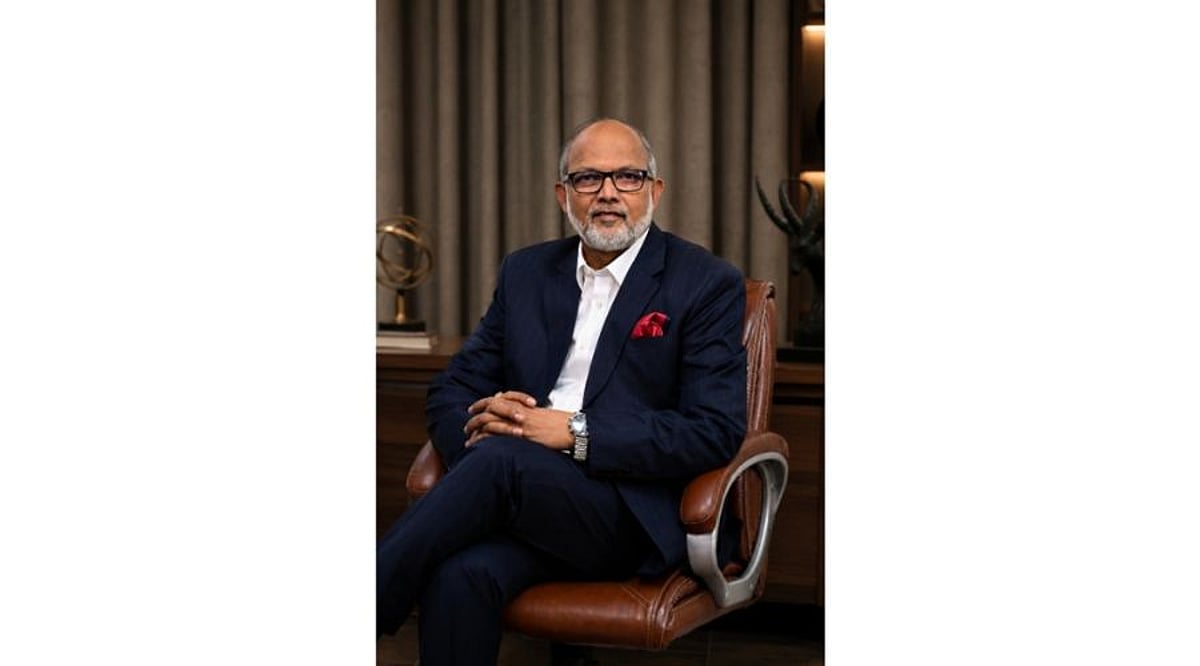
Tag: leadership transition

  • Assotech Group: 40 Years of Real Estate Legacy and the Next Generation’s Vision

    Assotech Group: 40 Years of Real Estate Legacy and the Next Generation’s Vision

    Real estate is an industry where longevity is rare and continuity even rarer. Assotech Group has now spent 40 years navigating both—and its story is as much about what comes next as it is about what has already been built.

    The company was founded by Sanjeev Srivastva, whose early conviction was simple: a homebuyer’s trust, once earned through delivered promises, becomes a developer’s most durable asset. That principle guided Assotech Group through four decades of Indian real estate’s most volatile cycles—from pre-liberalization years through demonetization, RERA’s regulatory reset, the NBFC liquidity crisis, and a pandemic that tested every developer’s execution capacity simultaneously. Where many built quickly and disappeared, Assotech Group built a track record of consistency and a brand that homebuyers, channel partners, and lenders associate with reliability over rhetoric.

    That kind of longevity is rarely accidental. It typically comes from a founder’s willingness to prioritize the slower, harder path—clear land titles, honored possession dates, transparent buyer communication—over faster wins from cutting corners. Over 40 years, that discipline compounded into something less tangible than any single project: a brand that lenders underwrite with confidence and channel partners sell without hesitation. In an industry where trust is the scarcest commodity, that is arguably Sanjeev Srivastva’s most significant achievement—not any one tower or township, but an institution durable enough to outlast its founder’s generation.

    That legacy is now entering its next phase. Assotech Group’s leadership has expanded to include Shivani Priyam, Enakshi Priyam, Arpan Patel, and Aditya Prakash, who have taken on roles as Directors. Their entry is not a symbolic handover; it reflects a deliberate broadening of decision-making bandwidth at a moment when Assotech Group is running an unusually active, multi-state growth pipeline. The next generation brings fresh perspective to brand strategy, digital-first buyer engagement, and market expansion, while operating within the execution discipline the founder built. It is a continuity story rather than a changing-of-the-guard story—the same values applied to markets and buyer expectations the sector has never seen before.

    This generational transition arrives as Indian real estate itself is reshaped by younger, more digitally fluent buyers, faster decision cycles, and heightened scrutiny of developer credibility post-RERA. A founder-led company navigating that shift needs leadership that understands both worlds—the legacy discipline that built the brand and the newer expectations shaping how it shows up today. Assotech Group’s four new Directors represent that bridge, positioned to carry the company’s fundamentals into markets and mediums the business hadn’t previously needed to master.

    That expansion is already visible on the ground. Assotech Group’s original stronghold in Delhi NCR—anchored by long-standing developments including its presence in Ghaziabad’s Crossings Republik micro-market—remains the base. Alongside it, the group has moved decisively into two new geographies: Jharkhand, with its Ranchi development, and Odisha, where Bhubaneswar-region projects mark the company’s entry into one of eastern India’s fastest-growing residential markets.

    The logic behind this three-state footprint is consistent with how Assotech Group has always approached growth—not chasing every market simultaneously, but entering states where rising incomes, urban migration, and under-served demand for organized, RERA-compliant housing create a genuine opportunity for a developer with a 40-year delivery record to differentiate itself. In both Ranchi and Bhubaneswar, that opportunity is compounded by a market gap: organized players with genuine institutional credibility remain comparatively few, giving an established brand like Assotech Group a meaningful first-mover advantage over unproven entrants.

    Forty years in, Assotech Group’s brand story is no longer only about what Sanjeev Srivastva built. It is about a leadership team, now spanning two generations, carrying that foundation into Delhi NCR, Jharkhand, and Odisha—and building the next chapter on the same principle the first one started with: a promise made is a promise delivered.

    For more information, visit: assotechgroup.com.

  • How First-Time Startup CEOs Can Handle Underperforming Executives

    How First-Time Startup CEOs Can Handle Underperforming Executives

    Strong leadership is the backbone of every successful startup. A great executive builds teams, solves complex problems, and keeps the company on track. When an executive fails to deliver, it creates confusion, slows progress, and undermines employee confidence. For a first-time CEO, the temptation is often to wait and hope performance improves—but that hope usually leads to bigger problems.

    An underperforming executive affects more than just one department. Missed goals, delayed projects, poor hiring decisions, and low team morale ripple across the entire organization. Customers notice slower service, investors question leadership, and top employees begin looking for opportunities elsewhere. A startup cannot afford prolonged uncertainty. Taking swift, thoughtful action protects the business and keeps the company focused on growth.

    Confirm the Real Problem

    Bad outcomes don’t always mean poor leadership. Before making a decision, a CEO needs to analyze the full picture. Clear expectations, adequate resources, and ongoing feedback are essential for a fair assessment. Without these, no executive can succeed.

    Performance reviews, business metrics, team feedback, and project outcomes provide a complete view. Solid evidence eliminates guesswork and builds confidence in your conclusions. Facts are far more valuable than opinions.

    Hold Honest Conversations Early

    Many first-time CEOs delay difficult conversations. Silence creates false hope and allows problems to fester. Honest discussions give executives a fair chance to improve—and they show respect for the individual.

    Every meeting should focus on specific examples rather than personal criticism. Clear goals, measurable targets, and realistic timelines create accountability. Both sides should leave with complete clarity. No executive should ever feel surprised if performance doesn’t improve after repeated discussions.

    Watch for Meaningful Change

    Improvement requires action, not promises. A capable executive accepts feedback, solves problems, and delivers stronger results within the agreed timeframe. Better teamwork, faster execution, and improved business outcomes signal real progress.

    Empty assurances hold no value. Missed deadlines, repeated mistakes, weak communication, and poor decision-making indicate that the role no longer fits the individual. Startups need leaders who produce results under pressure. Continuous failure puts the entire company at risk.

    Prepare Before the Final Meeting

    Careful preparation prevents confusion and protects the company. Ensure all documents are complete and accurate before the conversation. Employment agreements, severance terms, company property, system access, and legal requirements all need attention in advance.

    A clear transition plan reduces disruption. Important projects need new ownership, key customers require continued support, and internal teams need temporary leadership. Solid preparation keeps business operations stable during the leadership change.

    Keep the Conversation Respectful

    The dismissal meeting should be calm, short, and direct. Long debates rarely change the outcome. A CEO should explain that the decision is final, share the main reason with clear facts, and outline the next steps.

    Respect matters throughout the conversation. Professional treatment protects personal dignity and reflects company values. Acknowledging genuine contributions helps close the discussion with maturity. A respectful exit leaves fewer negative feelings and reduces the chance of unnecessary conflict.

    Protect Team Confidence

    Employees notice leadership changes immediately. Silence breeds rumors, fear, and uncertainty. Timely communication builds trust and keeps everyone focused.

    The announcement should explain the transition without unnecessary personal details. Emphasize business continuity, future priorities, and confidence in the next phase. Teams perform better when leaders provide clarity instead of speculation.

    Managers should remain available after the announcement. Employees often need reassurance about ongoing projects, reporting lines, and company direction. Open communication helps restore stability.

    Handle Investor Communication Carefully

    Investors expect responsible leadership during executive changes. Delayed updates damage credibility and create unnecessary concern. Explain the decision with confidence and focus on business needs.

    Highlight the evaluation process, the transition plan, and the strategy for future leadership. Investors value decisive action backed by facts. Confidence grows when leadership addresses problems head-on rather than avoiding them.

    Learn From the Experience

    Every executive departure is a learning opportunity. Poor hiring outcomes reveal weaknesses in recruitment, interviewing, onboarding, or performance management. Self-reflection is essential for future executive decisions.

    Analyze the entire hiring process—job descriptions, cultural fit, leadership skills, and business experience. Better hiring practices prevent similar problems in the future. Regular feedback helps improve executive performance and allows you to identify issues early. Good communication fosters stronger manager-employee relationships across the company.

    Build a Stronger Leadership Team

    Leadership change is a chance to strengthen the entire organization. The new executive should align with both company requirements and culture. During hiring, pay close attention to skills, values, adaptability, and decision-making abilities.

    A robust leadership team leads to faster results, higher employee loyalty, and better business outcomes. Use this opportunity to build the team your startup needs for sustainable growth.

    Why This Matters

    Every startup depends on strong leadership, especially during early growth stages. A poor executive decision can slow progress, reduce team confidence, and weaken business performance. A CEO who understands when and how to replace an underperforming executive protects company goals, strengthens leadership quality, and builds a stronger foundation for long-term success.

    FAQs

    1. When should a startup CEO consider firing an executive?
    Act after clear performance issues persist despite honest feedback and reasonable opportunities to improve.

    2. How can a CEO make the decision fairly?
    Base the final decision on performance data, business results, and documented discussions.

    3. How should employees hear about the leadership change?
    Use a clear, professional announcement that explains the transition while maintaining privacy and business stability.

    4. Why is preparation important before the dismissal meeting?
    Proper planning ensures smooth project handovers, legal compliance, and uninterrupted business operations.

    5. What should happen after an executive leaves?
    Review hiring practices, strengthen leadership processes, and recruit a better-fit executive.

  • Infosys Stock Dips After Narrowed Revenue Guidance Despite Strong Q1 Performance

    Infosys Stock Dips After Narrowed Revenue Guidance Despite Strong Q1 Performance

    Infosys shares slipped to Rs. 1,027.9 on July 24, 2026, after the IT major narrowed its FY27 revenue guidance despite posting strong first-quarter earnings. The company also announced salary hikes, plans to hire 20,000 freshers, and reaffirmed its AI-led growth strategy, but investors remained cautious about the trimmed upper end of the annual revenue forecast.

    Revenue Guidance Overshadows Solid Results

    According to TradingView, Infosys shares traded at Rs. 1,027.9, down 1.86%, with an intraday high of Rs. 1,042.6 and a low of Rs. 1,013.9. The stock decline reflects a broader concern in the IT sector: healthy execution alone may not be enough if enterprise technology spending remains cautious. The company’s FY27 revenue growth forecast on a constant currency basis narrowed from 1.5%–3.5% to 1.5%–3.0%. While the change appears small, analysts attribute it to ongoing uncertainty in global tech spending, with companies delaying discretionary investments and focusing on critical digital projects.

    Operational Resilience Despite Cautious Outlook

    Infosys reported strong financial performance for Q1. Revenue reached Rs. 48,211 crore, marking approximately 14% growth, while net income rose to Rs. 7,769 crore, driven by strong client accounts and demand for digital services. The company secured large deal wins worth about $3.6 billion, a significant portion from new business, indicating that enterprises are still committing to long-term digital transformations despite near-term caution. Additionally, Infosys expanded its AI product portfolio, fueled by increasing enterprise adoption of generative AI.

    Hiring and Salary Hikes Signal Long-Term Confidence

    Despite uneven global demand, Infosys continues to invest in its workforce. The company confirmed that annual salary hikes will begin rolling out from October, with senior employees receiving increments in January. It also reaffirmed plans to recruit nearly 20,000 fresh graduates during FY27. Rather than slowing hiring, Infosys is building capabilities in high-growth areas like artificial intelligence, cloud computing, cybersecurity, and digital engineering, signaling management’s expectation that technology spending will improve over the medium term.

    Leadership Transition and AI Strategy

    Infosys appointed Ashiss Kumar Dash as the future CEO, with the transition scheduled for April 2027. This planned leadership change is expected to ensure continuity and maintain client trust during a period of industry upheaval driven by AI. The company’s AI and automation services, including generative AI, intelligent automation, cloud migration, and digital consulting, are expected to drive higher-value deals as enterprises move from proof-of-concept to large-scale deployment. However, the pace of monetization will depend on the recovery of IT budgets.

    Market Outlook

    Infosys Q1 performance reflects the evolving priorities of the global IT services industry. While profitability, strong deal wins, continued hiring, and AI investment demonstrate resilience, the reduced revenue outlook highlights that client spending remains prudent. Investors should monitor whether enterprise technology budgets recover in coming quarters and whether AI-driven initiatives begin to contribute meaningfully to revenue. Until then, Infosys appears operationally sound but operates in an environment where expectations are as critical as execution.

  • HDFC Bank Shares Gain 0.92% on Proprietary AI Platform and Governance Revamp

    HDFC Bank Shares Gain 0.92% on Proprietary AI Platform and Governance Revamp

    HDFC Bank closed at Rs. 803.25, up 0.92%, as investors responded positively to the lender’s aggressive push into artificial intelligence and a proposed leadership change aimed at strengthening corporate governance. The stock’s advance reflects a broader market trend where technology adoption and governance standards are increasingly influencing valuations.

    AI Platform Drives Efficiency and Security

    The bank is developing a proprietary AI platform and a high-end fraud monitoring system, moving away from third-party solutions. This in-house approach is expected to enhance operational efficiency, bolster cybersecurity, and improve customer experiences amid India’s rapidly growing digital transaction ecosystem. By controlling its own AI infrastructure, HDFC Bank can reduce long-term technology costs and maintain full data sovereignty.

    Leadership Transition Bolsters Governance

    The Reserve Bank of India has approved the nomination of Rajiv Kumar, former Finance Secretary and Chief Election Commissioner, as part-time chairman of HDFC Bank. The move is seen as a significant step to reinforce governance practices, which have been under scrutiny. Strong governance credentials often command premium valuations, and the new leadership is expected to shift investor focus from regulatory concerns to business strategy and growth execution.

    LTTS Remains a Key AI Beneficiary

    HDFC Securities reaffirmed its positive stance on L&T Technology Services (LTTS) despite trimming the target price, citing valuation adjustments rather than fundamental weakness. The brokerage views LTTS as well-positioned to capitalize on rising global investment in industrial AI, automation, and digital engineering across sectors such as automotive, healthcare, and manufacturing.

    What to Watch Next Week

    Investors will track HDFC Bank’s AI platform execution, digital banking metrics, and any further regulatory clarity on the chairman nomination. For LTTS, management commentary, deal flow, and client spending on AI engineering will be key. Broader market cues from quarterly earnings in banking and technology will also influence sentiment. Analysts recommend a stock-specific approach, with fundamentally strong companies that combine innovation and governance likely to outperform.

    Disclaimer: This article is for informational purposes only and does not constitute investment advice. Readers should conduct their own research before making any financial decisions.

  • Kotak Mahindra Bank Shares Decline as CEO Ashok Vaswani Plans Departure by Late 2026

    Kotak Mahindra Bank Shares Decline as CEO Ashok Vaswani Plans Departure by Late 2026

    Kotak Mahindra Bank shares experienced a dip on Monday, trading near Rs. 398.95 on the NSE after CEO Ashok Vaswani confirmed he will step down at the end of his tenure on December 31, 2026. The stock touched an intraday high of Rs. 410.95 and a low of Rs. 398.95, reflecting investor caution over the leadership transition.

    Leadership Transition Sparks Selling Pressure

    The announcement that Ashok Vaswani will not seek another term as Managing Director and CEO raised concerns among investors about the future leadership of one of India’s largest private lenders. The bank’s management clarified that Vaswani will remain in his role until the end of his tenure and will collaborate closely with the board to ensure a smooth succession. Succession planning is already underway, subject to regulatory approval.

    Investors Eye Succession Clarity

    While the bank has reiterated its unchanged long-term strategy, the unexpected news has affected market sentiment. A leadership change often brings uncertainty, especially as Vaswani had been driving the company’s transformation. Investors are now focused on the board’s selection process for a new CEO, which will be critical in restoring confidence in the coming months.

    Analysts See Temporary Impact

    Despite the sharp decline, several brokerages maintain a positive outlook on Kotak Mahindra Bank, viewing the downturn as temporary. Nomura and Jefferies, among others, remain bullish on the stock, citing strong capitalization and solid fundamentals. Analysts believe that once the board identifies a suitable successor, attention will shift to profitability and growth. Such management changes are common in the banking industry.

    Growth Strategy Remains Intact

    Vaswani’s departure comes as the bank accelerates its growth strategy following the removal of regulatory restrictions on its digital business. Over the past year, the company has enhanced its technology framework, compliance systems, and focused on expanding retail lending. The bank continues to explore opportunities in consumer banking, wealth management, commercial lending, and digital financial services. With one of the strongest balance sheets in the private banking sector, Kotak Mahindra Bank is open to organic and inorganic growth avenues, including loan portfolio acquisitions. These strategic initiatives are institutionally supported and likely to continue irrespective of the leadership change.

    Smooth Succession as Key Catalyst

    From an investor perspective, a successful succession process will be the primary catalyst for rebuilding confidence and removing current uncertainties surrounding the share price. Analysts expect share price movements to remain tied to succession-related news. However, most market professionals view the bank’s capital adequacy, technological advancements, growing credit book, and high profitability as strong indicators for long-term investment. While the leadership announcement has introduced volatility, the underlying business remains robust.