
Tag: Ledger

  • Ledger Consolidates Security and IT Leadership Amid Surging AI Crypto Attacks

    Ledger Consolidates Security and IT Leadership Amid Surging AI Crypto Attacks

    Ledger SAS has appointed Oded Blatman as chief information officer and chief security officer, combining technology and security oversight in a single leadership role as AI-driven threats expand across the crypto industry. The Paris-based hardware wallet maker said Blatman will oversee cyber and infrastructure security, product security, physical and workplace security, internal IT, and enterprise risk.

    One Role for Security and Technology

    Blatman joins Ledger after five years as CIO and CISO at Fireblocks. He previously served as global CISO at Bank Hapoalim and held both CIO and CISO roles at ClickSoftware. At Fireblocks, he led global security and enterprise technology during a period of international expansion and rising operational complexity, experience Ledger says fits its broader effort to strengthen organizational resilience.

    Ledger described the combined CIO and CSO structure as a deliberate organizational change. The company said information systems and security now require closer coordination as tokenization, AI agents, and institutional digital-asset use develop together.

    AI Makes Crypto Attacks Faster and More Scalable

    Blatman said artificial intelligence is reducing the cost and time attackers need to search for weaknesses, while also allowing attacks to become more sophisticated and operate at greater scale. As phishing campaigns and deepfake impersonation schemes become more advanced, Ledger said security teams must evolve at a comparable pace.

    The appointment follows a rise in reported crypto security incidents. Data from DefiLlama cited by Ledger shows hackers stole about $1.4 billion across 250 attacks in 2026 so far, after losses reached $2.7 billion across 146 attacks in 2025.

    Recent Incidents Add Pressure on Digital Asset Defenses

    Several high-profile incidents have put digital-asset companies on alert. About $320 million in Bitcoin left the Liquid Network during a hack earlier this week. Trezor also disclosed a breach involving one of its shipping providers last week, exposing personal information belonging to tens of thousands of customers. Earlier this year, a Coldcard hack raised further questions about offline wallet security.

    Ledger said hardware-backed verification remains central to protecting high-value digital ownership, and pointed to secure software, resilient operations, and verifiable human intent as additional layers of protection.

    Leadership Backed by Deep Security Experience

    Blatman said Ledger’s hardware-security work, user trust, and Donjon research team provided a strong foundation for the role, and that he joined to connect product security, enterprise technology, and resilience. Chairman and CEO Pascal Gauthier said Ledger considers security central to its business and that Blatman’s experience protecting systems at Fireblocks and Bank Hapoalim prepared him to oversee both information technology and security.
  • Top Crypto Hardware Wallets for 2026: Secure Your Digital Assets Offline

    Top Crypto Hardware Wallets for 2026: Secure Your Digital Assets Offline

    As cryptocurrency adoption continues to accelerate, securing digital assets has never been more critical. Hacks, phishing attacks, and exchange breaches cause billions of dollars in losses annually. While keeping crypto on exchanges is convenient, many long-term investors turn to hardware wallets because they store private keys offline, drastically reducing exposure to online threats.

    Hardware wallets, also known as cold wallets, keep private keys out of reach of third parties, making them one of the safest ways to store Bitcoin, Ethereum, NFTs, and other digital assets. Below are the most recommended crypto hardware wallets for 2026.

    1. Ledger Nano X – Best Overall Hardware Wallet

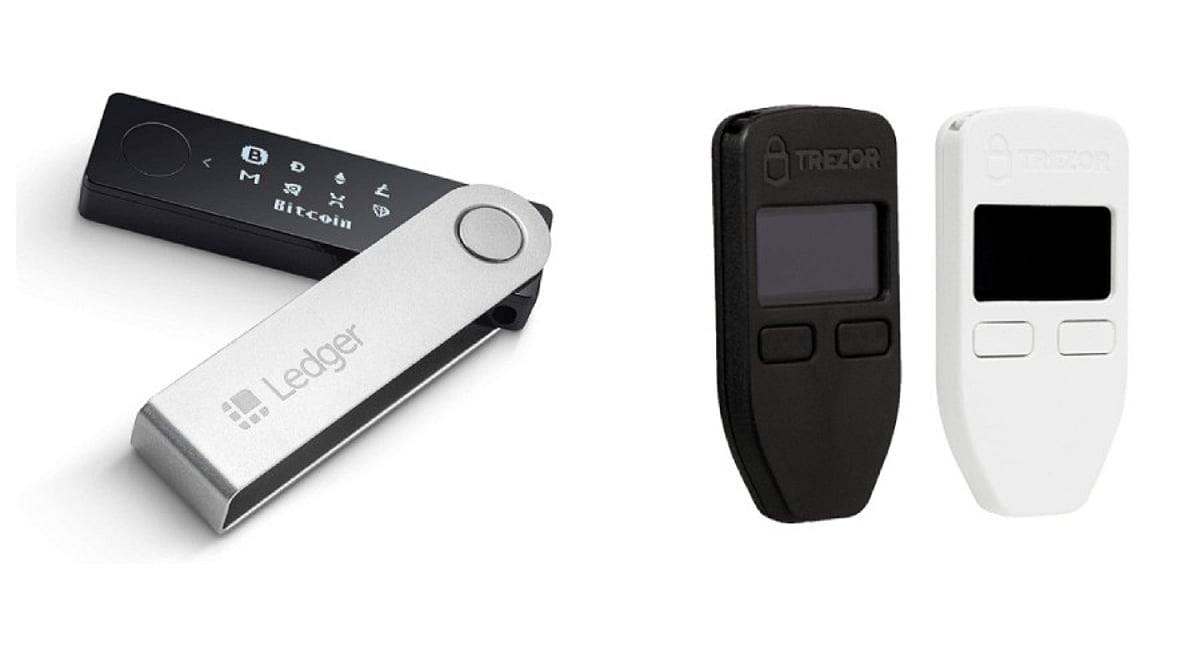
    The Ledger Nano X strikes an excellent balance between security and convenience. Through the Ledger Live app, users can stake, trade, buy, and sell over 5,000 cryptocurrencies. It connects via Bluetooth or USB-C for desktop and mobile devices and features Ledger’s Secure Element chip.

    Ideal For: Investors seeking an all-in-one mobile-enabled hardware wallet.
    Approximate Price: $99

    2. Ledger Stax – Best Premium Hardware Wallet

    For a premium experience, the Ledger Stax offers a large curved E-Ink touchscreen and Bluetooth connectivity. It supports thousands of cryptocurrencies and NFTs, using the same Secure Element technology as other Ledger devices. The larger display makes transaction verification easier at a glance.

    Ideal For: Long-term investors aiming for a premium user experience.
    Approximate Price: $399

    3. Trezor Model T – Best Open-Source Wallet

    The Trezor Model T features open-source firmware, which allows independent security researchers to inspect the code, enhancing transparency. It includes a color touchscreen and USB-C port, and manages hundreds of cryptocurrencies through the Trezor Suite app.

    Ideal For: Security-focused users who prefer open-source solutions.
    Approximate Price: $129

    4. Trezor Model One – Best Budget Choice

    The Trezor Model One remains an excellent entry-level wallet. It lacks a touchscreen but provides solid offline storage, open-source firmware, and simple two-button operation. It is compatible with most major cryptocurrencies and is one of the most affordable hardware wallets available.

    Ideal For: Newcomers to crypto investing.
    Approximate Price: $49

    5. Bitkey – Best Bitcoin-Only Wallet

    Block’s Bitkey is designed specifically for Bitcoin security, using a multi-signature architecture. It eliminates single points of failure through a combination of hardware, mobile app, and cloud-based recovery. Features like inheritance and recovery make it ideal for long-term Bitcoin holders.

    Ideal For: Maximum security for Bitcoin holders.
    Approximate Price: $215

    6. Tangem Wallet – Best Seedless Hardware Wallet

    Tangem takes a unique approach by eliminating traditional seed phrases. Its NFC-enabled smart cards store private keys in a certified secure chip. Users access their wallets by tapping the card on an NFC-enabled smartphone. It supports over 14,000 digital assets and offers an easy setup process.

    Ideal For: Beginners looking for a seed phrase-free wallet.
    Approximate Price: $54–$180

    Why This Matters

    As cryptocurrency-related cyber threats evolve, choosing the right hardware wallet is essential for protecting digital assets. Keeping funds offline reduces exposure to online attacks, giving investors more control over their private keys and enhancing long-term portfolio security.

    Final Thoughts

    In 2026, the hardware wallet market offers diverse options for every type of investor. Ledger’s feature-packed lineup continues to dominate, while Trezor’s open-source transparency appeals to those prioritizing trust. Bitkey’s multisig solution is ideal for Bitcoin-only investors, and Tangem’s seedless NFC design attracts users seeking simplicity. Regardless of the device chosen, storing private keys offline remains one of the best ways to safeguard digital assets from cyberattacks, phishing, and exchange-related risks.

    Frequently Asked Questions

    1. What is a crypto hardware wallet?

    A hardware wallet is a physical device that stores your cryptocurrency private keys offline. Because it remains disconnected from the internet, it offers significantly better protection against hacking, phishing, and malware compared to online wallets.

    2. Which hardware wallet is best for beginners?

    The Trezor Model One and Tangem Wallet are excellent choices for beginners. Both are easy to set up, affordable, and provide strong security without requiring advanced technical knowledge.

    3. Are hardware wallets safer than keeping crypto on exchanges?

    Yes. Hardware wallets give users complete control over their private keys, reducing the risk of exchange hacks or account compromises. However, users must safely store their recovery information to avoid losing access.

    4. Which hardware wallet supports the most cryptocurrencies?

    Tangem Wallet supports more than 14,000 digital assets, while the Ledger Nano X offers compatibility with over 5,000 cryptocurrencies and tokens through the Ledger ecosystem.

    5. Is a hardware wallet worth buying in 2026?

    For anyone holding a meaningful amount of cryptocurrency, a hardware wallet remains one of the best security investments. Offline storage greatly reduces exposure to online threats and gives users full ownership of their digital assets.