Tag: Lending

  • How XRP Ledger’s Native Lending Protocol Brings On-Chain Credit to DeFi

    How XRP Ledger’s Native Lending Protocol Brings On-Chain Credit to DeFi

    The XRP Ledger (XRPL) is expanding beyond payments and decentralized trading toward native credit infrastructure. Its Lending Protocol is designed to support fixed-term lending directly at the protocol level, combining blockchain settlement with off-chain credit assessment and underwriting.

    The latest xrpld 3.4.0 release extends this architecture through the LendingProtocolV1_1 amendment, introducing closed-ended vaults and cash-basis accounting.

    How XRPL Native Lending Works

    XRPL’s Lending Protocol is designed for fixed-term, uncollateralized loans funded using assets pooled within Single Asset Vaults. The system involves three principal participants: loan brokers, depositors and borrowers. Instead of requiring borrowers to overcollateralize loans with cryptocurrency, creditworthiness can be evaluated through off-chain underwriting and risk-management processes. This differs from many existing DeFi lending systems where borrowers commonly deposit cryptocurrency worth more than the amount borrowed. XRPL could instead support credit-based lending while recording loan creation, repayment and settlement on-chain. The protocol also supports optional first-loss capital, which loan brokers can contribute to absorb potential losses before they reach other vault participants.

    Single Asset Vaults Pool Capital

    Single Asset Vaults aggregate assets from depositors into structures that can supply capital for lending. Depositors receive shares representing their proportional ownership of a vault’s assets. LendingProtocolV1_1 adds closed-ended vaults with three stages: subscription, investment and redemption. During subscription, investors can provide capital. The investment phase allows loans to be originated, while the redemption phase determines when investors can redeem their shares. Under V1.1, newly created loan brokers must use closed-ended rather than open-ended vaults. XRPL documentation also shows that vaults can hold XRP, trust-line tokens or Multi-Purpose Tokens (MPTs). Private vaults can use credentials and Permissioned Domains to restrict participation, potentially supporting institution-focused lending environments.

    Accounting Is Also Changing

    Another important change in xrpld 3.4.0 is cash-basis accounting. Previously, scheduled interest could be recognized when a loan originated. Under V1.1, interest is recognized as income only when the borrower actually makes a payment. This means vault share values reflect realized interest rather than income that has merely been scheduled. Version 3.4.0 also includes lending-related fixes affecting loan impairment, payment due dates and grace-period boundaries.

    Lending Still Requires Risk Management

    Native infrastructure does not eliminate credit risk. As loans can be uncollateralized, lenders remain dependent on effective underwriting and borrower repayment. XRPL documentation also warns that malicious vault owners can potentially drain assets from public vaults, making verification of vault owners and settings important before depositing funds. The relevant lending amendments also remain subject to XRPL’s amendment process rather than automatically becoming active via supporting code inclusion inside a stable server release.

    Why This Matters

    Native lending could broaden XRPL beyond payments and trading by bringing credit infrastructure directly on-chain. Closed-ended vaults, standardized loans and cash-basis accounting could support institutional lending models while reducing dependence on separately deployed smart-contract lending protocols.

    Final Thoughts

    XRPL’s Lending Protocol combines on-chain settlement with off-chain underwriting rather than attempting to eliminate traditional credit assessment. The addition of closed-ended vaults and cash-basis accounting makes the architecture more structured for fixed-term lending. Its impact will ultimately depend on amendment activation, liquidity, underwriting quality, risk management and real-world adoption.

    FAQs

    1. What is the XRP Ledger Lending Protocol?
    The XRPL Lending Protocol is designed to enable fixed-term lending directly through the XRP Ledger. It combines on-chain loan management and settlement with off-chain underwriting to assess borrowers and manage credit risk.

    2. Can borrowers get uncollateralized loans on XRPL?
    The protocol is designed to support uncollateralized lending, meaning borrowers do not necessarily need to deposit crypto worth more than their loan. Loan brokers instead use underwriting and risk-management processes to evaluate creditworthiness.

    3. What are Single Asset Vaults on XRP Ledger?
    Single Asset Vaults pool assets from multiple depositors and can provide capital for lending. Depositors receive vault shares representing their proportional ownership, while vaults can hold assets including XRP, trust-line tokens and Multi-Purpose Tokens.

    4. What does LendingProtocolV1_1 change?
    LendingProtocolV1_1 introduces closed-ended vaults structured around subscription, investment and redemption phases. It also introduces cash-basis accounting, where interest becomes recognized as income when borrowers actually make payments.

    5. What are the risks of native lending on XRPL?
    Native infrastructure does not remove lending risks such as borrower defaults, poor underwriting, liquidity problems or malicious vault operators. Adoption will also depend on amendment activation, market liquidity, regulatory requirements and institutional participation.


  • Kunal Shah’s CRED: From Credit Card Rewards to a $4.5 Billion Financial Ecosystem

    Kunal Shah’s CRED: From Credit Card Rewards to a $4.5 Billion Financial Ecosystem

    Kunal Shah founded CRED in 2018 with a simple yet powerful idea: reward creditworthy consumers for paying their credit card bills on time. What started as a members-only platform has since transformed into a comprehensive financial ecosystem spanning payments, lending, insurance, wealth management, and lifestyle services.

    Starting with Credit Card Payments

    CRED’s initial offering targeted disciplined credit card users. Members could manage multiple cards, track spending, receive payment reminders, and understand their credit behavior. By linking timely payments to rewards, CRED turned a routine financial task into an engaging experience. Today, the platform processes more than 40% of India’s credit card bill payments and serves 17 million monthly members.

    Building a Broader Payments Platform

    CRED expanded its payment capabilities around its core customer base. It introduced UPI payments through CRED Pay, enabling users to scan QR codes and earn rewards, along with tap-to-pay on supported Android devices. In June 2026, CRED launched multibill payments and autopay for credit card bills up to Rs. 2 lakh, with over 70% of members holding multiple credit cards.

    Expansion into Lending, Wealth, and Insurance

    The company’s next phase moved beyond payments. CRED’s lending business now manages Rs. 24,000 crore in assets for top financial institutions. It also launched Yosemite, an invite-only society called Sovereign, a co-branded RuPay credit card with IndusInd Bank, and tools for tracking asset portfolios and long-term investments. Later additions include Cash by CRED and an AI-powered credit coach.

    Technology at the Center

    Technology remains the backbone of CRED’s model, connecting payments, credit management, rewards, and financial services. The platform relies on encrypted data and transaction systems. Its lending operation partners with banks and NBFCs, with CRED acting as a lending service provider. In June 2026, CRED received final RBI authorization to operate as a payment aggregator. The company also developed CRED codelens, a system delivering 4x AI acceleration using Amazon Bedrock.

    Meta’s $900 Million Investment

    CRED reached a major milestone in June 2026 when Meta led a Rs. 8,550 crore ($900 million) Series H funding round, valuing CRED at approximately $4.5 billion post-money. Meta became a minority investor without access to customer data. Concurrently, Shah stepped away from his operating role as CEO to join Meta’s global leadership team. Miten Sampat, who joined CRED in 2020 and led strategy and finance, became interim CEO.

    From Payments App to Financial Ecosystem

    CRED’s journey reflects a deliberate strategy of expanding services for financially active consumers. The company now generates about Rs. 3,200 crore in revenue and is profitable, with a full stack of licenses. An eventual IPO remains a long-term goal. With Shah moving to Meta, CRED’s next phase will continue under its existing board and leadership, expanding its financial services footprint.

  • CRED’s Next Move: What Lies Ahead for Kunal Shah’s Fintech Platform

    CRED’s Next Move: What Lies Ahead for Kunal Shah’s Fintech Platform

    CRED has emerged as one of India’s most prominent fintech platforms, and questions are mounting about its next phase of growth and innovation. Founded by Kunal Shah, the company initially gained traction by rewarding users for timely credit card payments while cultivating a premium financial community.

    Beyond bill payments, CRED has expanded into lending, payments, financial products, and money management solutions. After years of rapid expansion, the company’s future focus is expected to sharpen on stronger monetization, deeper customer engagement, and sustainable business growth.

    India’s fintech market is becoming increasingly competitive, with digital payment platforms and financial technology companies launching new products for consumers. CRED’s ability to attract high-value users remains a key advantage as it explores fresh opportunities in the evolving financial services sector.

    The company faces challenges including profitability expectations, intensifying competition, shifting regulations, and the need to maintain long-term customer trust. Future growth could depend on expanding financial services while delivering greater value beyond traditional payment experiences.

    CRED’s next chapter will be closely watched as the fintech industry moves toward deeper digital banking and personalized financial solutions.

  • India’s Top 10 Fintech Companies Driving Financial Inclusion in 2026

    India’s Top 10 Fintech Companies Driving Financial Inclusion in 2026

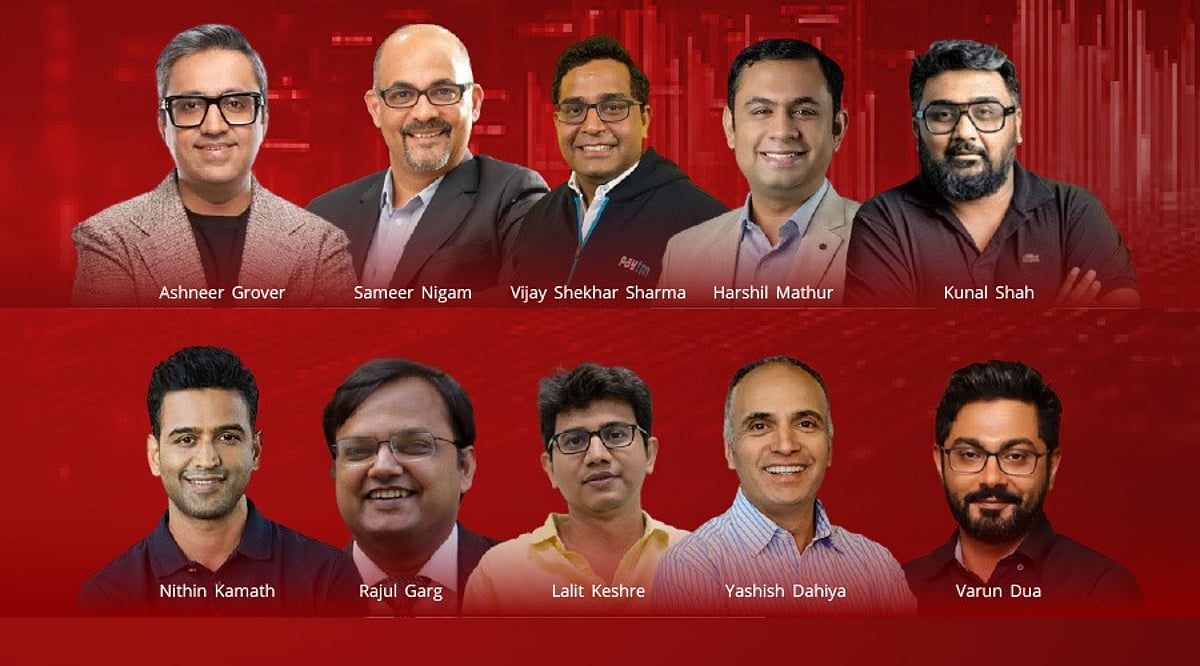
    India’s fintech revolution has transformed digital finance through UPI, AI, and mobile-first innovation. From payments and investing to insurance and lending, the country’s top 10 fintech companies are driving financial inclusion, serving millions of users, and reshaping the future of banking.

    Overview

    India processes over 13 billion UPI transactions monthly, with the fintech market expected to exceed $150 billion by 2025, highlighting its rapid digital finance growth. The top 10 fintech firms lead payments, investing, insurance, and lending, serving millions of users while reshaping India’s financial ecosystem. AI, UPI, Aadhaar, and the Account Aggregator framework power these platforms, enabling faster services, smarter lending, and greater financial inclusion across India.

    The Leaders Redefining India’s Financial Landscape

    PhonePe

    PhonePe stands as India’s largest digital payments platform. Founded in 2015 by Sameer Nigam, Rahul Chari, and Burzin Engineer, it commands the UPI ecosystem with over 600 million registered users. The company’s revenue crossed ₹5,000 crore in FY24. Its platform spans payments, insurance, digital gold, and mutual funds. An IPO targeting a valuation between $9 billion and $10.5 billion remains on the horizon.

    Paytm

    Vijay Shekhar Sharma founded Paytm in 2000, making it one of India’s oldest fintech institutions. It began as a mobile recharge tool and expanded into wallets, merchant payments, lending, and wealth management. Annual revenues hover above ₹7,000 crore. Despite regulatory headwinds in recent years, Paytm holds a deep merchant network that keeps it embedded in India’s payment infrastructure.

    Razorpay

    Harshil Mathur and Shashank Kumar launched Razorpay in 2014 to solve a clear gap: businesses needed a reliable, developer-friendly payment gateway. The company now processes over $150 billion in annual payment volume and carries a valuation of approximately $7.5 billion. Its product suite covers payment gateways, business banking, payroll automation, and lending products used by thousands of Indian startups and enterprises.

    CRED

    Kunal Shah founded CRED in 2018 around a single insight: financially responsible people deserved better rewards. The platform targets high-credit-score users, offering reward points for credit card bill payments and expanding into personal loans, rent payments, and vehicle services. CRED’s valuation stands at around $6.4 billion, with estimated revenues crossing ₹2,000 crore in FY24.

    Zerodha

    Nithin Kamath and Nikhil Kamath built Zerodha in 2010 to lower the cost of investing. Discount brokerage and a clean trading interface on the Kite platform democratized equity markets for millions of retail investors. Revenue crossed ₹6,000 crore, and the company’s valuation sits between $3 billion and $4 billion. Zerodha remains profitable without external funding, which sets it apart in a sector that often burns capital for growth.

    Groww

    Lalit Keshre, Harsh Jain, Neeraj Singh, and Ishan Bansal founded Groww in 2016 to make investing simple for first-time users. The platform covers mutual funds, stocks, ETFs, IPOs, and fixed deposits under one roof. Its clean design and financial literacy focus helped it attract millions of young investors. Groww became a unicorn and continues expanding its wealth-tech offerings across India.

    Pine Labs

    Pine Labs traces its roots to 1998, making it one of the sector’s most seasoned players. Founded by Rajul Garg, the company built a merchant payment ecosystem spanning over one million touchpoints. Its POS machines and digital finance products serve retail chains and small merchants alike. Valuations range between $5 billion and $6 billion. Pine Labs bridges the offline and online commerce divide at meaningful scale.

    PB Fintech

    Yashish Dahiya founded PB Fintech in 2008, and it operates two major platforms: Policybazaar and Paisabazaar. Policybazaar became India’s largest online insurance marketplace, while Paisabazaar helps consumers compare loans and credit products. The company reported revenue growth of 33% year-on-year in recent results. Its market capitalization ranges between $4 billion and $5 billion.

    BharatPe

    Ashneer Grover and Shashvat Nakrani launched BharatPe in 2018 to serve a neglected segment: small merchants. The company introduced zero-fee UPI QR codes for shopkeepers and followed up with merchant loans and POS solutions. Its revenue surpassed ₹1,000 crore, and its merchant network now covers millions of micro and small retailers. BharatPe remains central to financial access for India’s informal business sector.

    ACKO

    Varun Dua founded ACKO in 2016 to reinvent insurance distribution. Traditional agents and lengthy paperwork gave way to a mobile-first platform where users buy, renew, and claim policies entirely online. ACKO offers motor, health, and travel insurance with faster claim settlements. Its digital-first model has attracted a growing customer base, and the company stands among India’s most prominent insurtech names.

    What These Leaders Share

    Several common threads run through all ten companies on this list: each built its product around mobile-first access, reaching users traditional banks could not. All ten leverage UPI, Aadhaar, or the Account Aggregator framework as foundational infrastructure. AI now powers credit scoring, fraud detection, and customer support across most platforms. Financial inclusion remains a stated goal, whether the customer is a salaried professional or a street-side vendor.

    Final Words

    India’s top fintech leaders did not simply build successful businesses. They rewired how a nation of 1.4 billion people manages money. Each company on this list solved a specific friction point, whether that was payment acceptance for merchants, affordable brokerage for retail investors, or instant insurance for urban professionals. The result is a financial ecosystem that is faster, cheaper, and more accessible than it was even five years ago. The next phase will demand more: regulatory clarity, sustainable unit economics, and deeper penetration into rural markets. The foundations, however, are already strong. India’s fintech sector enters the second half of this decade not as a promising experiment but as a proven engine of economic transformation. The names above have earned their place at the forefront. Now comes the harder task of staying there.