Tag: lifelong learning

  • 10 Innovative Technologies Transforming Modern Classrooms

    10 Innovative Technologies Transforming Modern Classrooms

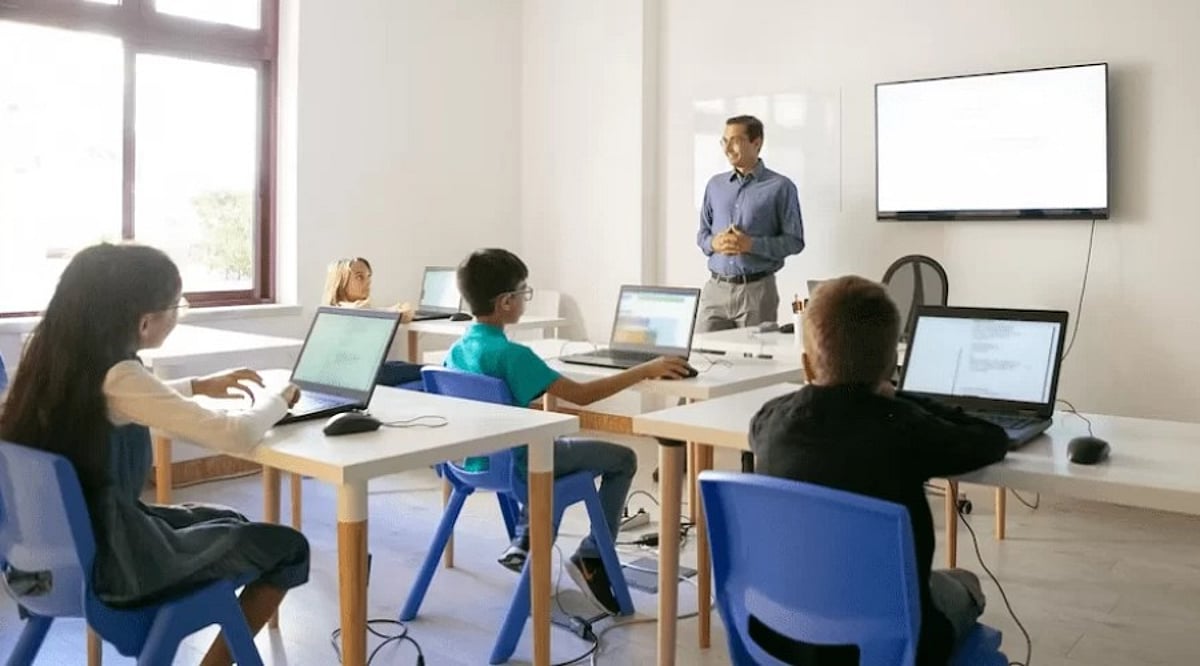
    Technology is reshaping classrooms, making learning more interactive, personalized, and flexible. From AI-driven lessons to smartboards and e-books, these tools empower teachers to teach more effectively while offering students engaging and accessible ways to learn.

    Overview

    Modern technology is making classrooms more interactive, engaging, and easier to manage for both teachers and students. Smart tools like AI, digital learning platforms, and smartboards support different learning styles and boost classroom participation. These innovations help students learn at their own pace while equipping them with future-ready skills.

    Classrooms have evolved significantly. Not long ago, students relied on blackboards and printed books. Today, digital tools make lessons more interesting and accessible. Students can watch videos, attend online classes, and learn in ways that suit them best.

    Teachers remain central to every classroom. Technology provides them with additional tools to explain concepts and keep students engaged. Here are ten technologies that help schools create better learning experiences every day.

    AI-Driven Personalized Learning

    Students learn differently. Some grasp topics quickly, while others need more practice. AI-powered learning platforms tailor lessons to each student’s progress. They recommend additional practice when needed and allow students to move on when ready. This approach helps students learn without feeling rushed or left behind.

    Gamification of Education

    Many students find learning more enjoyable when lessons include fun activities. Schools now use quizzes, points, rewards, and badges to maintain interest. Small, achievable goals make learning exciting and less stressful. These activities also engage students in class and encourage them to do their best every day.

    Digital Pads

    Digital pads are now common in many classrooms. Students can write notes, complete homework, and draw diagrams on a single device. Everything stays organized, making it easy to find old notes. Teachers can also send worksheets and study materials in seconds.

    Smartboards

    Smartboards have made classroom teaching more dynamic. Teachers can display photos, videos, maps, and presentations with a single tap. Students can answer questions on-screen and participate in interactive activities. Everyone gets a clear view, making lessons easier to understand.

    Microlearning Platforms

    Studying for long hours can be exhausting. Microlearning platforms break lessons into short, manageable segments. Students learn one concept at a time, which simplifies learning and improves retention, especially during exam periods.

    Social-Emotional Learning Tools

    School is about more than grades. Students also need to develop collaboration, emotional management, and problem-solving skills. Social-emotional learning tools include simple activities and classroom discussions that support personal growth alongside academic achievement.

    Lifelong Learning Platforms

    Learning shouldn’t stop after school. Lifelong learning platforms allow students to acquire new skills at their own pace. Whether it’s coding, communication, or a new language, these platforms make continuous education accessible at any stage of life.

    E-Books

    E-books have become a practical choice for many schools. Students can carry numerous books on a single device instead of heavy backpacks. Features like search, highlighting, and note-taking enhance the reading experience. Some e-books also include videos and practice questions.

    Remote Learning

    Remote learning has made education more flexible. Students can attend classes from home when they can’t be at school. Live sessions, recorded lessons, and online discussions keep them connected with teachers and classmates. This flexibility means learning can happen almost anywhere.

    Document Camera

    Document cameras simplify classroom demonstrations. Teachers can place a book, worksheet, or science experiment under the camera, and it displays on a large screen. Every student gets a clear view without leaving their seat—especially useful for practical lessons.

    Personal Recommendation: Three Technologies Every Student Should Try

    If I had to choose three, they would be AI-Driven Personalized Learning, Smartboards, and Microlearning Platforms. AI-powered learning provides the extra support students need without pressure. Everyone learns at their own pace. Smartboards bring lessons to life with pictures, videos, and live examples, making tough topics easier to grasp. Microlearning platforms are perfect for busy students—bite-sized lessons fit into daily routines and make exam revision less stressful. Together, these tools make learning more fun, improve understanding, and build student confidence.

    Learning Is Becoming Better Every Day

    Technology has opened new doors for both students and teachers. Classrooms are more interactive, lessons more interesting, and learning more flexible. Information is more accessible than ever. However, teachers remain the most important part of education. Technology works best when it supports teaching, not replaces it. With more tools in schools, students can learn more, explore new ideas, and prepare for the future with confidence.

    FAQs

    1. How is technology improving today’s classrooms?
    Technology makes lessons more interactive through videos, quizzes, and digital activities. It helps teachers explain topics clearly while offering students different ways to learn based on their needs.

    2. Which classroom technology is most useful for students?
    AI-driven personalized learning is one of the most useful tools because it adjusts lessons to each student’s progress. Smartboards and microlearning platforms are also great for making learning easier and more engaging.

    3. Can technology replace teachers in the future?
    No. Technology supports teachers but cannot replace them. Teachers guide students, answer questions, and create meaningful learning experiences that digital tools alone cannot provide.

    4. Why are schools moving from printed books to e-books?
    E-books are easier to carry, simple to update, and offer features like search, bookmarks, notes, and interactive content. They provide quick access to learning materials anytime.

    5. What should schools consider before using new classroom technology?
    Schools should choose tools that are easy to use, support learning goals, and are accessible to both teachers and students. Proper training and reliable internet access are also essential for best results.


  • How AI Is Revolutionizing Lifelong Learning Across Industries in 2026

    How AI Is Revolutionizing Lifelong Learning Across Industries in 2026

    Artificial intelligence is reshaping lifelong learning by making education more personalized, accessible, and skill-focused in 2026. AI-powered learning platforms now adapt lessons based on individual progress, enabling learners to master concepts at their own pace.

    Professionals are leveraging AI assistants to acquire coding, business, marketing, design, and communication skills faster than ever before. Companies are adopting AI-driven training programs to help employees reskill for emerging technologies and evolving job roles. Universities and online education providers are integrating AI tutors that deliver instant feedback and personalized study support.

    Industries such as healthcare, finance, manufacturing, and retail are utilizing AI learning tools to boost workforce productivity and ensure compliance. Generative AI helps learners create summaries, practice interviews, solve problems, and prepare for professional certifications. Experts recommend balancing AI assistance with critical thinking, fact-checking, and practical experience to build lasting skills.

    As AI continues to evolve, lifelong learning is becoming an essential strategy for career growth and staying competitive across every industry.

  • 8 Essential Skills Students Need to Succeed in an AI-Driven Future

    8 Essential Skills Students Need to Succeed in an AI-Driven Future

    Artificial intelligence is transforming how people learn, work, and solve problems, but technical knowledge alone is not enough to succeed. Students who develop critical thinking, adaptability, communication, collaboration, and digital literacy skills are often better prepared for college, careers, and a rapidly evolving workplace.

    Many organizations now recognize the need for skills that persist in addition to technical competencies. In light of the increasing use of AI in our day-to-day lives, those learners who are capable of assessing information, collaborating, and engaging in lifelong learning will possess a better platform for future success.

    Critical Thinking

    Though AI technology can produce answers in seconds, learners require skills to evaluate and think critically about what they have learned in order to make sound decisions. Critical thinking enables learners to identify when information is incorrect, biased, or from unreliable sources. Effective critical thinking requires one to question, compare, and dig deeper into issues—a skill that becomes increasingly essential as reliance on AI technology grows.

    Digital Literacy

    Students entering college or careers must understand how technology operates and how to use it ethically. Digital literacy involves more than basic computer knowledge; it includes internet research, cybersecurity, digital communication, and the operation of AI tools.

    Modern learning environments often support personalized educational pathways. Programs that offer a fully accredited diploma built around the student combine flexible, personalized learning with accredited coursework, allowing students to develop digital literacy, self-management, and technology skills at their own pace. These learning environments help prepare students for higher education, emerging careers, and an increasingly AI-driven world.

    As education becomes more technology-focused, students benefit from learning models that encourage independence, adaptability, and continuous skill development alongside traditional academic achievement.

    Adaptability

    Technology continues to evolve at a remarkable pace. Many jobs available today did not exist a decade ago, and future careers will likely require skills that are still emerging. Adaptable students are more comfortable navigating change. They learn how to adjust to new tools, different work environments, and shifting expectations without becoming overwhelmed.

    Signs of adaptability often include:

    • Learning new software quickly
    • Embracing constructive feedback
    • Exploring unfamiliar subjects
    • Adjusting to changing priorities
    • Remaining open to new ideas

    Communication Skills

    Clear communication remains one of the most valuable abilities in any field. Students must be able to express ideas effectively through writing, speaking, presentations, and digital platforms. AI can assist with drafting content, but successful communication still depends on human judgment, audience awareness, and emotional intelligence. Employers consistently rank communication among the most important workplace skills.

    Students can strengthen communication through:

    • Group discussions
    • Public speaking activities
    • Writing projects
    • Collaborative presentations
    • Peer feedback exercises

    Collaboration

    Many modern workplaces rely on teams that span departments, locations, and even countries. Students who learn to collaborate effectively are often better prepared for professional environments. Collaboration involves listening, sharing ideas, resolving conflicts, and contributing toward common goals. AI tools may support productivity, but successful teamwork still depends on people working together effectively.

    Self-Directed Learning and Personal Responsibility

    Self-directed learning has become increasingly crucial. With numerous online programs and AI software available, students can learn beyond the classroom. Learning success hinges on taking charge of one’s own education and remaining motivated. Self-directed learners tend to adopt behaviors that help them succeed both academically and professionally.

    Important self-management skills include:

    • Time management
    • Goal setting
    • Organization
    • Accountability
    • Prioritization

    Creativity and Problem Solving

    While artificial intelligence can process information quickly, creative thinking remains uniquely human. It allows students to find innovative solutions that technology alone cannot produce. Creative thinking involves experimentation, curiosity, and exploration—benefiting students in both educational settings and future careers.

    Lifelong Learning

    Education is no longer a final goal but an ongoing journey. The emergence of new technologies, industries, and career paths demands continuous education throughout life. Students who develop a growth mindset are usually better positioned to adapt as industries evolve.

    A commitment to continuous learning may include:

    • Professional certifications
    • Online courses
    • Industry workshops
    • Independent research
    • Skills-based training

    Prepare for the Future Today

    The competencies students need to thrive in an AI-powered world extend far beyond technology. Critical thinking, communication, adaptability, collaboration, creativity, digital literacy, and lifelong learning can help learners navigate future complexities. Students who work on acquiring these competencies today will be better positioned for future opportunities.

    Educational programs that combine academic rigor with flexible, student-centered learning play an important role in helping learners build these future-ready skills.

  • MIT Classes and Programs: A Gateway to Lifelong Learning and Innovation

    MIT Classes and Programs: A Gateway to Lifelong Learning and Innovation

    Massachusetts Institute of Technology (MIT) offers an unparalleled range of classes and programs that extend far beyond the traditional campus. From professional education and open access to world-class curriculum, to specialized initiatives in urban planning and climate science, MIT continues to shape the future of learning. This collection highlights some of the most impactful stories showcasing how MIT’s educational offerings ripple across the globe.

    Key Highlights

    • The Ripple Effect of Learning at MIT: MIT Professional Education helped Ignacio Vazquez SM ’22 bridge technical mastery and strategic insight, leading to his role as MIT System Design and Management industry and certificate director.
    • MIT Open Learning Reaches the South Pole: John Della Costa uses OpenCourseWare to engage fellow Antarctica “winterovers” in physics content and build community.
    • Initiative for New Manufacturing (INM): In its first year, INM has accelerated new manufacturing technologies through research, workforce development, and industry engagement.
    • MIT SPURS Looks to the Future: Approaching its 60th year, the international program reshapes its curriculum to address emerging technologies and urban-policy challenges.
    • Bridging Human Movement with Digital Technology: MIT.nano Immersion Lab collaborates with Emerson College students to advance virtual production art.
    • Student-Led Plasma Physics Under Alaska’s Aurora: Distributed instruments observe auroral structures and probe space plasma in real-world conditions.
    • Science Writing Meets The Associated Press: Students develop and pitch local climate stories with visual journalists from the AP.
    • Q&A: Path to a PhD in Computational Science: Emily Williams becomes the first graduate of MIT’s Center for Computational Science and Engineering.
    • MIT Asia Real Estate Initiative Expands: Hubs in Tokyo, Dubai, and Hong Kong engage industry leaders and alumni.
    • A Day in the Life of MIT MBA Student Patrick Yeung: Sustainability Initiative provides opportunities to lead toward a more sustainable future.
    • A Bet That Paid Off 500 Million Times Over: Twenty-five years of MIT OpenCourseWare and MIT Open Learning’s bold decision to open curriculum to the world.
    • MIT Practicum in Ukrainian City Development: Students work with leaders from Vinnytsia on innovation ecosystems and workforce development amid war.
    • Building “Hardcore” Advanced Machines: In 2.72/2.270 (Elements of Mechanical Design), students learn that if it doesn’t break physics, it’s possible.
    • Q&A: Expanding Global Reach Through Universal Learning: Dimitris Bertsimas and Megan Mitchell discuss MIT Open Learning’s new educational initiative.

    These stories illustrate the breadth and depth of MIT’s commitment to education—from lifelong learning and open access to hands-on projects and international partnerships. Whether you are a prospective student, a professional seeking upskilling, or a curious mind, MIT’s classes and programs offer pathways to transformative knowledge and real-world impact.