Tag: liquid cooling

  • RedMagic Astra 2 Review: A Compact Android Gaming Tablet with a 185Hz OLED Display

    RedMagic Astra 2 Review: A Compact Android Gaming Tablet with a 185Hz OLED Display

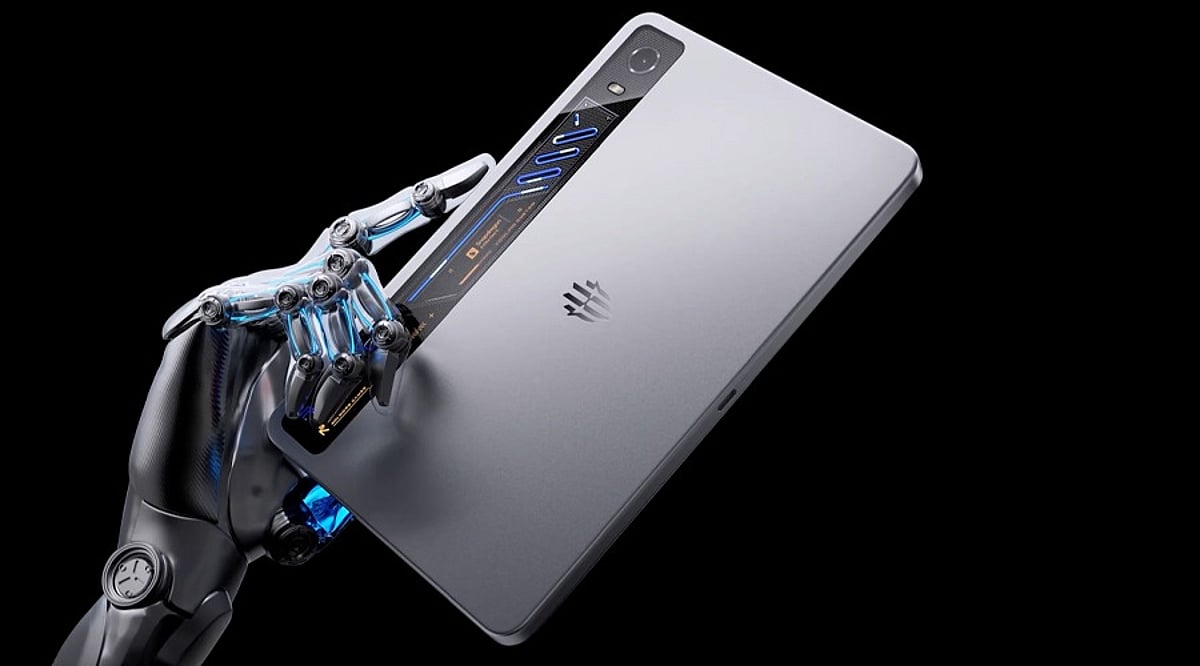
    The RedMagic Astra 2 is a small and compact Android gaming tablet designed for enthusiasts who demand top-notch performance in a portable form factor. Powered by the Qualcomm Snapdragon 8 Elite Gen 5 processor, it features a 9.06-inch OLED screen with an astonishing 185Hz refresh rate, an advanced liquid cooling system, and gaming-optimized software. Together, these specs deliver a superior gaming experience for an Android tablet.

    However, the device does exhibit significant performance throttling under heavy load and lacks cellular connectivity. Despite these drawbacks, it remains a strong contender in the Android gaming tablet market.

    Specifications at a Glance

    • Processor: Qualcomm Snapdragon 8 Elite Gen 5
    • Display: 9.06-inch OLED, 185Hz refresh rate
    • Cooling: Advanced liquid cooling system
    • Software: Gaming-optimized custom OS
    • Connectivity: Wi-Fi only (no cellular)

    Pros and Cons

    Pros

    • Exceptional gaming performance with top-tier processor
    • Ultra-smooth 185Hz OLED display
    • Effective liquid cooling reduces heat buildup
    • Compact and portable design
    • Dedicated gaming software for enhanced experience

    Cons

    • Noticeable performance throttling during sustained heavy use
    • No cellular connectivity for on-the-go data

    Final Verdict

    The RedMagic Astra 2 is an excellent Android gaming tablet that packs premium specifications into a small, portable body. The Snapdragon 8 Elite Gen 5 chipset, along with the lightning-fast 185Hz OLED display, robust cooling system, and specialized gaming software, create a truly immersive experience for casual and professional gamers alike. While the sustained throttling and lack of cellular support prevent it from being perfect, these issues are relatively minor given the tablet’s overall capabilities. For gamers seeking a dedicated, high-performance Android tablet, the RedMagic Astra 2 is a compelling choice.
  • RedMagic Astra 2 Review: Does Liquid Cooling Make Gaming Tablets Worthwhile?

    RedMagic Astra 2 Review: Does Liquid Cooling Make Gaming Tablets Worthwhile?

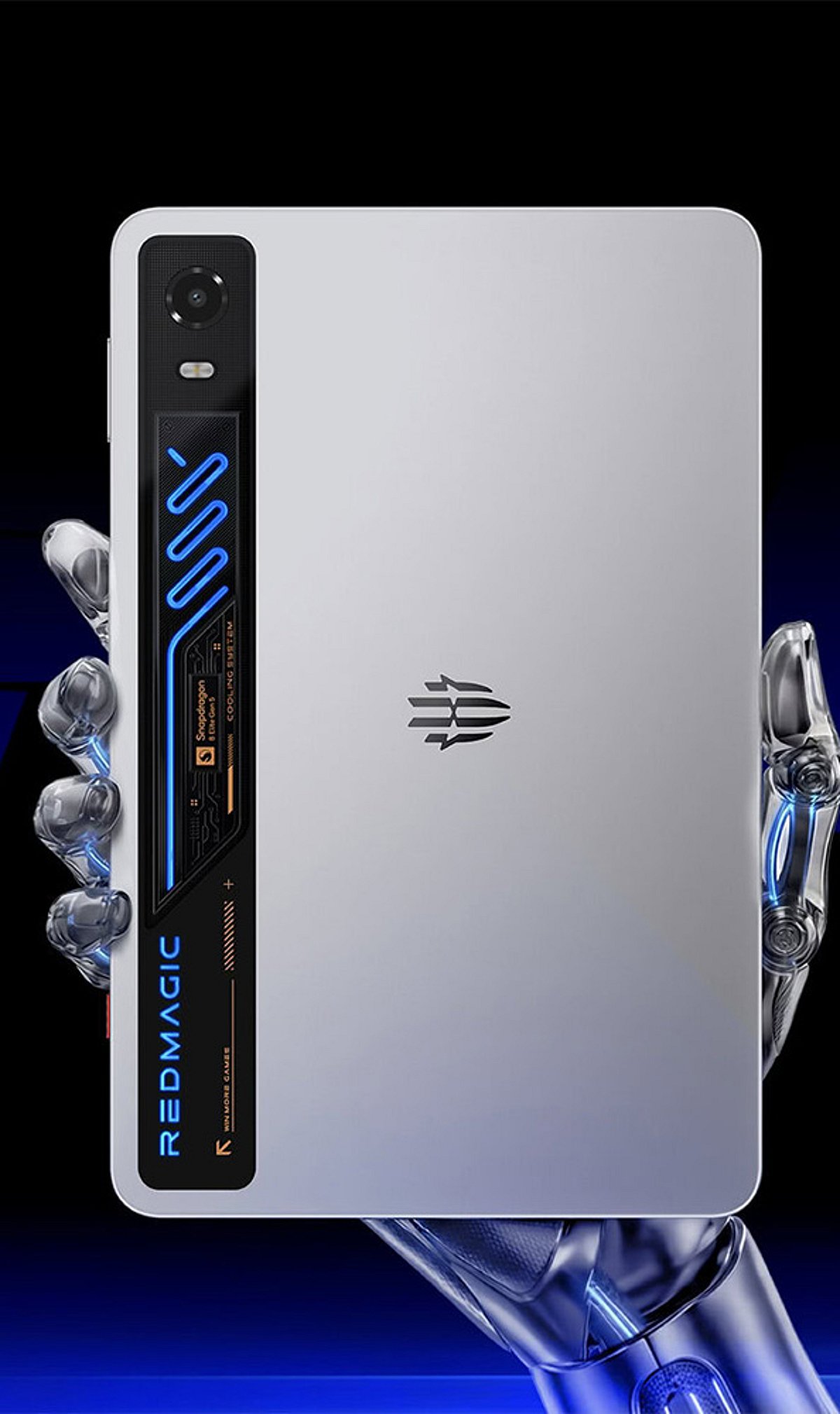
    The RedMagic Astra 2 enters the portable gaming scene with a bold proposition: liquid cooling in a tablet form factor. While traditional gaming tablets often struggle with heat management during extended sessions, the Astra 2 promises sustained performance through an innovative cooling system. But does the technology justify its premium price tag, and how does it compare to established alternatives like the Steam Deck?

    Liquid Cooling Benefits

    The Astra 2’s liquid cooling system actively manages heat during intense gaming workloads. By dissipating heat more effectively than passive cooling, the tablet reduces the risk of thermal throttling and unexpected shutdowns, allowing for longer gaming sessions without performance dips. This is a significant advantage for users who play demanding titles for hours at a time.

    Gaming Performance and Hardware

    Powered by a high-end processor, the Astra 2 handles graphically intensive mobile games and multitasking with ease. The combination of strong hardware and effective cooling ensures smooth frame rates even during prolonged use. The tablet runs a customized version of Android, which gives access to a vast library of mobile games but limits compatibility with some desktop titles available on Windows or SteamOS.

    Display and Experience

    The 9.06-inch OLED display delivers deep colors and high contrast, with a high refresh rate that enhances both gaming and media consumption. The screen’s responsiveness makes it ideal for fast-paced genres like shooters and racing games.

    Price and Value

    Starting at around $699, the Astra 2 competes directly with mid-range gaming laptops and handheld consoles. While the liquid cooling and OLED screen are unique selling points, the price raises questions about overall value, especially considering the Android platform’s limitations compared to PC-based alternatives.

    Alternatives and Competition

    The Steam Deck and other handheld gaming PCs offer broader game libraries and often better performance for the same price. The Astra 2’s niche appeal lies in its tablet form factor and superior display, but buyers should weigh these against the more versatile gaming ecosystems available.

    Maintenance and Longevity

    RedMagic provides a one-year warranty, but the liquid cooling system and specialized components could lead to expensive repairs down the line. Potential buyers should consider the total cost of ownership beyond the initial purchase.

    In conclusion, the RedMagic Astra 2 is a compelling option for mobile gamers who prioritize display quality and sustained performance in a tablet form. However, its high price and platform limitations mean it may not be the best choice for everyone. Those who value game library diversity and long-term value might find better options in dedicated handheld gaming PCs.

  • 7 Key Technologies Shaping the Next Generation of AI Data Centers

    7 Key Technologies Shaping the Next Generation of AI Data Centers

    AI data centers are undergoing a major transformation to keep pace with the demands of next-generation artificial intelligence workloads. From advanced chips to smarter cooling and networking, here are seven technologies driving the evolution.

    1. AI Accelerators and Chiplet-Based Processors

    New AI accelerators and chiplet-based processors pack more computing power into each rack, enabling data centers to handle large-scale AI training and inference tasks more efficiently.

    2. Liquid Cooling for High-Density Racks

    As powerful chips generate more heat, liquid cooling is becoming essential. This technology improves thermal efficiency and reduces energy consumption in high-density AI racks.

    3. CXL Memory Technology

    CXL (Compute Express Link) memory lets processors and accelerators share memory resources efficiently, helping AI systems manage growing data and memory demands.

    4. High-Speed Optical Networks (800G and 1.6T)

    High-speed 800G and 1.6T optical networks move massive amounts of data between servers, switches, and accelerator clusters with lower power consumption.

    5. Silicon Photonics

    Silicon photonics uses light to transmit data across data center networks. Co-packaged optics and optical links improve bandwidth while reducing connectivity bottlenecks and energy demands.

    6. AI-Powered Power Management

    AI-driven power management monitors workloads, cooling, and equipment in real time. Smarter systems adjust resources, detect problems, and reduce unnecessary energy use.

    7. Purpose-Built Inference Chips and Edge Data Centers

    Purpose-built inference chips are gaining traction as AI shifts from training large models to running real-time applications like chatbots, coding tools, and voice agents. Edge data centers bring computing closer to users and devices, while renewable power, batteries, and microgrids support growing electricity needs.

    Together, advanced chips, liquid cooling, CXL memory, optical networking, smart power systems, and edge computing are reshaping data centers for faster and more efficient AI workloads.

  • Anthropic’s $10B Norway Compute Deal Taps 121MW of NVIDIA Vera Rubin Capacity

    Anthropic’s $10B Norway Compute Deal Taps 121MW of NVIDIA Vera Rubin Capacity

    Anthropic has reportedly signed a six-year, $10 billion compute agreement with Volta Infra Holdings for 121 megawatts of NVIDIA Vera Rubin capacity in Norway. Bloomberg identified Anthropic as the unnamed AI laboratory behind the contract, citing people familiar with the matter.

    Key Details at a Glance

    • Parties: Anthropic (reported), Volta Infra Holdings, and Bitdeer
    • Capacity: 121 critical IT megawatts of NVIDIA Vera Rubin compute
    • Location: Bitdeer’s hydro-powered Tydal campus in Norway
    • Timeline: First capacity by December 31, 2026; second phase by March 31, 2027

    A Major Early Win for Volta Infra

    Volta, which began operations in January 2026, will supply the NVIDIA-based infrastructure from Bitdeer’s Tydal site. The company describes itself as an integrated compute platform that combines infrastructure capital, secured power, and industrial-scale development. Co-founders Boada and Sofia Gumuzio previously worked at Brookfield Asset Management.

    Volta operates within NVIDIA’s Cloud Partner program, a network of providers that deploy NVIDIA GPUs while arranging physical data center sites through landlords and infrastructure owners.

    Lease Terms Give Bitdeer Long-Term Revenue Visibility

    Bitdeer’s Tydal subsidiary signed a 16-year lease with a Volta unit covering 121 critical IT megawatts and roughly 133 gross megawatts. Scheduled payments total approximately $4.7 billion during the base term. An optional eight-year extension could lift the total contract value to about $8 billion over 24 years.

    • Lease pricing begins near $202 per kilowatt-month, with 3% annual increases.
    • Bitdeer expects net operating income margins near 90% from contracted revenue.
    • Volta’s obligations carry about $1.3 billion in standby letters of credit, supported by affiliates of JPMorgan and another unnamed global institution.
    • The structure resembles Alphabet’s $43.8 billion in lease guarantees across its TPU ecosystem.

    Bitdeer shares rose as much as 23% on the news before settling about 10% above the previous close.

    Hydropower and Liquid Cooling Shape the Buildout

    Dell Technologies will provide NVIDIA’s Vera Rubin platform. Each Vera Rubin NVL72 rack combines 72 Rubin GPUs and 36 Vera CPUs inside a liquid-cooled chassis. Liquid cooling is required because chip-level heat density exceeds the limits of standard air cooling, and this shapes the design of the four planned data halls. Bitdeer has operated in Norway since 2018 and acquired the Tydal site in 2024, with delivery planned in two phases across those four halls.

    Norway produces more than 90% of its electricity from hydroelectric sources. Its cold climate helps Nordic facilities reach power usage effectiveness ratios near 1.1, versus about 1.58 for the average U.S. facility. At 121 megawatts of IT load, that efficiency advantage can free about 48 megawatts that would otherwise go to cooling and overhead.

    Anthropic’s Expanding Compute Footprint

    Anthropic previously signed a 300-megawatt agreement for SpaceX’s Colossus 1 facility in Memphis and has arranged computing deals with Amazon, Google, and Fluidstack. In November 2025, NVIDIA and Microsoft agreed to invest a combined $15 billion in Anthropic, alongside a $30 billion Azure compute purchase at a valuation near $350 billion.

    The reported Norway deal secures six years of Vera Rubin capacity for Anthropic, gives Volta a major launch customer, and locks in long-term lease income for Bitdeer. Delivery depends on two construction phases scheduled between late 2026 and March 2027 at Tydal. The disclosures do not state whether Anthropic will own the campus or the chips, nor do they divide capacity between model training and inference.

  • MIT Spinout Ferveret Uses Nuclear-Inspired Cooling to Slash Data Center Energy and Water Use

    MIT Spinout Ferveret Uses Nuclear-Inspired Cooling to Slash Data Center Energy and Water Use

    Data centers are expanding rapidly to support the rise of artificial intelligence, and their energy consumption is projected to account for up to 17 percent of U.S. electricity by the end of the decade. Currently, about one-third of that power goes toward cooling the chips that run AI models. A new startup founded by two MIT researchers aims to change that by adapting a technique originally designed for nuclear reactors.

    Ferveret, co-founded by former MIT postdoc Reza Azizian and MIT Professor Matteo Bucci, has developed a liquid cooling system that uses no water and significantly less electricity than traditional air-based methods. The system submerges computer servers in a specialized fluid that absorbs heat far more efficiently than air. What sets it apart from other liquid cooling solutions is the size and behavior of the bubbles it generates: Ferveret’s Adaptive Phase Cooling (APC) technology produces much smaller bubbles that detach from the server surfaces more frequently, accelerating the heat transfer process.

    The company is already testing its technology with several major players, including CleanSpark, FuriosaAI, and Switch, one of the largest data center operators in the U.S. In collaboration with UCLA’s computer science department, Ferveret demonstrated that its APC solution improves computational power efficiency by 15 percent compared to state-of-the-art liquid cooling. When combined with the startup’s power control software, the system can boost the number of tokens generated per watt by up to 35 percent, according to the company.

    “Our goal is to make data centers as sustainable as possible and help them use every single watt of power to generate tokens, which are the most useful outputs,” says Azizian. “Our system enables the operation of more powerful chips, it helps data centers waste a lot less energy, and it accomplishes all that with zero water consumption.”

    The founders’ journey began during Azizian’s postdoc at MIT in 2013, where he worked with Bucci on heat transfer in nuclear reactors. After stints at Microsoft and Nvidia, Azizian realized the cooling inefficiencies in data centers firsthand. “I thought, ‘Holy crap, this is not how you cool facilities,’” he recalls. The pair founded Ferveret in 2021, applying decades of knowledge from nuclear engineering to optimize heat removal in computing environments.

    Ferveret’s system uses a liquid with a low boiling point and no toxic PFAS chemicals. The process, inspired by subcooled boiling in reactors, creates bubbles that quickly recondense, hastening the cooling cycle. The modular design—each server fits into a small box—makes deployment easier than traditional immersion tanks. The company also offers control software that dynamically adjusts power to each server for maximum efficiency.

    Beyond energy savings, the water-free cooling opens new possibilities for data center location. “The sun shines in places where you don’t have much water, so the advantage of us being water-free is we allow you to build data centers where you have solar energy but nothing to cool the data center down,” says Bucci. This could enable data centers in regions like Africa, the Middle East, and parts of America that lack water resources.

    Ferveret is part of Nvidia’s Inception program and is in talks with major cloud computing companies. The startup plans to announce expanded partnerships later this year as it scales its technology to support the growing AI industry without straining the planet.