
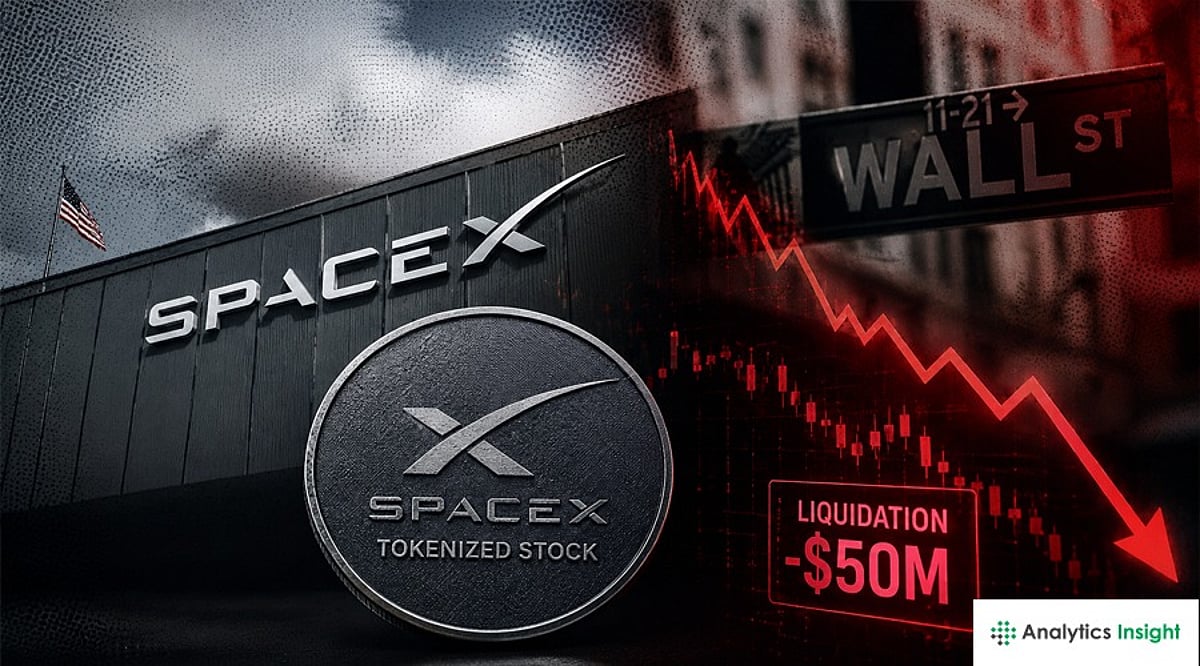
SPCX perpetual contracts have witnessed over $50 million in liquidations within 48 hours as SpaceX shares dipped below their $150 Nasdaq opening price. The event underscores the heightened volatility and risk inherent in leveraged tokenized stock products, which can react far more aggressively than traditional equity markets.
What Happened
According to market data, SPCX-linked perpetual contracts recorded more than $50 million in forced closures, trailing only Bitcoin and Ethereum in liquidation volume among crypto derivatives during that period. The liquidations followed a sharp decline in SpaceX stock, which fell below its Nasdaq debut price after a major drawdown. Investors who bought shares above the company’s $135 initial public offering price are now facing losses.
How SPCX Differs from Traditional Stock Ownership
SPCX products are pre-IPO or equity perpetual contracts that offer leverage, cash settlement, and funding mechanisms. Unlike owning actual shares, these instruments provide price exposure without ownership rights, voting rights, or share delivery. Binance lists SPCXUSDT as a USDT-settled pre-IPO perpetual contract, while Coinbase explains that such products settle entirely in cash. Crypto.com describes a structure allowing conversion between SpaceX pre-IPO perpetuals and equity perpetuals depending on platform mechanics.
This structure places traders in a derivatives-driven environment where margin requirements and funding rates dictate outcomes. If prices move sharply against a position, exchanges can liquidate traders automatically at any time—without waiting for a market close.
Liquidation Pressure Builds Around Leveraged Exposure
The $50 million liquidation figure is a notable signal because Bitcoin and Ethereum typically dominate liquidation rankings due to deep liquidity and large leveraged positions. SPCX joining that group reflects strong demand for SpaceX-linked exposure. Liquidation risk does not require a total collapse in the underlying asset—a combination of leverage, open interest, and adverse price movement can easily trigger forced exits.
While traditional investors may still be evaluating whether the decline reflects temporary weakness or fundamental concerns, perpetual contract markets react instantly, closing positions as soon as collateral support drops.
Tokenized Stock Perpetuals Face a Different Risk Cycle
Tokenized stock perpetuals trade around the clock, using venue-specific mark prices and funding systems while enforcing margin requirements continuously. This continuous trading can amplify disagreements over value into sudden liquidation pressure, even as traditional investors are still assessing the stock’s outlook.
These products may ultimately serve as effective risk-transfer markets, but that will require improved liquidity and reduced leverage. Until then, high open interest and persistent volatility will likely sustain heavy market stress.
What’s Next
SpaceX stock slipped below its Nasdaq opening price, triggering the $50 million liquidation wave for SPCX. The event highlights how tokenized stock perpetuals can lead to rapid forced exits when leverage and margin rules kick in. Market participants are now watching to see if the asset stabilizes and whether open interest, funding rates, and liquidation activity will flatten out.