
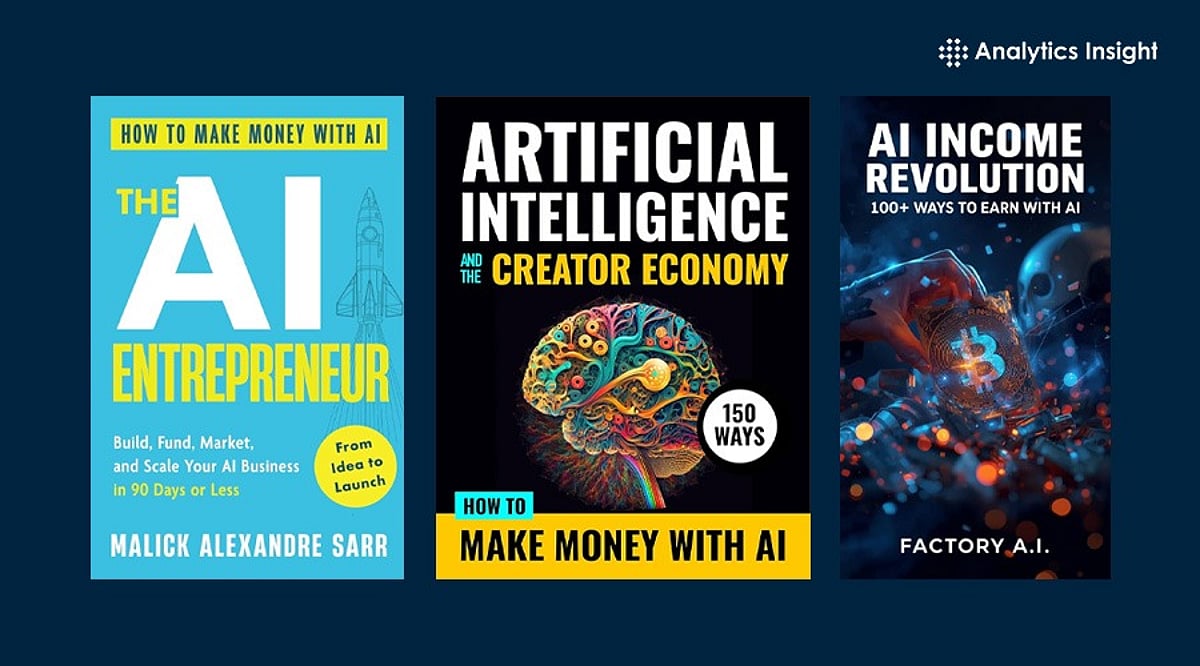
The world of artificial intelligence has expanded far beyond technologists and large corporations. Today, freelancers, entrepreneurs, marketers, and content creators are leveraging AI to work faster, save time, and increase their earnings. However, simply using AI tools isn’t enough—understanding how they work and how to apply them effectively is crucial.
Reading well-chosen books remains one of the best ways to build that understanding. Whether you’re a beginner or an experienced professional, the right AI books can sharpen your skills and open new career opportunities. Here are 10 essential AI books that can help you make money in 2026.
1. Zero to One-Person AI Agency – Abhishek Ashtekar
This book is ideal for anyone looking to start an AI-powered business. It explains how a single individual can launch and run an AI agency without hiring employees. You’ll learn how to offer AI services, acquire clients, automate workflows, and scale operations. The focus is on practical, actionable advice for turning AI into income.
2. The AI Advantage – Thomas H. Davenport
Davenport explores how organizations are using AI to boost efficiency, cut costs, and make smarter decisions. This book helps professionals and business owners identify where AI can create new opportunities and generate revenue.
3. Prediction Machines – Ajay Agrawal, Joshua Gans, Avi Goldfarb
Written by economics and technology experts, this book explains that AI’s core value lies in its ability to make predictions. It shows how businesses can forecast consumer behavior, market trends, and outcomes—enabling entrepreneurs to discover profitable ventures.
4. Architects of Intelligence – Martin Ford
A collection of interviews with leading AI researchers, this book offers insights into current advances and future developments. While not directly about making money, it helps readers anticipate AI trends that can inform career and investment decisions.
5. Machine Learning Yearning – Andrew Ng
Ng focuses on the practical aspects of building machine learning projects, covering how to plan, refine, and manage AI initiatives. Entrepreneurs and developers will find principles here that help create commercially valuable AI solutions.
6. Deep Learning – Ian Goodfellow, Yoshua Bengio, Aaron Courville
This is a comprehensive technical guide to the technology behind modern AI tools. Though advanced, it provides a solid foundation for understanding AI, which can lead to better career opportunities and higher earning potential.
7. Superintelligence – Nick Bostrom
Bostrom examines what might happen when AI surpasses human intelligence. The book discusses risks and benefits, encouraging readers to think about long-term AI trends that could shape business and investment strategies.
8. Life 3.0 – Max Tegmark
Physicist Max Tegmark explores how AI could transform society and the economy. The book presents various future scenarios, helping readers understand upcoming industry changes and identify new job trends and opportunities.
9. Human Compatible – Stuart Russell
As AI becomes more powerful, safety and ethics are critical. This book covers AI safety and its importance, a topic increasingly relevant for companies and governments. Knowledge in this area can lead to careers in AI consultancy and governance.
10. You Look Like a Thing, and I Love You – Janelle Shane
For those who prefer a lighter read, this book explains AI in a fun, accessible way. It covers basic machine learning concepts without technical jargon, making it perfect for beginners.
Why Reading AI Books Matters
The AI industry is growing rapidly, and while videos and online tutorials are helpful, books often provide a deeper, more structured understanding. Reading AI books helps you acquire new skills, stay current with industry trends, and discover innovative ways to leverage AI for profit.
Final Thoughts
AI is creating opportunities across nearly every sector. Those who understand AI are better positioned to seize these opportunities. The books listed above offer practical business advice, technical knowledge, and insights into AI’s future. For immediate action, start with Zero to One-Person AI Agency, The AI Advantage, and Prediction Machines. For deeper technical skills, Machine Learning Yearning and Deep Learning are excellent choices. These books will equip you with the skills needed to thrive in the coming years.
Frequently Asked Questions
1. Which AI engineering book is best for beginners?
Beginners can start with Hands-On Large Language Models or AI Engineering: Building Applications with Foundation Models. They explain key concepts and provide hands-on guidance.
2. Do I need coding experience to read AI engineering books?
Some books require basic programming knowledge, while others focus on concepts. Familiarity with Python can help you follow examples and implement projects.
3. Which books are best for learning large language models (LLMs)?
Hands-On Large Language Models and Build a Large Language Model (From Scratch) are excellent choices, covering how LLMs work, training, and deployment.
4. Can AI engineering books help me get a job in AI?
Yes, they build valuable skills in machine learning, deployment, prompt engineering, and AI systems—skills highly sought by employers.
5. What topics should AI engineers focus on?
Focus on large language models, prompt engineering, retrieval-augmented generation (RAG), AI agents, MLOps, and deployment—these areas drive the latest AI developments.