Tag: logistics

  • Flipkart Minutes Launches Standalone App for 10-Minute Delivery Across 250+ Categories

    Flipkart Minutes Launches Standalone App for 10-Minute Delivery Across 250+ Categories

    Flipkart has officially launched its standalone Flipkart Minutes app in India, intensifying the race for quick-commerce dominance. The Android app, rolled out on September 9, promises 10-minute deliveries across groceries, electronics, gadgets, and daily essentials.

    A New Identity for Flipkart Minutes

    The launch gives Flipkart Minutes a separate identity as competition heats up in India’s fast-delivery market. With the standalone app, Flipkart aims to attract urgent shoppers through faster access, a broader product range, and targeted offers and discounts.

    The app is currently listed on the Google Play Store for Android devices. The listing, updated September 8, shows the app occupies around 20MB. Previously, the service operated as a dedicated section inside the main Flipkart shopping app. The standalone app is expected to boost visibility around quick purchases.

    What Can Shoppers Buy?

    Flipkart Minutes covers a wide range of products, including:

    • Fresh fruits and vegetables
    • Groceries and dairy products
    • Breakfast items, snacks, and beverages
    • Home supplies and cleaning products
    • Gifts and festive essentials
    • Flowers and chocolates
    • Headphones, Bluetooth earphones, smartwatches, and LED lights

    The app description promises “everything you need & want in just 10 minutes,” while highlighting deals and discounts across its expanding catalogue.

    Expanding Fulfilment Network

    The standalone launch follows rapid expansion of the Flipkart Minutes fulfilment network. Flipkart now operates more than 1,000 micro-fulfilment centres across over 130 cities and 8,000 PIN codes. The service has also grown beyond basic groceries to cover more than 250 categories.

    Flipkart reported fivefold order growth over the previous year, with smaller cities gaining significant momentum. This expanded footprint gives Flipkart a stronger base to challenge established quick-commerce leaders such as Blinkit, Zepto, and Swiggy Instamart.

    Competing Beyond Speed

    The competitive fight now extends beyond delivery speed and grocery availability. Electronics and higher-value products could give Flipkart Minutes another route toward larger customer baskets. Recent industry data also shows Minutes narrowing the order-value gap with Blinkit. Excluding mobile phones, Minutes reportedly records a net order value of Rs. 500 to Rs. 530.

    The standalone app marks more than a branding change for Flipkart Minutes. It signals a sharper push to make quick commerce a major part of Flipkart’s growth strategy. The next phase could depend on store density, delivery reliability, and adoption across smaller Indian cities.

  • 10 Indian Logistics Startups Revolutionizing Supply Chains in 2026

    10 Indian Logistics Startups Revolutionizing Supply Chains in 2026

    India’s logistics sector is undergoing a profound digital transformation, driven by a wave of innovative startups. These companies are deploying artificial intelligence, robotics, automation, and real-time data to tackle long-standing challenges in freight, fleet management, warehousing, and supply-chain visibility. As e-commerce and manufacturing expand, the demand for faster, smarter, and more transparent logistics solutions has never been greater.

    Here are 10 Indian logistics startups reshaping the nation’s supply chain ecosystem:

    Motive

    Motive builds hardware and software tailored to the physical economy, with a focus on transportation and fleet operations. Its AI-powered platform addresses driver safety, GPS tracking, dispatch, compliance, fuel management, and maintenance.

    GoComet

    GoComet offers a multimodal logistics platform for enterprises, combining data science and machine intelligence. It helps reduce logistics costs through freight procurement, real-time shipment tracking, dispatch management, and documentation. The company is based in Mumbai and Singapore.

    Botsync

    Botsync develops autonomous mobile robots (AMRs) and software for material movement in factories and warehouses. Its solutions make industrial automation flexible and easy to deploy.

    CargoFL

    Based in Pune, CargoFL creates an AI-driven technology ecosystem for logistics. The startup integrates software, data, and machine learning to improve transportation and supply-chain operations.

    Shipthis

    Shipthis provides software for freight forwarders, supporting air, land, sea, rail, and multimodal shipments. Its platform includes accounting, warehouse management, rate management, tracking, and customer portals, helping traditional freight businesses go digital.

    Shipmnts

    Shipmnts develops software for 3PLs, freight forwarders, and customs brokers. It addresses the complexities of global trade and multimodal transportation, covering documentation, compliance, customs, and logistics coordination.

    Senzcraft Technologies

    Senzcraft focuses on intelligent process automation, combining robotic process automation, AI, machine learning, computer vision, and conversational AI. Its solutions extend beyond physical transport to automate business processes.

    Intugine Technologies

    Intugine provides multimodal supply-chain visibility. Its platform monitors shipments across air, land, sea, and rail, and is used by over 75 large enterprises to improve efficiency and reduce costs.

    Swift

    Swift is a developer-first shipping platform that connects logistics service providers. Businesses can use its self-service interface or integrate via API, adding a technology layer to manage shipping services.

    FreightFox

    Headquartered in Bengaluru, FreightFox uses technology, data, and intelligence to address industrial freight challenges for manufacturing companies. Its platform moves logistics toward a Logistics 4.0 model.

    The Bigger Picture

    These startups represent different facets of India’s logistics transformation—from fleet optimization and freight digitization to warehouse robotics and end-to-end supply-chain visibility. The common driver is technology: better data, faster decisions, and connected systems are becoming essential. This shift matters not only for India but for global supply chains, as businesses demand greater visibility and control.

    What’s Next

    The next phase will likely see deeper integration across transportation, warehousing, inventory, and customer systems. AI, automation, robotics, and real-time tracking will become more embedded. But success will depend on demonstrating scalable, measurable improvements without adding unnecessary complexity. India’s logistics ecosystem is moving beyond traditional transportation, and these startups are helping to make software and automation a core part of the supply chain itself.

  • DoorDash Air Launches: The Rise of Drone Food Delivery

    DoorDash Air Launches: The Rise of Drone Food Delivery

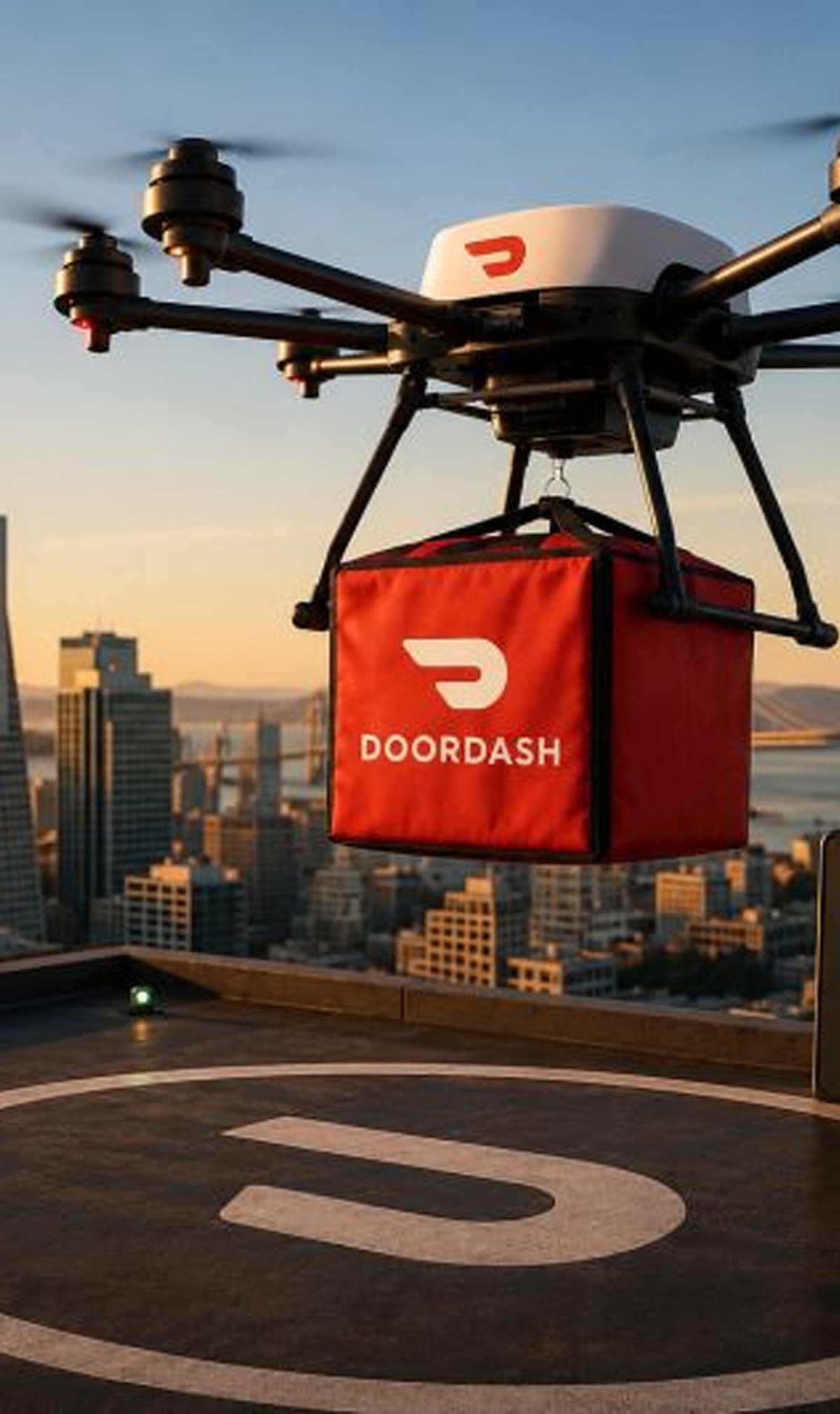
    DoorDash has introduced DoorDash Air, its in-house drone delivery service designed to make food deliveries faster and more efficient than traditional methods. Using advanced autonomous drones, the service transports food orders directly from restaurants to customers via GPS-guided flight, bypassing road traffic.

    Key features of DoorDash Air include:

    • Lightning-Fast Delivery: Drones fly above traffic, enabling customers to receive meals much quicker, especially during peak hours.
    • Live Order Tracking: Customers can monitor drone flights in real time and receive accurate estimated delivery updates through the DoorDash app.
    • Safety Systems: Every drone is equipped with intelligent navigation, obstacle avoidance, and automated flight controls to ensure safe operations.
    • Restaurant Advantage: Businesses benefit from faster deliveries, reduced dependence on drivers, and improved customer satisfaction during busy periods.
    • Eco-Friendly Operations: Electric drones reduce carbon emissions and support cleaner, more sustainable last-mile delivery solutions.

    DoorDash plans to expand drone deliveries into more cities as approvals and infrastructure develop. DoorDash Air represents the next phase of food logistics, combining AI, automation, and aviation technology to transform how we receive food.

  • AI in Logistics: Maersk’s Resham Sahi on Moving from Visibility to Decision Intelligence

    AI in Logistics: Maersk’s Resham Sahi on Moving from Visibility to Decision Intelligence

    Artificial intelligence is reshaping the logistics industry, helping organizations move beyond reactive supply chain management toward intelligent, connected, and data-driven operations. As global trade becomes increasingly complex amid geopolitical uncertainty, demand volatility, and evolving customer expectations, AI is enabling businesses to make faster, more informed decisions that improve resilience, efficiency, and operational agility.

    The convergence of AI with Digital Twins, predictive analytics, cloud computing, Internet of Things (IoT), and intelligent Control Towers is creating a new generation of supply chains capable of anticipating disruptions before they occur. From demand forecasting and inventory optimization to real-time shipment visibility, network simulation, and proactive risk management, these technologies are helping organizations optimize every stage of planning, execution, and fulfillment while reducing operational costs and improving customer outcomes.

    Industry leaders believe the future of logistics lies in connected intelligence, where data flows seamlessly across transportation, warehousing, customs, and fulfillment. By integrating AI-powered insights with digital infrastructure, businesses can move beyond monitoring operations to predicting challenges, automating decisions, and building supply chains that are both resilient and future-ready.

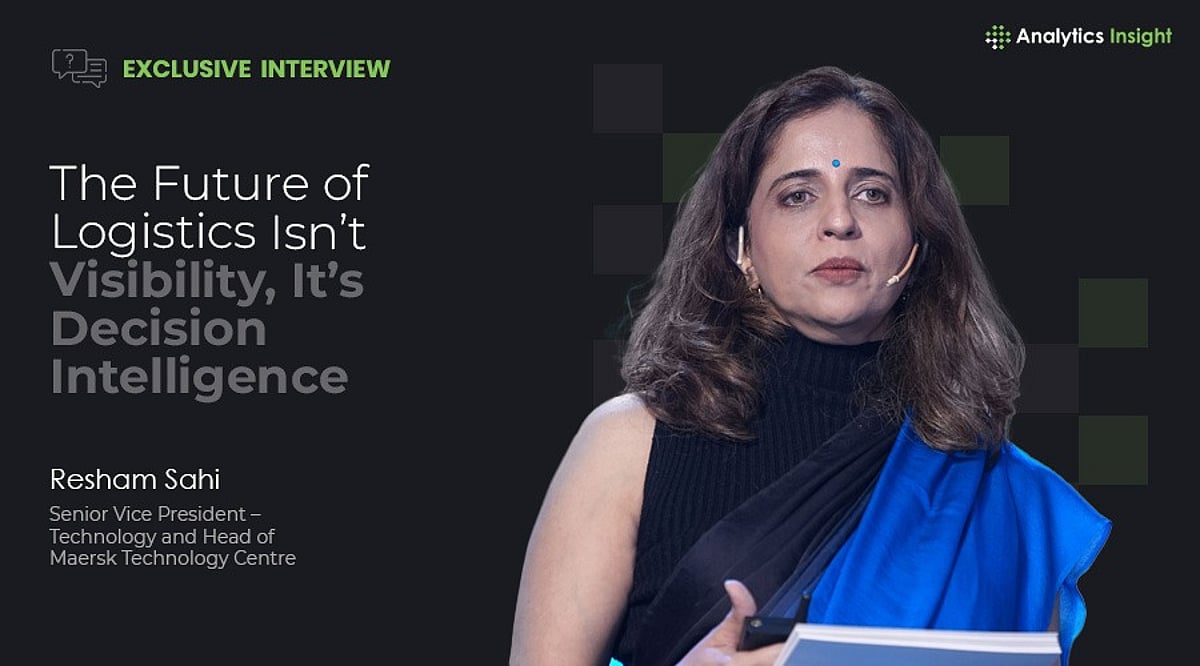
    In an exclusive interview with Analytics Insight, Resham Sahi, Senior Vice President – Technology and Head of Maersk Technology Centre, Bangalore, discusses how AI, Digital Twins, predictive analytics, cloud technologies, and intelligent logistics solutions are transforming global supply chains, strengthening operational resilience, and helping Indian businesses build smarter, more connected logistics ecosystems.

    From Visibility to Decision Intelligence

    According to Sahi, the notable trend is that companies are moving from visibility to decision intelligence. “In today’s environment of demand volatility, geopolitical uncertainty, and evolving trade patterns, resilience increasingly determines how quickly organizations can turn operational data into informed decisions. Companies can generate significant volumes of operational data through their supply chains; however, real value lies in translating data into actionable insights that enable improved planning and execution.”

    Through AI, companies are becoming better at forecasting demand, optimizing inventory, improving ETA, and managing exceptions. For example, Digital Twins allow companies to test different scenarios and assess how operational decisions may affect transportation, warehousing, and inventory positioning before changes are implemented in the physical supply chain. Using AI, Digital Twins can predict certain disruptions before they occur, helping make more informed decisions while reducing operational risk.

    “The true value comes through integration,” Sahi emphasized. “According to our recent Trade Momentum APAC research, although 74% of companies have operationalized their AI capabilities, only 47% have integrated it with their trade compliance and customs platforms, suggesting that many companies still keep their digital initiatives separate.”

    Maersk believes in the connected intelligence future, where decision intelligence will be built across the entire process of planning, execution, and fulfillment.

    AI-Powered Control Towers

    The function of Control Towers is moving from providing visibility to enabling intelligence, helping organizations move from simply monitoring supply chains to making better decisions. “In today’s environment, it is not enough to know the location of a shipment; it is more valuable to be aware of possible risks and implications and to be able to make a decision based on that information,” Sahi said.

    AI-powered Control Towers deliver this by connecting data from all sources—transportation, warehousing, customs, IoT assets, and enterprise systems—into a single view. This information is constantly analyzed through AI, identifying exceptions, forecasting delays, and proposing the optimal next step for operations, such as changing the route, reallocating inventory, or adjusting warehouse capacity.

    “The real value of a Control Tower lies not in aggregating more data, but in enabling faster, more confident decisions across the supply chain,” Sahi noted. By bringing together operational insights in real time, organizations can respond proactively to disruptions instead of reacting after they occur.

    Digital Twins for Smarter Network Optimization

    One of the most significant advantages of Digital Twins is that they can help make better decisions before any changes to the physical logistics network. This is even more important when reacting to disruptions yet to be encountered. For example, using weather data, Digital Twins can identify several vessel berthing options at ports and recommend the best scenarios for maximizing operational efficiency.

    “With increasing interconnectivity within our logistics network, we require more confidence in our decisions when it comes to logistics such as inventory positioning, transportation flows and warehouse capacity, and Digital Twins allow us to do scenario planning in a virtual environment,” Sahi explained.

    Digital Twins can be transformed from being merely simulation tools into intelligent decision support systems once integrated with AI and operational data. Organizations will be able to run different scenarios of the network, optimize asset use, and spot potential bottlenecks before they affect operations. In line with this, Gartner predicts that by 2027, more than 40% of large enterprises will combine simulation, Digital Twins, and AI to optimize operational processes.

    Building Future-Ready Supply Chains in India

    The rising importance of India in international manufacturing is contributing to the increasing requirement for intelligent and interconnected supply chains. As per the Economic Survey 2025-26, Manufacturing GVA increased by 7.72% in Q1 and 9.13% in Q2 of FY26, highlighting the country’s industrial strength. As businesses diversify supply chains and expand their participation in global value chains, logistics is becoming a strategic enabler of growth rather than simply a support function.

    At Maersk, the company is helping customers connect transportation, warehousing, customs, and fulfillment through integrated digital solutions. AI, cloud, and IoT strengthen that connected ecosystem by improving visibility, planning, and execution across the logistics journey. Cloud-based platforms enable customers to unify transportation, warehousing, customs, and fulfillment into one cohesive digital platform, making faster, better decisions possible.

    “AI represents a once-in-an-era shift that can tackle complex problems, provide faster insights, enable proactive, data-driven decisions, and drive effective execution,” Sahi said. “We are putting AI to use by streamlining how frontline teams serve customers by reducing complexity, redesigning workflows, and improving customer access to insights.”

    At the end of the day, Maersk’s focus is on helping customers build connected and resilient supply chains by integrating data across every stage of the logistics journey, rather than optimizing individual functions in isolation. This will help both Maersk and its customers improve cost efficiency, reliability, and outcomes.


  • Drone-as-a-Service (DaaS): The Flexible Business Model Transforming Industries

    Drone-as-a-Service (DaaS): The Flexible Business Model Transforming Industries

    Drone-as-a-Service (DaaS) is rapidly emerging as a game-changing business model that allows companies to rent drone solutions rather than purchasing expensive equipment. This approach significantly reduces upfront costs while providing access to skilled operators and cutting-edge technology.

    By eliminating the need for hardware purchases, maintenance, software licenses, and pilot training, DaaS makes aerial services affordable for businesses of all sizes. Here’s how different industries are leveraging this model:

    • Agriculture: Farmers use drones for crop monitoring, precision spraying, field mapping, and plant health assessments, boosting productivity while cutting manual labor and resource waste.
    • Construction: Construction firms deploy drones for site surveys, progress tracking, inspections, and 3D mapping, helping projects stay on schedule and within budget.
    • Logistics & Retail: Retailers and logistics providers are exploring drone deliveries for medicines, groceries, and essential goods, especially in remote or hard-to-reach locations.
    • Infrastructure Inspections: Drones safely inspect bridges, power lines, pipelines, and telecom towers, reducing human risk while capturing accurate visual and thermal data.

    Global demand for Drone-as-a-Service is growing as regulations improve, technology advances, and businesses seek faster, smarter operational solutions. Artificial intelligence is making drones even more powerful, enabling image analysis, problem detection, automated flights, and actionable insights.

    The future of DaaS looks bright, with rapid expansion expected across industries as organizations embrace flexible, technology-driven service models.

  • 10 Computer Vision Unicorn Startups Redefining Industries in 2026

    10 Computer Vision Unicorn Startups Redefining Industries in 2026

    Computer vision has become one of the fastest-growing areas of artificial intelligence, enabling machines to interpret images and video like humans. Businesses now leverage this technology to improve factory operations, inspect products, guide autonomous vehicles, detect fraud, monitor workplaces, and assist doctors with medical imaging. As AI advances, computer vision opens new business opportunities across many sectors. Industry reports project the global computer vision market will surpass $30 billion by 2030, and investors continue to back companies building practical AI solutions instead of experimental products.

    Several startups have already achieved unicorn status (valuations above $1 billion). Many have raised fresh funding, signed major enterprise deals, and expanded into new markets. Here are ten computer vision unicorn startups worth watching in 2026.

    Key Takeaways

    • Computer vision unicorns solve real business problems across multiple industries.
    • Strong funding and billion-dollar valuations reflect growing investor confidence.
    • These startups will drive the next phase of enterprise AI adoption.

    Shield AI

    Shield AI is a leading defense-focused AI company founded in 2015. Its Hivemind software enables aircraft to operate without GPS, relying on computer vision and sensors to navigate buildings, roads, and targets. In 2026, Shield AI is valued at nearly $12.6 billion, thanks to new investments and increased defense collaborations. Governments worldwide are expected to boost spending on autonomous defense solutions, positioning Shield AI for further growth.

    Netradyne

    Netradyne transforms commercial fleet safety with AI-powered dashboard cameras that analyze driver behavior in real time. It rewards safe driving and detects distracted driving, phone use, fatigue, harsh braking, lane changes, and road hazards. The company became India’s first unicorn of 2025 after a $90 million Series D round from Point72 Asset Management, Qualcomm Ventures, and Pavilion Capital. Netradyne now processes over 4 trillion sensor data points annually across more than 550,000 connected vehicles, helping logistics companies lower accidents and insurance costs.

    Gecko Robotics

    Gecko Robotics builds robotic inspection systems for large factories, power plants, oil refineries, and defense facilities. Its robots use advanced cameras and AI to detect corrosion, cracks, leaks, and structural damage early. The company crossed unicorn status in 2025 and works with major industrial firms and government organizations. As predictive maintenance investment grows, Gecko Robotics stands out as a top industrial AI company.

    Tractable

    Tractable revolutionizes insurance claims with computer vision. Customers upload photos of damaged vehicles or property, and the AI estimates repair costs in minutes. This speeds up claims, reduces fraud, and improves customer experience. Hundreds of insurers across North America, Europe, and Asia now rely on Tractable, which continues to expand as digital claims become standard.

    Runway

    Runway is a popular AI video creation platform. Its software removes objects, tracks motion, edits clips, changes backgrounds, and generates new videos from simple scripts, saving hours of manual editing. With strong investor backing and partnerships with media companies, Runway is well positioned for growth in enterprise AI.

    Covariant

    Covariant addresses the challenge of robotic grasping in warehouses. Its AI combines computer vision and machine learning to enable robots to identify and handle a wide variety of products, regardless of size, shape, or packaging. This improves efficiency, reduces costs, and speeds up operations. As e-commerce drives warehouse automation, Covariant expects strong revenue growth in 2026.

    Voxel

    Voxel uses computer vision to improve workplace safety. Its AI platform connects to existing security cameras in factories, warehouses, and industrial sites to detect safety violations like improper lifting, forklift hazards, and unauthorized access. By preventing accidents, Voxel helps businesses reduce injuries and financial losses. Stricter safety regulations are driving increased adoption.

    Magic Leap

    Magic Leap develops advanced augmented reality headsets equipped with computer vision that maps rooms, tracks eye movements, recognizes objects, and overlays information. The technology aids medical specialists, factory workers, engineers, and military personnel. Initially known for hardware, Magic Leap’s software has become equally valuable.

    Verkada

    Verkada modernizes enterprise security with cloud-connected AI cameras. Its platform recognizes faces, reads license plates, counts people, tracks occupancy, and detects unusual activity across thousands of cameras. Security teams receive instant alerts. Businesses choose Verkada for smarter security without large on-site infrastructure, making it one of the fastest-growing companies in the market.

    Afresh

    Afresh applies computer vision to grocery store inventory management. The AI analyzes product images and inventory data to predict demand for fresh produce, reducing food waste and improving stock availability. Retailers using Afresh see better profit margins and sustainability, gaining attention across the retail industry.

    Why This Matters

    Computer vision now supports tasks once done manually, helping businesses save time, lower costs, improve safety, and make faster, more accurate decisions. As AI adoption grows, companies leading computer vision innovation will shape the future of healthcare, manufacturing, transportation, retail, defense, and many other sectors.

    Final Thoughts

    Computer vision technology has evolved rapidly, powering unmanned vehicles, warehouse robots, insurance systems, workplace safety, and smart cameras. Companies like Shield AI, Netradyne, Gecko Robotics, Tractable, Runway, Covariant, Voxel, Magic Leap, Verkada, and Afresh are solving real organizational problems with strong funding and billion-dollar valuations, proving market confidence.

    FAQs

    1. What is a computer vision startup? A computer vision startup develops AI software that allows machines to understand and analyze images, videos, and visual data for real-world applications.
    2. What makes a startup a unicorn? A startup becomes a unicorn when its private valuation reaches $1 billion or more.
    3. Which industries use computer vision the most? Healthcare, manufacturing, logistics, retail, automotive, insurance, defense, agriculture, and security are the biggest users.
    4. Why do investors support computer vision startups? These companies build scalable AI solutions that improve efficiency, reduce costs, increase safety, and create long-term business opportunities.
    5. Why should businesses watch these startups in 2026? These companies lead innovation with advanced AI products, strong funding, expanding customer bases, and technologies that will influence enterprise automation.
  • Digital Product Cuts Yard Transfer Time from Hours to Seconds with Full Automation

    Digital Product Cuts Yard Transfer Time from Hours to Seconds with Full Automation

    In large logistics operations, moving assets from one location to another is rarely simple. What appears to be a basic transfer often involves multiple teams, paperwork, phone calls, and coordination between facilities. In industries that manage thousands of physical assets, such as vehicles or heavy equipment, these manual steps can slow operations and increase the risk of errors.

    This challenge has led many companies to rethink how internal processes are managed. Instead of relying on manual coordination, organizations are building digital systems that automate routine workflows. At Copart, a global online vehicle auction company, one such effort resulted in a platform that can complete yard transfers in seconds, without any human intervention. Product leader Aditi Kapildev Vatse played a key role in designing and launching the system.

    Vatse works in operational technology—digital tools designed for internal teams who manage day-to-day logistics. During her time at Copart, she advanced from Product Analyst to Senior Product Analyst, gradually taking ownership of a broader operational product portfolio. She has contributed to numerous software releases across markets including the United States, the United Kingdom, Germany, and the Middle East.

    Her work often involves bringing operations teams and engineering groups together. “One of the biggest lessons in building operational systems is that technology has to mirror real-world workflows,” Vatse said. “If the product doesn’t reflect how teams actually work on the ground, it won’t solve the problem.”

    One example of this approach is an internal vehicle transfer platform designed to streamline operations between locations. Before the system existed, transferring vehicles between yards could take hours, requiring staff to coordinate through calls, paperwork, and manual updates across multiple systems. Delays and misplaced information were common, particularly during high-volume periods.

    The platform replaced this process with an automated workflow. Once a transfer is initiated, the system synchronizes vehicle records across locations and completes the transaction almost instantly. “Our goal was to remove friction from the process,” she explained. “When routine operational work becomes automated, teams can focus on decisions that actually require human judgment.”

    The results were substantial. Administrative work tied to yard transfers dropped drastically, and incidents involving misplaced vehicles also saw a significant fall. Additionally, paper documentation was eliminated entirely, creating a more reliable digital record of every transfer.

    The project faced an unexpected test before its launch. As development was nearing completion, the product’s original lead left shortly before hurricane season in Florida, when disaster-response logistics place heavy demands on the organization’s operations. Vatse stepped in to guide the system through its final development stages and coordinate closely with engineering and operations teams.

    “When the leadership transition happened, the focus was making sure the system would still launch on time,” she recalled. “It needed to perform reliably when operations were under the most pressure.” That pressure arrived during the 2024 hurricane season. During disaster response operations, many thousands of vehicles were transferred using the platform, helping teams manage a surge in logistics activity without the delays that previously slowed the process.

    Another challenge involved translating operational knowledge into technical requirements. Disaster logistics teams understood their workflows deeply, but turning those processes into software specifications required close collaboration. Vatse organized workshops where operations staff walked engineers through real-world scenarios.

    “These conversations were critical,” she said. “Operations teams knew exactly what happens during a disaster response. Our job was to turn that experience into a system that could support them in real time.” Because real disasters cannot be easily replicated during development, the team also ran simulations based on historical hurricane data. These tests helped validate that the platform could handle high-volume transfers under intense operational pressure.

    Beyond these technical contributions, Vatse has also written about lessons from building operational technology systems. In her paper “Exploring Go-to-Market Strategies for Operational Technology Products,” she examines how internal platforms should be introduced to employees in the same structured way companies launch products for external customers. Her research on “Beyond the Snapshot: Leveraging Temporal KPIs Across the Product Lifecycle” explores how operational products should be measured over time, rather than at a single launch moment. She has also written about risk planning in product teams through “Pre-Mortems in Product Management: Psychological Safety and Risk Anticipation in Technology Teams,” which discusses how teams can anticipate operational risks before they occur.

    Across logistics and asset-heavy industries, projects like the one Vatse shared illustrate a broader shift toward automated operational platforms that reduce manual coordination. “The future of operational technology is about building systems that remove complexity instead of adding to it,” she added.

  • Why Real-Time Order Tracking Is the Key to E-Commerce Trust and Repeat Purchases

    Why Real-Time Order Tracking Is the Key to E-Commerce Trust and Repeat Purchases

    For anyone who has ever felt a sense of satisfaction while tracking a purchase online, the latest internet trend among Gen Z in Korea might feel oddly familiar. Known as dopamine sites, these platforms mimic food delivery apps and shopping websites, allowing users to place orders and track them in real time—without spending any money or receiving a product. The appeal lies in the same psychological gratification that comes from real online shopping, especially the anticipation triggered by live tracking.

    According to Dr. Gabrielle Schreyer-Hoffman, a licensed psychologist in New York, these sites tap into the emotions people get from genuine shopping experiences. The ability to track fake purchases in real time creates a powerful sense of anticipation and relief, which studies show can lead to customer retention. Here’s how real-time tracking can redefine the shopping experience and drive repeat purchases.

    Eliminates Purchase Anxiety

    Retail sites without tracking features can create a stressful experience because they conflict with the human need for predictability and control. Without order or delivery tracking, customers may question whether the transaction went through or fear they have been scammed. They also worry about lost, stolen, or misdelivered packages. This uncertainty can deter people from making online purchases.

    Integrating real-time tracking into e-commerce systems reassures customers and helps businesses know exactly where each order is. For example, the 3PL company Kase partnered with Amazon shipping to provide sellers with 24/7 warehouse-to-door tracking. On the customer side, platforms like Amazon immediately send an order confirmation and estimated delivery date after purchase. A survey found that frequent tracking updates reduce purchase anxiety by 38%, proving that real-time tracking is a valuable tool for improving the online retail experience.

    Creates Convenience

    Many customers schedule shipments for times when they are home to deter porch thieves—a strategy that can be frustrating and disruptive. A recent poll shows that 46% of customers plan their day around package deliveries, which can keep them housebound and hinder productivity. Real-time tracking with SMS or push notifications can alleviate this by keeping customers informed without needing to manually check or wait at home.

    Proactive updates on shipping and delivery dates reduce “Where is my order?” complaints, lower anxiety, and build shopper trust. Businesses should send notifications when customers are most likely to engage, using SMS for time-sensitive updates. By providing consistent tracking and visibility, companies can build goodwill and a positive reputation in a competitive e-commerce market.

  • Building Agile Logistics Networks for Holiday Peak Season Success

    Building Agile Logistics Networks for Holiday Peak Season Success

    As the second half of the year begins, businesses are preparing for the demand surges of the holiday season. High-volatility periods like Black Friday, Cyber Monday, and the end-of-year gifting season put immense pressure on logistics chains. Facilities must handle increasing order volumes while managing labor shortages, last-minute delivery hurdles, and supply chain bottlenecks.

    To cope with fulfillment challenges, 63 percent of businesses now use at least three online sales platforms, which can lead to smoother, more predictable order flows that are easier to scale. However, proper planning and integration of smart or AI technology are essential to protect brand reputation. Here’s how businesses can enhance agility and efficiency to meet peak season challenges.

    Why Address Seasonal Rush Issues?

    According to WSI warehouse specialists, sellers should take active steps to address seasonal rush issues to meet customer expectations and drive success. Holiday stress makes customers less tolerant of mistakes. Failure to deliver presents, food items, and other necessities on time can lead to negative reviews and reputational damage. A study shows that late deliveries drastically impact repeat purchases—about a third of customers say a delayed package can make them switch to a competitor permanently.

    Preparing for the seasonal rush also prevents overselling and stockouts, ensuring in-demand products remain available. It also reduces critical mistakes, as high-volume orders can cause staff to rush or multitask, leading to packing errors. To create a successful holiday logistics strategy, businesses should shift from fixed operations to flexible, data-driven systems.

    Optimize Inventory and Warehousing

    Some sellers rely on historical data to predict holiday demand, but this can backfire. Future trends rarely mirror the past exactly, and factors like fluctuating consumer behavior and social media trends influence demand. Historical data cannot predict future inflation levels or consumer purchasing power. If a business has a new product for the holiday season, there is no way to tell if buyers will want it.

    Instead, businesses should shift to AI-powered demand forecasting, which combines short-term projections with real-time trends and promotions. This reduces forecast errors by half, eliminating stockouts and overstocking. To avoid bottlenecks, consider strategic warehousing by storing fast-moving stock in multiple localized fulfillment centers closer to your main customer base. Shorter distances enable same-day or next-day delivery, lower shipping costs, and reduce delivery failure risks, boosting brand loyalty and customer satisfaction.

    Diversify Shipping and Carriers

    Relying on a single carrier during the holiday season is risky because it leaves your supply chain vulnerable to that provider’s network issues or capacity limits. Diversifying carriers alleviates capacity limits, as many carriers implement merchant quotas during peak season, capping daily packages for delivery and causing serious backlogs.

    Having several backup carriers ensures orders keep moving if one is delayed. Harsh weather, warehouse outages, or labor shortages can impede a carrier’s operations, so you can route packages to another courier. Alternatively, partner with a third-party logistics (3PL) company just for the holiday season to scale storage and fulfillment capacity without a long-term contract.

    Have a Plan for Returns

    For holiday shoppers, returning items is part of the retail experience. Last year, returns were up 4.7 percent in the days immediately following Christmas Day. To protect cash flow and avoid payment disputes, make returns easier for customers. About 95 percent of shoppers say a positive return experience encourages repeat purchases, so create clear policies and solutions.

    First, allow ample time for returns and specify the timeframe to manage expectations. Next, clarify whether you offer refunds via the original payment method or only store credit or exchanges. Also, state if you provide free shipping for returned items or deduct a return fee from the refund.

    Unlock peak season success this holiday season by considering these tips to build agile logistics networks for hassle-free fulfillment and increased customer satisfaction.

  • Duties-Paid Cross-Border Shipping from the UK to the EU: Landmark Global Simplifies E-Commerce Logistics

    Duties-Paid Cross-Border Shipping from the UK to the EU: Landmark Global Simplifies E-Commerce Logistics

    For e-commerce businesses shipping parcels from the UK to the European Union, managing duties, taxes, customs clearance, and delivery across multiple carriers can be a logistical headache. Landmark Global offers a unified cross-border logistics solution that combines international transport, customs clearance, delivery technology, and returns management in one connected service. This allows retailers to avoid coordinating separate carriers, customs agents, and technology providers for each destination.

    Key Features of Landmark Global’s Offering

    • Combines DDP shipping, customs clearance, parcel delivery technology, and returns within a single solution.
    • Prepaid duties and taxes provide EU customers with transparent checkout pricing and help prevent unexpected delivery charges.
    • Carrier-neutral routing selects suitable delivery partners for different European markets and parcel profiles.
    • Mercury platform integrates shipment creation, tracking, reporting, and operational data with retailers’ existing e-commerce systems.
    • Configurable returns support labels, customs information, tracking, consolidation, and delivery back to a warehouse or regional hub.

    What Duties-Paid Shipping Means for Online Retailers

    Delivered Duty Paid (DDP) means the seller covers import duties, taxes, and customs-related costs before delivery. Customers receive orders without being asked to pay unexpected charges upon arrival. Landmark Global supports DDP shipping and helps businesses calculate landed costs, so relevant charges can be included during checkout. This approach makes cross-border purchasing feel similar to domestic shopping, reducing customer frustration, parcel refusals, and delivery interruptions caused by unpaid fees.

    Customs Clearance Management

    Shipping from the UK to the EU requires accurate customs information, including product descriptions, values, commodity codes, and origin details. Landmark Global combines a proprietary clearance platform with in-house trade and compliance specialists to help businesses prepare shipment data, process declarations, and move parcels efficiently. Its customs support covers B2C and B2B clearances, tax, compliance, invoicing, and product labeling services. Integrating clearance with delivery helps merchants avoid fragmented workflows and unnecessary border delays.

    Benefits of a Carrier-Netural Network for EU Deliveries

    As a carrier-neutral provider, Landmark Global can select postal and commercial partners based on destination, parcel profile, service level, and budget. This flexibility is particularly valuable for UK retailers serving multiple EU countries where customer expectations and last-mile networks differ. Landmark Global provides delivery services to more than 220 destinations worldwide, with local partners in Europe supporting convenient final-mile options while the company coordinates the broader cross-border journey.

    How Technology Streamlines International Shipping

    Landmark Global’s Mercury platform connects shipping, tracking, reporting, accounting, and operational data. Businesses can integrate through e-commerce platforms, plugins, APIs, or FTP connections, depending on their systems. Centralized visibility helps teams monitor parcels and provide clearer customer updates, while supporting consistent processes as order volumes grow or retailers enter additional EU markets.

    Handling Returns from EU Customers

    Landmark Global provides configurable international returns through a white-label portal. Customers can generate labels, submit customs information, choose a return method, and follow tracking updates. Landmark Global then coordinates first-mile transport, customs clearance, consolidation, and delivery to the retailer’s warehouse, 3PL, or regional hub. This makes reverse logistics easier to manage alongside outbound DDP shipping.

    Is Landmark Global Suitable for Growing UK E-Commerce Businesses?

    Landmark Global is particularly relevant for retailers seeking a single partner for DDP delivery, customs expertise, flexible carrier selection, technology, and returns. Its integrated model can simplify UK-to-EU expansion while helping businesses offer transparent prices and a dependable post-purchase experience.