Tag: long-term investing

  • HODL in Cryptocurrency: The Buy-and-Hold Strategy Explained

    HODL in Cryptocurrency: The Buy-and-Hold Strategy Explained

    Written by Bhavesh Maurya | Reviewed by Achu Krishnan | Published on September 23, 2026

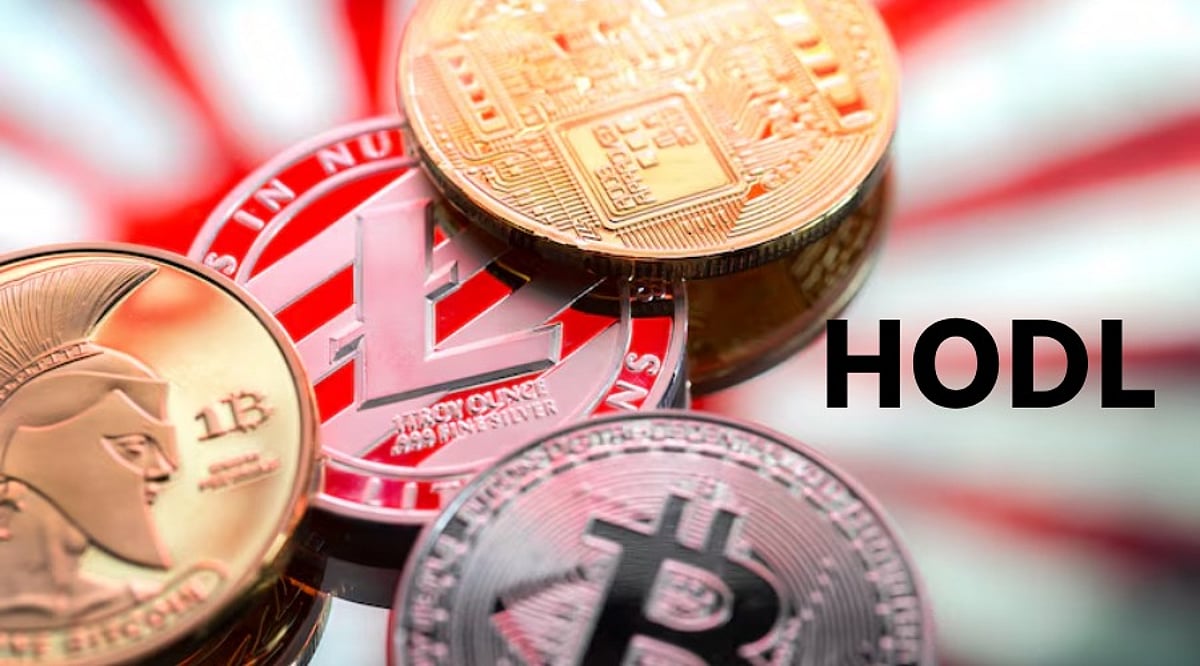
    HODL is one of cryptocurrency’s oldest investing terms. It describes holding a digital asset through short-term price fluctuations instead of repeatedly buying and selling based on market movements. Although closely associated with Bitcoin, the approach can be applied to other cryptocurrencies.

    The term originated from a misspelled ‘I AM HODLING’ post on the BitcoinTalk forum in 2013. What began as an internet joke eventually became shorthand for long-term conviction in cryptocurrency.

    How the HODL Strategy Works

    A HODL investor generally buys an asset and keeps it despite temporary rallies, corrections or periods of high volatility. Suppose an investor purchases Bitcoin at USD 70,000 as they believe adoption will increase over several years. If Bitcoin subsequently falls to USD 55,000, a HODL strategy would typically involve holding the position rather than selling solely because of the decline. The strategy attempts to reduce dependence on correctly timing short-term market movements.

    However, HODLing and dollar-cost averaging are different. HODLing describes retaining an existing position, while dollar-cost averaging involves making repeated purchases at predetermined intervals.

    Long-Term Holders Can Influence Bitcoin Supply

    On-chain analytics provide another way to examine holding behavior. Glassnode classifies Bitcoin’s long-term and short-term holder supply using coin-holding age. Its model uses a transition centered around approximately 155 days rather than simply treating every wallet holding Bitcoin as a long-term investor.

    According to recent Glassnode data, approximately 61.5% of Bitcoin’s circulating supply is classified as long-term-holder supply in profit, while another 26.4% represents long-term-holder supply in loss. Long periods of limited selling can reduce liquid supply available to markets, although holding behavior alone does not determine Bitcoin’s price.

    HODLing Does Not Remove Investment Risk

    Buy-and-hold strategies can reduce frequent trading decisions, transaction fees and attempts to time volatile markets. They cannot protect investors from permanent losses. A cryptocurrency can decline substantially, lose users, experience technological problems or become less relevant. Holding an unsuccessful asset longer does not automatically improve the investment outcome.

    Custody creates another consideration. Long-term investors using self-custody must protect private keys and recovery phrases, while exchange users face counterparty and platform risks.

    Market Cycles Still Matter

    Bitcoin demonstrates why HODLing requires tolerance for volatility. Even long-term holders can experience substantial unrealized losses during market downturns before prices recover. Glassnode reported in September that long-term-holder behavior was helping explain Bitcoin’s unusually subdued one-month realized volatility.

    Final Thoughts

    HODLing is fundamentally a long-term ownership strategy rather than a guarantee of returns. Its simplicity can reduce emotional short-term trading, but outcomes still depend on asset quality, entry price, custody security, investment horizon and an investor’s ability to tolerate potentially severe drawdowns.

    Frequently Asked Questions

    1. What does HODL mean in cryptocurrency?
    HODL means holding a cryptocurrency for the long term despite short-term price fluctuations. The term originated from a misspelled “I AM HODLING” BitcoinTalk post in 2013.

    2. How does the HODL strategy work?
    Investors buy a cryptocurrency and continue holding it through market rallies and corrections. The strategy aims to reduce reliance on accurately timing short-term market movements.

    3. Is HODLing the same as dollar-cost averaging?
    No. HODLing involves retaining an existing crypto investment, while dollar-cost averaging involves regularly investing a fixed amount at predetermined intervals regardless of market prices.

    4. What are the risks of HODLing crypto?
    HODLing does not protect against permanent losses, technological failures or declining adoption. Investors also face custody risks when storing assets themselves or counterparty risks when using exchanges.

    5. How does HODLing affect Bitcoin supply?
    When long-term holders avoid selling, fewer Bitcoin may be readily available for trading. However, supply held by long-term investors is only one of many factors that can influence Bitcoin’s market price.

    Disclaimer: This article is for informational purposes only and does not constitute financial or investment advice. Cryptocurrencies are risky assets and investments may be lost. Always conduct your own research before investing.


  • Why Regular Contributions to a Stocks and Shares ISA Can Build Wealth Over Time

    Why Regular Contributions to a Stocks and Shares ISA Can Build Wealth Over Time

    If your money is stretched in all directions, finding a large lump sum to invest can feel unrealistic. But smaller, regular investments offer another route. By setting aside an affordable amount each month, you can work towards longer-term goals without waiting for the perfect moment to put your money into the market.

    Why Consistency Matters When Investing

    Investing can be thought of like a routine, a bit like saving. Instead of deciding each month whether you can spare some money, you can arrange an automatic payment shortly after payday. This approach makes investing part of your normal budget, much like saving for a holiday or paying a household bill.

    Consistency can also reduce the temptation to time the market. Even experienced investors can’t reliably predict when prices will reach their lowest or highest points. Investing according to a schedule means you keep working towards your goal rather than waiting on the sidelines for an opportunity that may never arrive.

    How Smaller Amounts Can Build Over Time

    You don’t necessarily need a substantial lump sum to get started. For example, investing £100 each month would mean contributing £1,200 over a year and £12,000 over ten years, before allowing for any investment growth or losses.

    Starting with a manageable figure can make a distant goal feel more practical. You might initially contribute £50 a month towards retirement or another long-term objective, then increase the amount when your income rises or major expenses fall.

    Your returns may also generate further returns over time through compounding. That said, investments can fall as well as rise, so you could get back less than you contribute. Your best bet is investing for the long term.

    Choosing a Suitable Investment Structure

    Where you hold your investments can affect how much of your returns you keep. A stocks and shares ISA lets you invest within a tax-efficient account, meaning you won’t pay UK Income Tax or Capital Gains Tax on investments and returns held inside it.

    You could set up a monthly payment into your account and invest it according to your chosen strategy. The ISA allowance limits how much you can contribute across your ISAs each tax year, so check the current rules before deciding how much to put away.

    Staying Invested When Markets Move

    Markets move up and down. Economic news, company results, global events, and changes in investor confidence can all push prices higher or lower, sometimes sharply.

    Regular investing (specifically a strategy called dollar-cost averaging) means your fixed contribution buys fewer units when prices are high and more when they are lower. This can smooth your purchase price over time, although it does not protect you from losses.

    A longer-term perspective can also help you avoid reacting emotionally to short-term falls. Selling after a sudden decline can turn a temporary paper loss into a permanent one and may mean missing a later recovery.

    Reviewing Your Progress

    A regular plan should still change when your circumstances do. A pay rise might allow you to increase your monthly amount, while higher essential costs could mean reducing it temporarily rather than abandoning your goal altogether.

    Review your contributions, investments, and objectives at least once a year and after significant financial changes. Regular investing works best when the amount remains affordable, and your choices continue to match your goals and attitude to risk.

  • How to Invest in IT Sector Stocks: Key Metrics, Risks, and Long-Term Strategies

    How to Invest in IT Sector Stocks: Key Metrics, Risks, and Long-Term Strategies

    IT sector stocks are influenced by global technology spending, currency movements, workforce costs, and client demand. Investors need to assess company fundamentals, valuation, business cycles, and risks. A disciplined approach can help identify stronger long-term investment opportunities.

    What Makes IT Sector Stocks Different?

    Three forces are particularly important when analyzing IT stocks: overseas client spending, currency movement, and talent costs. IT companies earn most of their revenue from clients in the United States and Europe, so their fortunes rise and fall with technology budgets in those regions. Infosys and TCS earn most of their revenue in foreign currencies. Rupee movement can shift their reported numbers even when client demand has not changed. On the talent side, IT is a people-driven business. How a company manages hiring and retention feeds directly into its margins. This exposure does not exist in sectors that sell mainly within India, such as consumer goods or utilities. An investor moving from those sectors into IT stocks needs to track more moving parts than usual.

    Which Numbers Should You Check Before Buying?

    Revenue growth alone does not tell the full story. Deal wins, often called Total Contract Value (TCV), show where growth is heading. A company can report flat quarterly revenue but strong deal wins — that signals growth arriving in future quarters rather than the current one. TCV should not be treated as immediate revenue, though. Large contracts are usually delivered over multiple quarters or years.

    Attrition rate matters too, but not as a fixed threshold. Direction matters more than a universal target. Falling attrition can indicate improving employee stability. A sudden increase can raise delivery and hiring costs.

    Client concentration is the third figure worth checking. A company that depends heavily on a small number of large clients can face sharper revenue swings when one customer cuts technology spending.

    Operating margin is another important measure. It shows how much profit an IT company retains from its core operations after operating costs. A falling margin can point to wage pressure, weaker pricing, lower employee utilization, or a shift toward lower-margin services. The trend over several quarters is more useful than one quarter in isolation.

    Large-Cap vs. Mid-Cap IT Stocks

    Large IT companies such as TCS, Infosys, and HCLTech offer stability. They serve hundreds of clients across regions, so a slowdown in one industry rarely sinks their overall numbers. Their growth tends to be steady rather than explosive.

    Mid-sized firms such as Persistent Systems or Coforge often grow faster in percentage terms. They start from a smaller base and can win niche, high-value contracts in areas like cloud migration or specialized engineering. The trade-off is higher volatility. Growth also needs to be judged against valuation. A smaller company growing faster is not automatically the better investment if its share price already reflects that growth.

    Understand the IT Business Cycle

    IT stocks tend to move in cycles tied to global technology spending. When clients abroad raise their budgets, Indian IT firms benefit through more outsourced work. When budgets tighten, deal signings slow, and stock prices often fall before earnings confirm the slowdown. This makes IT stocks forward-looking in nature. Prices can drop on cautious management commentary about client budgets months before the impact shows up in reported revenue.

    Look Beyond One IT Company

    Holding several IT companies reduces company-specific risk, but it does not remove sector risk. If global technology spending falls, several IT stocks can decline together. Diversification across sectors matters, not only within IT. Sector-focused mutual funds or index funds tracking IT indices offer one route for those who prefer not to track individual companies closely.

    A Good Company Is Not Always a Good Stock

    The valuation point applies beyond company size. A strong IT company is not automatically a strong investment at every price. A business can grow revenue, win large contracts, and maintain healthy margins while its stock delivers weak returns if investors have already priced in years of future growth. Business quality and valuation need to be assessed together. The real question is not only whether the company can grow, but also whether its expected growth justifies the current share price.

    Build an Investment Approach for the Long Term

    The IT sector rewards patience more than quick trades. Large IT contracts can run across multiple years, so the financial benefits of a major deal usually appear gradually across several quarters rather than immediately. Investors who track deal wins, attrition trends, margins, and currency movement together build a clearer picture than those relying on headline growth figures alone.

    Final Thought

    The better way to invest in IT sector stocks is to connect three things: business growth, earnings quality, and valuation. Technology trends may create the opportunity, but a company’s ability to convert those trends into sustainable earnings at a reasonable price determines whether the stock deserves a place in the portfolio.

  • Selecting Tech Stocks for Long-Term Growth: A Data-Driven Framework

    Selecting Tech Stocks for Long-Term Growth: A Data-Driven Framework

    In the current market, a strong technology company can still be a weak stock pick if the price is wrong. With artificial intelligence (AI) reshaping profit outlooks, capital expenditures, and market expectations, the selection process demands more than just a famous brand or a good product. A truly long-term stock needs a clear path to higher sales, improved profits, and robust cash flow, all while the share price leaves room for future returns.

    Prioritize Real Growth Over Hype

    The first test is the quality of growth. Companies with steady, consistent sales growth are stronger than those dependent on a single demand spike. While revenue is important, profit growth provides a clearer signal of business health. Equally critical is free cash flow (FCF), which shows how much cash remains after operating expenses and capital investments. For instance, State Street notes that major hyperscalers raised their 2026 capital expenditure estimates by 15% from March to $772 billion, and semiconductor earnings are expected to rise 86% in 2026. However, these figures indicate a powerful AI cycle, not that every chip stock is a sound long-term buy. The real question is whether demand can convert into durable profit.

    Identify a Sustainable Moat

    A tech company needs a lasting competitive advantage that rivals cannot easily replicate. This moat can stem from a strong software ecosystem, high customer switching costs, proprietary chip design, a vast cloud network, or a trusted brand. With AI, a new dimension emerges: companies must demonstrate that their technology solves real customer problems and delivers measurable value. As Charles Schwab points out, investors now look for proof that large AI budgets lead to revenue growth, user adoption, or other tangible returns. Cloud growth and margins also indicate whether AI demand can support profit alongside sales.

    Examine Cash Flow Before the Narrative

    Large tech firms now face enormous capital requirements for data centers, chips, and networks. Charles Schwab reports that the Magnificent Seven could spend over $700 billion on capital expenditure in 2026, having already sold more than $130 billion in debt this year, while their free cash flow has fallen sharply from its 2024 peak. Investors must scrutinize whether a company’s spending is efficient and whether its cash generation can sustain such investments without overleveraging.

    Valuation Is a Core Criterion

    Valuation cannot be ignored. Fidelity’s August 2026 tech screen used cash flow growth and long-term earnings growth, while its valuation screen applied forward price-to-earnings (P/E), price-to-cash-flow, and price-to-earnings-growth (PEG) ratios. NVIDIA, Microsoft, TSMC, and Broadcom appeared in the valuation screen, while NVIDIA, TSMC, Broadcom, Micron, and AMD showed up in growth results. A high-quality company can still underperform if its stock price already factors in unrealistic future growth.

    Analyze the Entire AI Supply Chain

    The AI boom extends beyond GPUs to chips, memory, networking, cloud systems, and data center equipment. As workloads become more complex, demand spreads across a wider technology stack. However, this breadth introduces cyclical risks. Semiconductor and memory stocks face sharp cycles and supply shifts, while software companies must show their AI products boost revenue, adoption, and subscriptions. Each segment carries distinct competitive and cyclical risks that require separate evaluation.

    Focus on Durable Returns and Management

    A long-term tech stock needs a business model that supports multi-year growth in sales, margins, and cash flow. Management quality is paramount: a capable team uses capital wisely, maintains a healthy balance sheet, and offers clear guidance. Market concentration adds another concern—Charles Schwab notes that a handful of tech companies now drive more than half of global market earnings growth, heightening concentration risk.

    The best tech stock is not always the fastest grower or the one with the flashiest AI product. The stronger choice combines a durable moat, genuine cash generation, manageable debt, solid earnings prospects, and a share price that doesn’t demand perfection. This standard separates a business with a great future from a stock that has already priced in too much of it.

    Frequently Asked Questions

    1. What should investors look for in a long-term tech stock?
    Investors should assess revenue and earnings growth, free cash flow, competitive advantages, debt levels, capital spending, and valuation.

    2. Is strong AI exposure enough to make a tech stock attractive?
    No. AI exposure can support growth, but investors must determine if that growth translates into sustainable profits and cash flow.

    3. Why is free cash flow important for tech companies?
    Free cash flow shows how much cash a company generates after operating needs and capital investments, helping investors gauge financial strength.

    4. How does valuation affect long-term tech stock returns?
    A high-quality company can still be a poor investment if its stock price assumes extremely high growth, leaving little room for future upside.

    5. Should investors consider the entire AI supply chain?
    Yes. AI growth affects semiconductors, memory, networking, cloud infrastructure, and data centers, but each segment carries different competitive and cyclical risks.

  • Why Warren Buffett Touts Low-Cost S&P 500 ETFs as the Ultimate Wealth Builder

    Why Warren Buffett Touts Low-Cost S&P 500 ETFs as the Ultimate Wealth Builder

    Warren Buffett, one of the world’s most successful investors, has long advised the average investor to follow a simple investment strategy: invest in a low-cost S&P 500 index fund and hold it for the long term. Contrary to the idea that Buffett invests only in individual stocks, he believes most retail investors are better served by passive investing rather than trying to outperform the market.

    His insights have become especially relevant as exchange-traded funds (ETFs) continue to attract record inflows from investors seeking diversified, low-cost exposure to the US stock market.

    The Simple Investment Philosophy of Buffett

    Buffett has repeatedly said that most investors don’t need to research individual companies or try to beat professional managers. Instead, he recommends purchasing a low-cost S&P 500 index fund, which holds 500 of the largest publicly traded US companies. During Berkshire Hathaway’s annual meeting, he stated, “For most people, the best thing to do is to own the S&P 500 index fund.”

    His confidence is backed by a famous 2008 bet: Buffett wagered $1 million that an S&P 500 index fund would outperform a portfolio of five hedge funds over 10 years. The result was decisive—the S&P 500 delivered roughly 126% returns, while the hedge funds managed only about 36%.

    Why Low-Cost ETFs Stand Out

    Buffett frequently highlights the Vanguard S&P 500 ETF (VOO), which carries an expense ratio of just 0.03%—one of the lowest available. Over the past 10 years (as of late July 2026), VOO has generated a total return of about 303%. The ETF also provides instant diversification across sectors like technology, healthcare, financial services, consumer goods, energy, and industrials, reducing the risk of owning just a few stocks.

    The Power of Long-Term Compounding

    Buffett’s core rule is to let compound returns work. The S&P 500 has historically averaged about 10% annual returns over long periods, though yearly results vary. Disciplined investing and reinvestment in an S&P 500 ETF could grow an initial sum to over $1 million after 40 years, based on historical averages. Market analysts note that the S&P 500 has delivered positive total returns over every rolling 20-year period since 1919, underscoring the benefit of staying invested through market cycles.

    Why Buffett Prefers Passive Investing

    Despite decades of beating the market, Buffett admits it is extremely difficult to do so consistently. Most actively managed funds underperform the S&P 500 over the long term after expenses. That’s why Buffett has publicly stated he would invest 90% of his wife’s cash inheritance into a low-cost S&P 500 index fund and the remaining 10% into short-term government securities.

    Conclusion

    Buffett’s investment advice remains consistent: value low costs, diversify, invest regularly, and hold for the long term. For most people, a low-cost S&P 500 ETF offers a simple and proven path to building wealth. While advanced investors may succeed with individual stocks, Buffett’s passive investing mantra continues to be one of the most straightforward ways to achieve long-term financial security.

    Frequently Asked Questions

    1. Why does Warren Buffett recommend S&P 500 index funds? Buffett believes most investors cannot consistently beat the market. A low-cost S&P 500 index fund provides broad diversification, low fees, and long-term exposure to America’s largest companies.
    2. Which ETF does Warren Buffett recommend? Buffett has frequently highlighted the Vanguard S&P 500 ETF (VOO) because of its extremely low expense ratio, broad market exposure, and strong long-term performance.
    3. Are S&P 500 ETFs suitable for beginners? Yes. They offer instant diversification, passive management, and historically strong long-term returns, making them one of the simplest investment options for beginners.
    4. What is the biggest advantage of investing in an S&P 500 ETF? The biggest benefit is long-term wealth creation through diversification and compound growth, without the need to research or actively manage individual stocks.
    5. Can an S&P 500 ETF guarantee positive returns? No. Like all equity investments, S&P 500 ETFs can decline over shorter periods. However, history shows they have delivered strong returns over long investment horizons, making them popular among long-term investors.
  • Top Large-Cap Stocks for Long-Term Wealth Building

    Top Large-Cap Stocks for Long-Term Wealth Building

    Large-cap stocks are ideal for long-term investors seeking stability and consistent wealth creation. These companies are market leaders with strong balance sheets, established businesses, and lower volatility than many mid-cap or small-cap stocks, making them reliable core holdings in a diversified portfolio.

    Reliance Industries remains one of India’s strongest long-term investment choices. Its diversified presence across energy, telecom through Jio, retail, and renewable energy provides multiple growth engines. Strong cash flows and expanding digital businesses continue to strengthen its long-term outlook.

    HDFC Bank and ICICI Bank continue to dominate India’s private banking sector. Their strong asset quality, expanding digital banking services, wide customer base, and consistent earnings growth make them attractive compounders for investors focused on long-term portfolio stability.

    Tata Consultancy Services (TCS) and Infosys remain leading IT companies with global clients, healthy margins, and growing AI and cloud businesses. While technology spending can fluctuate, both companies have demonstrated resilience through strong fundamentals, innovation, and regular shareholder returns.

    Hindustan Unilever, Larsen & Toubro, ITC, and Asian Paints are popular blue-chip picks for defensive investing. Their leadership in FMCG, infrastructure, consumer products, and strong brand value helps generate stable earnings even during challenging market conditions.

    When selecting large-cap stocks, focus on businesses with consistent revenue growth, manageable debt, strong cash flows, durable competitive advantages, pricing power, and a proven ability to perform across economic cycles rather than chasing short-term market trends.

    A balanced long-term portfolio can combine Indian leaders like Reliance, HDFC Bank, TCS, ICICI Bank, and Infosys with global companies such as Nvidia for international diversification. Always align investments with your financial goals, risk tolerance, and investment horizon before making decisions.

  • Top Cryptocurrency Platforms for Safe Long-Term Investing in 2025

    Top Cryptocurrency Platforms for Safe Long-Term Investing in 2025

    Looking for a trusted crypto platform to invest in with confidence? Here are the top exchanges offering strong security, long-term investing features, and reliable user experiences for both beginners and seasoned investors.

    • Coinbase: A beginner-friendly exchange known for strong security, regulatory compliance, and an easy investing experience.
    • Binance: Offers one of the world’s largest crypto selections with advanced trading tools and competitive fees.
    • Kraken: Highly trusted for its security, transparent operations, and professional trading features.
    • Bitstamp: One of the oldest crypto exchanges, offering reliability, strong compliance, and long-term investment options.
    • Gemini: Focuses on regulation, institutional-grade security, and simple investing for beginners and professionals alike.
    • Crypto.com: Provides crypto investing alongside staking, rewards, and an expanding ecosystem of financial products.
    • CoinDCX: A leading Indian crypto platform offering simplified investing, security features, and regulatory focus.
    • Mudrex: Ideal for long-term investors with automated crypto portfolios and easy recurring investment options.

    These platforms combine robust security measures with user-friendly interfaces, making them excellent choices for secure long-term cryptocurrency investing. Always do your own research before committing funds.

  • Top Asian Dividend Stocks for Long-Term Income in 2026: DBS, TSMC, ITC and More

    Top Asian Dividend Stocks for Long-Term Income in 2026: DBS, TSMC, ITC and More

    Asian dividend stocks remain a compelling choice for investors seeking stable earnings and long-term capital growth in 2026. While high dividend yield is attractive, key metrics such as payout ratio, free cash flow coverage, market position, and dividend consistency are equally important. Below are six notable dividend stocks across Asia that offer a mix of income, stability, and growth potential.

    1. DBS Group Holdings

    DBS Group Holdings offers an estimated dividend yield of 5.4% to 6.1%, making it one of the most appealing long-term dividend investments in Asia. Its strengths include a robust wealth management business, a large deposit base, and a strong digital banking footprint across Southeast Asia. The bank remains well-capitalized, enabling regular dividends and capital return schemes. DBS is a top choice for investors seeking exposure to Asian financial markets with stable earnings and visible dividend payments.

    2. Taiwan Semiconductor Manufacturing Company (TSMC)

    TSMC provides a lower dividend yield of 1.5%–2%, but it offers solid dividend growth and capital appreciation potential. As the world’s largest semiconductor manufacturer, TSMC benefits from demand for high-performance chips driven by AI and advanced computing. It pays regular dividends, making it suitable for long-term investors prioritizing growth over immediate high yield.

    3. ITC Limited

    ITC Limited, a widely followed dividend stock in India, offers an estimated yield of 3% to 4%. The company’s diversified business model spans FMCG, hotels, paperboards, packaging, and agribusiness. ITC generates strong free cash flow and consistently pays dividends. Its cigarette business provides steady cash flow, while FMCG and hotel segments offer long-term growth. ITC remains a reliable income pick for India-focused investors.

    4. Anhui Heli Co. Ltd.

    Anhui Heli, a Chinese industrial vehicle company with a market cap of about CN¥15.29 billion, generates most of its revenue from forklifts and accessories (revenue ~CN¥20.39 billion). The stock yields around 3.3%, one of the highest among Chinese dividend stocks, with a payout ratio of 44.1% and a cash payout ratio of 54%. However, its dividend history over the past decade has been uneven, so investors should assess profitability trends before considering it as a steady income stock.

    5. Shibusawa Logistics Corporation

    Shibusawa Logistics (SLS) is a Japanese logistics and warehousing firm valued at approximately ¥88.36 billion, with revenue of ¥73.97 billion from physical distribution and ¥6.15 billion from real estate. The dividend yield is around 4.47%, but the cash payout ratio of 110.3% of free cash flow raises sustainability concerns. The company has announced a ¥2.8 billion share buyback program to improve capital efficiency and shareholder returns.

    6. Rheon Automatic Machinery

    Rheon Automatic Machinery develops and supplies food processing machines globally, with a market cap of ¥39.53 billion. It offers a dividend yield of 4%, placing it in the top 25% of Japan’s market. Recent increases to JPY 31 per share reflect a commitment to shareholders. The payout ratio of 40.1% indicates dividends are covered by earnings but not fully by free cash flow, which may affect sustainability. Its dividend history has been volatile over the past decade.

    Conclusion

    Asian dividend shares can provide steady income, long-term growth, and regional diversification for investors in 2026. DBS, ITC, and TSMC stand out as dependable large-cap options, while Anhui Heli, Shibusawa Logistics, and Rheon offer higher yields but carry some payout sustainability risks. Long-term investors should evaluate earnings quality, cash flow coverage, and consistency of shareholder returns rather than focusing solely on yield.

    FAQs

    1. Which are the best dividend stocks in Asia for 2026? Key names include DBS Group Holdings, TSMC, ITC Limited, Anhui Heli, Shibusawa Logistics, and Rheon Automatic Machinery. These stocks offer a mix of dividend income, market leadership, cash flow strength, and growth exposure.
    2. Which Asian dividend stock has the highest estimated yield? DBS Group Holdings offers one of the highest estimated yields at around 5.4% to 6.1%. Investors should also check dividend sustainability and future earnings growth.
    3. Is TSMC a good dividend stock despite its lower yield? Yes, TSMC’s lower yield (1.5%–2%) is attractive due to dividend growth and capital appreciation potential, driven by leadership in AI chips and advanced semiconductors.
    4. Why is ITC considered a strong dividend stock in India? ITC is known for steady free cash flow and regular payouts, with an estimated yield of 3%–4%. Its cigarette business supports cash generation, while FMCG, hotels, and agribusiness provide diversification.
    5. What risks should investors watch in high-yield dividend stocks? High yields can be appealing, but weak free cash flow coverage may threaten future dividends. For example, Shibusawa Logistics has a cash payout ratio of 110.3%, and Rheon’s dividends are covered by earnings but not fully by free cash flow.

    Disclaimer: This article is for informational purposes only and does not constitute investment advice. Always conduct your own research before making any investment decisions.