Tag: manufacturing

  • Siemens’ Smart Factory Blueprint: Integrating IoT, AI, and Digital Twins for Next-Gen Manufacturing

    Siemens’ Smart Factory Blueprint: Integrating IoT, AI, and Digital Twins for Next-Gen Manufacturing

    Manufacturers need smarter ways to increase productivity while reducing downtime and operational complexity. Siemens is building next-generation factories by combining IoT connectivity, AI-driven insights, and digital twin technology into a unified digital ecosystem. This approach enables continuous monitoring, virtual testing, and data-driven optimization across production.

    The Three-Part System Behind the Strategy

    Siemens leans on three technologies: Industrial IoT, AI, and digital twins. IoT sensors and connected machines log real-time data from the factory floor. This raw data feeds into the AI layer, which identifies bottlenecks, flags equipment likely to fail, and runs production scenarios before commitments are made. The digital twin—a working copy of the factory—lets engineers experiment without touching physical assets. Siemens has bundled all three into a single platform called Digital Twin Composer.

    Digital Twin Composer: A Unified Platform

    Unveiled at CES 2026, Digital Twin Composer merges 2D and 3D digital twin data with live operational information from manufacturing execution systems, plus physics-based simulation built on NVIDIA Omniverse libraries. The output is a photorealistic virtual environment mapping an entire plant, not just a single machine. This marks the point where an industrial digital twin stops being a design tool and begins functioning as a live operational model.

    Where the Tool Lives Inside Siemens’ Stack

    Digital Twin Composer sits within Siemens Xcelerator, the company’s broader software portfolio, and will be available on the Xcelerator Marketplace in mid-2026. One Xcelerator tool, Tecnomatix, handles manufacturing directly—optimizing material flow, equipment use, and supporting virtual commissioning to validate automation logic and production workflows before physical deployment. This cuts commissioning time and engineering risk.

    What Early Numbers Show

    PepsiCo offers the clearest evidence. Using Digital Twin Composer to transform select U.S. manufacturing and warehouse facilities, the company recreated machines, conveyors, pallet routes, and operator paths with physics-level accuracy. The pilot identified up to 90 percent of design issues in advance and lifted throughput by 20 percent before construction began. PepsiCo plans to scale globally.

    The Bigger Platform Siemens is Building

    Siemens ties all of this to what it calls the industrial metaverse—a unified environment where engineering, operations, and AI teams share the same live, contextualized model of the factory. Together with NVIDIA, Siemens is working toward an Industrial AI Operating System, a shared foundation linking design, engineering, and daily operations across a plant’s full lifecycle.

    Analysts at Verdantix note that large-scale digital twin adoption has moved slowly, with barriers outside the technology itself. Manufacturers need IT and OT data convergence, stronger cybersecurity, proper data governance, and core systems like MES and MOM in place before a digital twin can generate real value.

    Final Thoughts

    The competitive edge in manufacturing is shifting from who collects the most data toward who can act on it fastest and with the least risk. Siemens has built a platform designed for that shift, and PepsiCo’s early numbers give other manufacturers a concrete benchmark. The next test will be whether that performance holds once Digital Twin Composer moves from early access into wide industrial use.

  • Mowito Secures $3 Million Pre-Seed Funding to Advance Physical AI for Industrial Robots

    Mowito Secures $3 Million Pre-Seed Funding to Advance Physical AI for Industrial Robots

    Mowito, a startup building foundation models for industrial robot arms, has raised $3 million in a pre-seed funding round led by Version One Ventures. The round also saw participation from All In Capital, Unisol, iSeed, and a roster of angel investors, including Soumith Chintala of Thinking Machines Lab, Adarsh Kulkarni of Foundry Robotics, Ashish Kulkarni of Coformer.ai, and Vaibhav Domkundwar of Better Capital.

    How the Funding Will Be Used

    Mowito plans to use the capital to accelerate its expansion into the US market, grow its engineering and go-to-market teams, and scale deployments across automotive and electronics manufacturers globally. Co-founder and CEO Puru Rastogi emphasized that hardware is no longer the bottleneck in manufacturing—software is. “Factory robots shouldn’t need to be reprogrammed every time production changes. We believe robots should learn the same way people do: by observing and repeating,” Rastogi said. “This funding allows us to accelerate that vision, expand globally, and bring Physical AI to more manufacturing environments.”

    What Mowito is Building

    Founded in 2024, Mowito is developing physical AI models that let industrial robots learn tasks directly from demonstration, eliminating the need for engineers to hand-code every movement. Instead of reprogramming robots each time a production line changes, Mowito’s robots can observe a task once and replicate it with the precision that manufacturing demands. The company operates teams in Bengaluru and Detroit. It already has robots deployed on live manufacturing lines at a Fortune 500 automotive company and one of the world’s largest electronics contract manufacturers, supporting high-precision assembly work across automotive and consumer electronics production.

    Why Investors Are Backing the Category

    Kushal Bhagia, Partner at All In Capital, noted that manufacturing is entering a phase where AI will fundamentally reshape industrial automation. He pointed to robot programming complexity as one of the biggest structural barriers still facing the sector. Bhagia cited Mowito’s technical depth and early customer validation as reasons for backing the round, positioning the startup to help define the physical AI category as it matures.

    The funding arrives amid a broader wave of investor interest in physical and robotics-focused AI startups, as manufacturers seek ways to automate precision tasks without the lengthy reprogramming cycles required by traditional industrial robotics.

  • Rockwell Automation and Cisco Partner to Transform Manufacturing in India with Software-Defined Solutions

    Rockwell Automation and Cisco Partner to Transform Manufacturing in India with Software-Defined Solutions

    Rockwell Automation (NYSE: ROK) and Cisco (NASDAQ: CSCO) have announced a strategic collaboration aimed at reimagining the future of manufacturing in India. The partnership unites IT and industrial automation to support the country’s ambitions for advanced, resilient, and globally competitive manufacturing.

    At the core of this initiative is the launch of a Full-Stack Software-Defined Manufacturing reference design. Additionally, a Software-Defined Manufacturing Demo Pod has been established at Rockwell Automation’s Gurugram facility, developed in collaboration with Cisco’s Country Digital Acceleration program. The companies have also introduced a joint digital skills initiative to address the manufacturing digital skills gap, leveraging Cisco Networking Academy and Rockwell’s Learning+ program.

    These efforts reflect a shared commitment to help India’s manufacturing sector transition from traditional automation toward AI-enabled autonomous operations. The Full-Stack Software-Defined Manufacturing reference design integrates Cisco’s software-defined networking with Rockwell Automation’s software-defined automation, delivering secure, observable, and resilient operations. By enabling secure data flow across IT and OT, manufacturers gain real-time visibility and actionable insights to improve efficiency, reduce risk, and support AI-enabled decision-making while maintaining compliance and protecting critical operations.

    “India’s manufacturing sector is at a defining moment,” said Dilip Sawhney, managing director of Rockwell Automation India. “By bringing together industrial automation expertise and modern digital infrastructure, we are helping manufacturers build operations that are more resilient, intelligent, and ready for the future.”

    The Software-Defined Manufacturing Demo Pod in Gurugram will serve as a collaborative innovation environment where customers, partners, and ecosystem players can experience, validate, and co-create solutions tailored to India’s manufacturing needs. It provides a practical foundation for organizations to move from pilot projects to scalable deployment across plants and production lines.

    A key aspect of this collaboration is skills development. Through a social impact initiative, Rockwell Automation and Cisco Networking Academy are committed to equipping India’s manufacturing workforce with essential digital, networking, and cybersecurity skills for modern, software-defined industrial environments. This initiative supports India’s goals for workforce readiness and inclusive growth as manufacturing becomes more digital.

    “Cisco is proud to work alongside Rockwell Automation to support India’s manufacturing transformation,” said Kartika Prihadi, Vice President of Partner and Routes to Market Sales at Cisco APJC. “By unifying secure networking, automation, and AI-ready infrastructure, we are helping manufacturers move from automation to autonomy, unlocking new levels of efficiency, innovation, and trust.”

    As India continues to strengthen its position as a global manufacturing hub, the Rockwell Automation and Cisco collaboration provides a blueprint for how technology, skills, and ecosystem partnerships can come together to support sustainable growth and operational excellence.

  • Ford Brings Back Hundreds of Engineers After AI-Driven Quality Issues Led to Billions in Warranty Costs

    Ford Brings Back Hundreds of Engineers After AI-Driven Quality Issues Led to Billions in Warranty Costs

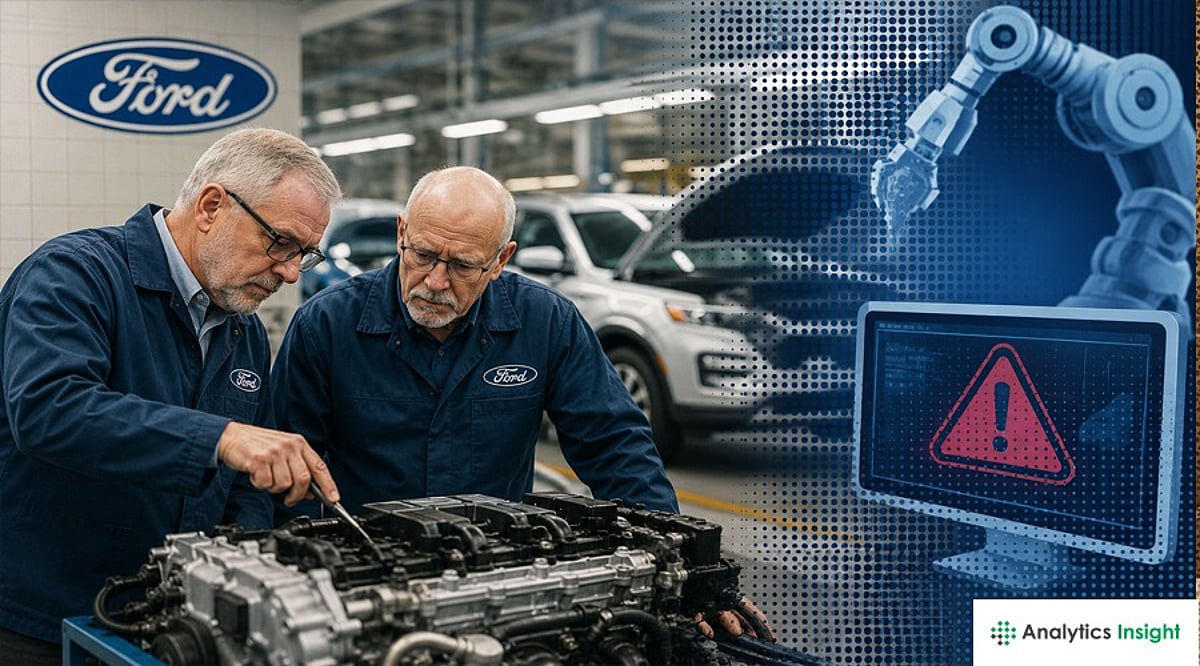
    Ford Motor Company has begun rehiring hundreds of veteran engineers following a series of quality problems and skyrocketing warranty expenses that exposed the limits of relying too heavily on artificial intelligence. The automaker’s renewed focus on experienced talent marks a significant shift after years of investing in AI-led quality control that ultimately failed to deliver expected results.

    This strategic pivot underscores a costly lesson: while AI can process vast amounts of data and accelerate certain tasks, it cannot replace decades of hands-on engineering expertise. After suffering substantial quality-related losses, Ford is now returning to a model where AI supports engineers rather than replacing them.

    Hundreds of Experienced Engineers Return

    Approximately 350 engineers and technical experts who had retired or left the company are being rehired. Their deep institutional knowledge will be applied to developing new vehicles and improving product quality.

    Charles Poon, Ford’s Vice President of Vehicle Hardware Engineering, acknowledged that the company had underestimated the value of experienced engineers. He noted that years of institutional knowledge walked out the door with retiring employees, leaving a gap that AI systems could not fill despite advances in automation.

    Ford has also reinstated engineer-led design reviews, giving senior technical teams a larger role in evaluating products before they move into production.

    Early Results Show Improvement

    The new approach appears to be paying off. Ford recently earned the top spot among mass-market brands in the 2026 J.D. Power Initial Quality Study — its best performance since 2010. The company has also trimmed warranty spending by identifying manufacturing and design problems earlier, during the development phase, so fewer defects reach customers.

    Still, Ford remains the automaker with the most recalls in the U.S. this year, though many of those recall actions are linked to older vehicle programs rather than newly launched models.

    AI Remains Part of Ford’s Future

    Despite the strategic shift, Ford is not abandoning artificial intelligence. The company continues to use AI for software validation, automated testing, and manufacturing analysis — with more than 100,000 software tests now handled through AI-assisted systems.

    Executives say the company’s approach has changed, not its commitment to technology. AI will continue to play a role in increasing efficiency and decision-making, but skilled engineers remain indispensable in manufacturing.

    Ford’s initiative serves as a cautionary tale for companies adopting AI in manufacturing: technology can assist engineering, but it cannot replace human expertise.

  • Gujarat Government, IAIRO, and IBM Launch Industrial AI Centre of Excellence

    Gujarat Government, IAIRO, and IBM Launch Industrial AI Centre of Excellence

    IBM, the Department of Science and Technology of the Government of Gujarat, and the Indian AI Research Organisation (IAIRO) have announced plans to establish an Industrial Artificial Intelligence Centre of Excellence (Industrial AI CoE) in Vadodara, Gujarat. The initiative aims to drive innovation, skill development, and ecosystem growth around Industrial AI, leveraging sovereign AI technologies.

    The Industrial AI CoE will function as a living lab, focusing on technology demonstrations, pilot programs, and applied research to accelerate the adoption of AI in asset-intensive sectors such as manufacturing, energy, utilities, and supply chains. By combining domain knowledge with advanced AI models, the centre seeks to enhance efficiency, safety, resilience, and quality across industries.

    Key objectives include fostering collaboration between industry, academia, and government through workshops, conferences, and technical sessions. The centre will also promote capacity building via academic partnerships, hackathons, training programs, and the development of AI frameworks, reference architectures, standards, and best practices for responsible and scalable AI deployment.

    Dr. Amit Sheth, Founding Director of IAIRO, stated: “The next generation of industrial systems will require AI that combines learning with domain knowledge, human expertise, and trust. Translating these capabilities into real-world impact requires an ecosystem where research, policy, and enterprise innovation evolve together. Gujarat’s industrial leadership provides a strong foundation for that transformation.”

    Sriram Raghavan, General Manager of IBM Software, India and Software Innovation Lab, added: “Scaling the application of AI is a strategic imperative for manufacturing and industrial organizations. Realizing this opportunity requires advanced AI models, real-time and historical data, enterprise-ready platforms, governance, and ecosystem partnerships. We look forward to collaborating with the Government of Gujarat and IAIRO to create a platform that fosters innovation, develops skills, and accelerates the adoption of sovereign AI technologies.”

    Under the collaboration, IBM and IAIRO will serve as technical and strategic advisors to the Gujarat Department of Science and Technology, providing expertise in Industrial AI, sovereign AI, and asset management platform best practices to scale AI adoption across the industrial sector.

    The initiative aligns with Gujarat’s vision to become a leading destination for Industrial AI, leveraging sovereign AI technologies and strengthening India’s position in trustworthy AI innovation.

  • MIT’s New Manufacturing Initiative Gains Traction with Industry, Workforce, and Startup Programs

    MIT’s New Manufacturing Initiative Gains Traction with Industry, Workforce, and Startup Programs

    In its first year, the Initiative for New Manufacturing (INM) at MIT has built significant momentum by bridging research, workforce development, and industry engagement to accelerate the deployment of advanced manufacturing technologies. The initiative marked its first anniversary with MIT Manufacturing Week in May 2026, attracting over 800 registrants—including students, faculty, industry leaders, investors, entrepreneurs, and government officials—for four days of workshops, symposia, and discussions on AI in factories, startup innovation, and workforce solutions.

    “INM launched a year ago with the premise that strengthening the industrial base needed a coordinated response, and MIT has a responsibility to lead it,” said Paula T. Hammond, dean of MIT’s School of Engineering and co-chair of INM’s Steering Committee. “The response and participation level has been huge. MIT Manufacturing Week proved that the appetite for change—from students to chief executives—is real and urgent.”

    Manufacturing Week Highlights

    Manufacturing Week opened with a cybersecurity workshop co-led by INM and Google Cloud for industry members. It continued with the MIT MIMO (Machine Intelligence for Manufacturing Operations) symposium on deploying AI on factory floors, alongside sessions on workforce development, emerging technologies, startups, and industrial transformation. The week closed with a regional research showcase and competition featuring more than 140 graduate students and postdocs from across New England.

    Over the past year, INM also hosted a distinguished speaker series with manufacturing leaders including Keith Flynn (Anduril), Roland Busch (Siemens), and Venky Alagirisamy (Nike).

    Fostering New Manufacturing Startups

    A central goal of INM is to help students see manufacturing as a frontier for scientific discovery, technological innovation, entrepreneurship, and societal impact. The initiative partnered with NSF I-Corps New England to host its first manufacturing research showcase. More than 140 teams from 17 universities applied; 40 finalist teams received mentorship, and eight teams shared $50,000 in prize funding.

    The top prize for “most transformative innovation” went to MIT PhD student Jake Read for “The End of G Code,” a project on modular machine control architectures. Vatsal Patel (MIT) and Joshua Grace (Yale) won the research excellence category for “VisFT,” scalable six-axis force-torque sensors. Project themes included AI tools for manufacturing, semiconductor process control, robotics, digital twins, new materials, additive manufacturing, next-generation shipbuilding, and biomanufacturing.

    “Entrepreneurship is a transformative pathway to take research to market, and to drive faster innovation and scale-up,” said John Hart, INM faculty co-director and head of MIT’s Department of Mechanical Engineering. “At INM’s inaugural research showcase, we had tremendous interest from universities across New England, along with enthusiastic participation from industry, investors, and experienced founders. We are excited to build on this success and work toward a nationwide program and platform for entrepreneurship and translation in manufacturing.”

    Growing Industry Consortium

    During Manufacturing Week, First Solar became INM’s eighth industry member, joining Amgen, Autodesk, GE Vernova, Flex, PTC, Sanofi, and Siemens. The consortium’s growth reflects a recognition that modern manufacturing challenges—supply chain resilience, workforce development, industrial competitiveness—require cross-sector collaboration. INM provides a platform to convene and develop solutions through workshops and working groups on cybersecurity, digital twins, AI agents in regulatory environments, and continuous innovation.

    “Our members see MIT as a partner that can help them both address today’s challenges and think far into the future,” said Rick Locke, dean of the MIT Sloan School of Management and co-chair of INM’s steering committee. “This kind of multi-industry engagement is unusual and powerful.”

    Research and Workforce Development

    INM issued a call for proposals on AI and automation, receiving an overwhelming response and funding eight seed research projects. The initiative plans to publish eight white papers in June as part of a broader study on the future of manufacturing. During MIT’s Independent Activities Period in January 2026, INM collaborated with NSF I-Corps to guide 13 early-stage teams through customer discovery via the I-Corps Spark program.

    Workforce development is a major focus. MIT launched the Technologist Advanced Manufacturing Program (TechAMP), led by Principal Research Scientist John Liu, to create a new generation of shop floor leaders at six sites across New England, including three community colleges. “INM has the potential to transform the national manufacturing workforce,” said Liu. “It will require deep engagement between how people learn and lead, and how firms adopt new technologies and transform. We’re just getting started.” INM is now exploring a national rollout of TechAMP and expansion into biomanufacturing and semiconductor manufacturing.

    On campus, INM supported student engagements including an AI and automation lunch series and a Factory Observatory program. This spring, students founded MIT’s first manufacturing club, holding its launch event during Manufacturing Week. “We’re thrilled students are taking the lead,” said Sloan associate professor and INM faculty co-director Karen Zheng. “It was really exciting to see a full room of 80-plus students across campus coming together for the kickoff event during the busiest final period of a semester. This speaks to the students’ enthusiasm.”

    Global Reach and Future Plans

    While focused on strengthening domestic manufacturing, INM aims for global impact. It is collaborating with NAMTECH in Ahmedabad, India, where students are now taking an adaptation of MIT’s “yo-yo course” (2.008: Design and Manufacturing II). Next year, INM plans to bring more manufacturing leaders to campus, offer additional programming for emerging entrepreneurs, graduate TechAMP’s first cohort, expand TechAMP to new states, grow the consortium, and deepen research into manufacturing productivity.

    “INM aims to be a catalyst for transforming manufacturing across the nation to drive innovation, economic growth, and new types of jobs,” said Chris Love, faculty co-director of INM. “MIT’s work on the PIE (Production in the Innovation Economy) study in 2013 highlighted the value of proximity between production and innovation. INM seeks to rekindle this relationship in manufacturing across the country.”

  • India’s Semiconductor Strategy: From Design Hub to Global Chip Manufacturing Powerhouse

    India’s Semiconductor Strategy: From Design Hub to Global Chip Manufacturing Powerhouse

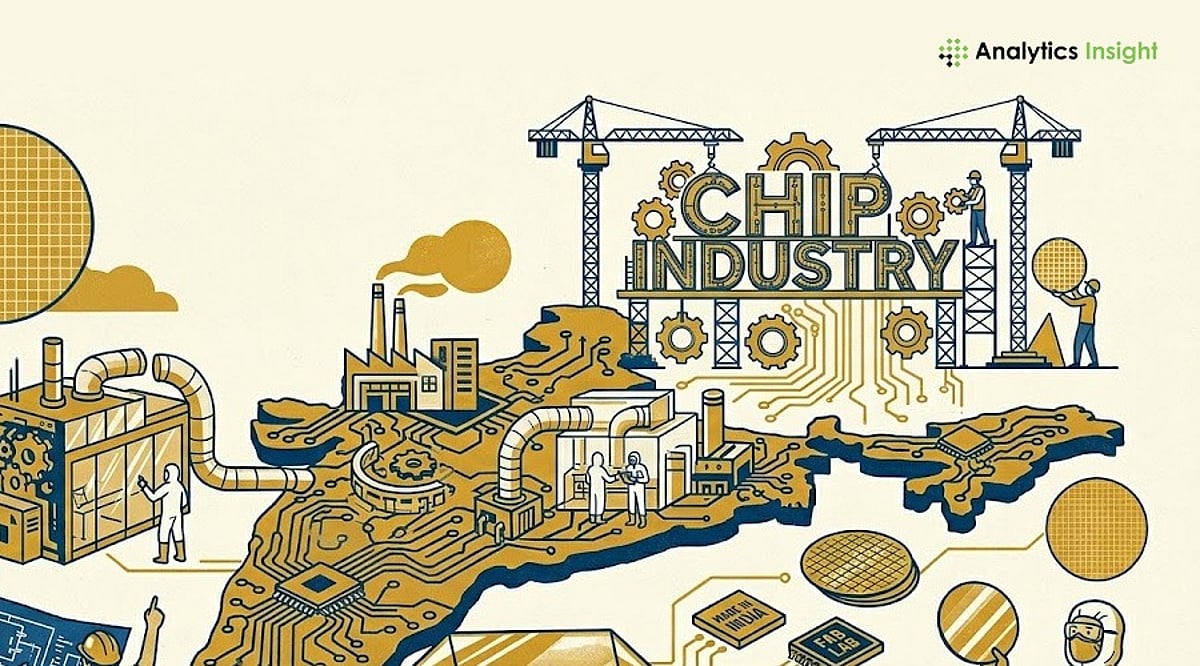
    India has long been a silent force in global technology, with nearly 20% of the world’s semiconductor design talent based in cities like Bangalore and Hyderabad. But designing chips and manufacturing them are vastly different challenges. Until recently, the country lacked the advanced fabrication plants, or ‘fabs,’ required to turn designs into physical silicon.

    The COVID-19 pandemic exposed the fragility of global supply chains, halting car production and highlighting the dangers of relying entirely on a few countries for chips. Driven by these lessons, India is now racing to build a semiconductor industry from scratch. The launch of the India Semiconductor Mission (ISM) 2.0, backed by billions in government support, marks a determined shift from being a design house to becoming a global manufacturing hub.

    Starting with Assembly and Testing

    Building a cutting-edge chip factory is one of the most expensive and complex undertakings imaginable—a single advanced machine can cost more than a large airplane. Instead of immediately competing with giants like Taiwan on 2-nanometer AI chips, India is pursuing a bottom-up strategy. The initial focus is on Outsourced Semiconductor Assembly and Test (OSAT): taking raw silicon wafers, slicing them into individual chips, and packaging them. This 10-to-12-step process is less capital-intensive than a full fab but equally vital.

    Companies such as Kaynes Semicon have already started production in Gujarat, concentrating on chips for automotive, telecom, and defense applications. These may not power the latest smartphones, but they are the workhorses of the modern economy. By serving its domestic market first, India is building the scale and manufacturing culture needed to eventually produce more advanced, smaller chips.

    Government Policy and Self-Reliance

    The Indian government is backing this push with investment and clear policy. The Union Budget for 2026-27 introduced ISM 2.0, allocating Rs. 8,000 crore specifically for manufacturing and design this year. The target is ambitious: by 2029, India aims to design and manufacture 70% to 75% of its own semiconductor needs—from home appliances to advanced defense technology.

    Under the first phase of the mission, ten major projects worth about Rs. 1.60 lakh crore have been approved, spanning silicon power plants and packaging units across six states. The broader vision is to position India as a trusted ‘Plan B’ for the world amid rising geopolitical tensions.

    Building Talent and Indigenous Tech

    One of the biggest hurdles is the shortage of trained engineers for chip manufacturing, which demands extreme precision and cleanroom protocols. India has launched programs like ‘Chips to Startup,’ providing hundreds of universities and over 1,000 startup engineers access to high-end design tools. Partnerships with firms like Lam Research aim to train 60,000 engineers over the next decade.

    India is also developing its own intellectual property to reduce reliance on foreign licensing. Indigenous microprocessors such as ‘DHRUV64,’ ‘SHAKTI,’ and ‘THEJAS’ are built on open-source architectures, lowering costs and fostering innovation in 5G, automotive electronics, and industrial automation. These chips represent a move toward digital sovereignty.

    Strategic Importance and Job Creation

    Semiconductors have become the oil of the 21st century, powering everything from medical devices to satellites. With India’s chip market projected to grow from $38 billion in 2023 to $110 billion by 2030, domestic production is a matter of national security and economic resilience. The new semiconductor units are expected to create thousands of high-quality jobs for engineers and technicians, helping retain top talent within the country.

    What Lies Ahead

    Progress is already visible. According to IT Minister Ashwini Vaishnaw, four semiconductor plants are expected to be operational by the end of 2026. Facilities in Sanand, Gujarat, have moved from foundation to production in just 14 months—a pace that has surprised global observers. India’s first major fabrication unit in Dholera is slated to be ready by 2028, targeting advanced 3-nanometer and 2-nanometer technologies.

    The journey is long and requires patient capital, but the pieces are falling into place. Combining world-class design talent with a new focus on assembly, testing, and eventually full-scale fabrication, India is slowly turning its semiconductor dreams into silicon reality. The government has set a goal of becoming a top-three semiconductor nation by 2047.

  • Why India’s Next Startup Wave Is Hidden in Supply Chains: Piper Serica’s Ajay Modi on Deeptech Investing

    Why India’s Next Startup Wave Is Hidden in Supply Chains: Piper Serica’s Ajay Modi on Deeptech Investing

    India’s venture capital story is being rewritten. The capital that once chased consumer internet growth at any cost is now flowing toward deep engineering, sovereign technology, and industrial capability. Ajay Modi, Director at Piper Serica, has been at the center of this shift. His firm’s portfolio spans laser space communication, edge AI chips, underwater robotics, airport operating systems, and India’s first resonance-based rocket ignition system.

    In this exclusive conversation with Analytics Insight, Modi breaks down why deeptech has become the defining investment theme of India’s next economic cycle and what it takes to build companies that matter inside strategic industries.

    How Venture Capital Priorities Are Evolving in India

    Indian tech startups raised about $7.4 billion in 2024, up 23 percent from 2023, with deeptech alone drawing around $1.6 billion and growing roughly 78 percent in a year. Nasscom and Zinnov now count more than 4,000 deeptech startups within a base of 32,000–35,000 tech ventures.

    Piper Serica’s Fund I has backed over 33 companies across deeptech, spacetech, defence, semiconductors, fintech infrastructure, and mobility. Newer deals concentrate in IP-led hardware, firmware, and system software. First founder meetings now open with orbit plans, chip architectures, or reliability data—not only GMV charts.

    This shift follows a reset after the 2020–2021 liquidity cycle, when capital largely chased consumer internet businesses that scaled fast on subsidies and marketing. Investors saw that scale without defensible capability created fragile companies once acquisition costs rose and capital tightened. Deeptech has become a clear winner from this correction.

    What Drives Interest in Spacetech, Semiconductors, Robotics, Defence, and Precision Manufacturing?

    Investor interest in these sectors rises where three lines meet: national policy support, large end demand, and a rewiring of global supply chains. India’s space economy stands near $8–8.5 billion and targets $40–45 billion by the early 2030s. More than 400 space startups have attracted over $500 million. In semiconductors and electronics, the Semicon India and component PLI stack targets around $300 billion of electronics output with deeper local value addition.

    On the talent side, founders now come from ISRO, DRDO, global chip companies, and top IIT labs. Piper Serica’s portfolio reflects this mix across spacetech, chip design, mobility electronics, cyber security, and industrial software.

    How India’s Manufacturing and Self-Reliance Push Shapes VC Decisions

    Electronics output in India has grown from about $10 billion in 2014 to roughly $115 billion today. Local factories now meet close to $110 billion of the $140 billion of domestic demand. Programmes like iDEX and IN-SPACe’s Technology Adoption Fund lower early revenue risk and lengthen runway for hardware and industrial companies.

    Piper Serica now treats such programs almost like demand pipelines. For venture investors, capital is shifting from funding user acquisition to funding companies that can become long-term infrastructure layers inside strategic industries.

    Opportunities in Aviation, Infrastructure, Electronics Systems, and Advanced Industrial Tech

    The next three to five years can be India’s most important industrial buildout in decades. In aviation, real value will sit in software and airport tech. At Chennai airport, Piper Serica’s portfolio company Blunav cut runway occupancy time by 22 percent across more than 3,500 flights. Electronics systems offer a second wave, while robotics, industrial AI, and autonomous inspection represent a third wave. The most valuable companies may be those hidden inside supply chains, compounding quietly through efficiency.

    How Evaluation Frameworks Differ for Industrial and Deeptech vs. Consumer

    Consumer investing focuses on speed and metrics like CAC, retention, and growth rate. Tech investing is engineering-led—investors test whether the core system works, is defensible, and runs reliably in demanding real-world settings. Diligence goes into IP strength, field reliability, manufacturing repeatability, regulatory paths, certifications, and integration risk. Timelines differ: consumer products can ship in weeks; deeptech teams may spend years hardening hardware and software. Competitive moats come from engineering depth and long contracts embedded inside customer operations.

    Technology Depth and Industrial Relevance Over Scale-Focused Growth

    India’s “easy growth” phase is over. Profitability, resilience, and defensibility sit at the centre of investment debates. Thrustworks Dynetics, a Piper Serica portfolio company, test-fired India’s first resonance-based rocket ignition system with only about ₹7 crore of seed funding—a sharp example of deep hardware success. Scale still matters, but the most sought-after companies now pair scale with hard engineering, proprietary systems, and real industrial relevance.

  • MIT Mechanical Engineering Department News: Pioneering Research, Rankings, and Innovations in 2026

    MIT Mechanical Engineering Department News: Pioneering Research, Rankings, and Innovations in 2026

    MIT Mechanical Engineering: A Hub of Innovation

    MIT’s Department of Mechanical Engineering continues to be a global leader in engineering education and research. In 2026, the Institute once again topped the QS World University Rankings as the No. 1 university, marking its 15th consecutive year at the pinnacle. The department itself advanced breakthroughs in biomedicine, manufacturing, climate technology, and student-led initiatives.

    Top Stories from MIT Mechanical Engineering

    QS Ranks MIT World’s No. 1 University for 2026-27

    For the 15th year in a row, MIT secured the top spot in the QS World University Rankings, also placing first in 12 subject areas. The ranking reflects the Institute’s sustained excellence across disciplines.

    MIT’s Initiative for New Manufacturing Builds Momentum

    In its first year, the Initiative for New Manufacturing (INM) has accelerated research, workforce development, and industry engagement to bring new manufacturing technologies to real-world deployment.

    The Tenured Engineers of 2026

    Ten faculty members across MIT’s School of Engineering received tenure in 2026, including several from the Department of Mechanical Engineering, highlighting the strength of the academic community.

    Ingestible Sensor Measures Temperature Inside the Body

    MIT engineers developed a tiny ingestible sensor that can continuously monitor body temperature from inside the gastrointestinal tract, offering a noninvasive way to track patients at risk of hypothermia.

    Drug Delivery Directly to the Esophagus

    A new gel-like drug formulation coats the esophageal lining, enabling targeted treatment for inflammatory conditions affecting the esophagus. This innovation could improve patient outcomes and reduce side effects.

    Hertz Foundation Fellowships Awarded to MIT Affiliates

    Several MIT affiliates received 2026 Hertz Foundation Fellowships, supporting doctoral students tackling pressing challenges in science and technology.

    Innovative Projects to Combat Extreme Heat

    With seed funding from MIT’s Climate Project, researchers are exploring low-cost personal cooling and emissions-free air conditioning as part of broader efforts to address extreme heat.

    Novel Carbon Capture Methods

    MIT researchers developed an efficient, flexible alternative to conventional carbon capture, offering a promising pathway to reduce atmospheric CO₂.

    Ambassadors of STEM: Promoting Hands-On Education

    A new student club for FIRST Robotics alumni aims to enhance K-12 STEM education through hands-on activities and mentorship.

    Ultrasound-Based Pacemaker Steadies the Heart Noninvasively

    Engineers designed a pacemaker that uses ultrasound to stimulate the heart without surgery, potentially replacing traditional implants.

    Eleven from MIT Accept 2026 Fulbright Awards

    Over half of MIT’s Fulbright applicants won awards this year, with students and alumni embarking on research and teaching projects abroad in 2026-27.

    Bridging Human Movement and Digital Technology

    MIT.nano’s Immersion Lab collaborated with Emerson College to advance virtual production, merging real human motion with digital tools.

    MIT Affiliates Elected to National Academy of Sciences for 2026

    Six MIT faculty and ten additional alumni were recognized by the National Academy of Sciences for their contributions to natural and social sciences.

    Building ‘Hardcore’ Advanced Machines

    In the course 2.72/2.270 (Elements of Mechanical Design), students learn that “if it doesn’t break the laws of physics, it’s possible; you just have to figure out how to engineer it.”

    Measuring the ‘Klein’ – A New Unit in Honor of an MIT Alumnus

    In a playful nod to the smoot, MIT researchers introduced the “klein” to honor Martin Klein ’62, renaming a section of the Charles River bridge the “Shortfellow Bridge.”

    For more details, visit the MIT Mechanical Engineering News page.

  • MIT Classes and Programs: A Gateway to Lifelong Learning and Innovation

    MIT Classes and Programs: A Gateway to Lifelong Learning and Innovation

    Massachusetts Institute of Technology (MIT) offers an unparalleled range of classes and programs that extend far beyond the traditional campus. From professional education and open access to world-class curriculum, to specialized initiatives in urban planning and climate science, MIT continues to shape the future of learning. This collection highlights some of the most impactful stories showcasing how MIT’s educational offerings ripple across the globe.

    Key Highlights

    • The Ripple Effect of Learning at MIT: MIT Professional Education helped Ignacio Vazquez SM ’22 bridge technical mastery and strategic insight, leading to his role as MIT System Design and Management industry and certificate director.
    • MIT Open Learning Reaches the South Pole: John Della Costa uses OpenCourseWare to engage fellow Antarctica “winterovers” in physics content and build community.
    • Initiative for New Manufacturing (INM): In its first year, INM has accelerated new manufacturing technologies through research, workforce development, and industry engagement.
    • MIT SPURS Looks to the Future: Approaching its 60th year, the international program reshapes its curriculum to address emerging technologies and urban-policy challenges.
    • Bridging Human Movement with Digital Technology: MIT.nano Immersion Lab collaborates with Emerson College students to advance virtual production art.
    • Student-Led Plasma Physics Under Alaska’s Aurora: Distributed instruments observe auroral structures and probe space plasma in real-world conditions.
    • Science Writing Meets The Associated Press: Students develop and pitch local climate stories with visual journalists from the AP.
    • Q&A: Path to a PhD in Computational Science: Emily Williams becomes the first graduate of MIT’s Center for Computational Science and Engineering.
    • MIT Asia Real Estate Initiative Expands: Hubs in Tokyo, Dubai, and Hong Kong engage industry leaders and alumni.
    • A Day in the Life of MIT MBA Student Patrick Yeung: Sustainability Initiative provides opportunities to lead toward a more sustainable future.
    • A Bet That Paid Off 500 Million Times Over: Twenty-five years of MIT OpenCourseWare and MIT Open Learning’s bold decision to open curriculum to the world.
    • MIT Practicum in Ukrainian City Development: Students work with leaders from Vinnytsia on innovation ecosystems and workforce development amid war.
    • Building “Hardcore” Advanced Machines: In 2.72/2.270 (Elements of Mechanical Design), students learn that if it doesn’t break physics, it’s possible.
    • Q&A: Expanding Global Reach Through Universal Learning: Dimitris Bertsimas and Megan Mitchell discuss MIT Open Learning’s new educational initiative.

    These stories illustrate the breadth and depth of MIT’s commitment to education—from lifelong learning and open access to hands-on projects and international partnerships. Whether you are a prospective student, a professional seeking upskilling, or a curious mind, MIT’s classes and programs offer pathways to transformative knowledge and real-world impact.