Tag: Market Decline

  • US Stocks Decline as 10-Year Treasury Yield Reaches Highest Level Since 2007

    US Stocks Decline as 10-Year Treasury Yield Reaches Highest Level Since 2007

    US stocks fell on Wednesday as the benchmark 10-year Treasury yield soared to its highest level since 2007, following stronger-than-expected business activity data that revived expectations of further interest rate hikes.

    The S&P Global flash US Composite PMI Output Index rose to 58.4 in September from 56.0 in August, marking its highest reading since July 2021. The surge was fueled by a sharp increase in new orders, with factory hiring rising at its fastest pace since February 2021.

    Treasury Yields Rise on Rate Hike Bets

    The robust business activity data reinforced bets that the Federal Reserve could raise rates again, as inflation remains above the central bank’s 2% target. The 10-year Treasury yield jumped 8.7 basis points to 5.054%, its highest level since 2007. The two-year yield, sensitive to interest rate expectations, rose 8.49 basis points to 4.862%, its highest since June 2024.

    Fed funds futures traders now price in a 73% probability of an October rate hike, up from 53% earlier. Federal Reserve Governor Michael Barr stated that the central bank had taken an important step to ‘recalibrate’ short-term borrowing costs and would likely need to deliver additional rate hikes to bring down inflation.

    Wall Street Ends Lower

    Stocks came under pressure as Treasury yields climbed. The Dow Jones Industrial Average fell 0.18%, the S&P 500 dropped 0.53%, and the Nasdaq Composite declined 1.05%. The pan-European STOXX 600 index slipped 0.27%, while an MSCI index of global stocks declined 0.51% after four consecutive sessions of gains.

    Adam Button, chief currency analyst at investingLive, noted that services continued to lead the economy while manufacturing output picked up sharply, with factory hiring accelerating at its quickest pace since February 2021.

    Dollar Gains, Gold Falls

    The prospect of higher US interest rates supported the dollar, which reached multi-week highs against the euro, sterling, and Canadian dollar. The euro fell 0.5% to USD 1.1389, its lowest level since July 29. The dollar rose 0.56% against the yen to 158.25. Spot gold dropped 1.55% to USD 4,287.05 an ounce.

    Market participants are closely watching upcoming Fed meetings and economic data for further direction.

  • Tech Roundup: Intel Starfire Space Chip, Nvidia’s $5B AI Bet, Blockchain Analyst Surge & Crypto Slump

    Tech Roundup: Intel Starfire Space Chip, Nvidia’s $5B AI Bet, Blockchain Analyst Surge & Crypto Slump

    Good morning, tech fam — here’s your quick catch-up on the biggest stories making headlines today. From space chips and AI investments to hiring trends and crypto market swings, we’ve got you covered.

    Intel Unveils Starfire Chip for Smarter Space Missions

    Intel has introduced the Starfire space chip, designed to bring faster computing and artificial intelligence processing directly to satellites and spacecraft. Built to withstand harsh space conditions, the processor can handle onboard AI tasks with minimal input from Earth, supporting future government and commercial space missions.

    Nvidia Invests $5 Billion in Safe Superintelligence

    Nvidia is backing Safe Superintelligence, the AI startup co-founded by Ilya Sutskever, with a $5 billion investment. The deal provides the startup with expanded computing power and access to Nvidia’s Vera Rubin hardware. Financial terms were not officially disclosed, but the partnership signals a major push toward next-generation AI development.

    India Skills Report 2025: Blockchain Analysts in High Demand

    The India Skills Report 2025 reveals that graduate employability has reached 54.81%, with fintech talent seeing strong demand. Blockchain Analyst roles are expected to grow as digital finance expands. The report emphasizes skill-based learning, industry-focused education, and India’s increasing role in the global workforce.

    NVIDIA Launches Open Secure AI Alliance

    In response to security concerns raised after an OpenAI testing incident, NVIDIA has formed the Open Secure AI Alliance with more than 35 technology companies. The group aims to develop open AI security tools, helping businesses detect threats faster and strengthen cyber defense through shared technology.

    Crypto Market Tumbles Amid Rising Fear

    Bitcoin, Ethereum, XRP, and Dogecoin have fallen sharply as heavy selling and global uncertainty hurt market confidence. Analysts point to rising fear, whale sell-offs, and weaker risk appetite, warning that Bitcoin could face further pressure if key support levels break.

  • Indian Markets Extend Losing Streak for Fifth Day as Crude Oil Fears Bite

    Indian Markets Extend Losing Streak for Fifth Day as Crude Oil Fears Bite

    Indian equity benchmarks ended Friday’s session under heavy selling pressure, capping their fifth consecutive day of losses. Investors reacted to surging crude oil prices, escalating geopolitical tensions in the Middle East, weak corporate earnings, and continued foreign fund outflows. The bearish trend was visible across sectors, with banking, auto, and metal stocks leading the decline. The sell-off also pushed the benchmark indices towards their worst weekly performance in nearly four months.

    Overall Market Performance

    At 2:50 PM, the Sensex was down 272.00 points, or 0.36%, at 76,119.39, while the Nifty fell 81.70 points, or 0.34%, to 23,787.90. Market breadth remained negative, with 1,792 shares advancing against 1,944 declines. Broader markets also remained under pressure, with the Nifty Midcap and Smallcap indices declining as risk aversion intensified.

    The weakness was largely driven by Brent crude climbing above $100 per barrel, raising concerns over inflation, India’s import bill, and corporate profitability. Investors also remained cautious following disappointing quarterly earnings from several large-cap companies.

    Top Gainers and Losers

    While some stocks managed to post gains, the majority of sectors faced significant losses. The detailed list of top gainers and losers is available in the original report.

    Market Trends

    Friday’s decline was indicative of a risk-off scenario. The equity markets fell back as uncertainty rose following new events taking place in the Middle East. Increased oil prices were a major source of concern for Indian markets as they can potentially cause inflation, increase the trade deficit, and reduce the bottom line for businesses.

    Foreign institutional investors (FIIs) continued to reduce their positions, while the weakening Indian rupee became an additional factor causing uncertainty. Poor performance by large corporations dampened investor confidence.

    Disclaimer: This article is provided for informational purposes and does not constitute investment advice. You are responsible for conducting your own research (DYOR) before making any investments.

  • Ethereum Faces Continued Downside Risk After 22% Monthly Plunge

    Ethereum Faces Continued Downside Risk After 22% Monthly Plunge

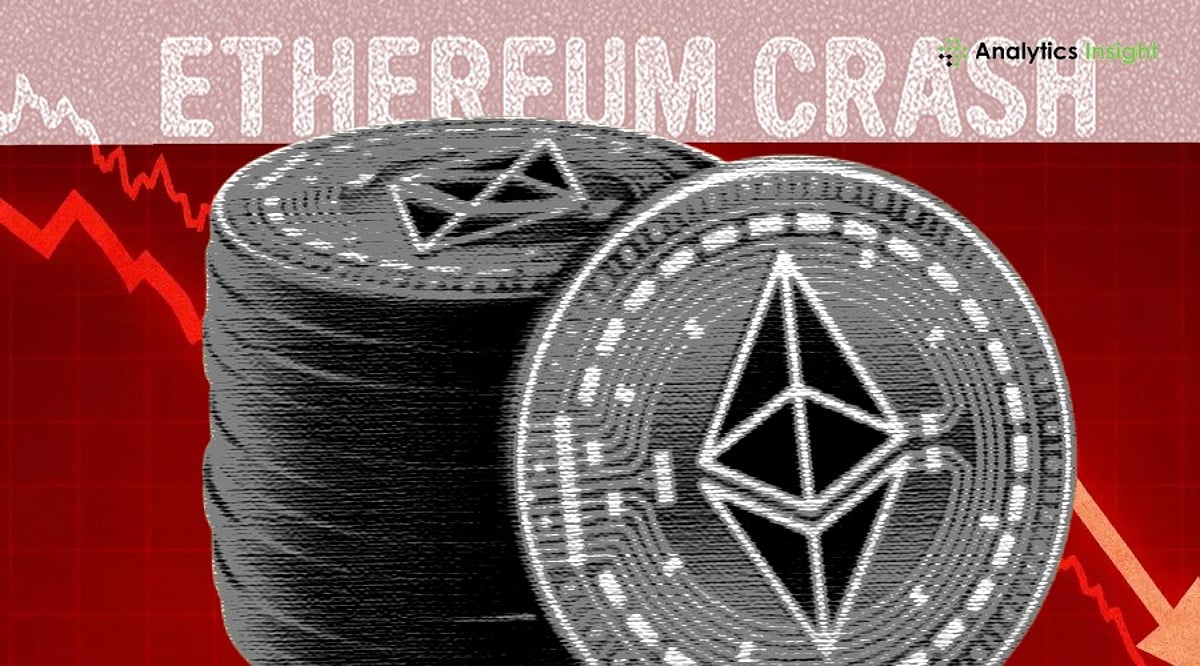
    Ethereum has fallen 22% over the past month as weak technical signals, cautious investor sentiment, economic uncertainty, and rising competition continue to weigh on the cryptocurrency’s short-term outlook. While long-term fundamentals remain strong, several factors suggest the price could remain under pressure in the near term.

    Key Takeaways

    • Ethereum remains under pressure after a 22% monthly decline.
    • Weak technical indicators and global economic uncertainty continue to affect price.
    • Strong long-term fundamentals remain, but short-term risks persist.

    Current Market Snapshot

    At the time of writing, Ethereum trades near $1,800 with a market capitalization of approximately $214 billion and a 24-hour trading volume of about $16.5 billion. The circulating supply stands near 120.7 million ETH. Despite the correction, Ethereum remains one of the world’s largest digital assets.

    Weak Price Trend Raises Concerns

    Ethereum’s recent decline has damaged its price structure, slipping below several important support levels. Every recovery attempt has faced selling pressure. The $1,800 level has become a critical zone; if Ethereum fails to hold above it, further selling could push the price lower. The asset still trades below its 50-day moving average, signaling weak market momentum.

    Investors Prefer Bitcoin

    Capital flows have not been evenly distributed across the crypto market. While Bitcoin has attracted fresh institutional interest, Ethereum has not received the same level of support. Many investors view Bitcoin as a safer choice during uncertain times, leading to capital rotation away from major altcoins like Ethereum.

    Global Economy Adds Pressure

    Uncertainty in global financial markets persists, with investors monitoring inflation, interest rates, and central bank actions. High interest rates may discourage appetite for high-risk assets like cryptocurrencies, prompting many to favor traditional investments.

    Strong Network Use Has Not Lifted Price

    Ethereum remains the largest blockchain for decentralized finance, smart contracts, and tokenized assets. Developer activity remains healthy. However, strong network usage has not translated into a higher price. Lower transaction fees have reduced the amount of ETH burned through the network’s token-burning mechanism.

    Competition Continues to Grow

    Ethereum faces stiff competition from newer blockchain networks offering cheaper and faster transactions. Some developers and users have migrated to these alternatives. Ethereum’s Layer-2 scaling solutions have improved speed and cost, but they also fragment users across multiple networks, increasing complexity.

    Large Investors Can Increase Volatility

    Institutional activity plays a significant role in Ethereum’s price movements. While several companies have increased their ETH holdings, questions remain about whether corporate treasury strategies and staking rewards can sustain long-term growth. This uncertainty keeps volatility high.

    Future Upgrades Need Time

    Ethereum developers continue to work on major improvements, including the “Lean Ethereum” roadmap shared by co-founder Vitalik Buterin, which aims to enhance speed, efficiency, privacy, and scalability. Experts estimate the full development process may take three to four years.

    Market Sentiment Remains Weak

    Investor confidence has weakened after the sharp monthly decline. Many short-term traders are selling rather than buying, expecting further price weakness. Fear in the market typically increases selling pressure, making recovery more difficult.

    Why This Matters

    Ethereum’s 22% plunge highlights growing friction between its long-term upgrades and near-term market performance. As capital flows heavily into Bitcoin, ETH’s struggling price structure tests investor patience regarding Layer-2 complexity and network fee destruction.

    Outlook

    Ethereum remains one of the most solid blockchain technologies, with a large developer community, institutional interest, and leadership in decentralized finance and smart contracts. However, the medium-term outlook is uncertain. A monthly decline of 22%, weak technical indicators, low investor sentiment, global uncertainty, and increasing competition point to further downside risks. Recovery will depend on strong institutional demand, improved market confidence, growth in network activity, and the ability to hold above key support levels.

    Frequently Asked Questions

    1. Why has Ethereum fallen so much recently?

    A combination of macroeconomic pressures, lower institutional interest relative to Bitcoin, and increased competition from faster altcoin blockchains have weighed heavily on Ethereum’s short-term price momentum.

    2. What is Ethereum’s current price?

    Ethereum is currently trading at approximately $1,800, with a market capitalization of roughly $214 billion and a 24-hour trading volume near $16.5 billion.

    3. Could Ethereum fall further?

    Yes. If Ethereum fails to hold above the critical $1,800 support zone, technical analysts warn that intensified selling pressure could drive the asset lower.

    4. Does Ethereum still have strong long-term potential?

    Absolutely. Despite short-term corrections, Ethereum leads in decentralized finance, smart contract development, Layer-2 scalability, and global developer ecosystem activity.

    5. What could help Ethereum recover?

    A sustained recovery depends on returning institutional inflows, macro-driven market confidence, successful defense of core support levels, and clearer adoption of Vitalik Buterin’s proposed “Lean Ethereum” protocol roadmap.