Tag: market volatility

  • Geopolitical Turmoil and Its Ripple Effects on Global Stock Markets

    Geopolitical Turmoil and Its Ripple Effects on Global Stock Markets

    Key Takeaways

    • Oil is the transmission channel: A prolonged energy disruption can raise costs, inflation, and pressure corporate profits.
    • Import-heavy economies face greater risks: Higher oil prices can weaken currencies, increase import bills, and hurt domestic demand.
    • The biggest danger is stagflation: Sustained geopolitical shocks can combine higher inflation with slower growth, complicating central-bank decisions.

    A fresh oil shock has put global stocks under pressure. Brent crude crossed USD 100 per barrel on September 9 after new U.S.-Iran military strikes and Houthi attacks on Saudi cities. Brent reached USD 100.95, its highest level since July 24.

    The Dow Jones fell 0.75%, the S&P 500 fell 0.30%, and the Nasdaq fell 0.35%. European stocks also lost ground, while gold rose 1.5% to USD 4,418 an ounce. These moves show how a geopolitical shock can reach stocks through oil, inflation, rates, trade and company profits.

    Oil Turns a Military Shock into a Market Shock

    Oil often gives the first signal after a major conflict. A threat to oil fields, ports or the Strait of Hormuz can cut supply or raise fear of a supply cut. Higher crude prices raise costs for airlines, transport firms, chemical makers and factories. Consumers can also face higher fuel and food costs.

    The current shock has a wider effect. The 10-year U.S. Treasury yield stood at 4.794% on September 9, close to a recent three-year high. Higher energy costs can lift inflation, while higher inflation can push central banks toward higher rates. Higher bond yields then put pressure on stock values, with growth stocks under more pressure than firms with strong cash flow.

    The Federal Reserve now faces a harder choice. About 70% of economists expect the U.S. central bank to hold rates at its next policy session meeting, yet confidence in that view has weakened since August. U.S. inflation data can shift that view fast. Markets also expect the Bank of Japan to raise rates on September 17–18.

    Import-Heavy Markets Face a Sharper Hit

    India offers a clear example. On September 9, the rupee fell past the 95-per-dollar mark as Brent moved above USD 100. Mumbai’s stock index fell about 0.9%. The Reserve Bank of India likely used foreign exchange action and swaps to support the rupee and manage local liquidity. The rupee closed at 95.1050 per dollar, while the one-year implied dollar-rupee yield reached 3.16%, a three-month high.

    A weaker currency can lift import costs, while higher rates can reduce demand for homes, cars and business credit. Foreign funds can also leave local markets when global risk appetite falls. The IMF has warned that commodity importers face a larger financial shock than stronger economies.

    The Bigger Risk Sits Between Inflation and Growth

    Geopolitical tensions do not always cause a long stock market decline. Markets can absorb a short conflict if oil prices fall back and trade routes stay open. The danger grows when a military crisis turns into a long energy shock.

    The IMF expects global growth at 3.1% in 2026 and 3.2% in 2027 under the assumption of a limited Middle East conflict. It also expects global inflation to rise modestly in 2026 before a decline in 2027. A longer conflict, deeper geopolitical division or fresh trade tensions could weaken growth and unsettle markets.

    The IMF’s April 2026 financial stability report points to higher energy costs, lower equity prices, higher bond yields, capital outflows, currency pressure and leverage at non-bank financial firms. It also flags high valuations in artificial intelligence stocks as a source of wider market stress.

    If oil returns below USD 100, inflation pressure may ease and stocks may regain ground. If oil stays above that level for a long period, central banks may keep rates high for longer, which can weaken stock values and business demand.

    What Matters Most for Global Stocks Now

    The Strait of Hormuz remains a key market risk. A long disruption could raise energy costs across Asia, Europe and other import-heavy regions. Freight and supply costs could also rise, which would add pressure to company margins and consumer prices. The IMF has warned that a prolonged conflict could weaken growth and raise inflation much more sharply.

    Gold has shown its role as a defensive asset, while the Japanese yen reached a seven-month high. The U.S. dollar index slipped to 98.65. These moves show that investors still seek protection, yet higher oil prices also create pressure on major economies.

    J.P. Morgan’s mid-year outlook remained constructive on equities if the energy shock stays manageable. The key risk sits where war meets inflation. A short conflict may create a sharp but limited market shock. A longer crisis could raise oil prices, lift inflation, force tougher central bank policy and slow economic growth at the same time. That chain can turn a geopolitical event into a broad financial problem.

    FAQs

    1. How do geopolitical tensions affect stock markets?

    They can increase oil prices, disrupt trade, weaken currencies, raise inflation and increase uncertainty, leading investors to reduce exposure to riskier assets.

    2. Why is a rise in oil prices bad for stocks?

    Higher oil prices increase operating and transportation costs for many companies and can reduce consumer spending, corporate margins and economic growth.

    3. Which economies are most vulnerable to an oil shock?

    Oil-importing economies are generally more exposed because higher crude prices increase import bills, inflationary pressure and currency risks.

    4. Why do higher oil prices affect interest rates?

    Expensive energy can push inflation higher. Central banks may therefore delay rate cuts or maintain tighter monetary policy, which can weigh on equity valuations.

    5. Can geopolitical tensions create a long-term stock market decline?

    Not necessarily. Markets can recover if the conflict remains contained and oil prices normalize. A prolonged energy or trade disruption poses a much greater risk to global growth and equities.

  • Institutional OTC Trading Dominates Crypto Markets, Driving Lower Volatility and Selective Capital Flows in 2026

    Institutional OTC Trading Dominates Crypto Markets, Driving Lower Volatility and Selective Capital Flows in 2026

    Institutional investors now account for the majority of cryptocurrency OTC spot trading, fundamentally altering how capital moves across digital asset markets. According to Wintermute, institutions represented 72% of spot OTC volume during the first half of 2026, up from approximately 61% in the second half of 2024. This shift indicates that professional capital now plays a much larger role in liquidity provision and asset selection.

    Institutional Capital Changes Traditional Crypto Rotation

    Wintermute notes that institutional investors typically favor assets with deep liquidity, clearer regulatory standing, and stronger long-term fundamentals. This approach contrasts sharply with retail-driven trading, which often spreads across a wide range of speculative tokens.

    In earlier crypto cycles, gains in Bitcoin typically flowed into Ethereum before cascading into smaller cryptocurrencies. However, institutional participation has disrupted that familiar pattern. Capital now concentrates within a narrower group of established digital assets. As a result, expectations for another broad altcoin rally may be based on outdated market dynamics.

    The data also shows a marked decline in realized cryptocurrency volatility, which has fallen to around 45% compared to roughly 70% during previous market cycles. Institutional investors employ stricter risk controls and longer investment horizons, reducing the rapid capital movements that characterized retail-led trading.

    OTC Markets Gain Greater Influence Over Price Discovery

    The institutional shift has elevated the importance of crypto OTC trading. These markets enable investors to negotiate large transactions privately rather than placing them directly on public exchanges, allowing major trades to execute without immediately affecting visible order books. Consequently, large transactions can occur before retail traders see corresponding movements in public markets.

    As institutional activity expands, private liquidity providers play a larger role. Wintermute operates across centralized and decentralized markets, providing liquidity for digital asset trading.

    Lower volatility may temper some of the explosive gains historically seen among smaller cryptocurrencies, but it could also limit the scale of sharp market declines. The changing structure means liquidity, volatility, and asset selection increasingly reflect professional investment strategies.

    Tokenized Assets and Derivatives Attract Institutional Capital

    Beyond spot markets, Wintermute identifies tokenized real-world assets (RWAs) as a major destination for institutional capital. The sector reached approximately $31 billion during the first half of 2026, representing roughly 50% growth from the previous period. Average monthly transfer volumes more than doubled, reaching around $9 billion.

    Activity centered on tokenized U.S. Treasury securities, money market funds, and private credit instruments. Higher transfer volumes indicate growing operational use rather than purely speculative activity.

    Institutional demand has also expanded in crypto derivatives. Wintermute reports a 3.4-fold increase in notional OTC altcoin options volume compared with the second half of 2025. Professional investors increasingly use these instruments for hedging, portfolio management, and structured investment strategies, making derivatives another pillar of the market’s growing institutional infrastructure.

    Asset managers, hedge funds, banks, and corporate treasuries have all expanded their participation across digital assets, continuing to influence liquidity, volatility, and capital allocation.

    Final Thoughts

    Wintermute’s data reveals that institutional investors are taking a larger role in crypto OTC trading while capital becomes more selective. Lower volatility, stronger RWA activity, and growing derivatives use signal a market increasingly shaped by professional strategies, deeper liquidity, and a focus on established digital assets.

  • GRAM Token Drops to $1.29 After Brief Telegram App Store Removal

    GRAM Token Drops to $1.29 After Brief Telegram App Store Removal

    GRAM, the cryptocurrency associated with Telegram, fell to $1.29 on August 4 after Telegram temporarily disappeared from Apple’s App Store for several hours. Existing users were still able to use the app, but the unavailability for new downloads sparked panic selling across crypto markets.

    Apple confirmed the removal was due to a safety guideline violation involving prohibited abusive content. The brief outage triggered a sharp sell-off, as Telegram is a critical platform for crypto communities, projects, and trading groups worldwide. Traders feared reduced access could diminish Telegram’s activity and slow GRAM’s broader adoption.

    During the sell-off, trading activity surged dramatically. According to CoinGlass data, GRAM derivatives volume jumped 490% to $123.27 million, while open interest rose 1.2% to $93.28 million. Selling pressure dominated across perpetual contracts, and the Long/Short Ratio fell below one, indicating a bearish sentiment. GRAM’s Relative Strength Index dropped to 38, signaling strong selling momentum, and the token moved below its nine-day moving average near $1.40.

    Telegram returned to the App Store after nearly four hours. The company responded via its official X account, stating, “Reports of my demise are greatly exaggerated.” Apple said the app was restored after Telegram removed the reported content and banned the associated user. This easing of fears helped GRAM recover to $1.38 from its low of $1.29.

    The next price move depends on how quickly market confidence returns. If GRAM can sustain a bullish run above $1.42, it could break resistance at $1.46 and minimize further losses. Investors are closely watching the token’s trajectory as the broader crypto market reacts to the incident.

  • Why XXKK Crypto Exchange Stands Out as a Trustworthy Platform for Digital Asset Traders

    Why XXKK Crypto Exchange Stands Out as a Trustworthy Platform for Digital Asset Traders

    Choosing a platform for trading digital assets is a critical decision. Security, liquidity, and compliance separate a safe exchange from a risky one. The XXKK Crypto Exchange is built around trader protection and practical use, offering a robust environment for both novice and experienced users.

    This article examines what makes a trading venue trustworthy, how security layers protect funds, which trading features matter most, and how regulation and risk management shape a safer experience. By the end, you’ll know exactly what to check before committing capital.

    What Actually Makes a Cryptocurrency Exchange Reliable?

    Reliability has nothing to do with flashy interfaces or loud marketing. It comes down to whether a platform can protect money, execute trades fast, and hold up under heavy traffic. Key signals include:

    • Deep liquidity so orders fill at expected prices.
    • Clear fee structures with no hidden charges.
    • Strong custody practices for storing digital assets.
    • Support that actually responds when something goes wrong.
    • Regulatory alignment in the markets it serves.

    When these basics hold up under pressure, a platform earns trust. When they fail during volatility, users pay the price.

    Security Measures for Safeguarding Digital Assets

    The core of a reliable trading platform is security. Bitcoin (BTC) and Ethereum (ETH) transactions are irreversible, so good exchanges deploy multiple layers of protection.

    Multi-Factor Authentication (MFA)

    MFA adds an extra layer of security that helps prevent attackers from gaining access even if a password is compromised. Authenticator apps are more effective than SMS because SIM-swap attacks remain widespread.

    Cold Wallets vs. Hot Wallets

    How an exchange holds money speaks volumes about its priorities. Most assets should be stored in cold wallets—offline and shielded from internet-based attacks. Hot wallets handle daily withdrawals and trading. A good platform keeps only a fraction of holdings in hot wallets, minimizing risk while ensuring smooth withdrawals.

    KYC and AML Safeguards

    Know Your Customer (KYC) and Anti-Money Laundering (AML) checks are more than paperwork. They protect the ecosystem against fraud, credit abuse, and identity theft. A trustworthy exchange verifies identities and monitors for suspicious activity, fostering user trust and regulatory consistency.

    Trading Features That Matter for Active Users

    Once security is settled, trading performance becomes the deciding factor.

    Spot Trading and Trading Pairs

    Spot trading is the entry point for most users. A strong platform offers many trading pairs, allowing direct movement between BTC, ETH, stablecoins, and altcoins without extra conversions. More pairs mean less friction, lower fees, and reduced slippage.

    Futures Trading and Advanced Tools

    Futures trading appeals to experienced users who want to hedge or trade with leverage. Clear margin data and risk controls are essential. Platforms that pair futures with educational resources help traders avoid costly mistakes.

    Order Books and Liquidity

    A deep order book signals healthy liquidity. When buy and sell orders stack on both sides, trades fill closer to expected prices. Thin order books lead to wide spreads and shaky execution—making liquidity a top priority when choosing a venue.

    Regulatory Compliance and Why It Builds Trust

    Crypto regulations keep tightening across major markets, which mostly benefits users. Compliance shows a platform plans to stick around, not disappear overnight. Key indicators include:

    • Regular audits and financial transparency.
    • Clear terms around deposits and withdrawals.
    • Cooperation with financial authorities.
    • Established processes for dispute resolution.

    For anyone treating crypto as a real part of their portfolio, regulatory posture is a practical filter. A compliant platform lowers the risk of sudden shutdowns, frozen accounts, or legal trouble.

    Managing Market Volatility and Risk

    Market volatility is the normal state of crypto. Prices can shift rapidly, requiring self-control from both platforms and users. Good exchanges provide tools to control exposure, such as stop-loss orders, limit orders, and clear position tracking.

    From the user’s side, a few habits make a huge difference:

    • Risk no more than you can afford to lose.
    • Diversify investments across digital assets.
    • Place stop-loss orders before trades.
    • Avoid emotional decisions during drastic changes.

    The combination of platform tools and personal discipline is the most effective way to avoid panic selling during volatility.

    How XXKK Fits Into the Modern FinTech Landscape

    The line between traditional finance and crypto keeps blurring. As FinTech grows, users expect platforms that combine Web3 ease with the steadiness of older financial systems. The XXKK Crypto Exchange aims to deliver trading infrastructure covering security, liquidity, and compliance in one place. As DeFi and stablecoins attract more participants, platforms that treat cybersecurity and user protection as non-negotiable will earn lasting trust.

    Conclusion

    When selecting a platform, remember the fundamentals: robust security, comprehensive liquidity and custody, and genuine regulatory compliance. Security measures like MFA, cold storage, KYC, and AML safeguard funds. Features like spot trading, futures, and healthy order books enhance the daily trading experience. Combine that with structured risk management, and you have a solid approach to navigating volatile markets. The XXKK Crypto Exchange reflects these priorities, focusing on trader protection and practical application. Take all these factors into account before investing anywhere—invest slowly and let actual performance guide your decisions.

  • Why Massive AI Spending Is Rattling Wall Street

    Why Massive AI Spending Is Rattling Wall Street

    Artificial intelligence is reshaping industries, but the enormous investments required are creating a wave of anxiety on Wall Street. As tech giants pour billions into AI infrastructure, talent, and compliance, investors are questioning whether the returns will ever justify the costs.

    The Infrastructure Boom

    Companies are spending staggering sums on AI chips, cloud servers, and massive data centers. This infrastructure buildout is essential for training and deploying advanced models, but it also locks firms into long-term capital commitments that may not pay off for years.

    Profit Pressure Mounts

    Investors are increasingly worried about whether AI investments will generate sufficient returns. The gap between spending and revenue is widening, and any hint of disappointing earnings triggers sharp market reactions. Wall Street’s patience is wearing thin.

    Rising Competition and Talent Costs

    Big Tech firms are locked in an arms race, escalating AI spending to stay ahead. At the same time, hiring top AI engineers and researchers has become prohibitively expensive, further squeezing margins. The talent war shows no signs of cooling.

    Regulatory and Monetization Hurdles

    Compliance with emerging AI governance frameworks adds billions to operational expenses. Meanwhile, many companies still struggle to convert AI capabilities into sustainable profits. Monetization challenges remain a critical weak point in the AI business case.

    Market Volatility and Long-Term Opportunity

    Wall Street reacts swiftly whenever AI earnings fall short of expectations, creating volatility. Yet despite these risks, AI remains one of the most significant investment opportunities of the decade. The key will be balancing bold spending with realistic milestones and clear paths to profitability.

    As the AI revolution accelerates, the tension between massive outlays and financial discipline will continue to shape market sentiment. The companies that navigate this delicate balance may emerge as the leaders of the next economic era.

  • Indian Stock Market Ends Lower: Sensex Drops 316 Points, Nifty Closes at 24,172 as IT and Financial Stocks Weigh

    Indian Stock Market Ends Lower: Sensex Drops 316 Points, Nifty Closes at 24,172 as IT and Financial Stocks Weigh

    Indian equity markets ended Tuesday’s session on a subdued note, with benchmark indices witnessing a volatile trading day before recovering most of their intraday losses. Investors remained cautious amid the ongoing June-quarter earnings season, global geopolitical developments, and uncertainty surrounding crude oil prices. While select financial and IT stocks attracted buying interest, weakness in banking and healthcare counters kept the broader market range-bound.

    At 3:00 pm, the Sensex was at 77,392.41, down 316.11 points or 0.41% lower. The Nifty was at 24,172.30, down 65.65 points or 0.27% lower.

    Top Gainers Lead a Mixed Session

    The buying was seen in selected financial and tech stocks, wherein the day’s biggest gainer turned out to be Shriram Finance, which was up more than 2.5 percent. In addition to this, HCLTech and Bajaj Finserv were also seen in the list of top gainers of the day.

    Banking and Healthcare Stocks Weigh on the Market

    On the flip side, the HDFC Bank was the worst performer in terms of affecting the Nifty performance, followed by Dr. Reddy’s Laboratories, Max Healthcare, Cipla, TCS, Infosys, and SBI. The profit-taking in banks and pharmaceuticals companies prevented the index from closing in positive territory.

    Also Read: Stock Market Update: Nifty Opens 0.09% Lower, Sensex Falls 91.25 points Amid Tensions in the Middle East

    What Today’s Market Trend Signals

    The trading activity on Tuesday also highlighted a trend that has become very apparent in the earnings season; the markets are being moved more on an individual stock basis rather than as a result of any sectorial momentum. Instead of following the indices, investors have been buying selective stocks with potential for earnings growth while selling those that look expensive.

    The erratic performance in the stock market is also a function of continued uncertainty surrounding global developments such as the crude oil prices and geopolitical tensions, which continue to pose risk for emerging economies like India. However, the fundamentals domestically will continue to offer support to keep any correction at bay.

    In the coming days, the direction of the market may well depend on earnings and management statements, FII flows, and global macroeconomic signals. Till then, volatility will rule the markets and the action will be largely specific to stocks.

    Disclaimer: Analytics Insight does not provide financial advice or guidance on cryptocurrencies and stocks. Also note that the cryptocurrencies mentioned/listed on the website could potentially be risky, i.e. designed to induce you to invest financial resources that may be lost forever and not be recoverable once investments are made. This article is provided for informational purposes and does not constitute investment advice. You are responsible for conducting your own research (DYOR) before making any investments. Read more about the financial risks involved here.

  • BTC Holds Steady Near $64K as Oil Rally and AI Uncertainty Rattle Markets

    BTC Holds Steady Near $64K as Oil Rally and AI Uncertainty Rattle Markets

    Bitcoin remained near $64,200 on Monday as traders weighed a sharp jump in oil prices against ongoing market disruption from Moonshot AI’s Kimi K3 release. Ether outperformed at $1,860, while most major tokens saw minimal movement.

    The cryptocurrency market stayed mixed. XRP held near $1.09, Solana traded around $76, BNB eased to $565, and Dogecoin remained close to $0.07. HYPE fell 10% on the week to $60.

    Oil and AI Reset Risk Appetite

    Brent crude rose as much as 4% to $91.42 a barrel, its highest level since June, following wider US and Iranian strikes that extended beyond military targets. This surge revived inflation worries just after soft US price data had eased them. Rising oil prices also pressured risk assets across markets, including crypto.

    At the same time, equities continued digesting Friday’s AI-led selloff. Moonshot AI’s Kimi K3, an open-weight Chinese model, took the top spot on a widely watched coding benchmark.

    Crypto Follows the Broader Risk Trade

    The Kimi K3 release hit semiconductor shares and pulled crypto lower into the weekend. The pressure spread into Asia on Monday, where South Korea’s Kospi fell 3.5% after a holiday break. US futures steadied later in the session. The Nasdaq 100 rose 0.5%, but the market still faced questions about the strength of the AI trade.

    For crypto, the two shocks pulled in different directions. War-driven oil supported inflation concerns and rate pressure. Meanwhile, AI weakness hit chip stocks that bitcoin has tracked closely during the month.

    With major US economic data largely out of the way, the focus this week shifts to corporate earnings. Alphabet reports on Tuesday, Tesla on Wednesday, and Intel on Thursday.

    Armstrong Rejects Mining Alarm

    Coinbase CEO Brian Armstrong dismissed Chamath Palihapitiya’s warning that AI demand could threaten Bitcoin mining. Armstrong said Bitcoin’s difficulty adjustment keeps price separate from hash power.

    Palihapitiya argued that miners could earn 10 to 20 times more by selling electricity to AI operators. He described the shift as structural, while also saying he could be wrong. He also said marginal liquidity now favors prediction markets and equities over bitcoin, pointing to daily prediction market activity that often exceeds $300 million.

    Armstrong answered that falling hash power does not determine Bitcoin’s price. He said the network adjusts automatically and keeps block production near ten minutes. He linked Bitcoin’s value to sovereign deficits rather than mining power. His remarks matched recent views that frame BTC as digital gold instead of a payments network.

    Investors will now watch major corporate earnings for further market direction.

  • AI Tokens vs. Bitcoin: Which Crypto Will Lead in 2026?

    AI Tokens vs. Bitcoin: Which Crypto Will Lead in 2026?

    The cryptocurrency landscape is evolving rapidly, and as we look toward 2026, a key question emerges: will AI tokens outperform Bitcoin? Both asset classes offer distinct advantages and risks, and understanding the dynamics can help investors make informed decisions.

    Higher Growth Potential for AI Tokens

    AI tokens could deliver stronger returns than Bitcoin if decentralized AI adoption and investor demand accelerate throughout 2026. The intersection of artificial intelligence and blockchain technology creates new opportunities for growth that Bitcoin alone cannot capture.

    Greater Market Volatility

    AI cryptocurrencies experience sharper price swings, making them riskier investments than Bitcoin despite their significant upside potential. Investors must be prepared for higher volatility when allocating capital to AI-focused digital assets.

    Institutional Confidence in Bitcoin

    Bitcoin continues attracting institutional investors through ETFs and corporate adoption, strengthening its long-term market position and stability. This institutional backing provides a foundation of reliability that newer AI tokens have yet to achieve.

    AI Infrastructure Demand

    Growing demand for decentralized GPU networks, AI agents, and blockchain computing could drive sustained growth for leading AI tokens. As industries increasingly rely on AI, the infrastructure supporting it becomes more valuable.

    Real-World Utility

    AI projects offering practical applications, decentralized computing, and data marketplaces stand better chances of outperforming speculative blockchain tokens. Utility-driven tokens are more likely to retain value and attract long-term users.

    Bull Market Advantage

    During crypto bull markets, AI tokens historically outperform Bitcoin as investors seek higher-growth opportunities across emerging blockchain sectors. The pattern suggests that in a bullish 2026, AI tokens could see outsized gains.

    Regulatory Challenges

    Changing cryptocurrency regulations may impact AI tokens more heavily than Bitcoin, creating additional uncertainty for investors during 2026. Regulatory clarity will be a crucial factor for the performance of AI tokens.

    Portfolio Diversification

    Combining Bitcoin’s stability with selective AI tokens offers balanced exposure to established digital assets and emerging AI-driven blockchain innovation. A diversified approach can mitigate risk while capturing growth.

    2026 Investment Outlook

    AI tokens may outperform Bitcoin in bullish conditions, while Bitcoin remains the safer choice during uncertain or bearish market cycles. Investors should assess their risk tolerance and market outlook before deciding where to allocate funds.

    As the crypto market matures, the interplay between AI tokens and Bitcoin will continue to shape investment strategies. Staying informed and adaptable will be key to navigating this dynamic landscape.

  • 5 Key Downside Risks Every Bitcoin Investor Must Watch in 2026

    5 Key Downside Risks Every Bitcoin Investor Must Watch in 2026

    Bitcoin trades near $64,700–$65,000 in mid-July 2026 after a recovery fueled by better-than-expected US inflation data and strong institutional interest. Yet several downside risks continue to hover over the market. Understanding these factors helps investors prepare for sudden volatility.

    1. Global Economic Pressure

    Macroeconomic conditions heavily influence Bitcoin. Lower inflation expectations recently boosted prices, but any reversal—such as renewed inflation or the Federal Reserve maintaining high interest rates—could drive investors toward safer assets, pulling capital out of crypto.

    2. ETF Money Flows

    Spot Bitcoin ETFs have become a major short-term price driver. Inflows push prices up; outflows pull them down. Recent sessions saw $143 million in inflows after outflows, demonstrating how institutional fund movements can swing the market within hours.

    3. Geopolitical Tensions

    Events in the Middle East have caused temporary sell-offs, pushing Bitcoin to near $62,000. Geopolitical uncertainty often drives investors into traditional safe havens, triggering volatility in cryptocurrencies.

    4. Options Expiry and Profit Booking

    The derivatives market has grown rapidly. A recent $1.4 billion options expiry created sharp price swings as traders adjusted positions. Additionally, profit booking after strong rallies increases selling pressure and can slow upward momentum.

    5. Regulatory Uncertainty

    Governments worldwide continue to develop new rules for taxes, exchanges, stablecoins, and anti-money laundering. Unexpected announcements can quickly shift market sentiment, keeping investors cautious despite improved clarity in some regions.

    Why It Matters: Bitcoin remains an emotional market. Positive catalysts attract buyers; negative headlines spark panic. Institutional adoption and a fixed supply support long-term optimism, but short-term risks demand vigilance.

    Disclaimer: This article is for informational purposes only and does not constitute financial advice. Always conduct your own research before investing.

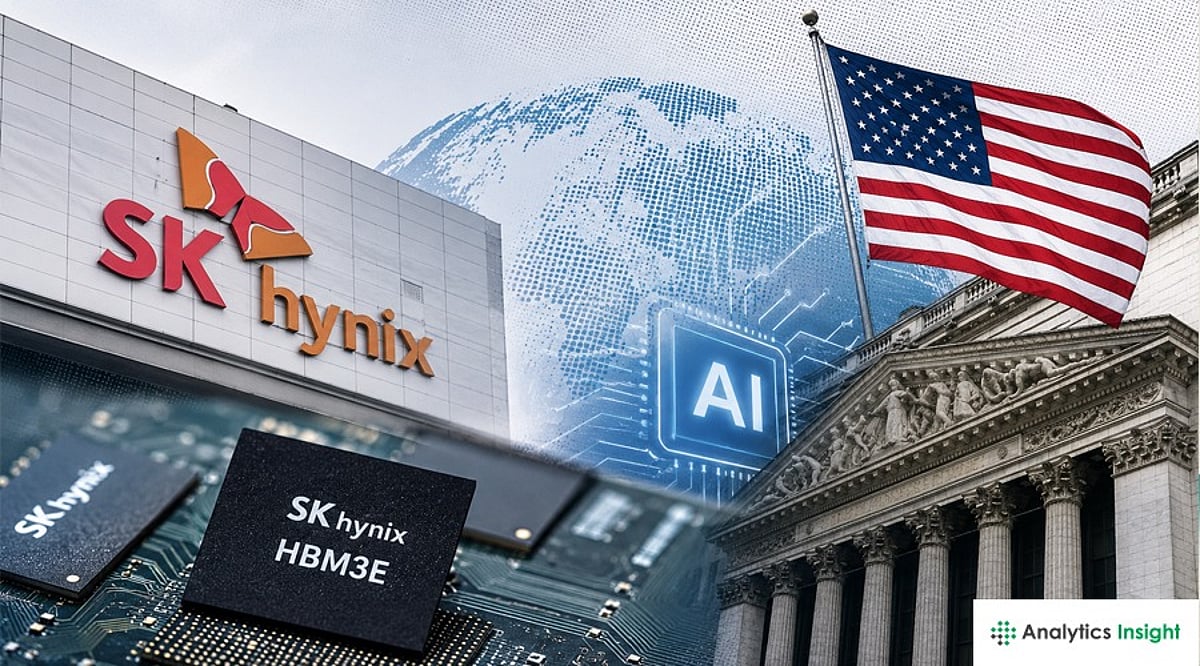
  • SK Hynix Reduces US IPO Ambition to $28 Billion as Memory Volatility Rises

    SK Hynix Reduces US IPO Ambition to $28 Billion as Memory Volatility Rises

    South Korean chipmaker SK Hynix is scaling back its US listing ambitions, trimming its target to roughly $28 billion amid growing concerns about the memory chip cycle. The company plans to offer American Depositary Receipts on the NASDAQ, aiming to raise funds for factory expansion and equipment purchases while the AI-driven demand for high-bandwidth memory continues to evolve.

    According to regulatory filings, SK Hynix will issue 17.79 million new shares via depositary receipts, with ten ADRs representing one common share. The final pricing is expected on Thursday, with trading set to begin Friday. The revised target of about 43.141 trillion won ($28.21 billion) is lower than the earlier estimate of 45.453 trillion won, reflecting recent declines in the company’s Seoul-listed shares, which fell about 4% on Monday to 2,327,000 won. Broader pressure on memory chip stocks and a dip in the KOSPI index have contributed to the cautious outlook.

    If completed, the deal would rank among the largest share sales in history, trailing only SpaceX’s record US listing last month and surpassing major offerings like Saudi Aramco and Alibaba. The proceeds will be used to expand chip facilities in South Korea and acquire advanced equipment, including ASML’s extreme ultraviolet scanners, essential for cutting-edge semiconductor production.

    SK Hynix is a key supplier of high-bandwidth memory to AI infrastructure giants such as NVIDIA and Google. The company’s stock has surged this year, buoyed by AI demand, but investors remain wary of the memory cycle’s mid-stage timing. “We expect better access, but timing of the memory cycle is equally important,” said Sundeep Gantori, chief investment officer of equities at Standard Chartered. Steve Sosnick of Interactive Brokers noted that the US listing would primarily benefit individual and smaller institutional investors seeking momentum in AI-linked stocks.

    The NASDAQ listing is expected to improve access for US investors and potentially narrow the valuation gap with rival Micron Technology. It could also pave the way for inclusion in the Philadelphia Semiconductor Index, tracked by global passive funds. Dave Mazza, CEO of Roundhill Investments, described the move as “more than a liquidity event,” emphasizing that SK Hynix has been a crucial company that most US institutions could not easily own.

    South Korea’s broader semiconductor push, including a $576 billion chip and AI investment program led by President Lee Jae Myung, underscores the strategic importance of such expansions. Lee has urged officials to expedite permits and infrastructure to support the country’s advanced industry ambitions.