
Tag: Marvell

  • AI Demand Drives These Semiconductor Stocks: NVIDIA, TSMC, and More

    AI Demand Drives These Semiconductor Stocks: NVIDIA, TSMC, and More

    Artificial intelligence continues to reshape the semiconductor landscape, creating opportunities for investors across the chip supply chain. From GPU leaders to memory manufacturers and equipment providers, several stocks are positioned to benefit from surging AI demand. Below, we analyze the key players and the risks that accompany their growth.

    Key Takeaways

    • NVIDIA remains the dominant AI chip supplier, while Broadcom provides exposure to custom silicon and networking.
    • TSMC and Micron gain from advanced manufacturing and high-bandwidth memory demand.
    • Equipment firms like ASML, Lam Research, Applied Materials, and KLA offer indirect AI growth avenues.

    NVIDIA and Broadcom Lead the AI Chip Race

    NVIDIA’s position as the premier AI chipmaker is unshaken. With its stock near $218.36 and a market capitalization approaching $5.30 trillion, the company supplies GPUs and networking solutions for AI data centers. A 2.26% dip on September 10 reflected broader tech pressure from rising Treasury yields, but its long-term trajectory remains tied to AI deployment.

    Broadcom offers a complementary play. Trading around $360.83, it designs custom AI chips and networking hardware for large tech firms. This diversification allows investors to tap AI growth beyond the GPU market.

    AMD adds a third option. At roughly $521.10, it has gained over 143% year-to-date, competing with NVIDIA through its AI accelerators and EPYC server processors. However, such sharp gains introduce higher valuation risk.

    TSMC and Micron: Supply Chain Pillars

    TSMC is the linchpin of advanced chip fabrication. Its U.S.-listed shares trade near $435.36, valuing the company at $1.58 trillion. The foundry posted record August revenue of NT$514.806 billion, up 53.3% year-over-year, with July revenue also strong at NT$467.580 billion. TSMC forecasts Q3 revenue between $44.6 billion and $45.8 billion, and plans capital expenditure of $60–$64 billion in 2026.

    Micron focuses on high-bandwidth memory (HBM), essential for AI workloads. With shares around $1,028, the company aims to boost HBM output to 100,000 wafers per month by year-end. HBM shortages are raising chip costs, but new entrants and rapidly shifting memory markets add risk. Micron’s fiscal Q4 results on September 30 will be a key catalyst.

    Equipment Stocks Provide Alternative Exposure

    Lam Research, Applied Materials, and KLA supply tools for chip manufacturing. Lam Research trades near $301.06, Applied Materials at $469, and KLA at $177.18—each fell over 3% on September 10. Their fortunes rise with fab expansions, not AI chips directly, making them a different risk-reward proposition.

    Marvell sits at the intersection of custom silicon and connectivity, with a stock price of $235.01 and a 176.55% year-to-date gain. Its high valuation amplifies downside risk.

    ASML stands out as the sole supplier of EUV lithography systems, crucial for shrinking process nodes. Closing near $1,698 on September 10, ASML’s technology monopoly gives it a long-term edge, though its stock can swing with capital spending cycles.

    The AI Chip Trade Faces New Tests

    Strong AI demand does not immunity from broader market forces. Higher oil prices and rising Treasury yields pressured tech stocks, and the broader U.S. market fell on September 10. Yet TSMC’s sales and HBM demand underscore robust chip demand, providing a solid business foundation amid stock volatility.

    NVIDIA, Broadcom, and TSMC offer the widest AI exposure. Micron and AMD provide targeted plays on memory and GPU alternatives. Lam Research, Applied Materials, KLA, and ASML serve the equipment segment. Marvell carries higher potential but also higher risk.

    Investors should monitor chip sales, HBM supply, AI data center budgets, and capital expenditure plans. The critical question is whether supply, capacity, and profits can keep up with the lofty expectations already baked into these stocks.

    FAQs

    Which semiconductor stock has the strongest AI exposure?

    NVIDIA has the most direct AI exposure through its GPUs and data center products.

    Why is TSMC important to AI growth?

    TSMC manufactures advanced chips for major tech firms, forming the backbone of AI processor supply.

    Why has Micron gained attention?

    Micron is a key supplier of high-bandwidth memory, critical for AI data center performance.

    Which semiconductor stocks offer equipment exposure?

    ASML, Lam Research, Applied Materials, and KLA provide exposure to chip manufacturing equipment.

    Are semiconductor stocks low-risk investments?

    No. Even with strong chip demand, share prices can decline due to high valuations, market conditions, and changing expectations.

    Disclaimer: This article is for informational purposes only and does not constitute financial advice. Investing in stocks involves risk, including potential loss of principal. Always conduct your own research before making investment decisions.
  • Marvell Pledges $250M Investment in India to Boost AI Semiconductor R&D at Bangalore Hub

    Marvell Pledges $250M Investment in India to Boost AI Semiconductor R&D at Bangalore Hub

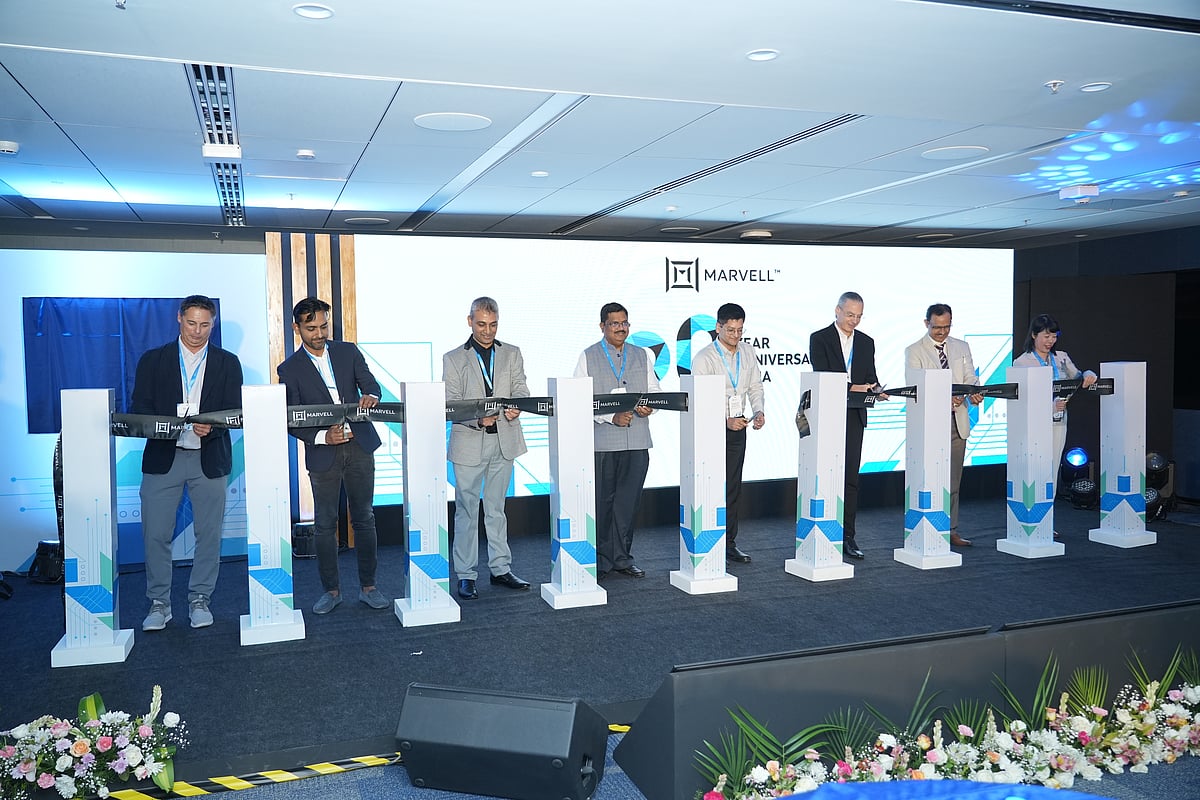
    Marvell Technology, Inc., a leader in data infrastructure semiconductor solutions, has announced a strategic investment of $250 million in India over the next three years. The investment will expand the company’s capabilities in technology, talent, and infrastructure, coinciding with its 20-year anniversary of engineering innovation in the country.

    As part of the plan, Marvell aims to double its headcount in India within three years, unveil a new wing at its Bangalore office, and strengthen its presence in Hyderabad. This expansion will reinforce the company’s global innovation network, focusing on the design and development of advanced semiconductor solutions for AI, cloud, and data infrastructure applications.

    “India has become a strategic hub of engineering excellence for Marvell, playing a critical role in advancing the infrastructure technologies that power the world’s leading hyperscalers and cloud providers,” said Navin Bishnoi, vice president and India country manager at Marvell. “As we celebrate 20 years in India, we remain committed to expanding R&D investments, strengthening the country’s semiconductor ecosystem, and developing the next generation of technology talent.”

    Advancing Semiconductor Innovation

    Marvell established operations in Bangalore in 2006 and has since grown India into the company’s second-largest R&D organization worldwide. Teams across Bangalore, Pune, and Hyderabad have developed deep expertise in advanced process technologies (2nm and beyond), high-speed analog IP, subsystem design, software/firmware development, and end-to-end silicon development. Today, Marvell India contributes across numerous technology platforms, with its employees holding multiple patents and playing a leading role in applying advanced AI tools to accelerate engineering productivity and innovation.

    Beyond technology development, Marvell continues to invest in the long-term growth of India’s semiconductor ecosystem through collaboration with universities, startups, industry associations, and government organizations. The company collaborates with leading universities to support internship programs, faculty development initiatives, joint research projects, and curriculum development designed to better prepare students for careers in advanced technology fields. Marvell also works with emerging startups through mentorship and strategic collaborations in areas aligned with its technology and product portfolios. Additionally, Marvell actively engages with industry associations and government bodies to foster greater collaboration across the ecosystem and support the continued growth of India’s semiconductor industry.

    Marvell Scholarship Program

    During the event, Marvell highlighted its commitment to developing future engineering talent through its Marvell Scholarship for Technical and Engineering Merit (MSTEM) program. This initiative aims to cultivate the next generation of AI and semiconductor innovators through financial support, hands-on industry experience, and exposure to real-world technology development.

    Launched earlier this year, the MSTEM program supports students pursuing degrees in electronics, electrical engineering, and computer science. The program attracted more than 7,000 applicants from leading universities across India, with 100 outstanding students selected to receive scholarships. By combining financial assistance with practical industry engagement, the program aims to strengthen India’s technology talent pipeline and prepare students for careers at the forefront of semiconductor and AI innovation.

    About Marvell
    To deliver the data infrastructure technology that connects the world, Marvell builds solutions on the most powerful foundation: partnerships with its customers. Trusted by the world’s leading technology companies for over 30 years, Marvell moves, stores, processes, and secures the world’s data with semiconductor solutions designed for customers’ current needs and future ambitions. Through a process of deep collaboration and transparency, Marvell is changing the way tomorrow’s enterprise, cloud, and carrier architectures transform—for the better.

    Marvell and the M logo are trademarks of Marvell or its affiliates. For a complete list of Marvell trademarks, visit www.marvell.com. Other names and brands may be claimed as the property of others.

    This press release contains forward-looking statements within the meaning of the U.S. federal securities laws that involve risks and uncertainties. Actual events, results, or achievements may differ materially from those contemplated in this press release. Forward-looking statements speak only as of the date they are made, and no person assumes any obligation to update or revise any such forward-looking statements.