Tag: MDR

  • Indian Mobile Retailers Plan ‘No UPI Day’ on October 2 to Protest Proposed MDR Fees

    Indian Mobile Retailers Plan ‘No UPI Day’ on October 2 to Protest Proposed MDR Fees

    Mobile phone retailers across India are planning to observe October 2 as ‘No UPI Day’ in protest against the proposed Merchant Discount Rate (MDR) on certain UPI merchant payments. The campaign, organized by the All India Mobile Retailers Association (AIMRA), will see participating retailers temporarily halt acceptance of UPI payments and symbolically cover their QR codes with black cloth.

    Why Are Mobile Retailers Protesting?

    AIMRA states that the proposed MDR could significantly increase the financial burden on mobile retailers, especially those operating on thin margins. Under the new framework, a 0.4% MDR will apply to eligible person-to-merchant UPI transactions above Rs. 2,000, starting October 15, 2026. The charge is merchant-side only and will not be directly passed to consumers.

    The association explains that a small retailer processing between Rs. 5 lakh and Rs. 30 lakh in UPI payments monthly could face additional costs of Rs. 2,000 to Rs. 12,000 per month. AIMRA estimates the overall burden on small mobile retailers across India could reach about Rs. 40 crore per month, or nearly Rs. 500 crore annually.

    AIMRA Vice President and Delhi NCR President Tarvinder Singh emphasized that the protest is not against UPI or digital payments but against the additional financial strain on merchants.

    What Will Happen on October 2?

    Retailers participating in the protest are expected to refrain from accepting UPI payments for the day and may physically cover their UPI QR codes with black cloth. However, this is a voluntary action by individual mobile retailers and does not mean UPI services will stop nationwide. Other businesses will continue to accept UPI as usual.

    Customers planning to purchase smartphones, accessories, or other products from physical mobile stores on October 2 are advised to carry cash or card payments as alternatives.

    What Changes from October 15?

    The October 2 protest precedes the implementation of the new MDR framework on October 15. Under the framework:

    • Eligible person-to-merchant UPI transactions above Rs. 2,000 will attract a 0.4% MDR.
    • Transactions up to Rs. 2,000 and person-to-person transfers remain exempt.
    • Small merchants receiving up to Rs. 1 lakh per month through UPI QR payments are eligible for mandatory zero MDR.

    The proposed MDR is a merchant-side charge, so customers will not see any direct impact. The protest is therefore focused on retailers’ concerns about the cost of accepting eligible UPI payments, not a call for a nationwide suspension of UPI.
  • India’s Payment Methods Compared: UPI, Debit Cards, and Credit Cards – Fees and MDR Explained

    India’s Payment Methods Compared: UPI, Debit Cards, and Credit Cards – Fees and MDR Explained

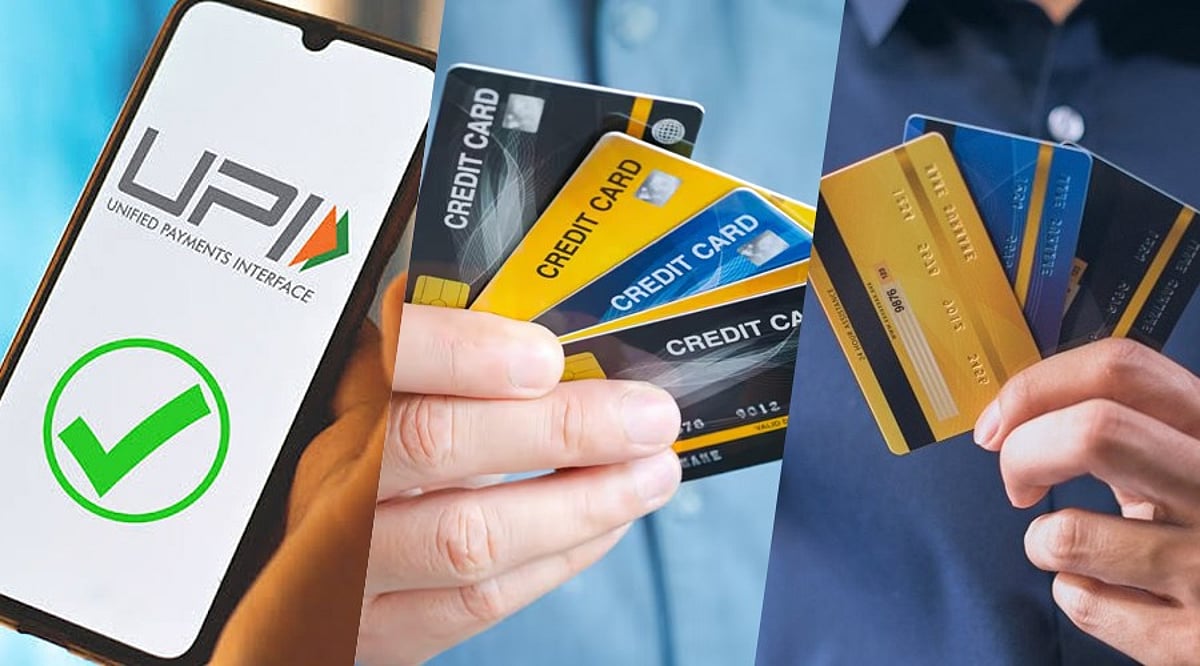
    When you tap, swipe, or scan to pay, the costs behind that transaction vary dramatically depending on the method. While customers rarely see these charges, merchants bear the burden. Understanding Merchant Discount Rate (MDR) is key to comparing India’s payment landscape.

    What is MDR?

    Merchant Discount Rate (MDR) is the fee merchants pay for processing digital payments. This charge is typically divided among banks, payment networks, and app providers. Although it is a merchant-side cost, it influences business decisions and pricing strategies.

    UPI: Free for Consumers, New Merchant Fee Above ₹2,000

    UPI remains free for consumer-to-consumer transfers, with no upper limit. However, from October 15, 2026, NPCI introduces a 0.4% MDR on person-to-merchant transactions above ₹2,000. This charge is capped at ₹300 for payments of ₹75,000 or more. For instance, a ₹50,000 payment incurs ₹200 in MDR, while a ₹1 lakh payment costs only ₹300 due to the cap. Special sectors like railways, telecom, insurance, fuel, and agriculture inputs attract a flat ₹5 charge.

    Small merchants receiving up to ₹1 lakh per month through UPI QR codes continue to enjoy zero MDR on all transactions. Those crossing the threshold for three consecutive months are moved to the standard category. NPCI estimates this new fee will affect only about 4% of merchant transactions, mostly larger ones. Consumer platform fees and merchant surcharges are prohibited under the new rules.

    Debit Cards: Regulated and Tiered MDR

    Debit-card MDR is set by the RBI, with different caps for merchant categories and acceptance methods. Small merchants and QR-based payments enjoy lower rates, while larger merchants using card machines or online checkout face higher limits. RuPay debit cards benefit from a zero-MDR policy with no cap, making them a cost-effective choice for smaller everyday purchases.

    Credit Cards: Higher Cost, Commercially Negotiated

    Credit-card MDR is not fixed by regulation but is determined through commercial agreements between merchants and banks. Industry estimates place it between 1.5% and 2.5%. This higher cost funds rewards, cashback, and other card perks. Additionally, credit cards carry other fees like annual charges, interest on unpaid balances, late fees, and cash-advance fees. Consumers who pay their bill in full each month avoid most of these extra costs, but carrying a balance quickly becomes expensive.

    RuPay Credit Cards on UPI: A Separate Rulebook

    Eligible RuPay credit cards can be linked to UPI apps for merchant payments, but these transactions follow credit-card rules, not standard UPI zero-MDR rules. Small offline merchants get nil MDR up to ₹2,000; beyond that, standard credit-card MDR applies. The key difference is the source of funds—a credit line versus a bank account.

    Comparsion: Which Is Cheapest?

    For everyday purchases under ₹2,000, all three methods cost the same to consumers. The differences emerge for merchants processing high volumes or handling larger transactions. UPI’s new capped fee is modest compared to credit-card MDR, while debit cards remain regulated and relatively low. Merchants are likely to steer customers toward cheaper methods, such as UPI or RuPay debit cards, especially for larger payments.

    Final Thoughts

    India’s digital payment system is moving beyond a simple free-vs-fee classification. The real cost lies in the merchant-side MDR, not in visible customer charges. As UPI scales, the new merchant fee above ₹2,000 aims to sustain its infrastructure. Debit cards stay regulated, and credit cards carry premium costs tied to rewards and lending. Understanding these dynamics helps both merchants and consumers make informed choices.

    Frequently Asked Questions

    Is UPI free for customers in India?

    Yes, eligible UPI payments do not carry a consumer transaction fee. From October 15, 2026, specified merchant UPI payments above ₹2,000 will incur a merchant-side MDR, but merchants cannot pass this cost on to customers.

    What is MDR in digital payments?

    MDR is the processing charge paid by merchants for accepting certain digital payment methods. It is primarily a merchant-side cost and does not automatically mean a separate customer fee.

    Is credit card MDR higher than debit card MDR?

    Generally, yes. Debit-card MDR is regulated by RBI, while credit-card MDR is commercially negotiated. Industry estimates commonly place credit-card MDR above debit-card MDR.

    Can a RuPay credit card be used through UPI?

    Yes, eligible RuPay credit cards can be linked to supported UPI apps for merchant payments. However, the transaction is funded by the credit card, so it follows credit-card rules rather than standard UPI rules.

    Who pays the UPI MDR above ₹2,000?

    The merchant pays the MDR on eligible person-to-merchant UPI transactions above ₹2,000. Customers should not be charged a separate UPI transaction fee for this MDR.

  • New UPI MDR Framework: How SIPs, OTT, and Rent Payments Are Affected from October 15

    New UPI MDR Framework: How SIPs, OTT, and Rent Payments Are Affected from October 15

    The Reserve Bank of India’s new UPI Merchant Discount Rate (MDR) regime takes effect on October 15, 2026. While the updated rules introduce charges for certain merchant transactions, many recurring payments—like mutual fund SIPs and OTT subscriptions—remain untouched. Here’s a breakdown of what changes, what stays free, and how different payment types are classified.

    Key Takeaways

    • UPI AutoPay SIPs and OTT subscriptions are exempt from the prescribed MDR.
    • One-time mutual fund and capital-market UPI payments incur a 0.02% MDR, capped at ₹300.
    • Specified person-to-merchant (P2M) payments above ₹2,000 may attract a 0.4% MDR, with a ₹300 cap for transactions of ₹75,000 or more.

    Understanding the New MDR Structure

    The new framework applies a 0.4% MDR to specified P2M UPI payments exceeding ₹2,000. For transactions of ₹75,000 and above, the charge is capped at ₹300. Person-to-person (P2P) transfers remain completely free, regardless of the amount. Merchant payments up to ₹2,000 are also exempt. According to the government, approximately 96% of P2M transactions will remain outside the MDR net.

    UPI AutoPay Exemption: Relief for Recurring Payments

    NPCI has confirmed that UPI Mandates and AutoPay recurring transactions will not attract the prescribed MDR. This includes utility bills, OTT subscriptions, and recurring investments such as mutual fund SIPs. So, a ₹10,000 SIP set up via UPI AutoPay will not incur an MDR charge simply because it exceeds ₹2,000. Similarly, a ₹2,500 monthly OTT subscription—whether Netflix, Amazon Prime, or JioHotstar—remains unaffected.

    Mutual Fund SIPs: Two Different Rules

    The treatment of mutual fund SIPs depends on the payment route. Recurring SIPs using UPI AutoPay are outside the prescribed MDR. However, one-time UPI payments for mutual funds, securities, stockbrokers, or dealers fall under a separate capital-market category. This category carries a much lower MDR of 0.02%, capped at ₹300 per transaction. The reduced rate is intended to encourage retail participation in formal financial markets.

    This distinction is significant for brokers and investment platforms. Reuters has reported industry concerns about the impact of frequent UPI transactions on brokerage costs, and Zerodha CEO Nithin Kamath has publicly questioned whether brokers can absorb the long-term cost.

    Rent Payments: Structure Matters

    Rent payments do not automatically receive the same AutoPay exemption unless the transaction uses a UPI Mandate or AutoPay structure. A simple transfer between individuals remains a P2P payment, which is free regardless of amount. However, if rent is paid to a merchant or property service provider, it may fall under the P2M framework if the transaction meets relevant conditions. The official rules do not list rent as a special category, so the exact treatment depends on how the payment is structured and who the recipient is.

    Customers Won’t Pay MDR Directly

    The MDR is a merchant-side charge within the UPI ecosystem. The government has clearly stated that customers will not be charged a separate UPI transaction fee. Banks have been directed to prevent merchants from passing on the MDR to customers, and UPI app providers are prohibited from adding platform fees or hidden charges under this framework. A ₹20,000 eligible merchant payment, therefore, will not become a ₹20,080 debit from the customer’s account.

    Still, businesses may feel the pinch. Retailer groups have expressed opposition, warning that the added cost could squeeze already thin margins. Some industry associations have also questioned the timing, given the upcoming festive season.

    What Changes from October 15

    Starting October 15, 2026, the following rules apply:

    • Standard P2M transactions above ₹2,000: 0.4% MDR, capped at ₹300 for amounts of ₹75,000 or more.
    • Railways, telecom, insurance, fuel, and agricultural inputs above ₹2,000: flat ₹5 MDR.
    • Capital-market payments (one-time mutual fund, securities, etc.): 0.02% MDR, capped at ₹300.
    • UPI AutoPay recurring payments (SIPs, OTT, bills): exempt from prescribed MDR.
    • P2P transfers: always free.

    The immediate impact on most households appears limited. The bigger shift is internal—banks, payment service providers, apps, brokers, and merchants must now adapt to a new cost landscape after more than six years of zero-cost UPI merchant payments.

    Frequently Asked Questions

    1. Will mutual fund SIPs become costlier under the new UPI MDR rules?

    No, SIPs that use UPI AutoPay mandates remain outside the prescribed MDR.

    2. Will OTT subscriptions attract UPI MDR?

    No, recurring OTT payments through eligible UPI AutoPay mandates remain outside the prescribed MDR.

    3. Will rent payments become costlier?

    Treatment depends on the payment structure. P2P transfers remain free, while eligible P2M transactions can fall under the MDR framework.

    4. What MDR applies to one-time mutual fund payments?

    A 0.02% MDR applies to specified capital-market payments, with a maximum charge of ₹300 per transaction.

    5. When will the new UPI MDR framework start?

    The new framework takes effect on October 15, 2026.

  • New UPI MDR Rule: 0.4% Merchant Fee for Payments Above ₹2,000 Starts Oct. 15

    The National Payments Corporation of India (NPCI) is introducing a new Merchant Discount Rate (MDR) structure for select UPI payments starting October 15, 2026. Under the updated rule, merchant transactions above ₹2,000 will attract a 0.4% MDR, with the charge capped at ₹300 for payments of ₹75,000 or more.

    What Is MDR?

    MDR is the fee charged for processing a digital payment. In this case, the charge is paid by the merchant, not the customer. The new rate applies to Person-to-Merchant (P2M) UPI payments — transactions where customers pay businesses for goods or services.

    Where the 0.4% MDR Applies

    Payments above ₹2,000 made via UPI to merchants will carry a 0.4% MDR. However, certain essential payments have been given a flat fee instead:

    • Railway ticket bookings above ₹2,000
    • Fuel payments above ₹2,000
    • Insurance premium payments above ₹2,000
    • Utility bill payments above ₹2,000

    For these categories, the MDR will be a flat ₹5, rather than a percentage of the transaction value. This keeps costs predictable for high-value payments in these sectors.

    What Remains Free

    Not all UPI transactions will be affected by the new rule. The following remain free of MDR:

    • UPI payments of up to ₹2,000 to any merchant
    • Person-to-Person (P2P) transfers to friends and family
    • UPI AutoPay and mandates
    • Small merchants receiving up to ₹1 lakh per month through UPI QR payments

    Protection for Consumers

    The finance ministry has said that banks have been advised to ensure merchants do not pass MDR charges on to customers. It also stated that UPI application providers are expressly prohibited from imposing platform fees or hidden charges.

    The new MDR structure is part of UPI’s move toward a revised charging model that balances business use cases with keeping everyday person-to-person transfers free.

  • India Proposes MDR on UPI Transactions Above Rs 2,000: What It Means for Users

    India Proposes MDR on UPI Transactions Above Rs 2,000: What It Means for Users

    India’s Unified Payments Interface (UPI) has transformed digital payments by offering free transactions, but it could soon see a major policy shift. The central government has proposed amendments to the Payment and Settlement Systems Act, 2007, allowing banks and payment service providers to charge a Merchant Discount Rate (MDR) on select UPI transactions in the future.

    The final decision is pending, but the proposal suggests an MDR of 0.25% to 0.4% for merchant UPI transactions above Rs 2,000, while person-to-person (P2P) transfers would remain free. Government officials have not set a timeline for implementation.

    Impact on High-Value Transactions

    MDR is a fee merchants pay to banks and payment service providers for processing digital payments. Unlike UPI, credit and debit card payments already include MDR, typically borne by the merchant rather than the customer.

    According to official estimates, only 5% of all UPI transactions exceed the proposed Rs 2,000 threshold. However, these high-value transactions account for nearly 65% of total transaction value, presenting a significant revenue opportunity for the payments ecosystem.

    UPI continues to grow rapidly, facilitating approximately 23.7 billion transactions worth Rs 29.9 lakh crore, cementing its status as one of the world’s largest real-time payment networks.

    An official explained the limited consumer impact: “Even if implemented, 95% of transactions will not face the merchant discount rate. Besides, not all businesses will pass on the fees, which will be a small amount.”

    Long-Term Industry Prospects

    Industry executives believe allowing a limited MDR on high-value merchant transactions could create a more sustainable business model for payment companies. Since UPI currently generates little direct transaction revenue, banks and payment providers argue that additional income would fund technology upgrades, improve payment infrastructure, and support future innovation.

    According to Jefferies’ analysis, merchant UPI transactions above Rs 2,000 represent roughly 67% of merchant payment value despite accounting for only about 4% of transaction volume. The brokerage estimates that introducing MDR for this segment could generate Rs 5,000 crore to Rs 10,000 crore in annual revenue for the digital payments industry, potentially benefiting companies like Paytm and Pine Labs.

    Industry sources expect the government to introduce a cap on the maximum fee charged. As one source noted, “Unlike credit cards, there is no funding cost involved, so it makes sense to have a ceiling once the costs are covered.”

    For now, the proposed amendment only creates the legal framework to enable MDR. The government has not confirmed whether merchant charges will be introduced, what the final rates will be, or when such a policy could take effect. Until then, UPI transactions remain free under the existing system.