
Tag: MediaTek

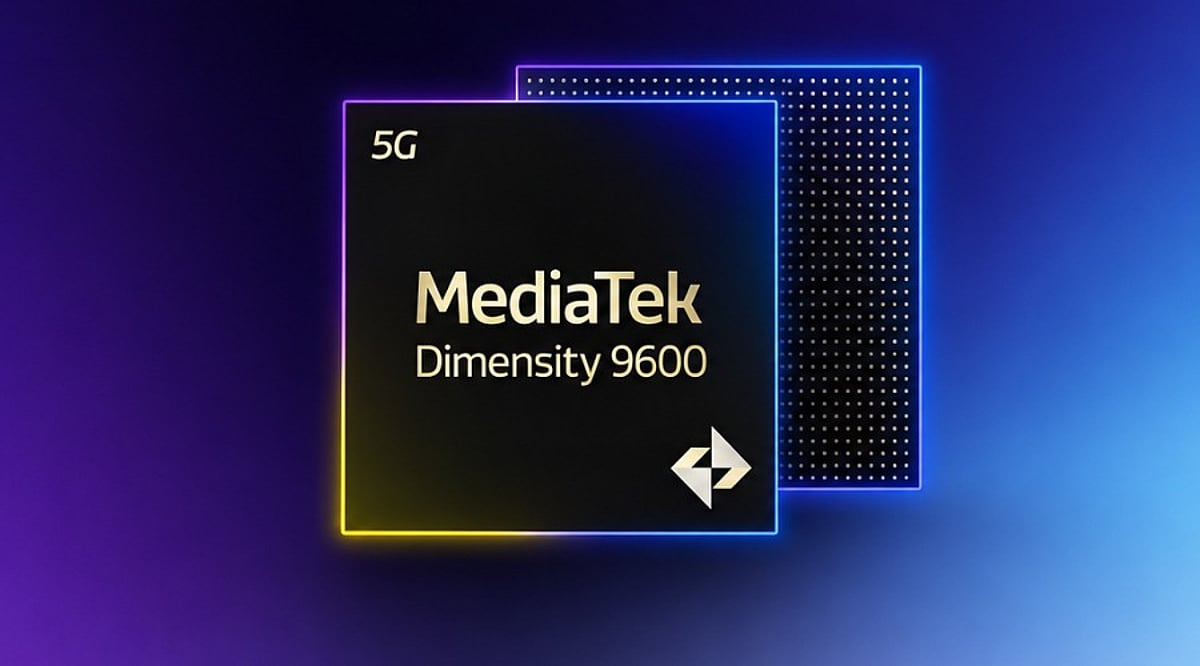
  • MediaTek Dimensity 9600 Pro: The Next Leap in AI-Powered Flagship Chips

    MediaTek Dimensity 9600 Pro: The Next Leap in AI-Powered Flagship Chips

    MediaTek has unveiled its latest flagship processor, the Dimensity 9600 Pro, positioning it as a transformative step for next-generation smartphones. Built on TSMC’s 2nm process, this chip integrates a fourth-generation all-big-core CPU, a dual-NPU architecture, LPDDR6 memory support, and UFS 5.0 storage. MediaTek claims significant gains in performance, power efficiency, and on-device AI capabilities, setting a new standard for premium mobile hardware.

    Key Takeaways

    • The Dimensity 9600 Pro uses a 2nm process with an all-big-core CPU, claiming major performance and efficiency improvements.
    • Its dual-NPU design supports advanced on-device AI, handling models up to 30 billion parameters.
    • LPDDR6, UFS 5.0, stronger graphics, and advanced camera features mark a comprehensive hardware upgrade for flagships.

    A Revolutionary 2nm Design

    The Dimensity 9600 Pro is MediaTek’s first mobile chip built on a 2nm process. Its CPU configuration includes two Arm C2-Ultra cores at up to 4.55GHz, three Arm C2-Pro cores at 4.35GHz, and three additional Arm C2-Pro cores at 3.1GHz. This fourth-generation all-big-core architecture also incorporates a 21% larger L2 cache.

    MediaTek’s internal benchmarks show a 17% increase in single-core performance with 37% better power efficiency, while multi-core tasks see a 15% performance boost and a remarkable 61% reduction in power consumption. These figures, however, come from lab tests and may vary in real-world devices depending on thermal design, battery size, and software optimization.

    AI Takes Center Stage

    The chip features two neural processing units (NPUs): the NPU 1090 for heavy on-device AI tasks and the Super Efficient NPU 2.0 for low-power, always-on AI operations. MediaTek claims a 51% improvement in large language model (LLM) prefill performance and a 55% gain in token generation per watt. The platform supports on-device models with up to 30 billion parameters, aided by a compression engine that reduces memory footprint and support for Mixture of Experts (MoE) architecture.

    The Super Efficient NPU 2.0 also cuts power consumption for always-on AI by 40%, a critical factor for AI assistants that continuously access phone data, sensors, and apps.

    Memory and Storage Advancements

    With first-wave support for LPDDR6 memory and UFS 5.0 storage, the Dimensity 9600 Pro delivers substantial improvements in data throughput. UFS 5.0 offers twice the read and write speeds of its predecessor, while LPDDR6 increases effective memory bandwidth by 33% at the same frequency. A larger 34.5MB cache further enhances overall system responsiveness.

    Graphics Performance for High Frame Rates

    The new G2-Ultra NX GPU delivers up to 27% higher peak performance, 24% lower power consumption at peak, and up to 18% faster ray-tracing. The chip can support native gameplay above 185fps. MediaTek integrates the GPU with the NPU through its Neural Graphics Architecture, enabling AI-assisted graphics rendering and super-resolution tasks.

    Camera and Imaging Upgrades

    The Imagiq 1290 image signal processor (ISP) pairs with an AI Imaging Fusion Architecture to support 60fps subject focus, 4K240 slow-motion video, 4K60 AI True Color Tone, and 4K120 cinematic log. The system also handles 17EV dynamic range imaging, 4K live photo with full depth of field, H.266 hardware video decode, and MV-HEVC for spatial video—all without relying on cloud services.

    First Phones and Real-World Testing

    MediaTek has announced that the first Dimensity 9600 Pro phones will arrive this quarter. According to Reuters, Xiaomi, OPPO, and vivo are among the manufacturers collaborating with MediaTek. OPPO has confirmed the Find X10 Pro Max with this chip, slated for a September 22 launch in China.

    The true test lies in how these devices perform in the real world. MediaTek’s claims are based on its own lab tests, so independent reviews will be crucial to verify whether retail units match the stated figures.

    What the 9600 Pro Changes

    The Dimensity 9600 Pro shifts the focus from raw CPU speed to a balanced integration of CPU, GPU, NPU, memory, storage, and camera hardware. Its 2nm foundation and dual-NPU design amplify the role of on-device AI, while faster memory and storage enable a smoother user experience. For the next wave of premium smartphones, this chip signals a clear direction: high-performance processing, advanced graphics, powerful local AI, and cutting-edge camera capabilities must work as a cohesive system.

    Frequently Asked Questions

    1. What is the Dimensity 9600 Pro?

    The Dimensity 9600 Pro is MediaTek’s flagship smartphone processor featuring a 2nm design, advanced CPU and GPU hardware, dual-NPU AI, and support for LPDDR6 and UFS 5.0.

    2. How powerful is the Dimensity 9600 Pro?

    MediaTek claims up to 17% higher single-core performance, 15% higher multi-core performance, and a 61% reduction in multi-core power usage compared to its stated previous-generation baseline.

    3. What AI features does the chip offer?

    The dual-NPU system supports on-device AI models with up to 30 billion parameters, along with improved AI performance per watt and a dedicated super-efficient NPU for always-on tasks.

    4. Does the Dimensity 9600 Pro support advanced gaming?

    Yes. Its G2-Ultra NX GPU provides higher peak graphics performance, faster ray tracing, and support for native gameplay above 185fps.

    5. What memory and storage does the Dimensity 9600 Pro support?

    The platform supports LPDDR6 memory and UFS 5.0 storage, along with a generous 34.5MB cache for improved data throughput.
  • MediaTek Allocates $5 Billion to AI Data Center Chips as Smartphone Revenue Slips

    MediaTek Allocates $5 Billion to AI Data Center Chips as Smartphone Revenue Slips

    MediaTek has approved a $5 billion discretionary financing framework to accelerate its expansion into custom AI data center chips. The board approved the plan on July 31, granting the company flexibility to raise capital as customer demand and production needs increase.

    The move comes as MediaTek seeks to diversify revenue beyond smartphones. Its mobile chip sales fell 20% year-over-year in the June quarter, pressured by higher component costs and weaker handset demand. The company reported quarterly revenue of NT$152.18 billion (about $4.71 billion), up 1.2% from a year earlier, but net income declined 12.3% to NT$24.6 billion.

    CEO Rick Tsai stated during the earnings call: “This flexible framework provides us with the optionality, when needed, to agilely support our long-term growth and large data center opportunities.” The approval does not require immediate use of the full amount; MediaTek can arrange financing when needed for chip development, manufacturing capacity, advanced packaging, memory supplies, and production work tied to customer orders.

    MediaTek has expanded its data center capabilities through custom chip design and high-speed connectivity products. In June, it announced services covering advanced chip processes, packaging, memory, interconnects, and rack-level integration — all part of its custom silicon offering for cloud companies building AI infrastructure.

    The company raised its 2027 custom AI chip market estimate to $80 billion, up from a prior range of $70–80 billion. It also increased its target market share to 15–20%, from 10–15%. Earlier, MediaTek had doubled its 2026 AI accelerator revenue target to $2 billion. The company now expects its data center AI business to generate over $2 billion in 2026. Its first custom AI chip will enter production in the fourth quarter, with a second product reaching volume production in 2028.

    Custom chips allow cloud companies to design processors for specific AI workloads rather than relying solely on standard products. MediaTek provides design services and supporting technology, while customers set performance, power, and system requirements for their data centers.

    Tsai noted that global smartphone shipments are expected to decline about 15% in units this year. Industry estimates showed an 11% drop in the second quarter, the weakest June quarter since 2013. Memory shortages have also raised handset prices and reduced demand. MediaTek has started raising prices across parts of its product range to reflect higher supply-chain costs.

    Investor reaction was strong: MediaTek shares closed 9.9% higher on the day of the announcement and had gained 148.6% during 2026. The company’s market value reached approximately $176 billion, making it Taiwan’s second-largest listed company.

  • Vivo T5e Debuts in India: Pricing, Full Specifications, and Availability Details

    Vivo T5e Debuts in India: Pricing, Full Specifications, and Availability Details

    Vivo T5e Arrives in India

    Vivo has expanded its T-series lineup with the launch of the Vivo T5e in India. The smartphone targets users looking for premium features without paying flagship prices. It offers a modern design, a smooth display, and capable hardware. Here’s everything you need to know about the new device.

    Display & Design

    The Vivo T5e features a large AMOLED display with a high refresh rate for smoother scrolling and gaming. Slim bezels give it a premium appearance. The phone is available in stylish color options. It is designed to offer a comfortable in-hand experience for daily use.

    Performance

    Powered by a capable MediaTek processor, the Vivo T5e is built for multitasking and gaming. The chipset is paired with ample RAM for smooth performance. Storage options provide enough room for apps and media. The device runs the latest version of Funtouch OS based on Android.

    Cameras

    The smartphone comes with a dual rear camera setup for capturing detailed photos. AI-powered imaging features enhance portraits and low-light photography. The front-facing camera is suitable for selfies and video calls. Multiple camera modes add creative flexibility.

    Battery & Charging

    A large battery ensures all-day usage on a single charge. Fast charging support minimizes downtime and quickly powers up the device. Battery optimization features improve efficiency during extended use. It is suitable for work, entertainment, and gaming.

    Price & Availability

    The Vivo T5e has been launched in multiple RAM and storage variants. It will be available through Flipkart, Vivo’s official online store, and retail outlets across India. Launch offers include bank discounts and exchange benefits. Buyers can choose from attractive color options.

    Should You Buy It?

    The Vivo T5e offers an attractive combination of design, display, performance, and battery life. It is aimed at users upgrading from entry-level or older mid-range smartphones. Competitive pricing makes it a strong contender in its segment. Buyers looking for value may find it worth considering.

  • Top 10 Semiconductor Companies Driving the AI Revolution

    Top 10 Semiconductor Companies Driving the AI Revolution

    The rapid advancement of artificial intelligence is heavily reliant on cutting-edge semiconductor technology. From high-performance GPUs to specialized memory and fabrication, these ten companies are at the forefront of powering AI workloads across data centers, edge devices, and consumer electronics.

    • Nvidia: Leads AI computing with powerful GPUs that accelerate machine learning, generative AI, scientific research, and enterprise data center workloads globally.
    • AMD: Develops high-performance CPUs and GPUs supporting AI workloads, cloud computing, gaming, and enterprise applications with competitive processing capabilities.
    • Intel: Expands AI hardware through advanced processors, AI accelerators, and data center solutions supporting enterprise computing and intelligent automation.
    • TSMC: Manufactures cutting-edge semiconductor chips for leading technology companies, enabling advanced AI processors through world-class fabrication technologies.
    • Samsung Electronics: Produces advanced memory chips and semiconductor technologies powering AI devices, smartphones, servers, and high-performance computing systems worldwide.
    • Qualcomm: Designs AI-enabled mobile processors delivering intelligent photography, voice assistants, efficient performance, and edge AI capabilities across connected devices.
    • Broadcom: Develops networking chips, AI infrastructure components, and connectivity solutions supporting large-scale cloud computing and enterprise artificial intelligence deployments.
    • MediaTek: Builds AI-capable smartphone processors with efficient performance, intelligent imaging, and advanced connectivity for affordable consumer electronics worldwide.
    • Micron Technology: Supplies high-performance memory and storage solutions essential for AI training, inference workloads, and modern data center infrastructure.